Port control, port control, port control this is sailing vessel Vilja calling! Efter åtta timmar efter att vi drejat bi inatt når vi inloppet till South Tarawa atoll. Huvudstaden i Kiribati. Eller Kiribass som det heter på deras lokala språk Kiribatiska eller Gilbertesiska. Ti i slutet uttalas ss. Vi har verkligen kämpat för att komma hit. Det som skulle vara sju dygn blev nio tuffa dygn och mycket motvind. Det har ni redan läst om i förra inlägget
Port control, port control, port control, this is sailing vessel Vilja calling! Eight hours after heaving to last night, we are reaching the entrance to the South Tarawa atoll, the capital of Kiribati. Or ”Kiribass” as it is pronounced in the local language, Kiribati (also known as Gilbertese), the ”ti” at the end is pronounced ”ss.” We have truly fought to get here. What was supposed to be a seven-day voyage turned into nine tough days, with a great deal of headwinds. You have already read about that in the previous post.

Incheckningen i Kiribati är lika tuff som den i Fiji. På ett annat sätt. I Fiji var det den totala kontrollen inne i båten som slutade med att båten var fullkomligt kaos efter att ha tömt ur alla förråd av mat samt att vi fick slänga över tio kilo mat. Här går just den kontrollen jätteenkelt. Men de behandlar oss som ett kommersiellt fartyg och vill ha dokument efter dokument efter dokument som vi skulle ha och dessutom redan ha skrivit ut o fyllt i. Vi har inte ens tillgång till sådana dokument. Kommersoella fartyg har alla dessa dokument men de går inte att googla upp för oss. Det är så frustrerande och tröttsamt. Vi känner oss helt utmattade och konfunderade. Hur gör vi?Vi är ju bara en liten fritidsbåt. Inte ett stott fraktfartyg. Efter mycket dividerande fram och tillbaka och flera handskrivna dokument blir vi till sist godkända. Fast vi behöver ta oss till immigration 3 km bort.
Checking in to Kiribati is just as tough as it was in Fiji, though in a different way. In Fiji, the issue was an exhaustive inspection of the boat’s interior, which left the vessel in complete chaos after every food locker had been emptied and we ended up having to discard over ten kilos of food. Here, that part of the process is a breeze. However, they treat us like a commercial vessel, demanding document after document, all of which we are supposedly expected to have, printed out and filled in advance. We don’t even have access to these kinds of forms; while commercial ships have them, they aren’t something we can simply find via a Google search. It is so frustrating and exhausting. We feel completely drained and bewildered. What are we supposed to do? We’re just a small pleasure craft, not a massive cargo ship! After a great deal of back-and-forth discussion and the creation of several handwritten documents, we are finally cleared, though we still need to make our way to the immigration office, 3 km away.

Dessutom kräver de oss på 300 AUD i avgift till pilotbåten som körde ut alla till oss. Det var vi inte beredda på. Har ju hört att det är gratis att checka in i Kiribati. Frågan är hur de tänker. Vi får inte lov att gå iland och sköta incheckningen där. De vägrar att bli hämtade av vår jolle pga starka vindar. Och om de tar sig ut till oss skall vi betala motsvarande hutlösa 2100 svenska kronor. Vi godkände inte ens summan innan. Utan frågade vad det kostar och då kom de ombord utan att svara om priset. Får se hur det landar. Gissar att vi måste betala för att kunna checka ut.
On top of that, they are demanding a 300 AUD fee for the pilot boat that brought everyone out to us. We weren’t prepared for this. I’d heard that checking into Kiribati was free. I really don’t understand their reasoning. We aren’t allowed to go ashore to handle the check-in process there; they refuse to be picked up by our dinghy, citing strong winds. Yet, if they come out to us, we’re expected to pay an exorbitant sum, the equivalent of 2,100 Swedish kronor. We didn’t even agree to this amount beforehand; we asked what the cost would be, and they simply came aboard without giving an answer. We’ll see how it plays out, but I suspect we’ll have to pay if we ever want to be able to check out.
Efter att de varit ombord sjösätter vi jollen o kör in för att ta oss till immigration. Det är lite förvirrande var vi kan lägga jollen. Här finns många båtar, både större och mindre o precis där det är markerat som dingebrygga ligger en jättestor båt. Smutsigt är det också. En massa skräp som flyter runt överallt. Vi plöjer oss väg mellan skräp och tampar som är fästa i de stora båtarna och går iland någonstans på muren som omgärdar den lilla hamnbassängen. Här ligger även andra små båtar.
After they have been on board, we launch the dinghy and head in to reach immigration. It is a bit confusing as to where we can tie up the dinghy. There are many boats here, both large and small, and a huge vessel is moored right where the dinghy dock is marked. It’s also dirty; there is a lot of trash floating around everywhere. We make our way through the debris and lines attached to the larger boats, then go ashore somewhere along the wall that surrounds the small harbor basin. Other small boats are moored here as well.


Vi fäster jollen o går mot huvudvägen. Vi måste hitta en busshållplats för att ta oss till immigration innan de stänger. Vi skall inte bara lämna in våra papper för båten och få stämplar. Vi har också med oss brev för att söka om tillstånd att segla till yttre atoller. Vi har valt Abaiang och Butaritari som båda ligger norr om Tarawa.
We secure the dinghy and head toward the main road. We need to find a bus stop to get to the immigration office before it closes. We aren’t just there to submit our boat paperwork and get our passports stamped; we also have letters with us to apply for permission to sail to the outer atolls. We have chosen Abaiang and Butaritari, both of which lie to the north of Tarawa.
Vi hittar busshållplatsen och väntar och väntar på en buss. Det kommer flera som kör inom denna del av staden, Betio, men ingen som kör vidare till Bairaki där immigration ligger. Vi liftar också men det går inget vidare….tills plötsligt en kvinna med hennes son stannar. Vi blir överlyckliga och hon kör oss ända till ingången till immigration. Vi erbjuder henne pengar vilket hon envist tackar nej till
We find the bus stop and wait and wait for a bus. Several buses pass through this part of the city, Betio, but none continue on to Bairiki, where the immigration office is located. We also try hitchhiking, but with little success… until, suddenly, a woman with her son stops. We are overjoyed, and she drives us all the way to the entrance of the immigration office. We offer her money, but she firmly declines.

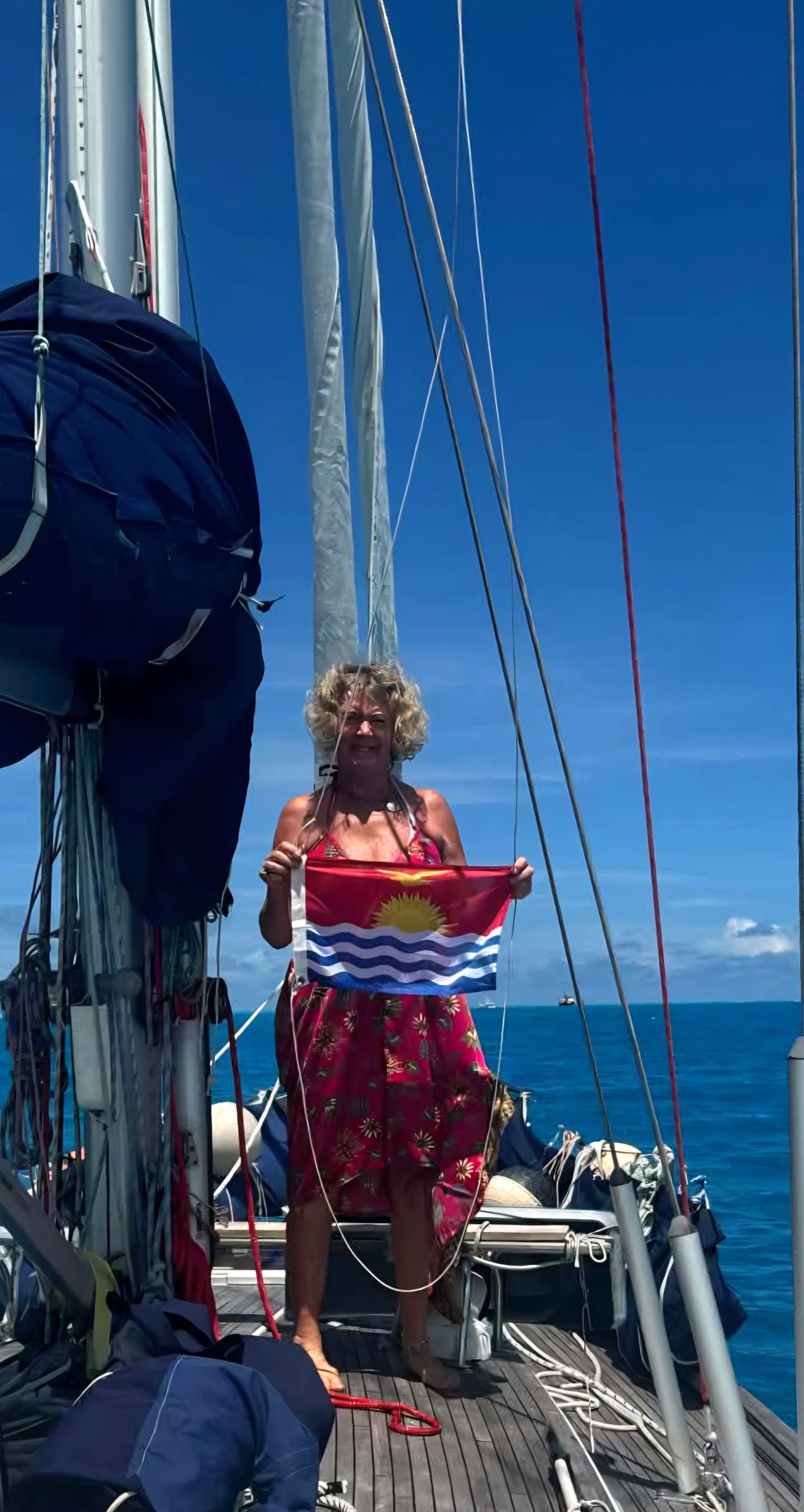
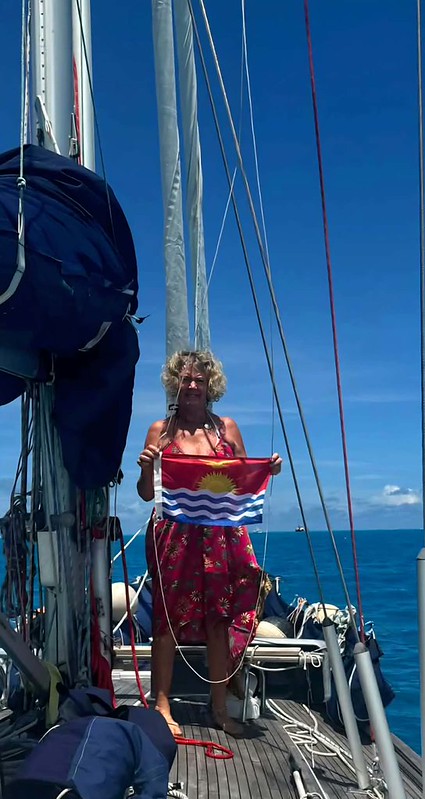
Slutligen har vi lämnat våra brev och fått våra pass stämplade. Nu kan vi hissa Kiribatis vackra flagga på båten. En av världens vackraste flaggor enligt mig.
Finally, we have dropped off our letters and had our passports stamped. Now we can hoist Kiribati’s beautiful flag on the boat, in my opinion, one of the most beautiful flags in the world.

Fast först måste min telefon som fått pepsi cola över sig, lämnas in och göras ren. Jag väntar i kö en evighet o till sist är det min tur. Reparatörer värmer upp skalet där det är limmat o använder sedan något vasst för att skära bort baksidan. Därefter börjar jag få panik…Han skruvar upp den ena lilla skruven efter den andra och plockar sedan loss en massa delar. Allt lägger han planlöst på sitt arbetsbord där det redan ligger små delar från många andra telefoner. Jag blir så orolig så jag måste gå därifrån. Tänk om han inte får ihop den på rätt sätt igen. Kan inte överleva utan den här telefonen då allt viktigt finns där. Samt foton, blogg, bank, bank-id, starlink, navigationsappar mm mm mm. Även fotokopia på allt viktigt rörande resan, min båt Kailani, min bil, och lagret. Efter mycket svettande från min sida skruvar han ihop allt och ger telefonen till mig. Nu verkar det gå att ladda den igen. Hoppas bara inget frätt sönder inuti av min pepsi cola. Han visste vad han gjorde ❤️
But first, my phone, which had Pepsi-Cola spilled all over it, needed to be handed in for cleaning. I waited in line for an eternity, and finally, it was my turn. The technicians heated up the casing where it’s glued together, then used a sharp tool to cut away the back panel. That’s when I started to panic… He unscrewed one tiny screw after another and proceeded to remove a whole bunch of components. He just tossed everything haphazardly onto his workbench, which was already covered in small parts from many other phones. I got so anxious that I had to walk away. What if he couldn’t put it back together correctly? I can’t survive without this phone, everything important is on it: photos, my blog, banking, BankID, Starlink, navigation apps, and so much more. It even contains digital copies of all the important documents regarding my trip, my boat Kailani, my car, and my storage unit. After I’d spent a good while sweating bullets, he finished reassembling everything and handed the phone back to me. It seems I can charge it again now. I just hope the Pepsi-Cola didn’t corrode anything inside. He really knew what he was doing! ❤️


Nu är vi klara här o skall ta oss tillbaka till Betio o jollen. Vi har tur! En buss kommer o de väntar på oss när vi kommer springande. Tillbaka vid jollen o här är det fullt av liv och rörelse. Alla hejar och vinkar och är glada. Trots att Tarawa är extremt skräpigt. Både på land och i vattnet. Inget ställe man vill tillbringa mycket tid. Vid dinge-landningen finns det skjul där de förvarar copra i säckar. Det stinker något fruktansvärt så det hjälper inte ens att hålla för näsan.
We’re finished here now and are heading back to Betio and the dinghy. We’re in luck! A bus pulls up, and they wait for us as we come running over. Back at the dinghy landing, there’s a real buzz of activity. Everyone is greeting us, waving, and smiling, even though Tarawa is incredibly littered, both on land and in the water. It’s not the kind of place where you’d want to spend much time. Near the dinghy landing, there are sheds where they store sacks of copra. The stench is absolutely awful, holding your nose doesn’t even help.
Det är längesedan vi lämnade Fiji och vi behöver fylla på vårat grönsaksförråd. Eftersom det är över 30° varmt, snarare 35°, konstant och bland den högsta luftfuktigheten i världen håller inte grönsakerna länge. Vi lägger en del i kylen men utrymmet är starkt begränsat. Så vi går till de två supermarkets som finns. Väldigt enkla o framförallt torrvaror, städartiklar och konserver finns att tillgå. Går fram till grönsakerna. Gul lök och vitlök – that’s it. Inga morötter, vitkål eller ens potatis. Det är bara att acceptera. Konserver har vi ombord och det är konserver det får bli framöver. Tänk vad bortskämda vi är i Sverige. Där skriver vi handlelistor o köper från den plus lite extra som vi blir sugna på när vi ser det. Här får vi se vad som finns o köpa därefter. Mejerivaror finns över huvud taget inte. Egentligen inget som behöver förvaras i kyl. Kött, fisk mm finns knappt heller. Hittade ett paket frusna korvar och frusna kycklingvingar. O det får vi kalla lyx. Vi har torra bönor o linser ombord. Samt torkad sojafärs. Kommer ganska långt på det faktiskt. Mätta blir vi i alla fall.
It has been a long time since we left Fiji, and we need to restock our supply of vegetables. Since the temperature is constantly above 30°C, more like 35°C, combined with some of the highest humidity levels in the world, vegetables don’t last long. We keep some in the fridge, but space is extremely limited. So, we head to the two local supermarkets. They are very basic, offering mostly dry goods, cleaning supplies, and canned items. I walk over to the produce section: yellow onions and garlic, that’s it. No carrots, white cabbage, or even potatoes. We just have to accept it. We have canned goods on board, and that’s what we’ll be eating for the foreseeable future. It’s amazing how spoiled we are in Sweden; back home, we make shopping lists and buy exactly what’s on them, plus a few extra things that catch our eye. Here, we have to see what’s available and shop accordingly. There are no dairy products whatsoever, in fact, nothing that requires refrigeration. Meat, fish, and similar items are also nearly impossible to find. I did manage to find a pack of frozen sausages and some frozen chicken wings, we’ll call that a luxury! We have dried beans and lentils on board, as well as dried soy mince. You can actually get quite far with those. At the very least, we won’t go hungry.


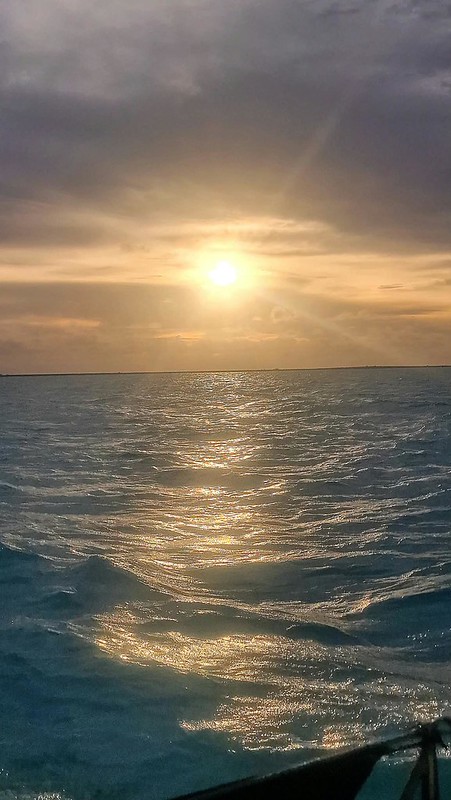
Vår ankringsplats är definitivt inte optimalt. Det blåser 20 – 30 knop och ibland mer, bortemot 40 knop. Rakt in mot oss utan egentligt skydd. Visst det finns en sandbank men Vilja rullar oavbrutet och väldigt mycket. Vi måste ha allt sjöstuvat ombord och att röra sig eller ännu värre, laga mat, är en prövning. Det är ovanliga västliga vindar, vilket det varit länge. I nästan tio dagar nu. Det var ju de som gjorde seglingen hit så svår. Normalt är det alltid no-vindar här men eftersom det är super El Niño år har det förutspåtts västliga vindar I denna del av Stilla Havet. Och det stämmer verkligen. Många seglare har valt andra vägar just pga detta. Vi hoppas hitta väderfönster både upp till Marshall öarna o sedan västerut genom hela Micronesia federation. Hoppas det går bra.
Our anchorage is definitely not ideal. The wind is blowing at 20–30 knots, sometimes even more, approaching 40 knots, hitting us head-on with no real protection. Sure, there is a sandbank, but Vilja is rolling incessantly and quite violently. Everything on board has to be stowed securely for sea; just moving around, let alone trying to cook, s a real ordeal. We’ve been experiencing unusual westerly winds for a long time now, nearly ten days. In fact, these are the same winds that made our passage here so difficult. Normally, the winds here are always from the north, but because this is a ”super El Niño” year, westerly winds were predicted for this part of the Pacific, and that has certainly proven true. Many other sailors have chosen different routes precisely because of this. We’re hoping to find weather windows to head up to the Marshall Islands and then continue westward through the Federated States of Micronesia. Fingers crossed that it all goes well.


Vi måste acceptera att vågorna går höga och försöka ta oss för det första ombord i jollen, och sedan in i hamnbassängen. Det kommer bli två turer idag eftersom vi behöver fylla på diesel först och sedan handla lite mat. Tufft. Vågorna går så höga så jollen stundtals hamnar ovanpå vår badbrygga. O att hålla in jollen med linan är totalt omöjligt. Efter mycket om o men o stor chansning är vi båda i jollen för att åka in o köpa, först diesel. Sex jerrycans ca 20 liter var. Vi släpar dem till bensinstationen. Där är de jättehjälpsamma. Fyller först upp och bär sedan till platsen där vi har vår jolle. Och sedan…lokalbefolkningen sluter upp mandant o bär våra jerrycans samt väskor med mat och ägg till vår jolle. De är bara sååååå underbara ❤️
We have to accept that the waves are running high and try to get, first, into the dinghy, and then into the harbor basin. We’ll need to make two trips today, as we have to top up our diesel and then pick up some groceries. It’s tough going. The waves are so high that, at times, the dinghy ends up right on top of our swim platform—and holding it steady with the painter is completely impossible. After a lot of struggle and a major gamble, we both manage to get into the dinghy to head ashore—first for diesel. Six jerrycans, holding about 20 liters each. We haul them over to the gas station, where the staff are incredibly helpful; they fill them up and then carry them all the way back to where our dinghy is moored. And then… the locals pitch in, carrying our jerrycans as well as bags of groceries and eggs down to the dinghy. They are just so, so wonderful! ❤️


Stoooor tvättardag idag. Efter nio dygn till havs o sedan fem dygn med väldigt mycket blåst har tvätthögen växt. Inte bara personliga kläder. Utan tre uppsättningar sängkläder, handdukar och badlakan och en massa tvätt från köket. Dessutom fem dynor vi sitter på i sittbrunnen som stinker svett, är indränkta i saltvatten och börjar bli mögliga. Vi har en tvättmaskin ombord men använder den inte. Tyvärr. Den är placerad på ett så dumt ställe så vi måste riva upp hela akterkojen med madrasser och allt. Jag sover i akterkojen så det skulle vara jobbigt för mig. O vi har dessutom en massa saker förvarade där. Spänner fungerar bra för oss, fast vi vet ju att det inte blir lika rent. Extra Tvättmedel eller sköljmedel så luktar det gott i alla fall
A huuuuge laundry day today. After nine days at sea, followed by five days of very strong winds, the pile of laundry has grown. It’s not just personal clothing, there are three sets of bed linens, towels and bath sheets, and a whole lot of kitchen laundry. On top of that, there are the five cockpit cushions we sit on; they reek of sweat, are soaked in salt water, and are starting to get moldy. We do have a washing machine on board, but we don’t use it, unfortunately. It’s located in such an inconvenient spot that we’d have to tear apart the entire aft berth, mattresses and all. Since I sleep in the aft berth, that would be a real hassle for me. Plus, we have a lot of other gear stored in there. Using a bucket works well enough for us, even though we know things don’t get quite as clean. But with some extra detergent or fabric softener, at least it ends up smelling nice!

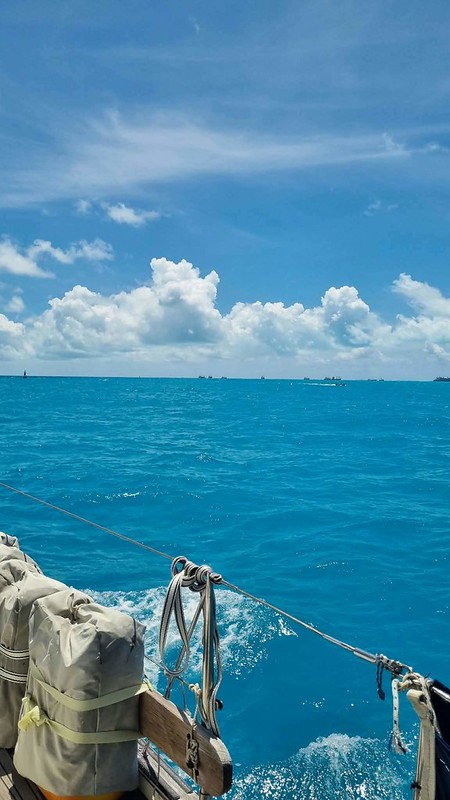

Oj vad det har blåst inatt! Vi har flyttat oss lite längre in i lagunen för att slippa de stora container- och fiskefartygen samt att få renare vatten. Men det är precis lika öppet mot västliga vindar. Och inatt har det blåst! Ordentligt! Saker har rullat runt inne I båten och det har ryckt fruktansvärt i vårt stackars ankarspel. Förhoppningsvis har snubben hållit så ankarspelet inte ryckts sönder. Vindarna har varit över fyrtio knop stundtals. Alltså upp mot stormvindar – Tänk senaste stormen i Sverige Boeli – vi bor i vår båt mitt i stormen utan något skydd. Som tur är har vi fäste för ankaret. Om det släpper o vi driver, hamnar vi fort på reven o då är det kört med Vilja – vårt hem.
Wow, has it been windy tonight! We’ve moved a bit further into the lagoon to get away from the large container ships and fishing vessels, and also to find cleaner water. But it’s just as exposed to westerly winds. And has it blown tonight! Really hard! Things have been rolling around inside the boat, and our poor windlass has been taking a terrible pounding. Hopefully, the snubber has held, preventing the windlass from being torn apart. At times, the winds have exceeded forty knots, approaching storm force. Think of the recent storm in Sweden, Boeli, well, we’re living in our boat right in the middle of a storm, with absolutely no shelter. Luckily, the anchor is holding. If it lets go and we start to drift, we’ll end up on the reefs in no time, and that would be the end of Vilja, our home.


Nu är det morgon o vi är trötta. Det har inte blivit mycket sömn inatt. Helt naturligt under en så jobbig natt. Idag blir det mest avkoppling och att röja lite i båten. Om vågorna lägger sig skall vi över med dingen till Screensaver som kom hit igår. Vi lämnade Tuvalu samtidigt men de gjorde flera stopp på vägen pga de svåra förhållandena medans vi körde på o kom hit tre dagar tidigare
It’s morning now, and we’re tired. We didn’t get much sleep last night, which is only to be expected, given how difficult the night was. Today will mostly be about relaxing and tidying up the boat a bit. If the waves die down, we’ll take the dinghy over to Screensaver, which arrived yesterday. We left Tuvalu at the same time, but they made several stops along the way due to the rough conditions, whereas we kept going and arrived three days earlier.
Det blir en jättetrevlig kväll med goda samtal och delade erfarenheter. En flaska gott vin, nypoppade popcorn och solnedgång gör det ännu bättre.
It’s going to be a really lovely evening, with good conversation and shared experiences. A bottle of nice wine, freshly popped popcorn, and the sunset make it even better.

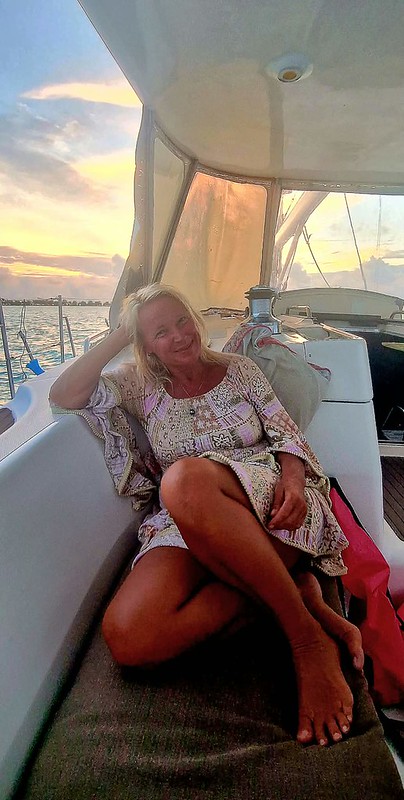


Nu är vi äntligen på väg mot äventyr! Att få tillstånd att åka till outher atolls togs sin tid. Vi har bett om fjorton dagar på Abaiang och fjorton dagar på Butaritari. Det slutade tyvärr med sju dagar på varje. Men det är absolut bättre än inget. Vi är på väg mot Butaritari nu – lämnade runt lunch och har ca tjugofyra timmar dit. Vi valde den ön först eftersom den är längst bort och därmed svårare att åka tillbaka ifrån. Vi måste tillbaka till Tarawa för att checka ut innan vi kan bege oss mot nästa land – Marshall öarna. Men det är några veckor tills dess
We are finally off on an adventure! Getting permission to visit the outer atolls took some time. We had requested fourteen days on Abaiang and fourteen days on Butaritari, but in the end, we were granted seven days for each. Still, that’s definitely better than nothing! We are currently en route to Butaritari, we departed around lunchtime, and it’s about a twenty-four-hour journey. We chose that island first because it’s the furthest away, making it more difficult to return from later. We’ll need to head back to Tarawa to clear out before we can set off for our next destination, the Marshall Islands, but that’s still a few weeks away.

Seglingen, eller snarare motorseglingen, är behaglig. Vi tar oss framåt och sjön är relativt platt. Självklart dörjer vi under sådana förhållanden. Jag längtar mig sjuk efter en tonfisk eller Mahi Mahi. Man kan tro att vi lever på fisk men det är bristvara för oss. Det nappar tyvärr ytters sällan. Och, speciellt Jan, är livrädd för fiskar som kan bära på nervsjukdomen, Ciguterra. Små fiskar äter alger och plankton innanför revet. Sedan äter lite större fiskar de små och slutligen t ex Barracuda äter de större. Sjukdomen följer med och den går inte att koka, frysa, grilla eller steka bort tyvärr. Sjukdomen medför illamående, diarréer, kramper, muskelsvaghet och allt möjligt annat otrevligt. Går tyvärr nästan inte att bli frisk från heller tyvärr. Så enda fiskar vi äter är typ tonfisk, mahimahi – som vi fångat själva( eller en stor marlin fångad långt ute till havs som vi en gång haft tur att hitta)
The sailing, or rather, motor-sailing, is pleasant. We’re making good progress, and the sea is relatively calm. Naturally, we spend time trolling under conditions like these. I’m absolutely dying to catch a tuna or a mahi-mahi. You might assume we live on fish, but it’s actually a rarity for us; unfortunately, we hardly ever get a bite. Furthermore, Jan in particular is terrified of fish that might carry the neurological illness known as ciguatera. Small fish feed on algae and plankton inside the reef; these are then eaten by slightly larger fish, which in turn are consumed by predators like barracuda. The toxin persists, unfortunately, it cannot be eliminated by boiling, freezing, grilling, or frying. The illness causes nausea, diarrhea, cramps, muscle weakness, and a whole host of other unpleasant symptoms. Sadly, it is also nearly impossible to recover from. Consequently, the only fish we eat are species like tuna or mahi-mahi, provided we’ve caught them ourselves (or, on one lucky occasion, a large marlin caught far out at sea).
Jan tycker vi skall ta in linan. Men jag vill vänta. Ofta får vi napp i skymningen. O plötsligt! Rassel rassel rassel! Vi har napp! Först tror vi att den släppte för linan är så lös. Men, jo den är där. O den kämpar. Vi ser strax att det är en tonfisk. Mitt drömbyte! Jan drar in o jag står färdig med håven, där den snällt landar. En gulfenad aldeles ljuvlig tonfisk. Det vattnar sig redan i munnen på mig när jag tänker på en lätthalstrad tonfisk. Fast först en massa jobb. Rensa bort huvud och stjärtfena. Sedan vill jag ha fyra fina filéer som kan tillagas till perfektion. Jan vill ha dem mer stekta. Så allt är varmt. Jag vill ha en härlig tunn stekyta runtom – inget mer.
Jan thinks we should reel in the line, but I want to wait. We often get a bite at dusk. And then, suddenly, rattle, rattle, rattle! We’ve got a bite! At first, we think it’s gotten away because the line goes so slack, but no, it’s still there, and it’s putting up a fight. We soon realize it’s a tuna, my dream catch! Jan reels it in while I stand ready with the landing net, and in it goes, nice and smooth. It’s a yellowfin tuna, absolutely gorgeous. My mouth starts watering just thinking about some lightly seared tuna. But first, there’s plenty of work to do: removing the head and tail. I want four beautiful fillets that can be cooked to perfection, though Jan prefers his a bit more well-done. I’m aiming for a lovely, thin, seared crust all the way around, and nothing more.


Vi tar våra nattskift som vanligt. Inget spännande med vare sig nattliga sqalls eller kinesiska fiskebåtar. Så runt lunch ankommer vi Butaritari. Längtar!
We are carrying on with our night shifts as usual. Nothing exciting to report, no squalls in the night, nor any Chinese fishing boats. So, around lunchtime, we will arrive at Butaritari. Cant’t wait!


