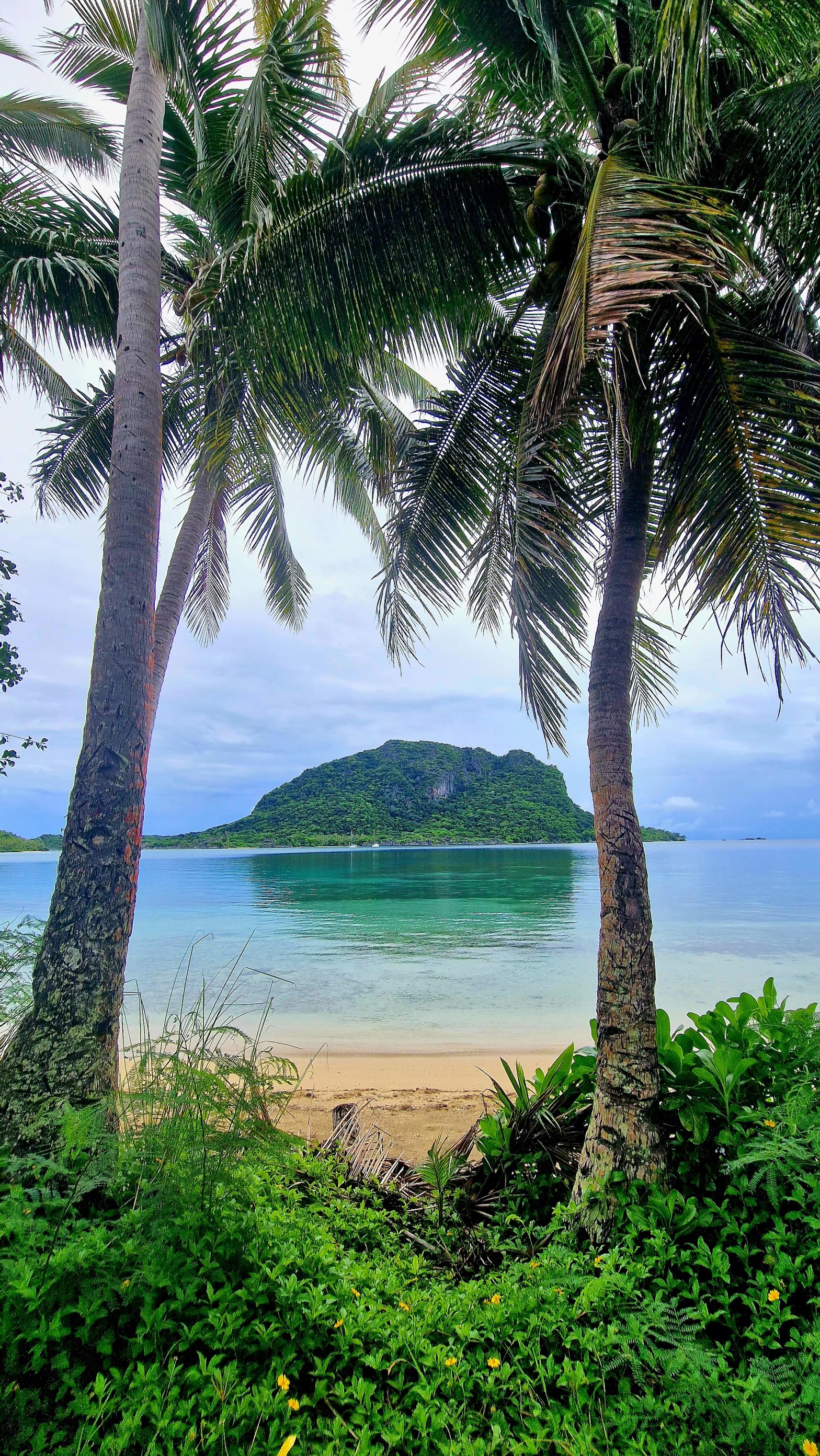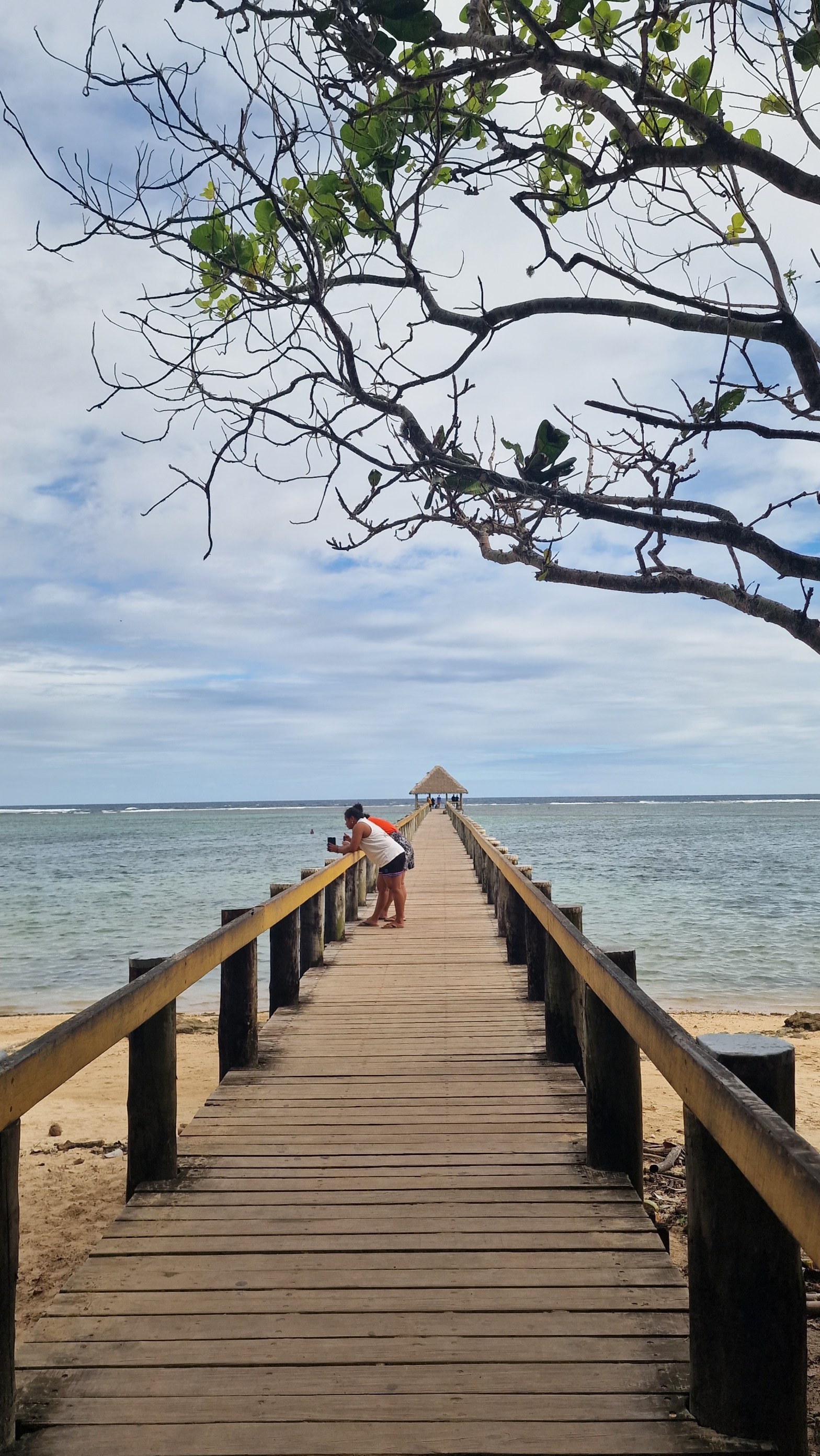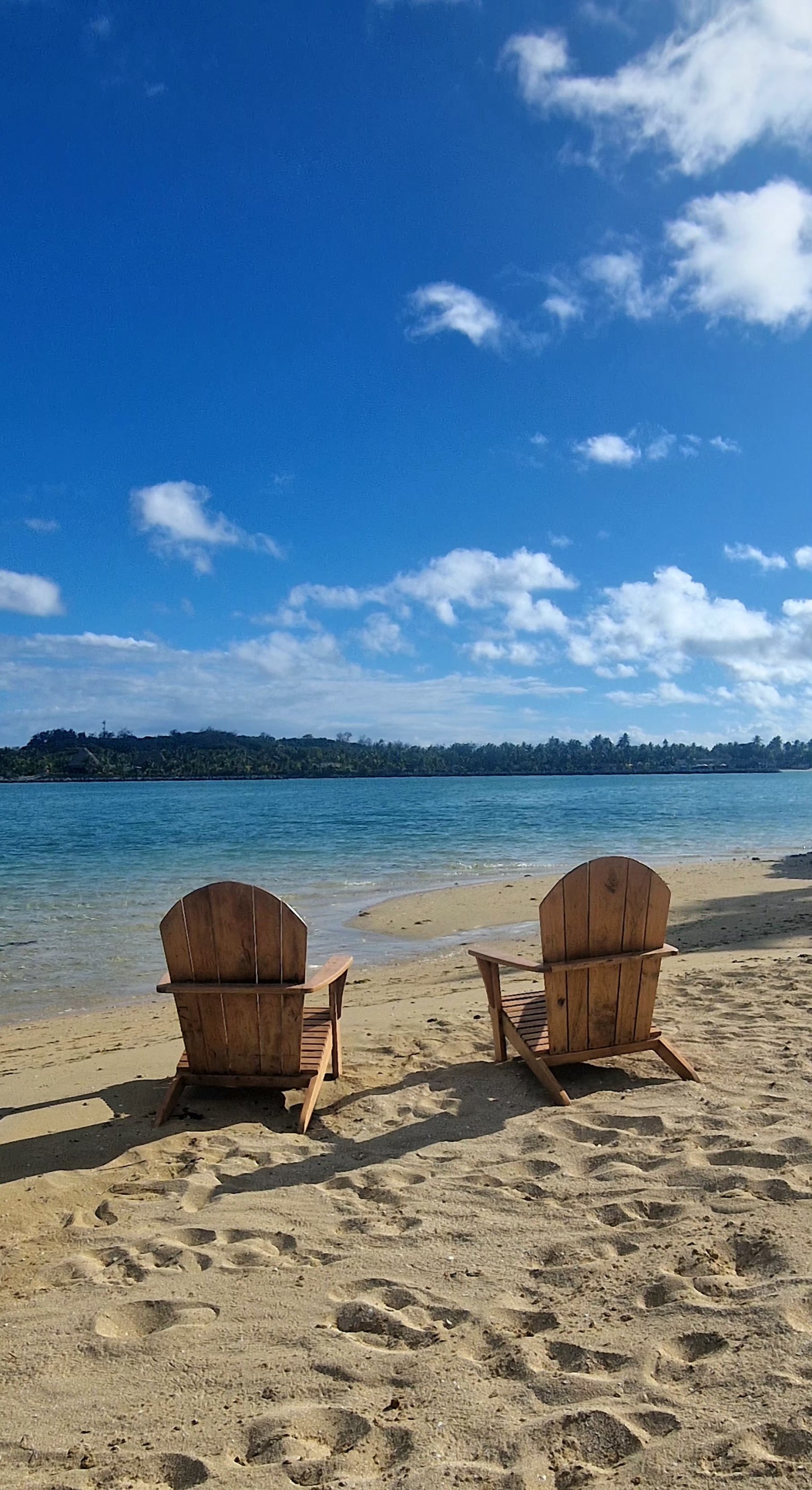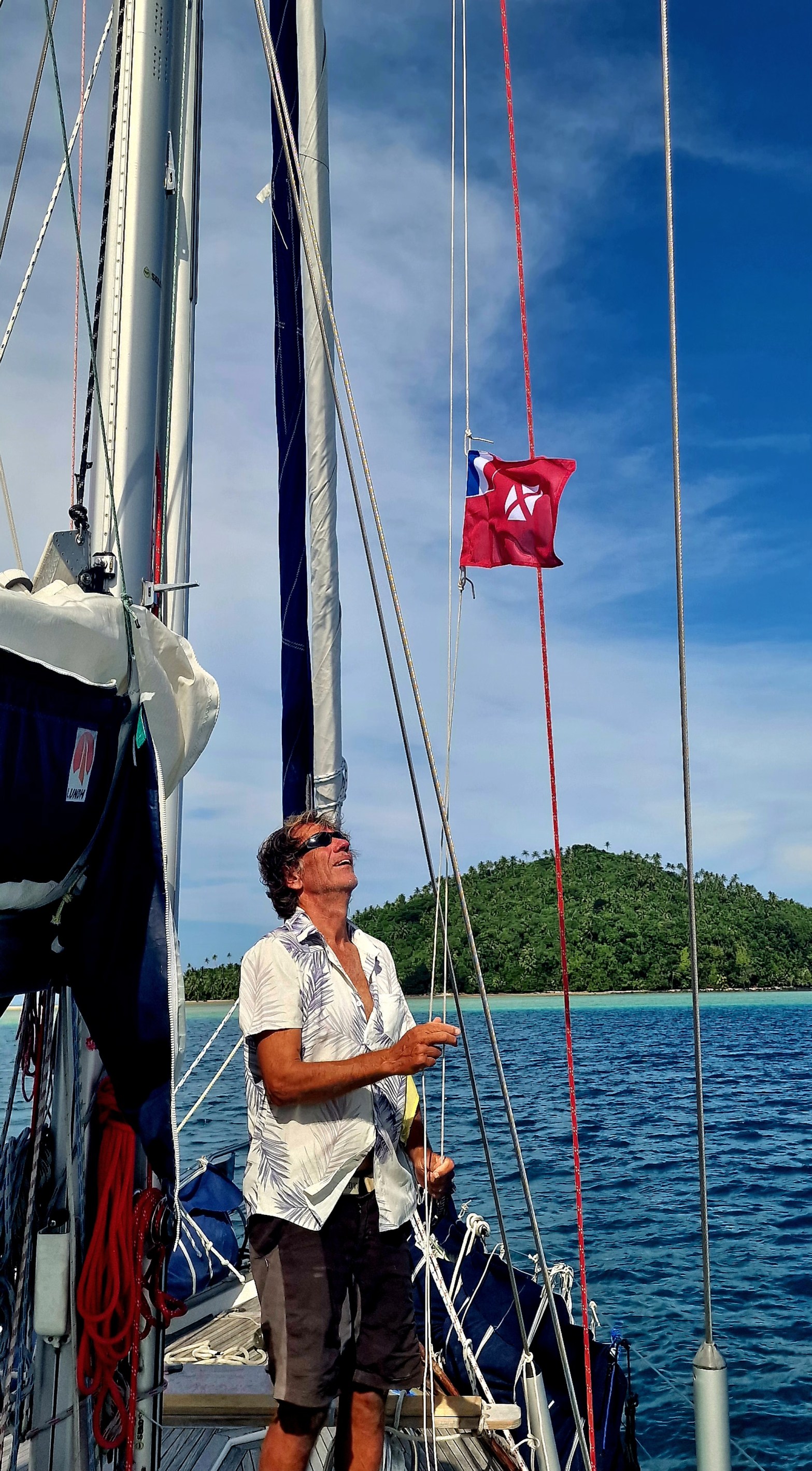
Butaritari – an island we fell in love with

Inloppet är lugnt o stilla. Vi väntade oss eventuellt några stående vågor då vi är mitt emellan lågvatten och högvatten. Men det är knappt ens strömt. Kanske det beror på att hela inloppet är brett men med 2 kanaler att ta sig in igenom där det är djupare vatten. Tidvattnet kan röra sig mer fritt. Vi är ju vana vid Tuamotus i Franska Polynesien där vattnet verkligen kokade i varje inlopp och den fem meter höga våg vi plöjde oss rakt igenom. Går att läsa om tidigare i bloggen, från 5 juli 2025.

The pass is calm and still. We were expecting some standing waves since we are right between low and high tide, yet there is barely even a current. Perhaps it’s because the entire entrance is wide with two deeper channels to enter through, allowing the tide to move more freely. We are used to the Tuamotus in French Polynesia, where the water truly boiled in every pass—and that five-meter-high wave we plowed straight through, which you can read about earlier in the blog from July 5, 2025.

Butaritari
Really calm in the entrance

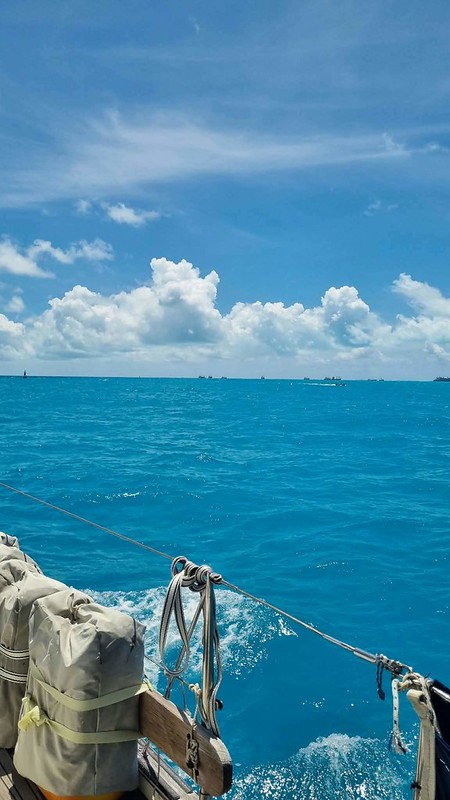
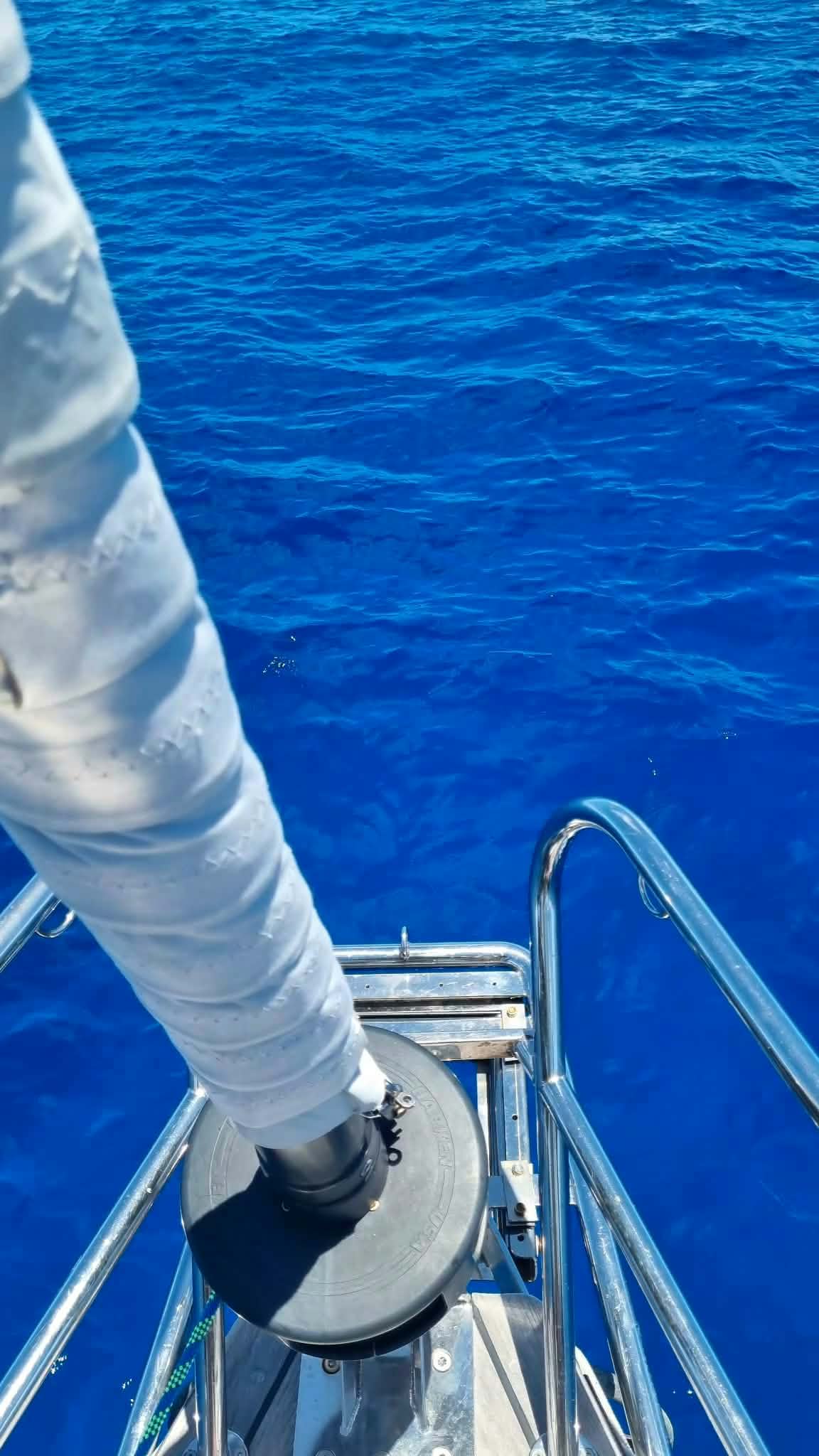
Vattnet är sååååå klart! På 35 meters djup ser jag stenar o koraller på botten och färgen på havet är magiskt blått. Frestar verkligen till att bada. Jag står vakt framme på däck så vi går klara för eventuella boomies eller grund. Pratar gör vi genom våra intercom. Det är verkligen så lätt. Inga missförstånd med tecken och jag kan göra snabba kommentarer som uppfattas omedelbart.

The water is sooooo clear! At a depth of 35 meters, I can see rocks and corals on the bottom, and the color of the ocean is a magical blue. It’s really tempting to go for a swim. I’m standing watch on the foredeck so we steer clear of any bommies or shallows. We’re talking through our intercoms. It really is so easy. No misunderstandings with hand signals, and I can make quick comments that are understood immediately!

Butaritari
The water is sooo clear and blue
Butaritari
Me in front watching with the intercom on my head

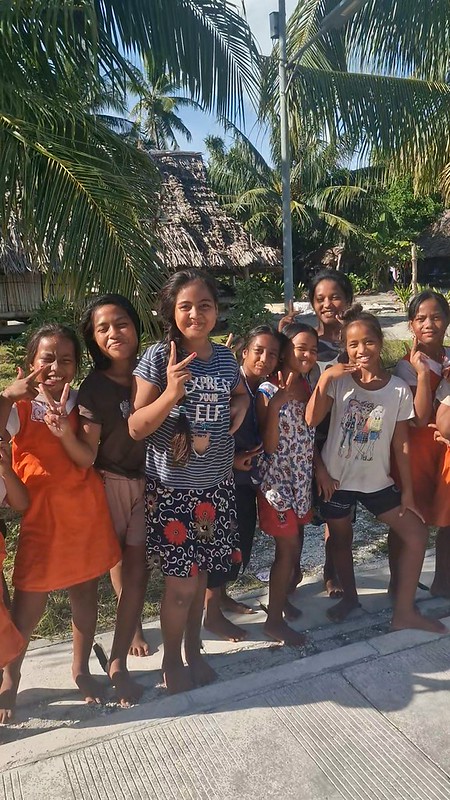
Vi tar oss till största byn i Butaritari. Vi har ju med ett ”letter of permission ” och behöver visa det för polisen. Hittar ett ställe att förtöja jollen o går in till byn. Vi slås av hur otroligt enkelt de lever här. Alla bostäder har endast en uppbyggnad av trädstammar ca 1 meter över marken, ungefär som ett fyrkantigt bord. Inga väggar o ett enkelt tak av blad. Som de flätat samman. Inne i ”byn” möts vi av otaliga hejarop och hälsningar, tjutande och jubel. Inte många båtar kommer hit så vi blir en attraktion. Skolorna har precis slutat så det är skolbarn i alla åldrar o i uniform överallt. De vinkar och visar sin glädje. Att träffa barn runt om i världen är alltid lika underbart! Samma spontanitet, samma glädje o samma oblygsel. Älskar det!

We head to the largest village in Butaritari. Since we have a ”letter of permission” with us, we need to show it to the police. We find a place to tie up the dinghy and walk into the village. We are struck by how incredibly simply they live here. All the dwellings consist only of a structure made of tree trunks about 1 meter above the ground, sort of like a square table. No walls, and a simple roof made of leaves that they’ve woven together. Inside the ”village,” we are met with countless cheers and greetings, whooping, and celebration. Not many boats come here, so we become an attraction. The schools have just let out, so there are schoolchildren of all ages in uniform everywhere. They wave and show their joy. Meeting children around the world is always just as wonderful! The same spontaneity, the same joy, and the same lack of shyness. Love it!

20261022_154358
The street in Butaritari
20261022_154446
Children walking on the street

Vi hittar poliskvinnan o lämnar vårt brev. Hon visar oss till byns enda restaurang där vi tar var vår cola o pratar lite med lokalbefolkningen.  En man, från ”counsil Office” säger att de tar en ankringsavgift på 20 eller 50 AUD pr natt, han var osäker på vilken summa 🫣 Jag ifrågasätter o säger att Tarawa tar 30 AUD för en månad. Tror han hoppades tjäna pengar men vi hörde inget mer om det. 😄

We find the policewoman and hand over our letter. She shows us to the village’s only restaurant, where we each grab a Coke and chat a bit with the locals. A man from the ”council office” says they charge an anchoring fee of 20 or 50 AUD per night; he wasn’t sure which amount 🫣 I question it and say that Tarawa charges 30 AUD for a month. I think he was hoping to make some money, but we didn’t hear anything more about it. 😄

20261022_152618
Taking a coke at the restaurant
20261022_154248
The only shop we saw in the village
20261022_154923(1)
And a cute little baby pig
20261022_154625
Street view
20261027_151730
Welcoming children
20261022_180340
Sunset out on our anchorage

Efter en natt på svaj utanför Butaritari Village är vi nu på väg inåt i atollen. Vi skall allra längst in där vi har tänkt lägga till vid en liten ö, Natata. Det är inte så många boomies här inne så vi behöver inte ha en utkik i fören hela vägen utan endast när vi känner att det behövs som t ex när vi kommer passera nära grundare områden. Vattnet är inte fullt lika klart och genomträngande blått som i inloppet igår men fortfarande helt otroligt vackert. Nu närmar vi oss och vi hittar en smal djupare tunga där vi kan komma lite närmare stranden. Ofta är det grunt en bra bit ut så vi brukar ligga långt från stranden. Så blir det även här. Skillnaden mellan hög och lågvatten är ca 1,5 – 2 meter så det måste vi också ta hänsyn till.

After a night at anchor outside Butaritari Village, we are now heading further into the atoll. We are going all the way to the innermost part, where we plan to drop anchor by a small island, Natata. There aren’t as many bommies in here, so we don’t need to keep a lookout on the bow the entire way, only when we feel it’s necessary, such as when passing close to shallower areas. The water isn’t quite as clear and piercingly blue as it was in the inlet yesterday, but it’s still completely unbelievably beautiful. Now we are getting closer, and we find a narrow, deeper channel where we can get a little nearer to the shore. Often it stays shallow a good distance out, so we usually anchor far from the beach. That turns out to be the case here as well. The difference between high and low tide is about 1.5 – 2 meters, so we have to take that into account too.

Butaritari
Almost at Natata island
Butaritari
The island looks so beautiful
Butaritari
Beach with palm trees
Butaritari
A lot of corals on the way in
20261024_103741
Taking a walk
20261024_104138
We parked the dinghy far out because of low tide coming
20261024_105609
Found some beautiful shells
Butaritari
And a small palm
Butaritari
Love the palm trees
20261024_105602
A closer look at the shells

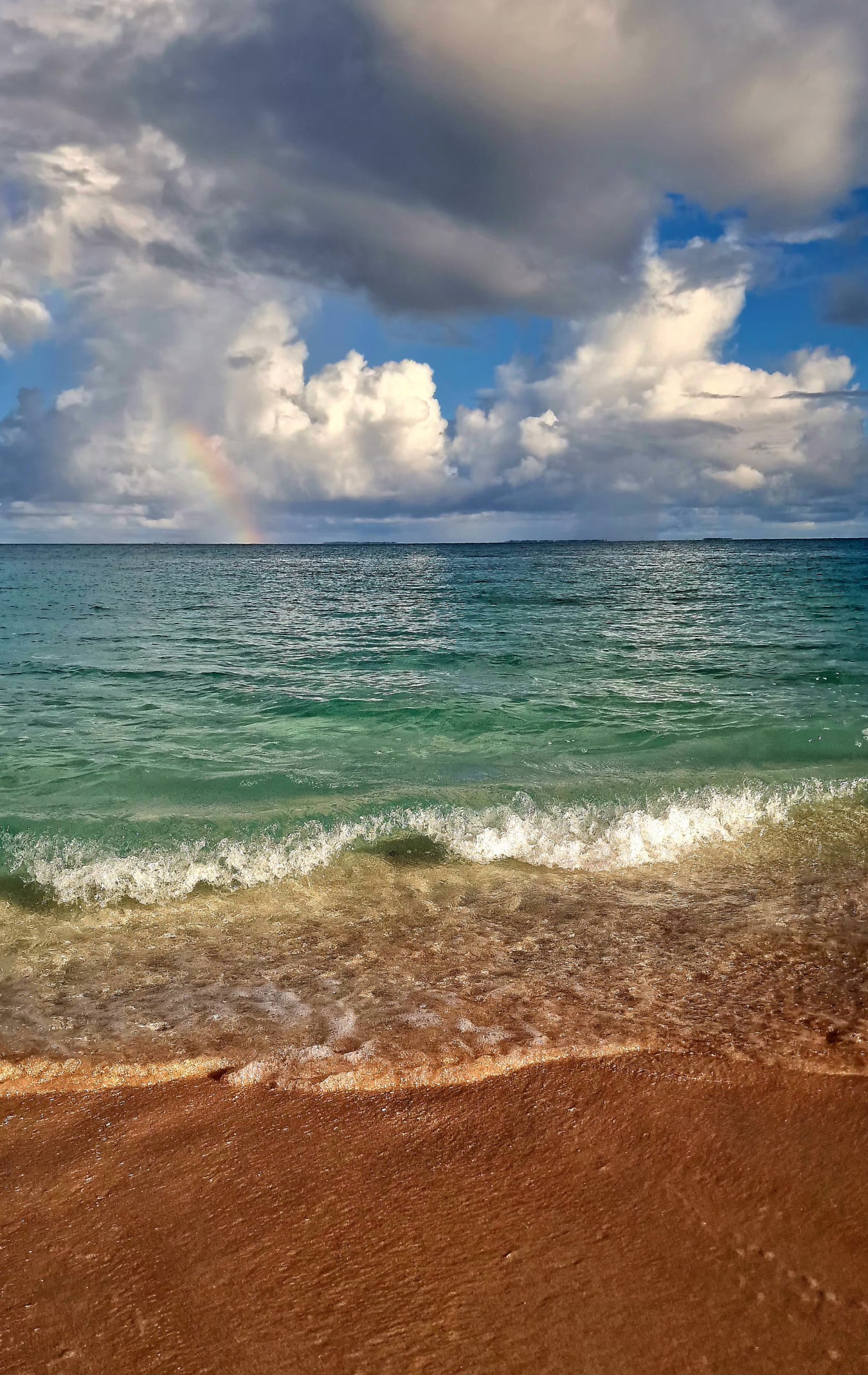
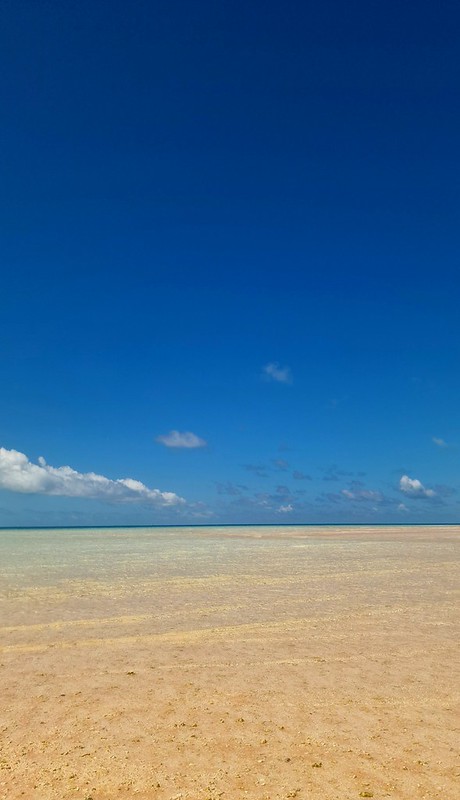
Jollen sjösatte vi i går. Så nu är vi nyfikna på att komma in till ännu en paradisstrand. Och oj, så vackert här är. En kritvit sandstrand utan några fotspår och med en massa vackra snäckor. Palmer hänger ner över stranden och en tunga av sand går ut i vattnet som vi kan promenera på. Känns som  Robinson Cruice-liv. Här skall vi stanna några dagar och bara vara och njuta av ensamhet, avskildhet och en massa badande. Vi är så tacksamma över vårat fantastiska liv.

We launched the dinghy yesterday. So now we’re eager to get ashore to yet another paradise beach. And oh, how beautiful it is here. A chalk-white sandy beach with no footprints and lots of beautiful seashells. Palm trees hang down over the beach, and a sandbar stretches out into the water that we can walk on. Feels like a Robinson Crusoe life. We are going to stay here for a few days and just be, enjoying the solitude, seclusion, and lots of swimming. We are so grateful for our fantastic life.

Butaritari
Palm trees hanging over the beach
20261024_104816
Low tide and blue sky
Butaritari
More walking in untouched sand
Butaritari
We get welcomed by the locals

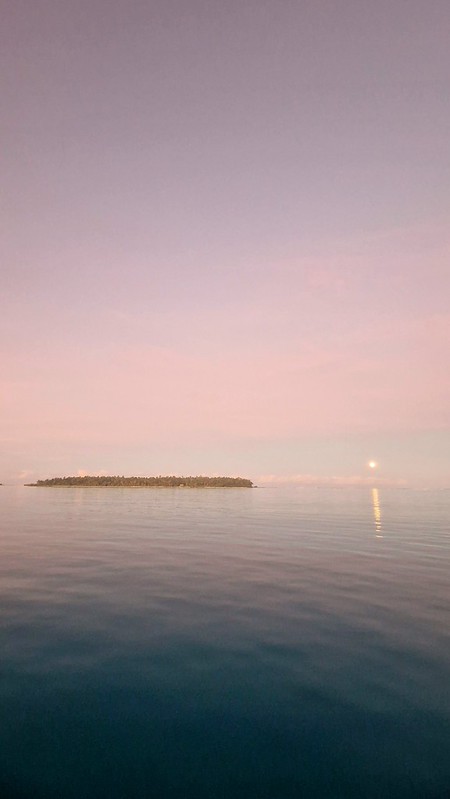
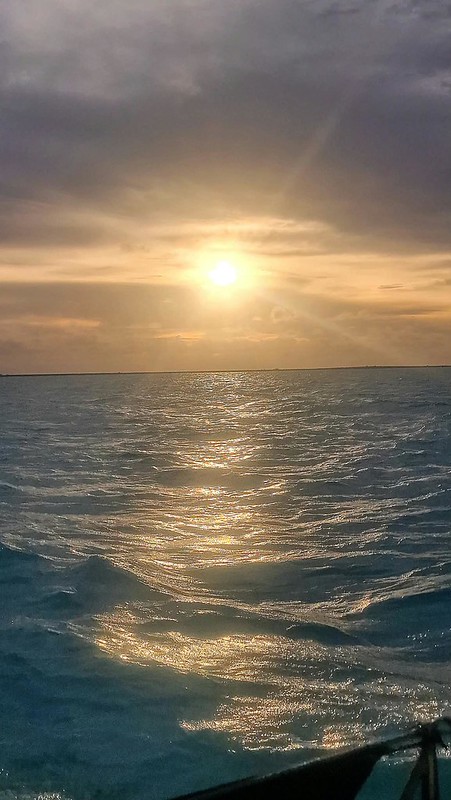
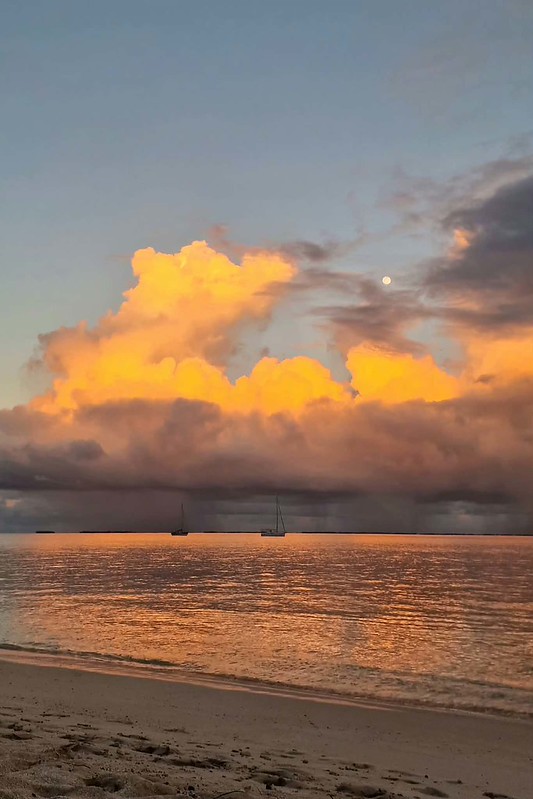
Vi har en grill ombord som vi tyvärr sällan använder, men idag blir det grillade lammkotletter och lyxig potatisgratäng med både ost och grädde i. En flaska rödvin på delning till det gör middagen till en sällsynt lyx. Allt är råvaror vi köpte i Fiji innan vi lämnade därifrån för nästan två månader sedan. Och helt omöjligt att få tag på någon stans efter det. Vi njuter verkligen av god mat o dryck och en fantastisk solnedgång. Samtidigt stiger fullmånen upp på andra sidan av båten. Färgerna blir magiskt vackra och glittrar i allsköns färger. Det är sällan vi ser en så vacker måne. Ibland känns livet lite extra bra.

We have a grill on board that we unfortunately rarely use, but today we’re having grilled lamb chops and a luxurious potato gratin with both cheese and cream in it. A bottle of red wine to share alongside it makes dinner a rare luxury. Everything is made from ingredients we bought in Fiji before we left there almost two months ago, and completely impossible to get hold of anywhere since then. We are truly enjoying good food and drink and a fantastic sunset. At the same time, the full moon is rising on the other side of the boat. The colors become magically beautiful and sparkle in all sorts of hues. It’s rare that we see such a beautiful moon. Sometimes life feels a little extra good.

20261024_171951
Potato gratin in the omnia
20261024_172150
Red wine in the glas
20261024_172150(1)
Lamb and potato gratin
20261026_182447
The sun sets
20261026_182603
As always with beautiful colors
20261026_182456
The view from Vilja
20261026_182627
And the full moon rises
20261026_182403
A small island in front
20261026_182352
It’s absolutely stunning

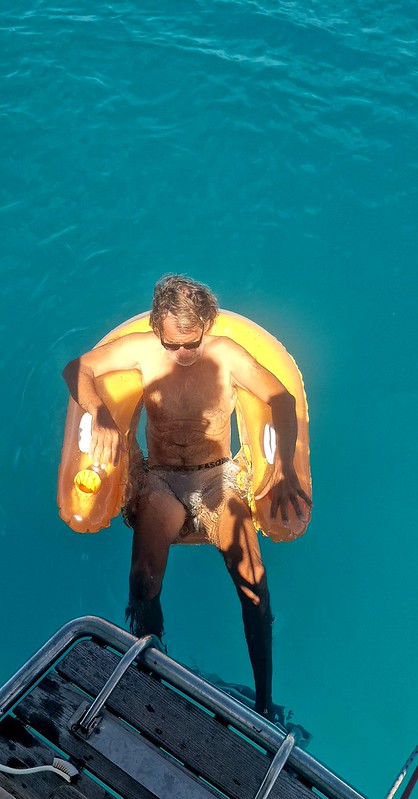
Här på ankringen stannar vi några dagar och rår om varandra och oss själva. Det blir många och långa bad i havet som är ljuvligt varmt men ändå lite svalkande. Vi har några flyt badleksaker som det är underbart att ligga i i vattnet och verkligen njuta av avkopplingen. Eftersom vi är ensamma kan vi kosta på oss att även bada nakna. En så härlig frihetskänsla. Speciellt jag njuter av att vara enda båten. Som jag har längtat efter det! Det är lite av målet, åtminstone för mig, med hela seglingen nu när vi tar en såpass ovanlig rutt, norr om ekvatorn. När de flesta segelbåtar valt att ta skydd i Nya Zeeland under cyklonsäsongen som startar söder om ekvatorn nu. Jag vill till platser långt bort från allfartsväg. Både till helt folktomma men också få möta en del av kulturen som fortfarande är relativt skyddad från omvärldens påtryckningar. Och här på Butaritari får jag verkligen det jag önskar. Det som jag sett på som en dröm i flera år nu.

Here at the anchorage, we stay for a few days, taking care of each other and ourselves. There are many long swims in the ocean, which is delightfully warm yet still a bit refreshing. We have some inflatable pool floats that are wonderful to lounge in on the water and really enjoy the relaxation. Since we’re alone, we can even treat ourselves to skinny-dipping. Such a wonderful feeling of freedom. I especially enjoy being the only boat here. How I have longed for this! It’s sort of the whole point, at least for me, of this entire sailing trip now that we’re taking such an unusual route, north of the equator, while most sailboats have chosen to take shelter in New Zealand during the cyclone season starting south of the equator now. I want to go to places far off the beaten path—both completely uninhabited spots, and also to experience a part of the culture that is still relatively sheltered from outside pressures. And here in Butaritari, I am truly getting what I wished for—something I’ve viewed as a dream for several years now.
20261026_143257
Jan relaxing in the water

Efter tre dagar på denna fantastiska plats förflyttar vi oss bort till närmsta lilla byn, Kuma village. Det är en kort sträcka med båten. Nu skall det bli fint att komma in till byn och möta lokalbefolkningen. Byn är utsträckt med enkla bosättningar på var sida om den väldigt fina och troligen nya vägen. Trafiken är däremot i stort sett obefintlig.  En och annan motorcykel åker förbi oss. En kvinna stannar vid oss och frågar på lite knacklig engelska om vi vill besöka en av byns ”pre-schools” i morgon. Självklart vill vi det! Det skall bli jättekul! Det visar sig att hon är lärare där och att de har lek och undervisning mellan 09 och 11 på vardagarna. Både hon och vi känner oss upprymda för att få ta del av lite av livet i byn.

After three days in this fantastic place, we move over to the nearest small village, Kuma Village. It’s a short distance by boat. Now it will be lovely to go into the village and meet the locals. The village is spread out with simple settlements on either side of the very nice and probably new road. Traffic, however, is practically nonexistent. The occasional motorcycle passes by us. A woman stops beside us and asks in slightly broken English if we would like to visit one of the village’s ”pre-schools” tomorrow. Of course we want to! That will be so much fun! It turns out she is a teacher there and that they have play and lessons between 9 and 11 on weekdays. Both she and we feel excited to get to take part in a bit of village life.

20261027_181451
We get welcomed in our anchorage outside Kuma village
20261027_150923
A colorful canoe

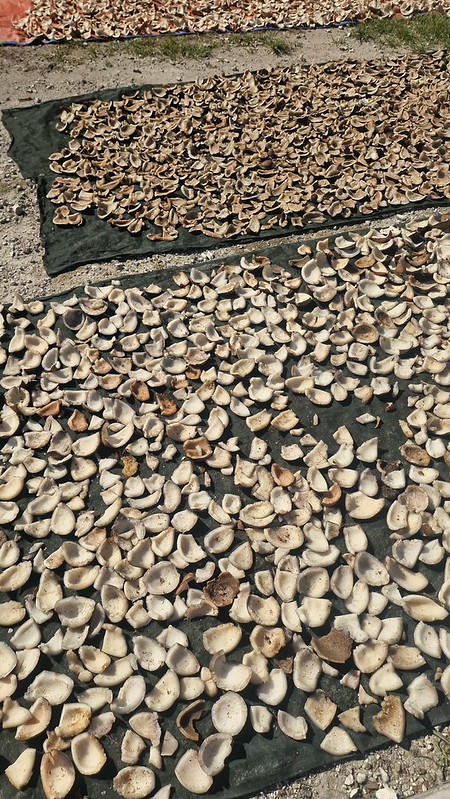
Vi promenerar vidare och förundras över hur stillsamt och fridfullt allt är. Många barn kommer fram till oss och frågar lite blygt ”what’s your name? How old are you? Where do you come from?” De vuxna är lite mer återhållsamma men hejar lite försiktigt. Här finns inga affärer förutom små ”hål i väggen” och bensinstationerna är en inhägnad rund tank med bensin och/eller diesel. Vet inte hur de betalar eller om de har någon låda de stoppar pengarna i. Utanför nästan varje klunga av hus ligger det kokoskött till tork. Det är troligen deras enda inkomstkälla.

We walk further and marvel at how quiet and peaceful everything is. Many children come up to us and shyly ask, ”What’s your name? How old are you? Where do you come from?” The adults are a bit more reserved, though they greet us gently. There are no stores here except for small ”holes in the wall,” and the gas stations are just a fenced-in round tank with petrol and/or diesel. I don’t know how they pay, or if they have a box where they put the money. Outside almost every cluster of houses, coconut meat is laid out to dry. It is likely their only source of income.

20261027_151055
Taking a first walk
20261027_151354
Traditional houses and leaves getting dried for new roof
20261022_154923
Coconuts getting dried
20261027_152200
Another stage of the drying for copra
20261022_154923(2)
The only hole-in-the-wall shop we found
20261027_160109
And the petrolstation
20261027_152120
They collect and keep the rainwater high up so it comes out when they open the tap in the bottom. And many houses have one or two solarpanels
20261027_161026
Here they burn garbage under the ground
20261027_154933
We continue the walk and here the road ends
20261027_155518
Children in the primary school which is a boarding school
20261027_155035
Toilets in the school
20261027_161718
Students coming back from another school. Shouting and laughing and waving to us
20261027_161900
A beautiful canou that a man later on will go out fishing with
20261027_180554
Another sunset – stunning as always

Vi har turen att träffa på en underbar familj. En kvinna, Beretire, kommer ut till oss på vägen och börjar prata. Vi blir inbjudna i hennes familjs bostad. Det visar sig att både hon och hennes man har arbetat i Australien i nio månader var, på olika farmer. Och där har de lärt sig engelska. Det blir en två dagars fantastisk vänskap och oj så mycket vi lär oss av henne. Om livet i Kiribati och om livet på en isolerad ö som Butaritari.

We are lucky enough to meet a wonderful family. A woman, Beretire, comes out to us on the road and starts talking. We are invited into her family’s home. It turns out that both she and her husband have worked in Australia for nine months each, on different farms, and that is where they learned English. It turns into a two-day fantastic friendship, and oh, how much we learn from her—about life in Kiribati and about life on an isolated island like Butaritari.

20261027_153258
Beretire prepares coconuts for us
20261027_153800
Jan with Beretire and some of the children in the big family
20261027_153905
Different stages of coconuts getting dried to make copra
20261028_110211
The youngest cute little girl is tired and sleeping

Intressant för oss är att eftersom de levt i Australien så har de också upplevt ”vårt sätt” att leva. Hon berättade inte så mycket om det. Men när de flyttade tillbaka till Kiribati för några år sedan bosatte de sig först i Tarawa, huvudstaden med ca 70000 invånare. De bodde där i några år och jobbade för att få mat på bordet och ha tak över huvudet. Ett liv de absolut inte trivdes med. Visst de hade t o m väggar på sitt hus och en del materialistisk saker. Men hela livet gick enbart ut på stress för att tjäna pengar så de hade råd till mat och lite extra. Efter några år i denna verklighet beslöt de sig därför för att flytta tillbaka till Butaritari och byn Kuma i stället. Där de båda är uppvuxna och har sin familj. Familjen är väldigt viktig i Kiribati. De bor tillsammans med syskonen och deras familjer. Delar på kök och dusch/wc och lever som en jättestor familj.

What is interesting to us is that since they lived in Australia, they have also experienced ”our way” of living. She didn’t talk much about that. However, when they moved back to Kiribati a few years ago, they first settled in Tarawa, the capital with about 70,000 inhabitants. They lived there for a few years, working to put food on the table and keep a roof over their heads—a life they did not enjoy at all. Sure, they even had walls on their house and some materialistic things, but their entire life was solely about stress to earn money so they could afford food and a little extra. After a few years in this reality, they therefore decided to move back to Butaritari and the village of Kuma instead, where they both grew up and have their family. Family is very important in Kiribati. They live together with their siblings and their families, sharing a kitchen and shower/WC, and living like one giant family.

20261028_105738
Most of the family’s now have mobile phones and here the elderly generation is playing on onem

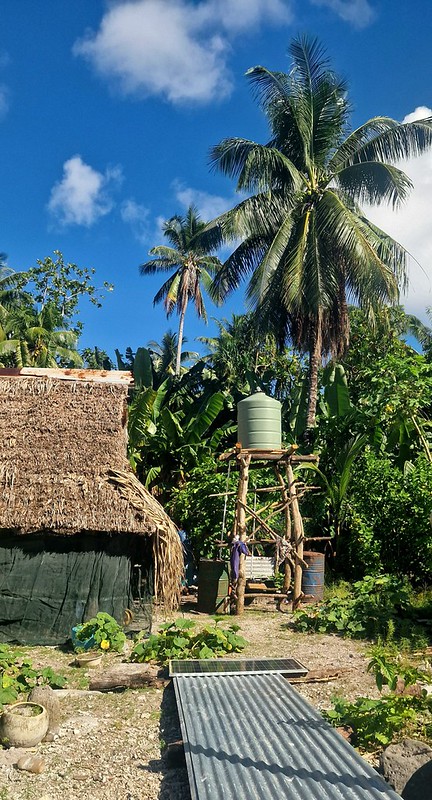
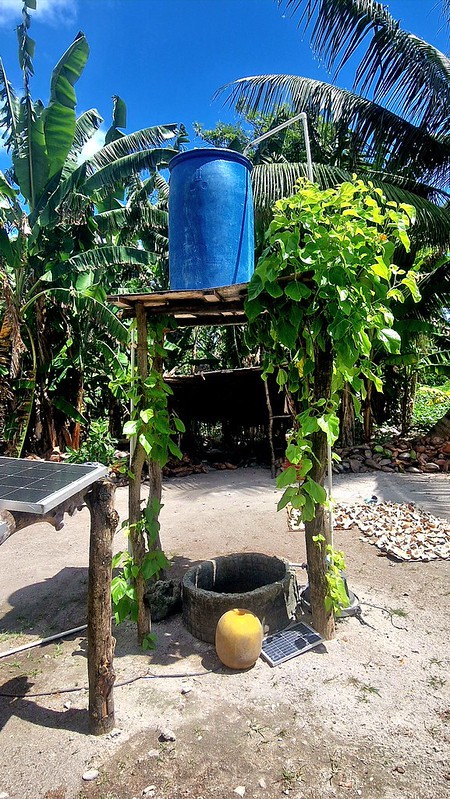
När de kom tillbaka till Kuma hade hennes föräldrar gått bort och platsen där de bott var nedfallen och marken täckt av högt gräs och annan växtlighet. De startade med att rensa bort all beväxtning och jobbade tillsammans med hela stora släkten för att bygga upp familjernas gemensamma hem igen. Sedan byggdes husen upp. De är uppbyggda av en trädstam i varje hörna med en platta ca en meter upp från marken däremellan. Taket är högt i mitten och sluttar ganska brant ner. Där taket tar slut finns inga väggar utan det är öppet åt alla fyra håll. Varje familj i den stora familjen har varsitt sådant här traditionellt hus som används som vardagsrum på dagen och sovrum på natten. Då lyfts bastmattor ner som de sover på. Förutom dessa hus finns ett gemensamt utomhus kök där denna familj faktiskt har rinnande vatten, de flesta familjer har inte det. Det finns också en kokplatta med ett enkelt tak över. De eldar med kokosnötter och har elden igång hela tiden. Vattnet de har är regnvatten som samlas i en stor cistern placerad högt upp. Dricksvattnet kokar de och förvarar i en särskild behållare. De lever verkligen ”ur hand i mun”. Maten de äter är den fisk, skaldjur, havsmaskar och annat de får tag på i vattnet. Till det har de brödfrukt, kokosnötter, bananer och en och annan frukt de plockar från träden. Beretire berättar att hon absolut föredrar detta liv framför både Australien och framförallt framför Tarawa. Det är bekymmersfritt och saknar stress. Både ekonomiskt och materiellt. Hela familjen umgås och arbetar tillsammans. Barn finns det gott om och de hjälps åt med att ta hand om dem. Förskola finns ju också och skolan börjar de när de är ca fem år gamla. Barnen i byn är jättemånga, varje familj har många barn. De går runt i byn barfota, badar, leker och hjälper till med att passa varandra och med en del göromål i hemmet.

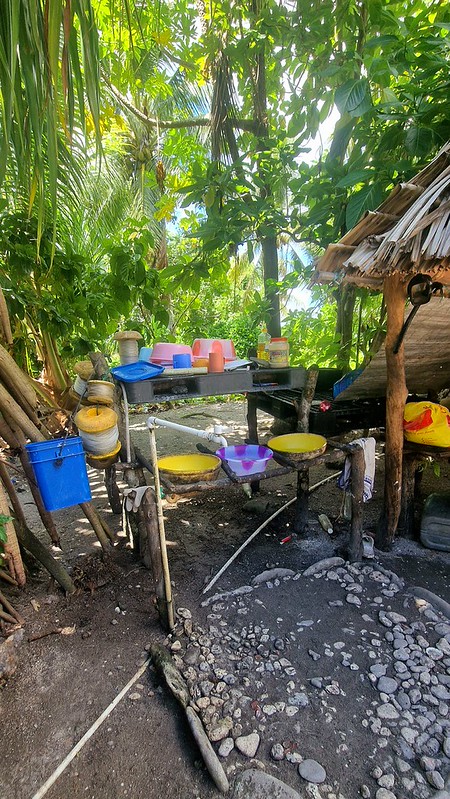
When they came back to Kuma, her parents had passed away, and the place where they had lived was run-down and the ground covered in tall grass and other vegetation. They started by clearing away all the overgrowth and worked together with the entire extended family to rebuild their shared family home. Then the houses were built. They are constructed with a tree trunk in each corner and a raised platform about a meter off the ground between them. The roof is high in the middle and slopes down quite steeply. Where the roof ends, there are no walls; instead, it is open on all four sides. Each family within the extended family has their own traditional house like this, which is used as a living room during the day and a bedroom at night, when woven mats are taken down for them to sleep on. Besides these houses, there is a shared outdoor kitchen where this family actually has running water—most families don’t have that. There is also a cooking area with a simple roof over it. They burn coconut husks and shells for fuel and keep the fire going all the time. The water they use is rainwater collected in a large cistern placed high up. They boil their drinking water and store it in a separate container. They truly live ”hand to mouth.” The food they eat is whatever fish, shellfish, sea worms, and other things they can catch in the water. Alongside that, they have breadfruit, coconuts, bananas, and the occasional fruit they pick from the trees. Beretire tells us that she definitely prefers this life over both Australia and, above all, Tarawa. It is carefree and free of stress, both financially and materially. The whole family spends time together and works together. There are plenty of children, and everyone helps out with taking care of them. There is a preschool, too, and they start school when they are about five years old. There are so many children in the village; every family has many kids. They walk around the village barefoot, swim, play, and help out by looking after one another and doing various chores around the home.
20261028_105503
The water tank. They have an electrical pump that helps them with running water
20261028_105454
And two solarpanels that gives them electricity
20261028_105440
The battery gets charged from the solarpanels
20261028_105037
The coockingarea
Butaritari
Kitchen with running water
Butaritari
Jan trying the living room / bedroom

Livet kretsar kring familjen och havet och även kyrkan. Allt de äter kommer från havet både när det är lågvatten då de plockar djur som lever i sanden, humrar och musslor och högvatten då de är ute och fiskar. De ger sig oftast ut sent på eftermiddagen när det inte är fullt lika varmt. Humrar plockar de vid lågvatten i mörkret på reven på utsidan atollen. Könsfördelningen är ganska klassisk. Kvinnorna tar mest hand om barnen och hemmet medan männen fiskar och bygger. Lite pengar får familjerna in genom kopran som de torkat av kokosnötterna. Det är ett aldrig sinande jobb att först ta bort det håriga skalet och sedan dela kokosnötterna för att plocka ut kokosen och lägga den till tork i olika stadier.

Life revolves around family, the ocean, and also the church. Everything they eat comes from the sea—both at low tide, when they gather creatures living in the sand, lobsters, and clams, and at high tide, when they are out fishing. They usually head out late in the afternoon when it isn’t quite as hot. They catch lobsters at low tide in the dark on the reefs outside the atoll. Gender roles are fairly traditional. The women mostly take care of the children and the home, while the men fish and build. The families bring in a little money from the copra they make by drying coconuts. It is a never-ending job to first remove the fibrous husk and then split the coconuts to scoop out the meat and lay it out to dry in different stages.

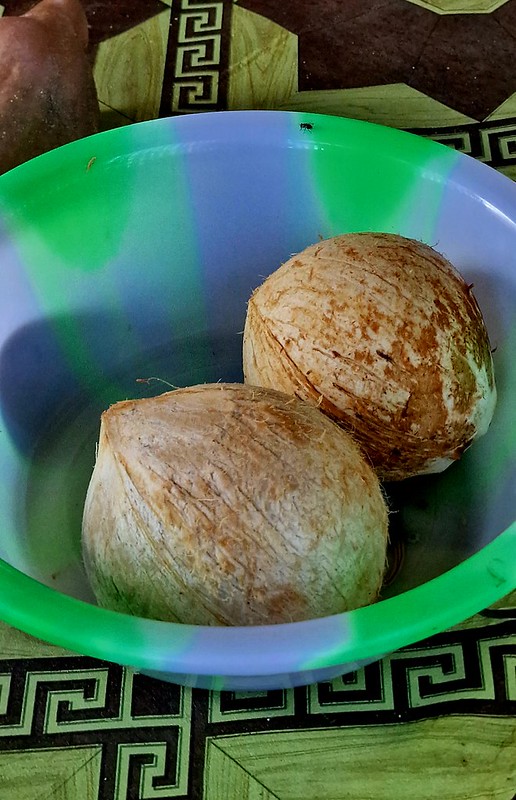
Kokosnötter är också något de älskar att dricka och att bjuda på. Vi blir bjudna vart vi än går och de smakar otroligt friskt, sött och gott i värmen.

Coconuts are also something they love to drink and offer to guests. We are offered them wherever we go, and they taste incredibly fresh, sweet, and delicious in the heat.

20261022_154426
A man climbing up the palm to get coconuts
20261022_154433
A closer look at his technique
20261028_095623
Coconuts prepared for us

Vi tar oss in till byn i långvattnet för att hälsa på i förskolan. Förväntansfulla och nyfikna. Med oss har vi ballonger, såpbubblor och kritor.  Några av barnen är lite blyga när vi kommer dit, ett av dem börjar t o m gråta men de flesta springer fram med nyfikenhet och öppna sinnen. Vi får sätta oss ner och titta på när de först ritar. Sedan kommer en lek där barnen leker något liknande ”sisten ut”. Fröken ger ordrar, delvis på engelska, och de följer genom att lägga sig ner, föra handen till pannan mm mm. Efter ytterligare lekar är det dags för lite undervisning. Hela alfabetet gås igenom och de ropar i kör hur de skall uttalas. Mest speciellt för oss är när ett och ett av barnen skall presentera sig. Alla sitter ner framför oss och när de reser sig väljer de en sång som fröken sjunger. Alla väljer samma sång visar det sig. Pojkarna efterapar vuxna mäns dans medan flickorna efterapar vuxna kvinnors. Vilket betyder, för flickorna, att de putar ut med rumpan och vickar på den. Ovanligt för oss men här i denna delen av världen, en urgammal tradition. Under tiden vi sitter där på golvet blir vi bjudna på läskande kokosnötter och barnen börjar blåsa upp sina ballonger och leker med dem.  När de två timmarna är över lämnar barnen och ropar glatt ”bye bye”. Fröknarna tackar för att vi kommit dit och ger oss en stor hel stock med bananer. Vilken underbar upplevelse att få vara med om detta!

We head into the village at low tide to visit the preschool, full of anticipation and curiosity. We bring along balloons, soap bubbles, and crayons. Some of the children are a bit shy when we arrive—one of them even starts crying—but most run up to us with curiosity and open minds. We get to sit down and watch as they start off drawing. Next comes a game where the kids play something similar to ”Simon Says” (elimination style). The teacher gives commands, partly in English, and they follow along by lying down, bringing a hand to their forehead, and so on. After a few more games, it’s time for some lessons. They go through the entire alphabet, shouting out in chorus how each letter is pronounced. Most special for us is when each child has to introduce themselves one by one. Everyone sits down in front of us, and when they stand up, they pick a song for the teacher to sing. It turns out they all choose the same song. The boys imitate the dance of adult men, while the girls imitate the dance of adult women—which, for the girls, means sticking their bottoms out and wiggling them. Unusual to us, but here in this part of the world, it’s an age-old tradition. While we sit there on the floor, we are offered refreshing coconuts, and the children start blowing up their balloons and playing with them. When the two hours are up, the children leave, cheerfully shouting ”bye bye.” The teachers thank us for coming and give us a huge, whole stalk of bananas. What a wonderful experience to be a part of!

20261028_103759
Here is the pre-school we visited
PhotoCollageMaker_2026103013648142
A child playing with a balloon
PhotoCollageMaker_2026103012912171
The presentation of each child
20261028_100904
20261028_101201
Children playing again
20261028_094212
The teachers cute daughter
20261028_100715
Preparing the sweet coconuts
20261028_101905
We got a lot of bananas when we left
20261028_104214
Leaving the pre school after some lovely hours
20261028_103941
A woman with her absolutely loving bag in front of us

Efteråt går vi tillbaka till vår familj, där vi också parkerat jollen. Det är fortfarande extremt lågvatten så den ligger helt torrlagd några hundra meter utifrån land. Det är omöjligt för oss att ta oss tillbaka till Vilja nu. Beretire vill visa oss familjens ”sommarställe” och hon ordnar så två män kör oss dit på sina motorcyklar. Det är en kort resa dit och vi kommer fram till utsidan av atollen med öppet hav utanför. Här har de fem traditionella små hus och en kokplats, diskplats och några mattor ute på marken där de brukar dricka kava. Hon berättar om alla fester och sammankomster de brukar ha här. Födelsedagar, jul – som är en väldigt stor högtid och fest i Kiribati, bröllop och sist men definitivt inte minst så firar de sina döttrars första menstruation. Och det firar de i flera dagar. Det betyder att flickan går över till att vara kvinna och det är, för dem, en stor och viktig händelse. Beretire säger att hennes familj och flera andra i byn vill ställa till med en stor fest för oss. Men de behöver några dagar för att kunna iordningställa festen. Fiska, hämta humrar, plocka frukt och grönt och tillaga allt. Det skall bli hög feststämning med god mat, skratt, musik och mycket dans. Vi blir verkligen berörda av detta och vill så gärna. Men tyvärr, vi har bara fått sju dagars tillstånd att vara på Butaritari så vi måste lämna nästa dag. Hon blir verkligen ledsen och det blir vi med. Tänk vilken upplevelse det hade varit att vara föremål för och delta i en stor fest på den mycket isolerade lilla atollen Butaritari mitt ute i Stilla havet. Något väldigt få är förunnade.

Afterward, we walk back to our host family, where we also parked the dinghy. It is still extremely low tide, so it is sitting completely high and dry a few hundred meters out from shore. It’s impossible for us to get back to Vilja right now. Beretire wants to show us the family’s ”summer place,” and she arranges for two men to drive us there on their motorcycles. It’s a short ride, and we arrive at the outer side of the atoll with the open ocean right in front of us. Here, they have five traditional little houses, a cooking area, a dishwashing area, and a few mats out on the ground where they usually drink kava. She tells us about all the parties and gatherings they usually hold here: birthdays, Christmas—which is a huge holiday and celebration in Kiribati—weddings, and last but definitely not least, they celebrate their daughters’ first menstruation, which they celebrate for several days. It signifies the girl transitioning into womanhood, and to them, it is a major and important event. Beretire says that her family and several others in the village want to throw a big party for us, though they need a few days to prepare it—going fishing, catching lobsters, picking fruits and vegetables, and cooking everything. It would be a lively celebration with good food, laughter, music, and lots of dancing. We are truly touched by this and want to so badly, but unfortunately, we were only granted a seven-day permit to stay in Butaritari, so we have to leave the next day. She is genuinely saddened by this, and so are we. Just imagine what an experience it would have been to be the guests of honor at, and take part in, a big celebration on the very isolated little atoll of Butaritari right in the middle of the Pacific Ocean—something very few people are privileged to experience.

20261028_105341
Really low tide and our dinghy is stranded far out
20261028_105320
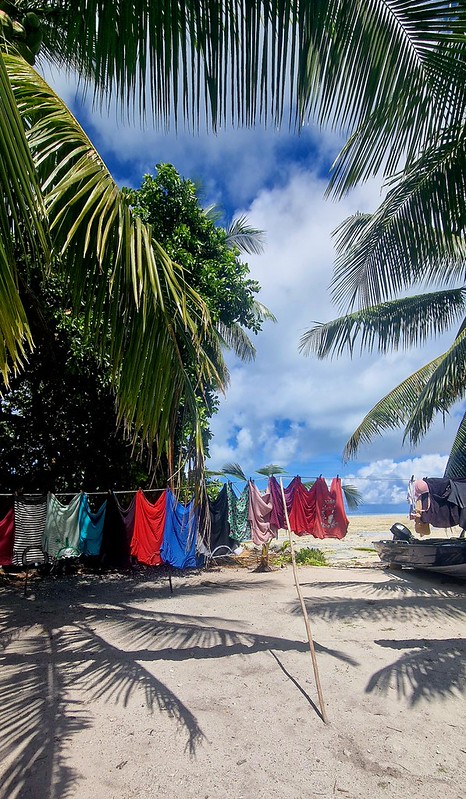
Laundry getting dry after cleaning
20261028_111657
The guys with their motorbikes that took us to the ”summerhouse” or picknick area
20261028_125012
One of the houses
20261028_124951
Coockingarea
Butaritari
The mat where to drink kava

När vi senare tar farväl av familjen blir det med tårar i ögonen. De vill att vi skall flytta dit och de skall hjälpa oss att bygga upp vår egna traditionella bostad. Med oss får vi en stor hel stock bananer och en jättestor papaya. De i sin tur får bönor och en del kvinnokläder av oss. Sådana här möten är helt underbara och vi känner oss så rika.

When we later say goodbye to the family, it is with tears in our eyes. They want us to move there and say they will help us build our own traditional home. They send us off with a huge, whole stalk of bananas and a giant papaya. In return, we give them beans and some women’s clothes. Encounters like these are truly wonderful, and we feel so rich.

20261028_170925
Beretire and her husband
20261028_171831
The bananas they gave us
20261028_171020
Saying goodbye to the children
20261028_172506
Soon reaching Vilja
20261028_172857
The second banana stock we got today
Butaritari
Jan is happy with a lot of bananas and a big pumpkin
Butaritari
A last sunset in Butaritari

I morgon lämnar vi ön som fastnat i vårt hjärta och kommer vara ännu ett minne för livet. Nästa mål är atollen Abaiang.

Tomorrow we leave the island that has captured our hearts and will remain yet another memory for a lifetime. Our next destination is Abaiang Atoll.
Arriving Kiribati

Port control, port control, port control  this is sailing vessel Vilja calling! Efter åtta timmar efter att vi drejat bi inatt når vi inloppet till South Tarawa atoll. Huvudstaden i Kiribati. Eller Kiribass som det heter på deras lokala språk Kiribatiska eller Gilbertesiska. Ti i slutet uttalas ss. Vi har verkligen kämpat för att komma hit. Det som skulle vara sju dygn blev nio tuffa dygn och mycket motvind. Det har ni redan läst om i förra inlägget

Port control, port control, port control, this is sailing vessel Vilja calling! Eight hours after heaving to last night, we are reaching the entrance to the South Tarawa atoll, the capital of Kiribati. Or ”Kiribass” as it is pronounced in the local language, Kiribati (also known as Gilbertese), the ”ti” at the end is pronounced ”ss.” We have truly fought to get here. What was supposed to be a seven-day voyage turned into nine tough days, with a great deal of headwinds. You have already read about that in the previous post.

Messenger_creation_68C7B8F3-F734-4530-8BC3-F294BF7C2A3F
Arrived and anchored in Kiribati

Incheckningen i Kiribati är lika tuff som den i Fiji. På ett annat sätt. I Fiji var det den totala kontrollen inne i båten som slutade med att båten var fullkomligt kaos efter att ha tömt ur alla förråd av mat samt att vi fick slänga över tio kilo mat. Här går just den kontrollen jätteenkelt. Men de behandlar oss som ett kommersiellt fartyg och vill ha dokument efter dokument efter dokument som vi skulle ha och dessutom redan ha skrivit ut o fyllt i. Vi har inte ens tillgång till sådana dokument. Kommersoella fartyg har alla dessa dokument men de går inte att googla upp för oss. Det är så frustrerande och tröttsamt. Vi känner oss helt utmattade och konfunderade. Hur gör vi?Vi är ju bara en liten fritidsbåt. Inte ett stott fraktfartyg. Efter mycket dividerande fram och tillbaka och flera handskrivna dokument blir vi till sist godkända. Fast vi behöver ta oss till immigration 3 km bort.

Checking in to Kiribati is just as tough as it was in Fiji, though in a different way. In Fiji, the issue was an exhaustive inspection of the boat’s interior, which left the vessel in complete chaos after every food locker had been emptied and we ended up having to discard over ten kilos of food. Here, that part of the process is a breeze. However, they treat us like a commercial vessel, demanding document after document, all of which we are supposedly expected to have, printed out and filled in advance. We don’t even have access to these kinds of forms; while commercial ships have them, they aren’t something we can simply find via a Google search. It is so frustrating and exhausting. We feel completely drained and bewildered. What are we supposed to do? We’re just a small pleasure craft, not a massive cargo ship! After a great deal of back-and-forth discussion and the creation of several handwritten documents, we are finally cleared, though we still need to make our way to the immigration office, 3 km away.

Messenger_creation_ACC4B06F-2E87-4450-A6BE-3CA42F2023FF
The Pilot boat arrives

Dessutom kräver de oss på 300 AUD i avgift till pilotbåten som körde ut alla till oss. Det var vi inte beredda på. Har ju hört att det är gratis att checka in i Kiribati. Frågan är hur de tänker. Vi får inte lov att gå iland och sköta incheckningen där. De vägrar att bli hämtade av vår jolle pga starka vindar. Och om de tar sig ut till oss skall vi betala motsvarande hutlösa 2100 svenska kronor. Vi godkände inte ens summan innan. Utan frågade vad det kostar och då kom de ombord utan att svara om priset. Får se hur det landar. Gissar att vi måste betala för att kunna checka ut.

On top of that, they are demanding a 300 AUD fee for the pilot boat that brought everyone out to us. We weren’t prepared for this. I’d heard that checking into Kiribati was free. I really don’t understand their reasoning. We aren’t allowed to go ashore to handle the check-in process there; they refuse to be picked up by our dinghy, citing strong winds. Yet, if they come out to us, we’re expected to pay an exorbitant sum, the equivalent of 2,100 Swedish kronor. We didn’t even agree to this amount beforehand; we asked what the cost would be, and they simply came aboard without giving an answer. We’ll see how it plays out, but I suspect we’ll have to pay if we ever want to be able to check out.

Efter att de varit ombord sjösätter vi jollen o kör in för att ta oss till immigration. Det är lite förvirrande var vi kan lägga jollen. Här finns många båtar, både större och mindre o precis där det är markerat som dingebrygga ligger en jättestor båt. Smutsigt är det också. En massa skräp som flyter runt överallt. Vi plöjer oss väg mellan skräp och tampar som är fästa i de stora båtarna och går iland någonstans på muren som omgärdar den lilla hamnbassängen. Här ligger även andra små båtar.

After they have been on board, we launch the dinghy and head in to reach immigration. It is a bit confusing as to where we can tie up the dinghy. There are many boats here, both large and small, and a huge vessel is moored right where the dinghy dock is marked. It’s also dirty; there is a lot of trash floating around everywhere. We make our way through the debris and lines attached to the larger boats, then go ashore somewhere along the wall that surrounds the small harbor basin. Other small boats are moored here as well.

Messenger_creation_28FB74E4-F820-480C-B041-8F7D43D3D92E
Here we put the dinghy
Messenger_creation_34797DC3-C107-4EBC-91F1-A6ECD334E22D
In the small harbour
Messenger_creation_2B2DC9D6-59F7-453E-81FF-6F82813A173E
Unfortunately it’s a lot of rubbas in the water (and on land)
Messenger_creation_4942E8DA-A178-4241-A7B0-7E5EF86396DD
Messenger_creation_C219EF79-E5DE-40CA-9784-821F454291E5
Colorful and practical boats

Vi fäster jollen o går mot huvudvägen. Vi måste hitta en busshållplats för att ta oss till immigration innan de stänger. Vi skall inte bara lämna in våra papper för båten och få stämplar. Vi har också med oss brev för att söka om tillstånd att segla till yttre atoller. Vi har valt Abaiang och Butaritari som båda ligger norr om Tarawa.

We secure the dinghy and head toward the main road. We need to find a bus stop to get to the immigration office before it closes. We aren’t just there to submit our boat paperwork and get our passports stamped; we also have letters with us to apply for permission to sail to the outer atolls. We have chosen Abaiang and Butaritari, both of which lie to the north of Tarawa.

Vi hittar busshållplatsen och väntar och väntar på en buss. Det kommer flera som kör inom denna del av staden, Betio, men ingen som kör vidare till Bairaki där immigration ligger. Vi liftar också men det går inget vidare….tills plötsligt en kvinna med hennes son stannar. Vi blir överlyckliga och hon kör oss ända till ingången till immigration. Vi erbjuder henne pengar vilket hon envist tackar nej till

We find the bus stop and wait and wait for a bus. Several buses pass through this part of the city, Betio, but none continue on to Bairiki, where the immigration office is located. We also try hitchhiking, but with little success… until, suddenly, a woman with her son stops. We are overjoyed, and she drives us all the way to the entrance of the immigration office. We offer her money, but she firmly declines.

Messenger_creation_11C5CC98-8BD9-467B-913E-17FA139340B3
Waiting for the bus

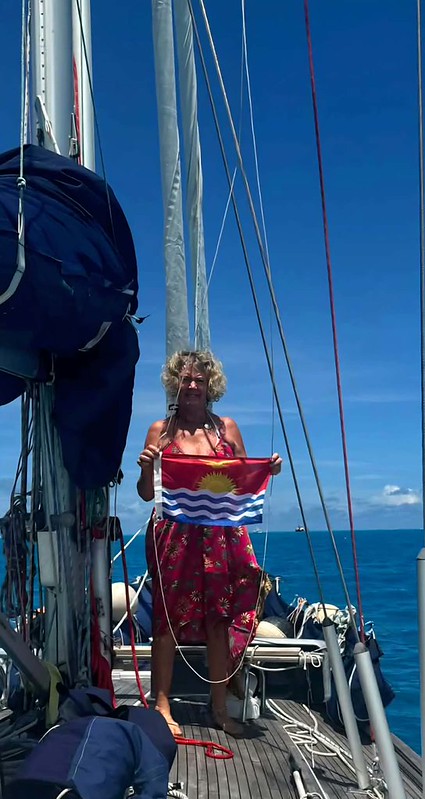
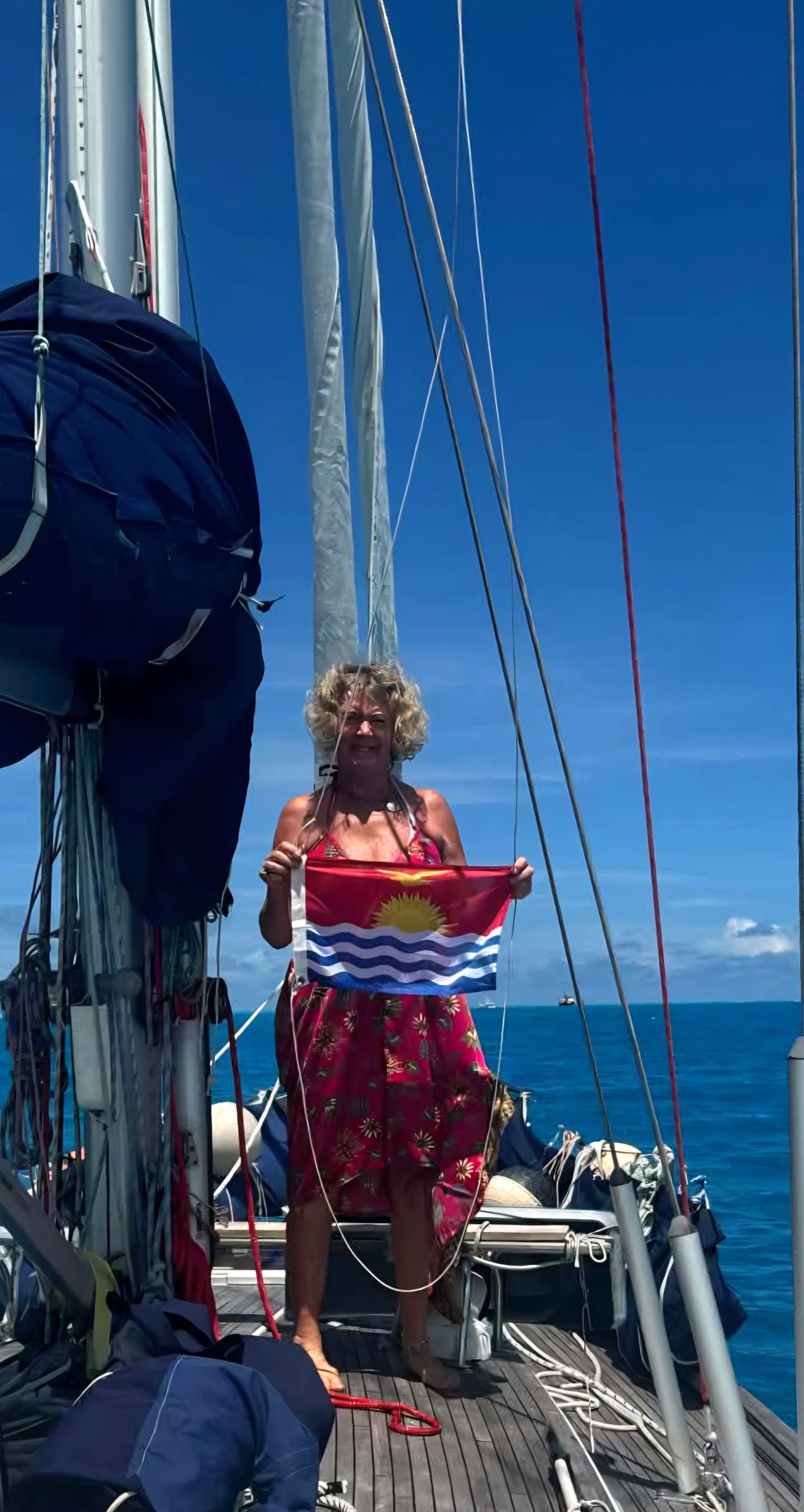
Slutligen har vi lämnat våra brev och fått våra pass stämplade. Nu kan vi hissa Kiribatis vackra flagga på båten. En av världens vackraste flaggor enligt mig.

Finally, we have dropped off our letters and had our passports stamped. Now we can hoist Kiribati’s beautiful flag on the boat, in my opinion, one of the most beautiful flags in the world.

Messenger_creation_C85BE61C-5F18-48CB-ADD5-56E043DD2608
The beautiful flsg of Kiribati
Messenger_creation_0F406D2B-7203-4877-BAC8-8B6209BDED5D
we raise the flag to the spreaders on the mast

Fast först måste min telefon som fått pepsi cola över sig, lämnas in och göras ren. Jag väntar i kö en evighet o till sist är det min tur. Reparatörer värmer upp skalet där det är limmat o använder sedan något vasst för att skära bort baksidan. Därefter börjar jag få panik…Han skruvar upp den ena lilla skruven efter den andra och plockar sedan loss en massa delar. Allt lägger han planlöst på sitt arbetsbord där det redan ligger små delar från många andra telefoner. Jag blir så orolig så jag måste gå därifrån. Tänk om han inte får ihop den på rätt sätt igen. Kan inte överleva utan den här telefonen då allt viktigt finns där. Samt foton, blogg, bank, bank-id, starlink, navigationsappar mm mm mm. Även fotokopia på allt viktigt rörande resan, min båt Kailani, min bil, och lagret. Efter mycket svettande från min sida skruvar han ihop allt och ger telefonen till mig. Nu verkar det gå att ladda den igen. Hoppas bara inget frätt sönder inuti av min pepsi cola. Han visste vad han gjorde ❤️

But first, my phone, which had Pepsi-Cola spilled all over it, needed to be handed in for cleaning. I waited in line for an eternity, and finally, it was my turn. The technicians heated up the casing where it’s glued together, then used a sharp tool to cut away the back panel. That’s when I started to panic… He unscrewed one tiny screw after another and proceeded to remove a whole bunch of components. He just tossed everything haphazardly onto his workbench, which was already covered in small parts from many other phones. I got so anxious that I had to walk away. What if he couldn’t put it back together correctly? I can’t survive without this phone, everything important is on it: photos, my blog, banking, BankID, Starlink, navigation apps, and so much more. It even contains digital copies of all the important documents regarding my trip, my boat Kailani, my car, and my storage unit. After I’d spent a good while sweating bullets, he finished reassembling everything and handed the phone back to me. It seems I can charge it again now. I just hope the Pepsi-Cola didn’t corrode anything inside. He really knew what he was doing! ❤️

Messenger_creation_DD151D6D-EC4A-4DBD-AA93-1586A7FAF544
Some of the loose parts
Messenger_creation_F4DE04C5-75A2-43B3-8D87-054361231395
Putting everything back again

Nu är vi klara här o skall ta oss tillbaka till Betio o jollen. Vi har tur! En buss kommer o de väntar på oss när vi kommer springande. Tillbaka vid jollen o här är det fullt av liv och rörelse. Alla hejar och vinkar och är glada. Trots att Tarawa är extremt skräpigt. Både på land och i vattnet. Inget ställe man vill tillbringa mycket tid. Vid dinge-landningen finns det skjul där de förvarar copra i säckar. Det stinker något fruktansvärt  så det  hjälper inte ens att hålla för näsan.

We’re finished here now and are heading back to Betio and the dinghy. We’re in luck! A bus pulls up, and they wait for us as we come running over. Back at the dinghy landing, there’s a real buzz of activity. Everyone is greeting us, waving, and smiling, even though Tarawa is incredibly littered, both on land and in the water. It’s not the kind of place where you’d want to spend much time. Near the dinghy landing, there are sheds where they store sacks of copra. The stench is absolutely awful, holding your nose doesn’t even help.

Det är längesedan vi lämnade Fiji och vi behöver fylla på vårat grönsaksförråd. Eftersom det är över 30° varmt, snarare 35°, konstant och bland den högsta luftfuktigheten i världen håller inte grönsakerna länge. Vi lägger en del i kylen men utrymmet är starkt begränsat. Så vi går till de två supermarkets som finns. Väldigt enkla o framförallt torrvaror, städartiklar och konserver finns att tillgå. Går fram till grönsakerna. Gul lök och vitlök  – that’s it. Inga morötter, vitkål eller ens potatis. Det är bara att acceptera.  Konserver har vi ombord och det är konserver det får bli framöver. Tänk vad bortskämda vi är i Sverige. Där skriver vi handlelistor o köper från den plus lite extra som vi blir sugna på när vi ser det.  Här får vi se vad som finns o köpa därefter. Mejerivaror finns över huvud taget inte. Egentligen inget som behöver förvaras i kyl. Kött, fisk mm finns knappt heller. Hittade ett paket frusna korvar och frusna kycklingvingar. O det får vi kalla lyx. Vi har torra bönor o linser ombord. Samt torkad sojafärs. Kommer ganska långt på det faktiskt.  Mätta blir vi i alla fall.

It has been a long time since we left Fiji, and we need to restock our supply of vegetables. Since the temperature is constantly above 30°C, more like 35°C, combined with some of the highest humidity levels in the world, vegetables don’t last long. We keep some in the fridge, but space is extremely limited. So, we head to the two local supermarkets. They are very basic, offering mostly dry goods, cleaning supplies, and canned items. I walk over to the produce section: yellow onions and garlic, that’s it. No carrots, white cabbage, or even potatoes. We just have to accept it. We have canned goods on board, and that’s what we’ll be eating for the foreseeable future. It’s amazing how spoiled we are in Sweden; back home, we make shopping lists and buy exactly what’s on them, plus a few extra things that catch our eye. Here, we have to see what’s available and shop accordingly. There are no dairy products whatsoever, in fact, nothing that requires refrigeration. Meat, fish, and similar items are also nearly impossible to find. I did manage to find a pack of frozen sausages and some frozen chicken wings, we’ll call that a luxury! We have dried beans and lentils on board, as well as dried soy mince. You can actually get quite far with those. At the very least, we won’t go hungry.

Messenger_creation_C4C56925-CBBC-4571-A4B9-CE635A823935
Going out to Vilja again
Messenger_creation_99461946-6692-4ACC-9DBA-5421AB66FB0A
She looks so small compared to the cargoships. Our neighbour is Temauri
Messenger_creation_04A89AB9-295A-4062-80E9-D5661E8CE0CD
A big ship at the jetty
Messenger_creation_011C09A9-05B8-455F-8A81-5CA34F8A974C
Another sunset here with a ship
Messenger_creation_FFABD731-9B76-475C-A3C7-891F7447C62C
And without.  It’s both amazing

Vår ankringsplats är definitivt inte optimalt. Det blåser 20 – 30 knop och ibland mer, bortemot 40 knop. Rakt in mot oss utan egentligt skydd. Visst det finns en sandbank men Vilja rullar oavbrutet och väldigt mycket. Vi måste ha allt sjöstuvat ombord och att röra sig eller ännu värre, laga mat, är en prövning. Det är ovanliga västliga vindar, vilket det varit länge. I nästan tio dagar nu. Det var ju de som gjorde seglingen hit så svår. Normalt är det alltid no-vindar här men eftersom det är super El Niño år har det förutspåtts västliga vindar I denna del av Stilla Havet. Och det stämmer verkligen. Många seglare har valt andra vägar just pga detta. Vi hoppas hitta väderfönster både upp till Marshall öarna o sedan västerut genom hela Micronesia federation. Hoppas det går bra.

Our anchorage is definitely not ideal. The wind is blowing at 20–30 knots, sometimes even more, approaching 40 knots, hitting us head-on with no real protection. Sure, there is a sandbank, but Vilja is rolling incessantly and quite violently. Everything on board has to be stowed securely for sea; just moving around, let alone trying to cook, s a real ordeal. We’ve been experiencing unusual westerly winds for a long time now, nearly ten days. In fact, these are the same winds that made our passage here so difficult. Normally, the winds here are always from the north, but because this is a ”super El Niño” year, westerly winds were predicted for this part of the Pacific, and that has certainly proven true. Many other sailors have chosen different routes precisely because of this. We’re hoping to find weather windows to head up to the Marshall Islands and then continue westward through the Federated States of Micronesia. Fingers crossed that it all goes well.

Messenger_creation_D6B218B3-A110-4D9F-9D09-85E4AA9D410D
The colors…
Messenger_creation_88BCE324-1A98-4A52-BF39-C7B782F0BFE6
….love them
Messenger_creation_379D7E06-5BD9-4978-8BCA-C5512E95A616
When bathing behind Vilja we almost get attacked by the dinghy
Messenger_creation_4CBF30A8-C250-4720-A3B3-55E534226A79
But the view is lovely

Vi måste acceptera att vågorna går höga och försöka ta oss för det första ombord i jollen, och sedan in i hamnbassängen. Det kommer bli två turer idag eftersom vi behöver fylla på diesel först och sedan handla lite mat. Tufft. Vågorna går så höga så jollen stundtals hamnar ovanpå vår badbrygga. O att hålla in jollen med linan är totalt omöjligt. Efter mycket om o men o stor chansning är vi båda i jollen för att åka in o köpa, först diesel. Sex jerrycans ca 20 liter var. Vi släpar dem till bensinstationen. Där är de jättehjälpsamma. Fyller först upp och bär sedan till platsen där vi har vår jolle. Och sedan…lokalbefolkningen sluter upp mandant o bär våra jerrycans samt väskor med mat och ägg till vår jolle. De är bara sååååå underbara ❤️

We have to accept that the waves are running high and try to get, first, into the dinghy, and then into the harbor basin. We’ll need to make two trips today, as we have to top up our diesel and then pick up some groceries. It’s tough going. The waves are so high that, at times, the dinghy ends up right on top of our swim platform—and holding it steady with the painter is completely impossible. After a lot of struggle and a major gamble, we both manage to get into the dinghy to head ashore—first for diesel. Six jerrycans, holding about 20 liters each. We haul them over to the gas station, where the staff are incredibly helpful; they fill them up and then carry them all the way back to where our dinghy is moored. And then… the locals pitch in, carrying our jerrycans as well as bags of groceries and eggs down to the dinghy. They are just so, so wonderful! ❤️

Messenger_creation_99589403-5E3A-4D6B-906C-439F94ADAA1D
Six jerrycans full of diesel
Messenger_creation_724392E1-E102-4009-AEEF-D0D78BC044B8
They have to be carried down the steep and slippery wall
Messenger_creation_3197FF9A-6AEE-4EBA-B7E9-8812E319DA2E
It’s not easy to keep balance and carry more thsn twenty kilos
Messenger_creation_E17021B2-30F7-43E1-B29E-8C2B4E125187
We soon get help from locals
Messenger_creation_E7D5F1C3-158E-4FF6-B90C-FE4D2E411E27
They take it all the way onboard where Jan is
Messenger_creation_D4E729F0-E04A-45BF-BA4C-E74F0FD35150
They are carefull with the eggs we bought

Stoooor tvättardag idag. Efter nio dygn till havs o sedan fem dygn med väldigt mycket blåst har tvätthögen växt. Inte bara personliga kläder. Utan tre uppsättningar sängkläder, handdukar och badlakan och en massa tvätt från köket. Dessutom fem dynor vi sitter på i sittbrunnen som stinker svett, är indränkta i saltvatten och börjar bli mögliga. Vi har en tvättmaskin ombord men använder den inte. Tyvärr.  Den är placerad på ett så dumt ställe så vi måste riva upp hela akterkojen med madrasser och allt. Jag sover i akterkojen så det skulle vara jobbigt för mig. O vi har dessutom en massa saker förvarade där. Spänner fungerar bra för oss, fast vi vet ju att det inte blir lika rent. Extra Tvättmedel eller sköljmedel så luktar det gott i alla fall

A huuuuge laundry day today. After nine days at sea, followed by five days of very strong winds, the pile of laundry has grown. It’s not just personal clothing, there are three sets of bed linens, towels and bath sheets, and a whole lot of kitchen laundry. On top of that, there are the five cockpit cushions we sit on; they reek of sweat, are soaked in salt water, and are starting to get moldy. We do have a washing machine on board, but we don’t use it, unfortunately. It’s located in such an inconvenient spot that we’d have to tear apart the entire aft berth, mattresses and all. Since I sleep in the aft berth, that would be a real hassle for me. Plus, we have a lot of other gear stored in there. Using a bucket works well enough for us, even though we know things don’t get quite as clean. But with some extra detergent or fabric softener, at least it ends up smelling nice!

Messenger_creation_88BCE324-1A98-4A52-BF39-C7B782F0BFE6
Every day the same pink, grey and turquoise
Messenger_creation_F8D11EDA-DB14-49DD-B136-FE4B9522FB18
Totally six big buckets of laundry
Messenger_creation_770E8762-AD0B-4990-BBBE-7156A00EA514
Good it’s sundhine and windy so it get’s dry quick
Messenger_creation_E654F663-FD33-48D7-9D26-5E30EA135A3D
Home sweet home

Oj vad det har blåst inatt! Vi har flyttat oss lite längre in i lagunen för att slippa de stora container- och fiskefartygen samt att få renare vatten. Men det är precis lika öppet mot västliga vindar. Och inatt har det blåst! Ordentligt! Saker har rullat runt inne I båten och det har ryckt fruktansvärt i vårt stackars ankarspel. Förhoppningsvis har snubben hållit så ankarspelet inte ryckts sönder. Vindarna har varit över fyrtio knop stundtals. Alltså upp mot stormvindar – Tänk senaste stormen i Sverige Boeli – vi bor i vår båt mitt i stormen utan något skydd. Som tur är har vi fäste för ankaret. Om det släpper o vi driver, hamnar vi fort på reven o då är det kört med Vilja – vårt hem.

Wow, has it been windy tonight! We’ve moved a bit further into the lagoon to get away from the large container ships and fishing vessels, and also to find cleaner water. But it’s just as exposed to westerly winds. And has it blown tonight! Really hard! Things have been rolling around inside the boat, and our poor windlass has been taking a terrible pounding. Hopefully, the snubber has held, preventing the windlass from being torn apart. At times, the winds have exceeded forty knots, approaching storm force. Think of the recent storm in Sweden, Boeli, well, we’re living in our boat right in the middle of a storm, with absolutely no shelter. Luckily, the anchor is holding. If it lets go and we start to drift, we’ll end up on the reefs in no time, and that would be the end of Vilja, our home.

Messenger_creation_92C2D825-EBFE-42BB-BD44-07841BE46963
Messenger_creation_D024E5C6-A0AA-40B9-B90D-BC95F437D2EE
The sea at the anchorage is ruff and the dinghy full of water after heavy rain. It was really difficult for Jan to go in and out of the dinghy to take out the water
Messenger_creation_A6103C8C-EE1D-4838-9BDF-018B6AC86EFD
But if you look far out it’s beautiful

Nu är det morgon o vi är trötta. Det har inte blivit mycket sömn inatt. Helt naturligt under en så jobbig natt. Idag blir det mest avkoppling och att röja lite i båten. Om vågorna lägger sig skall vi över med dingen till Screensaver som kom hit igår. Vi lämnade Tuvalu samtidigt men de gjorde flera stopp på vägen pga de svåra förhållandena medans vi körde på o kom hit tre dagar tidigare

It’s morning now, and we’re tired. We didn’t get much sleep last night, which is only to be expected, given how difficult the night was. Today will mostly be about relaxing and tidying up the boat a bit. If the waves die down, we’ll take the dinghy over to Screensaver, which arrived yesterday. We left Tuvalu at the same time, but they made several stops along the way due to the rough conditions, whereas we kept going and arrived three days earlier.

Det blir en jättetrevlig kväll med goda samtal och delade erfarenheter.  En flaska gott vin, nypoppade popcorn och solnedgång gör det ännu bättre.

It’s going to be a really lovely evening, with good conversation and shared experiences. A bottle of nice wine, freshly popped popcorn, and the sunset make it even better.

Messenger_creation_DCFC35C1-D789-4059-A9D4-707AB7557F3E
Yanina, Alan and Jan ( and me) onboard Screesaver having a nice evening
Messenger_creation_0BBF1B28-7915-4C46-B1F7-42860F9E383A
Yanina
Messenger_creation_87D9DA96-FEFE-4514-90C0-EC9626C39307
Me
Messenger_creation_89BD0F5F-0432-414B-94E2-8917D17ABFBC
And us together
Messenger_creation_6AB6D400-04A9-4A6A-BD01-38E470429C3A
We watched the special colors together

Nu är vi äntligen på väg mot äventyr! Att få tillstånd att åka till outher atolls togs sin tid. Vi har bett om fjorton dagar på Abaiang och fjorton dagar på Butaritari.  Det slutade tyvärr med sju dagar på varje. Men det är absolut bättre än inget. Vi är på väg mot Butaritari nu – lämnade runt lunch och har ca tjugofyra timmar dit. Vi valde den ön först eftersom den är längst bort och därmed svårare att åka tillbaka ifrån. Vi måste tillbaka till Tarawa för att checka ut innan vi kan bege oss mot nästa land – Marshall öarna. Men det är några veckor tills dess

We are finally off on an adventure! Getting permission to visit the outer atolls took some time. We had requested fourteen days on Abaiang and fourteen days on Butaritari, but in the end, we were granted seven days for each. Still, that’s definitely better than nothing! We are currently en route to Butaritari, we departed around lunchtime, and it’s about a twenty-four-hour journey. We chose that island first because it’s the furthest away, making it more difficult to return from later. We’ll need to head back to Tarawa to clear out before we can set off for our next destination, the Marshall Islands, but that’s still a few weeks away.

Messenger_creation_3B18B15D-FD1C-47BC-A081-11A5B211BE62
The permission to go to outher atolls

Seglingen, eller snarare motorseglingen, är behaglig. Vi tar oss framåt och sjön är relativt platt. Självklart dörjer vi under sådana förhållanden.  Jag längtar mig sjuk efter en tonfisk eller Mahi Mahi. Man kan tro att vi lever på fisk men det är  bristvara för oss. Det nappar tyvärr ytters sällan. Och, speciellt Jan, är livrädd för fiskar som kan bära på nervsjukdomen, Ciguterra. Små fiskar äter alger och plankton innanför revet. Sedan äter lite större fiskar de små och slutligen t ex Barracuda äter de större. Sjukdomen följer med och den går inte att koka, frysa, grilla eller steka bort tyvärr. Sjukdomen medför illamående, diarréer, kramper, muskelsvaghet och allt möjligt annat otrevligt. Går tyvärr nästan inte att bli frisk från heller tyvärr. Så enda fiskar vi äter är typ tonfisk, mahimahi – som vi fångat själva( eller en stor marlin fångad långt ute till havs som vi en gång haft tur att hitta)

The sailing, or rather, motor-sailing, is pleasant. We’re making good progress, and the sea is relatively calm. Naturally, we spend time trolling under conditions like these. I’m absolutely dying to catch a tuna or a mahi-mahi. You might assume we live on fish, but it’s actually a rarity for us; unfortunately, we hardly ever get a bite. Furthermore, Jan in particular is terrified of fish that might carry the neurological illness known as ciguatera. Small fish feed on algae and plankton inside the reef; these are then eaten by slightly larger fish, which in turn are consumed by predators like barracuda. The toxin persists, unfortunately, it cannot be eliminated by boiling, freezing, grilling, or frying. The illness causes nausea, diarrhea, cramps, muscle weakness, and a whole host of other unpleasant symptoms. Sadly, it is also nearly impossible to recover from. Consequently, the only fish we eat are species like tuna or mahi-mahi, provided we’ve caught them ourselves (or, on one lucky occasion, a large marlin caught far out at sea).

Jan tycker vi skall ta in linan. Men jag vill vänta. Ofta får vi napp i skymningen. O plötsligt! Rassel rassel rassel! Vi har napp! Först tror vi att den släppte för linan är så lös. Men, jo den är där. O den kämpar. Vi ser strax att det är en tonfisk. Mitt drömbyte! Jan drar in o jag står färdig med håven, där den snällt landar. En gulfenad aldeles ljuvlig tonfisk. Det vattnar sig redan i munnen på mig när jag tänker på en lätthalstrad tonfisk. Fast först en massa jobb. Rensa bort huvud och stjärtfena. Sedan vill jag ha fyra fina filéer som kan tillagas till perfektion. Jan vill ha dem mer stekta. Så allt är varmt. Jag vill ha en härlig tunn stekyta runtom – inget mer.

Jan thinks we should reel in the line, but I want to wait. We often get a bite at dusk. And then, suddenly, rattle, rattle, rattle! We’ve got a bite! At first, we think it’s gotten away because the line goes so slack, but no, it’s still there, and it’s putting up a fight. We soon realize it’s a tuna, my dream catch! Jan reels it in while I stand ready with the landing net, and in it goes, nice and smooth. It’s a yellowfin tuna, absolutely gorgeous. My mouth starts watering just thinking about some lightly seared tuna. But first, there’s plenty of work to do: removing the head and tail. I want four beautiful fillets that can be cooked to perfection, though Jan prefers his a bit more well-done. I’m aiming for a lovely, thin, seared crust all the way around, and nothing more.

Messenger_creation_8D4CB913-749F-4161-A4FA-2CC23B92A534
Our lovely tuna!
Messenger_creation_4474C057-1092-495E-89D7-5DBCDD76D445
Tastes so wonderful
Messenger_creation_F5F2B8D5-93A1-4026-89AA-41BF842014D4
Sunset before nightshifts

Vi tar våra nattskift som vanligt. Inget spännande med vare sig nattliga sqalls eller kinesiska fiskebåtar. Så runt lunch ankommer vi Butaritari. Längtar!

We are carrying on with our night shifts as usual. Nothing exciting to report, no squalls in the night, nor any Chinese fishing boats. So, around lunchtime, we will arrive at Butaritari. Cant’t wait!

Messenger_creation_F5F2B8D5-93A1-4026-89AA-41BF842014D4
Dark but with lovely moonshine around us
Messenger_creation_92436C8B-C6CC-4900-BC95-9FAE0995F7EA
And an amazing sailing in sunrise
Messenger_creation_E14201A0-7E95-4726-A526-BBE762A9E066
A squid had jumped onboeard during the night. Making a lot of dirt. The squid lays beside the yellow jerrycan

Tuvalu

Det känns så oerhört kul att äntigen ha kommit hit till Tuvalu. Detta pytteland som ligger så långt bort från allfartsväg. Ytan är endast 26.000 km2 som består av nio väldigt låglänta atoller med korallrev. Högsta punkten är ca 4,5 möh  men det mesta av öarna ligger under 2möh så  hela landet riskerar att täckas av havsvatten om inte så många år pga havshöjningen. För att rädda sig själva håller de på att bygga en mur mot havet med jättestora sandsäckar i flera lager.

It feels incredibly exciting to have finally arrived in Tuvalu—this tiny nation located so far off the beaten path. Its total area is only 26,000 km², comprising nine very low-lying atolls with coral reefs. The highest point is approximately 4.5 meters above sea level, but most of the islands lie below 2 meters; consequently, the entire country risks being submerged by seawater in the not-too-distant future due to rising sea levels. To protect themselves, they are currently constructing a sea wall using multiple layers of massive sandbags.

Messenger_creation_1B49301E-6BFA-4677-9BEA-DA944869CA8E
Part of the wall made of sandbags
Messenger_creation_D76B855E-19F5-4E26-B14A-08EBE545B3C5
Big waves on the other side of Funafuti

Vad vi har förstått så är tanken att bygga en platå som är högre än dagens högsta punkt i staden Funafuti. De lägger ut enorma sandsäckar som skydd mot högvatten, stormar, erosion och havs höjning. Sedan fyller de upp på insidan. Där skall ny bebyggelse byggas. Sanden de tar kommer innifrpn lagunen och tanken är att skydda landet ca ett hundra år till. Det är bara byn Funafuti som räddas. Alla andra atoller kommer översvämmas av havet om inte så länge. Globala uppvärmningen drabbar låglänta länder som Tuvalu hårt.

As we understand it, the plan is to build a plateau that is higher than the current highest point in the town of Funafuti. They are laying out enormous sandbags as protection against high tides, storms, erosion, and rising sea levels, and then filling in the area behind them. New structures are to be built there. The sand is being sourced from within the lagoon, and the intention is to protect the land for about another hundred years. Only the village of Funafuti is being saved; all other atolls will be submerged by the sea before long. Global warming is hitting low-lying countries like Tuvalu hard.

Messenger_creation_20501A7D-7FAB-4C40-8C54-E52BE8490B71
Here they work with the wall
Messenger_creation_289F9089-55D8-44F7-B28D-C62A9C7B870A
The sandbags are enormous
Messenger_creation_9B141128-326E-4C7D-AA2A-9855AFE73B98
They work seven days a week

Vi har sovit gott i en natt och tar nu jollen in till staden. Vi vill ta reda på om vi skall betala något för att resa runt med båten inne i atollen och självklart även se oss omkring. Alla pratar bra engelska här trots att det är deras andra språk och turismen nästan inte existerar.

We’ve had a good night’s sleep and are now taking the dinghy into town. We want to find out if we need to pay any fees for sailing around the atoll, and, of course, take a look around. Everyone here speaks good English, even though it’s their second language, despite the fact that tourism is virtually non-existent.

Det är varmt att promenera runt. Mycket varmare än Fiji och luftfuktigheten är hög. Nu är vi ju nära ekvatorn och då höjs luftfuktigheten ordentligt. Tuvalu är ett av världens varmaste länder om man tar hänsyn till konstant luftfuktighet. Endast Singapore o Malaysia är varmare. Byn består av 2 parallella vägar och det finns lite småaffärer, en kyrka och några gouverment byggnader som t ex samlingssalar. Om jag förstått det rätt så har varje atoll en egen samlingssal här i Funafuti. Privathusen är enkla och låga. Inget hus är över två våningar i hela huvudstaden. Plötsligt kommer en störtskur och vi hittar skydd under ett större tak. Regnet öser verkligen ner. Lika plötsligt som det startade slutar det också och solen skiner igen. Vi tar oss tillbaka till jollen och åker hemåt. Fast först stannar vi till ett tag på Screensaver och pratar med Yanina och Allan.

It’s hot walking around—much hotter than in Fiji, and the humidity is high. We’re close to the equator now, which really drives the humidity up. Tuvalu is one of the hottest countries in the world when you factor in the constant humidity; only Singapore and Malaysia are hotter. The village consists of two parallel roads, with a few small shops, a church, and some government buildings, such as meeting halls. As I understand it, each atoll has its own meeting hall here in Funafuti. The private homes are simple and low-slung; there isn’t a single building in the entire capital that’s more than two stories high. Suddenly, a downpour hits, and we take shelter under a large roof. The rain is absolutely pouring down. Just as abruptly as it began, it stops, and the sun comes out again. We head back to the dinghy and make our way home, though first, we stop by Screensaver for a while to chat with Yanina and Allan.

Messenger_creation_07039C36-0B9B-477A-A04A-A388FF4EBAA2
One of the 2 main Streets in Funafuti
Messenger_creation_3D309A9E-4F33-4EDF-AB7D-4BB52DDB59FA
A private house
Messenger_creation_D63350C3-5E25-436C-AD6B-75D761017A39
The houses are low and small
Messenger_creation_6561B416-D7E6-4967-BB2B-FB55C860BD56
In the wharf area there are a lot of containers

Idag skall vi följa med Yanina till en ”happening” på ön. Det är den lilla atollen Nui som har en ceremoni för att fira att det två år långa projektet där de byggt stora cisterner för att samla regnvatten äntligen är klart. Cisternerna är i Funafuti och inte på Nui. Det är vackert pyntat när vi kommer fram och ballonger i lila och vitt pryder insidan partytältet. Lila är öns signaturfärg och nästan alla är finklädda i lila och vita kläder. Eller lila i andra kombinationer. Först hålls en massa tal vilka vi inte förstår mycket av men sedan blir det traditionell dans. Jättekul! Denna dansakt avslutas med att kvinnorna som dansat sätter blomsterkransar på huvudet på alla inbjudna gäster som är där. Därefter blir det mera tal och mera dans. Allra sist är det en yngre kvinna som, för ett kort tag sedan, vann skönhetstävling ”Miss Nui”. När hon dansar kommer folk fram och stoppar pengar i hennes kläder på ryggen. Under dansens gång går många runt med en parfymflaska och sprutar på både dansare och publik. En tradition i Tuvalu och på kort tid har framför allt dansarna men även vi blivit helt indränkta i parfym.

Today, we are accompanying Yanina to an event on the island. The small atoll of Nui is holding a ceremony to celebrate the completion of a two-year project: the construction of large cisterns for collecting rainwater. The cisterns are actually located on Funafuti, not Nui. When we arrive, the venue is beautifully decorated, with purple and white balloons adorning the inside of a party tent. Purple is the island’s signature color, and almost everyone is dressed up in purple and white, or purple combined with other colors. First, there are several speeches, most of which we don’t quite follow. Followed by traditional dancing. It’s great fun! The performance concludes with the dancers placing floral garlands on the heads of all the invited guests. Afterward, there are more speeches and more dancing. Finally, a young woman, who recently won the ”Miss Nui” beauty pageant, takes the stage. As she dances, people approach and tuck money into her clothing, specifically on her back. Throughout the dance, several people walk around with perfume bottles, spraying both the dancers and the audience. It’s a Tuvaluan tradition, and before long, the dancers, and even us, are completely drenched in perfume.

Messenger_creation_C4A9227D-0B74-4693-88D2-E8D9C879BB68
The dance has started
Messenger_creation_5A8C038C-69C6-4F99-85DF-54A6B005EC4B
Beautiful women with flowers
Messenger_creation_6E33CEAF-3E9A-4B9E-92A8-7D4986D4BC00
Audience dressed in purple
Messenger_creation_98298F3E-0C70-4737-8D8B-31D5C9C0B2C2
And some in blue but all with flowers on their heads
Messenger_creation_7684E58E-6CA5-4BFC-B515-3D19EC58CBF0
The dance continues
Messenger_creation_CB3B5E76-DDC0-4A78-86B5-64726B9909BD
The garland of flowers on their arm
Messenger_creation_2B3C19FD-6D25-4879-84D3-D1DC05F2AC37
Putting the garlands on the honoured invited guests head
Messenger_creation_E140A7D4-EDB4-4E32-84BC-1E1B4B89445F
It’s such a beautiful gesture
Messenger_creation_FF61FA6F-3187-4EB5-A791-E9C03BF8DAA6
Jan enjoys what he is seeing
Messenger_creation_487B6B3C-6C0D-44CD-9153-50149355CCB1
Miss Nui dancing
Messenger_creation_B273BFCC-1CD0-4EC7-9756-BAD12FED7F1F
And here they put money on her

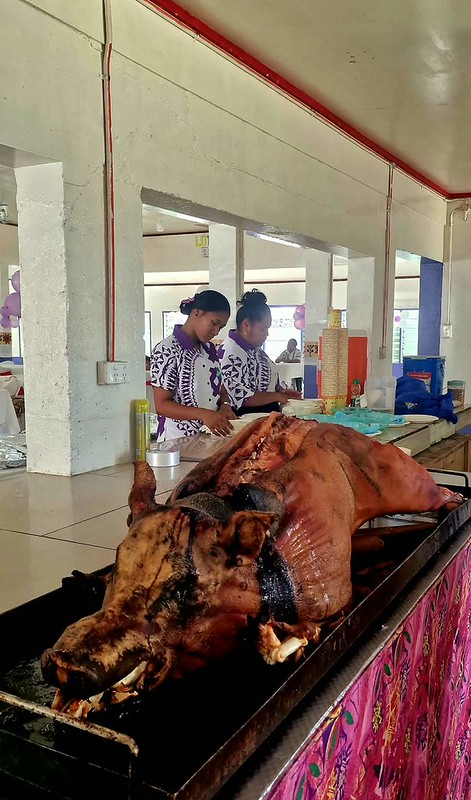
Efter tal o dans bjuds det på en fantastisk lunch med mängder av traditionell mat. Viktigast av allt är den helgrillade grisen som de tillagat i en ugn som påminner om en pizzaugn. Maten är otroligt god och jag hämtar en andra tallrik. Under hela lunchen är det musik och dans som underhållning. Vad kul att få vara med på detta! Vi är jättenöjda med dagen och åker tillbaka till Vilja mätta och belåtna.

After speeches and dancing, a fantastic lunch is served, featuring an abundance of traditional food. The highlight is a whole roasted pig, prepared in an oven that resembles a pizza oven. The food is incredibly delicious, and I go back for a second helping. Throughout the lunch, there is music and dancing for entertainment. It’s such a joy to be part of this! We are thoroughly pleased with the day and head back to Vilja, full and content.

Messenger_creation_DBCAD4F7-D3A6-4CCF-94D7-591F7027BCE4
Here the Puaka Tunu is prepared for the big lunch
Messenger_creation_54E81ACE-E6EA-426A-87AB-ED34BC4D860A
Me and the Tuvaluan woman who invited us for the ceremony and lunch
Messenger_creation_6168CFB4-1DA3-4A51-870E-20EAB3D25F42
It is danceperformances all the time
Messenger_creation_C69D5B21-FDD5-4FB1-B7D8-1345ADBA4BAB
Some of all the lovely traditional food

På kvällen samlas vi i Scrensaver. Totalt är här fyra båtar som alla skall norrut mot Kiribati och Marshall. När vi kom hit var det ytterligare en båt men den har nu lämnat för Fiji. På ett år kommer det endast 15 – 20 segelbåtar så att vi låg fem här samtidigt är väldigt ovanligt. Vi umgås några timmar och åker sedan tillbaka till våra båtar med våra jollar. Dingen är nog bland det viktigaste vi har eftersom vi oftast ligger på svaj. Utan den kommer vi ingenstans.

In the evening, we gather on Screensaver. There are four boats here in total, all heading north toward Kiribati and the Marshall Islands. When we arrived, there was another boat, but it has since left for Fiji. Only 15 to 20 sailboats visit here in a year, so having five of us here at the same time is highly unusual. We spend a few hours together before heading back to our respective boats in our dinghies. The dinghy is arguably one of the most important things we have, since we are usually anchored out; without it, we wouldn’t be able to go anywhere.

Vi har kommit till paradiset! I dag har vi tagit oss över atollens lagun till en liten korallö i nordvästra delen av lagunen. Havet är kristallklart, sanden vit och palmerna pryder den lilla ön. Kläderna åker av och det blir ett långt dopp i det ljumma havet. Åh vad vi njuter. Det är detta vi längtat efter och sett fram emot. Atoll liv på sitt bästa. Under eftermiddagen och kvällen sitter vi vid strandkanten i korallsanden, tänder en eld, badar i havet, strosar på stranden och bara njuter. Tillsammans med Yanina och Alan. Livet kan vara helt underbart! Vi stannar här två nätter och njuter lika mycket andra dagen, som avslutas med grill över öppen eld på stranden. Med en vacker fullmåne som lyser på himmelen samtidigt som solnedgången färgar molnen orangea och brandgula. Nu är klockan 05.30 andra morgonen. Vinden har vänt och det är ganska orolig sjö. Vi beslutar oss för att lämna redan nu och gå tillbaka till Funafuti där vi ligger i lä för östliga vindar.

We have arrived in paradise! Today, we crossed the atoll’s lagoon to reach a small coral island in its northwestern section. The sea is crystal clear, the sand is white, and palm trees adorn the tiny island. Off come our clothes, and we dive into the warm, inviting water for a long swim. Oh, how we are enjoying this! This is exactly what we have been longing for and looking forward to atoll life at its absolute best. Throughout the afternoon and evening, we sit on the coral sand at the water’s edge, light a fire, go for swims, stroll along the beach, and simply soak it all in, together with Yanina and Alan. Life can be truly wonderful! We stay for two nights, enjoying the second day just as much as the first; it concludes with a barbecue over an open fire on the beach, with a beautiful full moon shining in the sky while the sunset paints the clouds in shades of orange and fiery red. It is now 5:30 AM on the second morning. The wind has shifted, and the sea has become quite choppy. We decide to leave right away and head back to Funafuti, where we will be sheltered from the easterly winds.

Messenger_creation_E46C7C16-FB60-4328-B0F5-F727351CC898
Floating in the lovely water
Messenger_creation_2238A679-AE27-436F-A66F-5DE5E78421FC
The water is totally blue
Messenger_creation_0E4930AE-427A-45A5-97D8-33D2FCDDDD16
Beautiful blue sky and white skies
Messenger_creation_ED6B8DDB-3907-4D0D-BEFD-C76DA5BECF7B
And, of course, Vilja
Messenger_creation_BE33E9B5-A297-4AD1-9E04-6BF802C0BD78
Here closer up
Messenger_creation_B7B201FA-DBC9-4959-B671-9D00882CFBB9
We came in to the beach with our dinghy
Messenger_creation_7AEC2EE4-B88E-4F2C-8948-6845BBCDF199
A coconut  tree has started to grow
Messenger_creation_417F4767-93F0-4F9A-9880-CA617BCC8CB5
Look at the water
Messenger_creation_1F663AD2-D9F3-477F-AAA0-03AF04BA006A
So clear water
Messenger_creation_DC29BB89-C66B-452D-B36D-093D1C173808
Lovely colours
Messenger_creation_1FE6C4E6-3C85-49C4-A963-1956B4F1851A
Paradise!
Messenger_creation_2A2EC304-60E5-4FB7-B9D5-F41DD5744126
The fire is on
Messenger_creation_98E15086-DC2F-40D4-9851-0ADE11D6EF03
Yanina and me
Messenger_creation_E8401418-1937-4A33-BBFE-A6A43CBC7665
With Alan in the water
Messenger_creation_699ECAA8-4901-4501-8044-132B1F4F60C5
Love bonfires
Messenger_creation_62E6F1AE-7A87-49B7-9205-9594ED245106
Look at the sky and the skies
Messenger_creation_392A15E9-7F7B-465A-B58D-74D8BCC4D6D2
Jan walking on the beach
Messenger_creation_E17C4012-A1E2-4F95-952E-F5C3B4B4D40D
Amazing colours
Messenger_creation_F89F9AD2-ABAF-46E6-BCB7-788BBFE1489C
Dark skies, sunset and full moon on the same time
Messenger_creation_5EE14113-675A-4749-BB16-E3196E0574F5
New day and new formations in the sky
Messenger_creation_817E69F5-B5D7-4DAD-9C05-A648C8669012
As beautiful as yesterday
Messenger_creation_AFD390C7-D8B9-424F-912D-4EAF193BB715
Our home
Messenger_creation_99F9A712-032C-4CDA-BED5-16627DF8606B
There are a lot of these small cuties
Messenger_creation_6E98D814-D0A5-4289-AA47-17A48EAC0473
The sun is shining
Messenger_creation_CAC0FA65-0CEB-4567-B925-96EF8FED526F
But heavy skies on the other side of the atoll
Messenger_creation_BCADD726-F4BF-4A3C-AC16-2F993375817D
Even heavy skies can be beautiful in sunset
Messenger_creation_3F873149-0B74-4159-809E-DD2968C8991E
It’s getting very dark
Messenger_creation_0F558DF6-6B91-448A-89AF-D688371AC606
But the sunset gets through
Messenger_creation_23DC8E71-62C2-4BA1-B794-DA10F74F9148
Beautiful
Messenger_creation_E991D894-EC11-4FF5-B52C-7BCB84D8BF3D
A new bonfire with bbq on it

När vi kom hit till Tuvalu från Fiji upptäckte Jan ett nytt problem med båten. Jan har varit i kontakt med en mekaniker och ett varv i Kiribati och det ser ut som vi kan få hjälp där. Han har även pratat med två olika företag i Sverige. Reservdelar är beställda från Sverige som Jans son skickar till Tarawa. Tanken, från början, var att stanna i Tuvalu i ca en månad och segla även till flera andra atoller. Nu går inte det och det är jag väldigt ledsen för. Men, vi har i alla fall beslutat oss för att stanna kvar över Independence day som är om ett par dagar.Mer om det i nästa inlägg.

When we arrived in Tuvalu from Fiji, Jan discovered a new problem with the boat. He has been in touch with a mechanic and a shipyard in Kiribati, and it looks like we might be able to get help there. He has also spoken with two different parties in Sweden. Spare parts have been ordered from Sweden, and Jan’s son will be sending them to Tarawa. The original plan was to stay in Tuvalu for about a month and also sail to several other atolls. That’s no longer possible, which I’m very sad about. However, we have decided to stay through Independence Day, which is just a couple of days away. More on that in the next post.

Messenger_creation_DB5E3A0D-B3EA-45DA-A092-7B9CB80A54C3
Messenger_creation_279CB213-5A63-458B-94A4-C1535B3EF8A7
Messenger_creation_EE3BF24F-1D4D-4BC4-A5CE-3CF87B0C483E
Messenger_creation_913DF2DB-621C-4082-86F9-D414BFAF0737
Vilja in different colors of the sea and sky

New adventures awaits

Äntligen! Idag är det dags! Efter nästan 11 månader i Fiji är vi nu på väg för att betala vår sista faktura och sedan gå till immigration och checka ut. Det känns jättekonstigt. Och både ledsamt och spännande. De senaste dagarna har många i personalen stoppat oss när de sett oss, kommit förbi vår båt och velat prata. De har hört att vi bokat utklarering och är ledsna för att vi skall lämna dem.

Finally! The day has come! After nearly 11 months in Fiji, we are now on our way to pay our final bill and then head to immigration to check out. It feels really strange—and both sad and exciting. Over the past few days, many staff members have stopped us when they saw us, or dropped by our boat, wanting to chat. They’ve heard that we’ve booked our clearance and are sad that we’re leaving them.

Betalningen går bra o vi går bort till immigration. Vi har tid bokad klockan 10 men hoppas de kommer tidigare så vi kommer iväg i god tid. Men vi väntar och väntar. Till sist, när klockan nästan är 11.30 dyker de upp. Allt går smidigt och vi får papper och pass stämplade. Nu skall vi tillbaka till Vilja och släppa loss.

The payment goes smoothly, and we head over to immigration. We have an appointment for 10:00 but are hoping they’ll arrive early so we can get going in good time. But we wait and wait. Finally, just before 11:30, they show up. Everything goes smoothly, and we get our papers and passports stamped. Now we’re heading back to Vilja to cast off.

Messenger_creation_029F240A-9D70-44F4-BF21-2CA9AD2A166A
Waiting for clearance to open
Messenger_creation_9D2568E6-CA26-4FCE-9A38-2A6772109776
The dosor is still locked
Messenger_creation_74DA0513-5479-4122-8F0E-9FD805031685
Finally The paperwork starts
Messenger_creation_D1FED878-CB33-42C1-93C8-B1A4383EC4A3
The staff took is to Vilja with their tender
Messenger_creation_62026A82-D123-4F78-91B4-3B5B48872853
Jan looking at Vuda marina

Fast först blir det ett vackert avsked. Personalen från hela Vuda marina möter upp på bryggan, hänger en blomsterkrans på båten och sjunger sedan vackert för oss att de kommer sakna oss. De har även en banderoll där det sstår ”Sota Tale – we will miss you”. Sången är otroligt vacker och tårarna rinner ner för våra kinder. Vilket fantastiskt avslut på nästan ett år i Fiji och på Vuda marina. Sedan blir det en massa vinkande och lyckönskningar när vi väl ger oss iväg strax efter 12.00.

But first, there is a beautiful farewell. Staff from all over Vuda Marina gather on the dock, hang a flower garland on the boat, and then sing a beautiful song to tell us they will miss us. They even have a banner reading ”Sota Tale – we will miss you.” The singing is incredibly beautiful, and tears stream down our cheeks. What a fantastic conclusion to nearly a year in Fiji and at Vuda Marina. Then comes a lot of waving and well-wishes as we finally set off just after noon.

Messenger_creation_81DE427D-C676-4299-AA8B-582EF7DB061E
Wonderful singing with the sign ”Sota tale – We will miss you”
Messenger_creation_F1B53D2D-EA0D-49A9-9F74-D2424B30CB5E
A lot of wawing ”Goodbye”
Messenger_creation_2E42FA15-3095-4A87-A857-341E32FE5FAA
Our spot the last week
Messenger_creation_247F0078-E122-467E-9514-E06230A3028E
Jan stegring Vilja out of the harbour
Messenger_creation_13F948AC-F63F-42D7-808D-40677618B22D
A last goodbye to Vuda marina
Messenger_creation_4E42314C-73F9-476E-B7E3-2A12944BFC81
We have the lucky flowers with us
Messenger_creation_018750FB-C4E4-42DD-846C-2EFC83CF336A
Vuda is disappering behind us

Tidigare på morgonen har Jan upptäckt ett problem med solcellpanelerna. De laddar inte batterierna och utan dem får vi svårt att klara elförsörjningen ombord. Eller rättare sagt så blir det omöjligt med full frys, två kylar, starlink och autopilot som allihop drar mycket. Jan går ner i båten och börjar mäta och röja för fullt. Utan att hitta felet. Igår fungerade det men inte nu. Förtvivlan. Vad gör vi? Måste vi vända redan efter 30 minuter? Jag föreslår att han ringer Bartek, en polsk jättetrevlig man, som är väldigt duktig på el o har hjälpt oss en hel del. Han svarar snabbt och går sakta o systematiskt igenom alla tänkbara scenarior. Efter över en timma hittar Jan o Bartek, tillsammans, en brytare som slagits av. En automatsäkring som troligen slog av natt till idag. Vilken lättnad! Nu kan vi fortsätta. Vi har ca sju timmar till nordsidan av ön Waya, som vi skall gå norr om. Och sedan ytterligare över tre timmar innan vi kommer utanför revet som går långt utanför hela västsidan av ön Viti Levu där vi varit.

Earlier that morning, Jan discovered a problem with the solar panels. They weren’t charging the batteries, and without them, we would struggle to maintain our onboard power supply—or rather, it would be impossible, given the high power draw from the full freezer, two fridges, Starlink, and autopilot. Jan went below deck and began testing circuits and clearing space in a frenzy of activity, yet couldn’t find the fault. It had worked yesterday, but not now. Despair set in. What were we to do? Would we have to turn back after just 30 minutes? I suggested he call Bartek—a very friendly Polish man who is an electrical expert and has helped us a great deal. He answered quickly and walked us slowly and systematically through every possible scenario. After more than an hour, Jan and Bartek—working together—found a switch that had been flipped off: a circuit breaker that had likely tripped sometime during the night. What a relief! Now we could continue. We had about seven hours to reach the northern side of Waya Island—which we planned to pass to the north—and then another three-plus hours to clear the reef that extends far out from the entire western coast of Viti Levu, where we had been staying.

Nu har mörkret fallit sedan någon timma tillbaka. Vi har passerat Waya och är på väg ut mot revöppningen där vi skall ändra kurs från NV till NNO. Det är stjärnklart och månen lyser upp det svarta havet så det glittrar i vågorna och det vita skummet som kommer varje gång en våg bryter eller runt Vilja som plöjer genom havet. En stjärna lyser starkare, klarare och med en lite gulare nyans än alla andra. Rakt söderut från oss. Sirius- Hundstjärnan. En stjärna som historiskt har använts av polynesiska navigatörer som en viktig ledstjärna.

Darkness fell an hour or so ago. We have passed Waya and are heading toward the reef opening, where we will change course from northwest to north-northeast. It is a starry night, and the moon illuminates the black sea, making the waves sparkle—as well as the white foam that appears whenever a wave breaks or swirls around Vilja as she ploughs through the water. One star shines brighter, more clearly, and with a slightly more yellow hue than all the others. It lies directly south of us: Sirius—the Dog Star. A star that has historically served as a vital guiding light for Polynesian navigators.

Messenger_creation_D63139E7-E517-4781-875B-AD50544421F1
The sun starts to set and we are now north of Waya Island
Messenger_creation_C2077F95-4335-4C37-AF9F-4BD299310D8D
As always it’s beautiful
Messenger_creation_A0BA373F-0292-4BDE-8150-E9F4B6C9680F
Big orange sun

Jan vilar ögonen här uppe i sittbrunnen medans jag sitter på vakt. Vi vaggas nästan till söms men eftersom vi inte varit ute och seglat på nästan ett år så är kroppen och framför allt öronen på helspänn för varje ljud och nyans vi hör. Det kommer troligen ta några dagar innan vi är helt inne i seglande igen. Fast jag känner ändå att kroppen redan, efter åtta timmar, har börjat anpassa sig efter rörelserna och Viljas gungande.

Jan is resting up here in the cockpit while I keep watch. We are being lulled almost to sleep, yet—having not been out sailing for nearly a year—our bodies, and especially our ears, are on high alert for every sound and nuance. It will likely take a few days before we fully settle back into the rhythm of sailing. Even so, I can feel that my body has already begun to adjust to the movements and the rocking of Vilja after just eight hours.

Det kommer nog bli lite kyligt under natten. Vi har känt det redan i hamnen där det knappt blåser, att så fort solen går ner ändras temperaturen och vi har haft långbyxor på oss. Nu är vi ute på havet och det blåser ganska friskt, vindar som letar sig in i sittbrunnen och även in under sprayhooden där vi annars oftast sitter i lä. Fast nu har vi vinden in i sidan. Tyvärr  kommer vi få den rakt emot oss om vi gör ett slag för att styra upp mot Tuvalu. Troligen får vi lägga oss på en lite västligare riktning för att ta hänsyn till vinden. Enda problemet med det är att vi kommer ha en ström från Ö mot V som kommer föra oss sidledes ännu längre västerut och i så fall missar vi Tuvalu och den lilla atollen med huvudstaden Funafuti. Tur då att seglingen kommer ta runt fem dygn så vi har möjlighet att kompensera framöver o gå betydligt mer mot öst.

It’s likely going to get a bit chilly overnight. We’ve already noticed this in the harbor—where the wind is barely blowing—that the temperature drops as soon as the sun goes down, and we’ve been wearing long trousers. Now we’re out at sea and the wind is quite brisk; gusts are finding their way into the cockpit and even under the sprayhood, where we usually sit sheltered from the wind. Right now, however, the wind is hitting us on the beam. Unfortunately, it will be blowing straight at us if we tack to head toward Tuvalu. We’ll likely have to steer a slightly more westerly course to account for the wind. The only problem with that is an east-to-west current that will push us sideways even further west; if that happens, we’ll miss Tuvalu and the small atoll containing the capital, Funafuti. Fortunately, the voyage will take around five days, so we’ll have the chance to compensate later on and steer significantly more toward the east.

Sitter här i mörkret, klockan är nästan 01.30. Akter om oss kommer ett stort tankfartyg som strax är ifatt oss på i stort sett samma kurs. Tänker på den hemska olyckan utanför Tjörn i somras. Därför ropar jag upp Anthas på vhf:en. Vill vara säker på att de sett oss och höra om vi kan hålla vår kurs. Vi pressar relativt nära vinden o har svårt för att ändra kurs. Plus att Anthas är upphinnande. Jag får snabbt svar. De har koll på oss, säger att de tänker köra om på vår babords sida och att vi kan fortsätta vår kurs. Skönt. Så nu kan jag sitta o titta på ljusen från det stora fartyget när de strax passerar oss.

I’m sitting here in the dark; it’s almost 1:30 AM. A large tanker is approaching from astern, soon to overtake us while following much the same course. I’m thinking about that terrible accident off Tjörn last summer. That’s why I’m calling Anthas on the VHF. I want to make sure they’ve seen us and find out if we can hold our course. We’re sailing relatively close to the wind, so changing course is difficult for us. Plus, Anthas is the one overtaking. I get a quick reply. They have us in sight and say they intend to pass on our port side, so we can maintain our course. A relief. So now I can sit and watch the lights of the large ship as it’s about to pass us.

Messenger_creation_E8A68718-6888-48F9-818C-B33D0689D095
On the plotter we can see the tanker, Althea. Now she is more on our port side

Seglingen flyter på bra. Just nu har vi slör, vinden in snett akterifrån, och gör mellan sex och sju knop. Solen skiner och det fläktar härligt i sittbrunnen. Vi har fiskelinan ute och hoppas på napp. Jag längtar nästan ihjäl mig efter att få äta fisk. Vi har inte vågat köpa fisk i Fiji pga risken för nervsjukdomen ciguaterra, som kan finns i alla revfiskar och även rovfiskarna som äter revfiskarna. Jag är inte fullt lika orolig som Jan men har inte haft lust att laga till olika middagar till oss. Nu är vi ute på öppet hav och här hoppas vi främst på tonfisk men även en mahimahi hade varit perfekt. Frysen är iofs stoppfull av lamm- och kycklingkött så om vi får napp kommer det bli fisk till frukost, lunch o middag 😄

The sailing is going smoothly. Right now, we’re on a broad reach, with the wind coming from off the quarter,making between six and seven knots. The sun is shining, and there’s a lovely breeze in the cockpit. We have a fishing line out and are hoping for a bite; I’m absolutely dying to eat fish. We didn’t dare buy fish in Fiji due to the risk of ciguatera, a neurological illness found in reef fish and the predatory fish that feed on them. I’m not quite as worried as Jan, but I haven’t felt like cooking separate meals for us. Now we’re out on the open ocean; we’re mainly hoping for tuna, though a mahi-mahi would be perfect, too. The freezer is packed full of lamb and chicken, so if we do get a bite, it’ll be fish for breakfast, lunch, and dinner! 😄

Messenger_creation_93FAD50F-0C5A-4B90-B2CB-8172FCFAC4E7
By sail towards Tuvalu
Messenger_creation_6EF8D4C6-6009-4237-A840-7B06964ABE57
No land – only sea, sky and some clouds
Messenger_creation_03AC0BC6-4F8A-47AF-9305-BCB3AD9F8E73
We have some papaya and pineapple with us

Det är fridfullt att sitta här ute och färdas framåt av vinden. Inget motorljud utan endast segel som fladdrar lite och havet som slår mot Vilja och vågornas brus. Överallt runt oss är det blått, vitt och grått. Himmel, hav och moln.

It is peaceful sitting out here, moving forward on the wind. There is no engine noise, only the sails fluttering slightly, the sea lapping against Vilja, and the sound of the waves. All around us, there is blue, white, and gray: sky, sea, and clouds.

Messenger_creation_DBAAF3D6-9FDB-4E93-A071-8A24232709F1
Same view every day
Messenger_creation_785A1F23-011B-4856-A2DE-07440207ED2F
Enjoying life
Messenger_creation_5034D00E-1C5A-45CE-BB1D-B1217D31EC3B
Playing with the phone
Messenger_creation_8719B107-8B6B-4047-B9EF-CA874002644A
Sailing north

Vaknar upp till en gråmulen dag. Det blåser runt 10 -12 m/s och vi bara susar fram. Ofta upp emot åtta knop. Havet är ganska vilt med stora vågor så det är svårt att röra sig i båten. Men vi känner oss trygga. Vi har fortfarande slör med vinden snett in i aktern och det är nog favoritseglingen, för mig i alla fall. Fortsätter vi i denna farten är vi framme redan i morgon eftermiddag men vinden skall avta längre norrut när vi närmar oss Tuvalu. Eftersom vi skall in i en atoll behöver vi också komma fram i dagsljus och helst i slackvatten. När havet vänder från lågvatten till högvatten eller från högvatten till lågvatten. Då är strömmen som minst. Dessutom behöver vi bra sikt inne i atollen så vi kan hålla utkik efter boomies – ”korallberg” som plötsligt sticker upp från djupare vatten till strax under vattenytan eller ovanför. Vi har ju erfarenhet från Tuamotus i Franska Polynesien av atoller där vi var inne i många.

We wake up to a grey, overcast day. The wind is blowing at around 10–12 m/s, and we are really flying along—often reaching speeds of up to eight knots. The sea is quite rough, with large waves making it difficult to move around inside the boat, yet we feel safe. We still have the wind coming in over the quarter—a broad reach—which is probably my favorite point of sail. If we keep up this pace, we’ll arrive as early as tomorrow afternoon, though the wind is expected to die down further north as we approach Tuvalu. Since we need to enter an atoll, we also need to arrive during daylight hours and, ideally, at slack water, the moment when the tide turns from low to high or high to low and the current is at its weakest. Furthermore, we need good visibility inside the atoll to keep a lookout for ”bommies”, coral heads that rise abruptly from deep water to just below or even above the surface. We do have experience with atolls from our time in the Tuamotus (French Polynesia), where we navigated into quite a few of them.

Messenger_creation_E8512053-0EE1-4280-BC67-63269F3BE09E
Today it’s a grey day
Messenger_creation_E5ABDE15-BCF7-44DA-8857-1AEB2296A040
Jan working up on deck

Lycka!!! Ett tjugotal  trubbnosade, troligen Pilotvalar, leker runt Vilja! De har varit här länge nu o simmar både framför, bakom o på båda sidor om oss. Helt nära båten. Första gången vi har valar lekande runt båten.  Varje gång vi möter delfiner och nu valar är lika stor glädje och det verkar som de tycker det är jättekul att leka runt båten och visa upp sig för oss.

Pure joy! About twenty blunt-nosed whales, likely pilot whales, are playing around Vilja! They’ve been here for a long time now, swimming in front of, behind, and on both sides of us, right next to the boat. It’s the first time we’ve had whales playing around the boat like this. Every encounter with dolphins, and now whales, brings such joy; it seems like they have a blast playing around the boat and showing off for us.

Messenger_creation_457D9A0F-CBFF-49B1-9E1D-08FD7FA74B86
It was plenty of them
Messenger_creation_7F540455-379B-433B-8DFF-6661E773F582
And they were swimming around us for a long time

Lite spänning i det annars ganska lugna livet där tiden passerar revy med öde hav o himmel. Sedan några timmar har vi en kinesisk fiskeflotta på vår styrbords sida. Vi ser som mest sju båtar samtidigt på radarn men det är endast de som är närmast oss. Troligen kan de vara dubbelt så många. Vi vet att de har enormt långa nät och trålar så vi vill inte hamna för nära dem o framförallt inte få dem även på vår babords sida. Vi har ändrat vår kurs ca 20° babord för att vara säkra på att hålla oss undan. Nu när mörkret fallit ser vi lanternor eller troligen arbetsljus, på en av dem. De andra är väl längre bort eller är inte upplysta. De flesta är små båtar, bara ca åtta meter långa och tre meter breda, alltså en del mindre än min Kailani. Men en av båtarna är betydligt större. Det är väl där all fisk lossas för att sedan köras till Kina eller något annat land de har avtal med. Inne i hamnen på Samoa låg det en massa kinesiska fiskebåtar.

A bit of excitement in an otherwise rather quiet life, where time drifts by against a backdrop of empty sea and sky. For the past few hours, we’ve had a Chinese fishing fleet off our starboard side. We can see up to seven boats at a time on the radar, but those are just the ones closest to us; there could easily be twice that many. We know they use incredibly long nets and trawls, so we don’t want to get too close and we certainly don’t want to end up with them on our port side as well. We’ve altered our course about 20 degrees to port to ensure we stay clear. Now that darkness has fallen, we can see navigation lights, or more likely, work lights, on one of them; the others are probably further away or unlit. Most of them are small boats, only about eight meters long and three meters wide, considerably smaller than my Kailani. But one of the boats is significantly larger. That’s likely where all the fish is offloaded before being transported to China or another country with which they have an agreement. There were plenty of Chinese fishing boats in the harbor in Samoa.

Messenger_creation_E99D4A10-B874-4D17-A74D-164C92D07C5E
Here we see some of the fishingboats

Mitt pass, från 19.00 till 02.00 blir omväxlande. Först kinesiska fiskeflottan, efter det en ordentlig squall, bra vind i seglen med upp mot nio knops fart, åskoväder, regn och strax före jag skall gå av passet tar vinden slut. Det är väntat men det blir obekvämt i båten. Sjön är fortare grov efter all vind vi haft och båten rullar väldigt från sida till sida. Det är svårt att röra sig inne i båten och näst intill omöjligt att dra ner byxorna för att gå på toaletten. Vi tar ner seglen och startar motorn. Målet är ju att komma fram tisdag morgon och resten av sträckan till Funafuti är ett stiltjebälte som verkar ligga fast lång tid framöver.

My watch, from 7:00 PM to 2:00 AM, is a mixed bag. First, the Chinese fishing fleet; then a fierce squall with good wind, speeds reaching up to nine knots, followed by thunderstorms and rain; and finally, just before I’m due to go off watch, the wind dies completely. It was expected, but it makes for an uncomfortable ride. The sea remains rough after all the wind we’ve had, and the boat is rolling heavily from side to side. Moving around inside the cabin is difficult, and pulling down one’s trousers to use the head is nearly impossible. We take down the sails and start the engine; after all, the goal is to arrive on Tuesday morning, and the remaining stretch to Funafuti lies within a belt of calm that looks set to persist for quite some time.

Messenger_creation_5C18B5C2-68E3-4AA5-825B-46650FF36B9D
We are in a middle of a squall – easy to see on the radar

Framme i Tuvalu och i Funafuti-atollen. Ca 08.30 idag går vi in genom passet. Ingen ström, inget kokande vatten utan helt lugn o stilla. Vi tar oss fram o ankrar där fyra andra segelbåtar redan ligger ankrade. Screesaver känner vi sedan Fiji men det andra är nya för oss. Vi ropar flera gånger på vhf:en utan att få svar. Till sist svarar de men det hörs bara brus och inte vad de säger. Så vi tar jollen in. De vet att vi är här men vill komma ut till båten o sköta inklareringen. Så vi åker allihop ut till Vilja o fyller i några papper och svarar på lite frågor. Så nu är vi välkomna i landet med stämplade pass och Tuvalus flagga är hissad. Nytt land att upptäcka!

We have arrived in Tuvalu and the Funafuti Atoll. We entered through the pass around 8:30 this morning. There was no current and no rough water—everything was completely calm and still. We made our way in and anchored near four other sailboats. We know Screesaver from our time in Fiji, but the others are new to us. We called out several times on the VHF radio without getting a reply. Eventually, they did answer, but there was only static, we couldn’t make out what they were saying. So, we took the dinghy ashore. They knew we were there but wanted to come out to the boat to handle the clearance process. We all headed out to Vilja, filled out some paperwork, and answered a few questions. Now we are officially welcomed into the country with stamped passports, and the Tuvaluan flag is flying. A new country to explore!

Messenger_creation_45FEE915-97FA-4911-96AF-5BADAFB290ED
We have seen land for a while and are now going through the pass
Messenger_creation_D680366C-A7E4-4461-B397-F93CD7343D94
Going from land out to Vilja with staff for clearance
Messenger_creation_E22BCDB7-8A27-4520-9041-0A26D4C02ABE
It was a very smooth clearance and we are all happy
Messenger_creation_BD1D243A-2DF9-44CC-8698-0192F93D6AC2
Tuvalu flag
Messenger_creation_B95408AF-0996-4787-8544-2A4C31F60962
Going up in the mast

Fixing Kailani back in Sweden

Vi är tillbaka i Sverige! O det var längesedan sist. Lämnade i september 2024 när vi flög till Cartagena i Colombia där Vilja låg då. Mycket har hänt sedan dess. Vi har seglat i Panama på Karibien-sidan, gått genom Panama-kanalen och gett oss ut på världens största hav – Stilla havet. Det är större än hela jordens landmassa tillsammans. Våra vänner Marie och Niklas kom till oss och vi seglade, via Galapagosöarna, ända till Marquesas i Franska Polynesien. Längsta sträckan på öppet hav var 29 dygn. Tror vi såg totalt 6 båtar, nästan alla på långt håll, på den månaden. Det blev ca ett halvår i Franska Polynesien och Marie o Niklas lämnade oss efter att ha varit med i nästan 3 månader. Vår segling fortsatte västerut o vi korsade datumlinjen. Samoa, Tonga och Wallis & Futuna var nästa länder vi ankom till. Därifråm var planen att segla norrut o sedan fortsätta under orkansäsongen västerut mot Indonesien. Men…det blev inte så. Problem med båten fick oss att segla söderut i stället – till Fiji där vi hoppades kunna lösa problemen på en vecka. Det blev inte så heller. Visst, vi seglade till Fiji men det fanns mycket mer problem än vi önskade. Och tiden rann ut för att det skulle vara tryggt att lämna Fiji. Orkansäsong är inte att leka med. Så resultatet blev att vi fick skjuta upp vår fortsatta resa ett helt år o stanna hela orkansäsongen i Fiji. Jan har trivits otroligt bra medan jag inte har gjort det. Människorna är helt underbara o landet är otroligt vackert. Men pga orkansäsongen har vi tillbringat i stort sett all tid i marinan. Där är det hett, mycket hett utan någon bris som svalkar, inget att göra o det går inte att bada. Ett liv som definitivt inte passar mig. De få gånger vi kunnat lämna marinan har däremot varit fantastiska. Öarna är vackra och människorna så öppna, vänliga o tillmötesgående. Men 90% av tiden har varit i marinan. För att slippa att bara fördriva tiden åkte vi till Bali. Jan stannade 2 veckor o jag en månad. Och efter det blev det 2 månader i Thailand för mig.

We’re back in Sweden! It’s been a long time. We left in September 2024, flying to Cartagena, Colombia, where Vilja was docked at the time. A lot has happened since then. We sailed the Caribbean side of Panama, transited the Panama Canal, and ventured out onto the world’s largest ocean, the Pacific. It is larger than all the Earth’s landmasses combined. Our friends Marie and Niklas joined us, and we sailed, via the Galápagos Islands, all the way to the Marquesas in French Polynesia. The longest open-ocean stretch took 29 days. I think we saw a total of six boats, almost all from a distance, during that month. We spent about six months in French Polynesia; Marie and Niklas left after sailing with us for nearly three months. We continued sailing west and crossed the International Date Line. Samoa, Tonga, and Wallis & Futuna were the next places we visited. From there, the plan was to sail north and then continue west toward Indonesia during the hurricane season. But… that’s not how things turned out. Boat trouble forced us to sail south instead, to Fiji, where we hoped to resolve the issues within a week. That didn’t happen either. Sure, we sailed to Fiji, but we encountered far more problems than we had hoped for. And time was running out to leave Fiji safely; hurricane season is nothing to mess with. Consequently, we had to postpone the rest of our journey by a full year and stay in Fiji for the entire hurricane season. Jan has really enjoyed it, whereas I haven’t. The people are absolutely wonderful, and the country is incredibly beautiful. However, because of the hurricane season, we’ve spent virtually all our time in the marina. It’s hot there, sweltering, with no cooling breeze, nothing to do, and no chance to go swimming. It’s a lifestyle that definitely doesn’t suit me. On the other hand, the few times we were able to leave the marina were fantastic. The islands are beautiful, and the people are so open, friendly, and welcoming. But 90% of the time was spent in the marina. To avoid just killing time, we went to Bali. Jan stayed for two weeks, and I stayed for a month. After that, I spent two months in Thailand.

Messenger_creation_1CD3CF99-F4E2-46DD-9190-AA9AA7404090
Vilja in Cartagena
Messenger_creation_C38D7D1D-7235-48B8-B258-B4F97EBFCABB
In San Blas, Panama
Messenger_creation_CBDA28A4-F1ED-4826-90FB-F90F630BA984
One of our favourit places
Screenshot_20250106_000411_Google
The Panama-canal
Panama canal
In one of the locks
Panama canal
We are excited to be here
Panama canal
Pacific here we come!
Screenshot_20241113_095549_Chrome
Pacific Ocean is really really big
Panama City
Panama City
Messenger_creation_2E19F21A-D47B-41BF-88FF-51BE18ADC2FA
Marie and Niklas have arrived
Messenger_creation_60523F7E-3CC6-4B82-A1E0-595F08CAD6EF
We have started our sailing towards Galapagos
Messenger_creation_B789584F-3FEF-47F7-97E6-92DFB76A4238
Swimming on open ocean
Messenger_creation_2169FE21-77FA-450B-A2AC-863C0662D1D2
Passing the equator
Messenger_creation_525328AD-52A3-4805-BA2B-888C3A07D3B3
Arrived in Galapagos
Messenger_creation_45D74A3F-E670-450D-A164-2AC759578090
A lot of animals everywhere
Messenger_creation_BE76B29C-5FE3-48DE-B71B-3AFABFEAA2E6
And, of cource, turtles
Messenger_creation_D33E679E-31E4-4CA5-85A4-E68096A2C28A
We have started our 29 days sailing towards Marquesas
Messenger_creation_6E1339E9-DE1B-4DB9-9962-FD8478B529CC
Lovely sailing
Messenger_creation_62FE987A-C976-44C5-83E4-90A47CE969A3
Work on board
Messenger_creation_EB1492A1-5512-4048-81BC-68BBCDD2A6FE
Reaching Nuku Hiva early in the morning
Messenger_creation_4D8AD5CD-6C50-44E4-B38F-CA627880EE29
Beautiful Marquesas
Messenger_creation_EBE052A1-C89C-4B6F-AE7A-F740DD7CC875
Marie and Niklas are leaving
Messenger_creation_0D50A6F8-BB2B-497B-96AE-AA194B2FFE24
Vilja on Fatu Hiva
Messenger_creation_2F725C9A-9607-49AF-9116-20D4D4253EDA
Inside an atoll in Tuamotus
Messenger_creation_C3D09C16-0A1E-4CE4-BF62-E530BCAF5F2C
A local fisherman
Messenger_creation_DF91FDEA-E019-4FF4-9C61-7978FC1A05FA
Bbq on the beach
Messenger_creation_3C3D2D8C-53C4-4C35-B0E7-FCD602D49208
Enjoying life
Messenger_creation_E4025918-2C94-4812-A88D-E63063BAFF34
Parade in Tahiti
Messenger_creation_FC44DCB5-F46D-4FC5-A192-85A167C7B359
Our very good friends Kelly and Dan
Messenger_creation_6C3F9824-DE42-4AB2-A8FC-FD5D75252FCF
Buying black pearls in Tahaa
Messenger_creation_0332A543-C3F4-4E77-8DBC-CCC756ABD999
We have arrived in Samoa
Messenger_creation_F32EC79E-69E8-46BB-B81E-A51911D17AC0
Lovely country
Messenger_creation_4EBEE561-31E0-4370-ADA4-87F2B0F5F1F6
We onboard Vilja
Messenger_creation_3E2F0951-12BF-4FB9-B9C6-B721F260DC44
Dance performamce
Messenger_creation_BE04C90C-3BBE-4463-ADFF-CC36FB8D4DD1
Next country – Tonga
Messenger_creation_5DE3D1D2-4DAC-41E3-9C70-DE468F5DDF92
With caves
Messenger_creation_698D4B83-D21D-4A6C-B88E-A38AA4A2205D
And a lot of social gatherings
Messenger_creation_CD0FD64B-FBAC-4E10-910E-EEBFE40763A5
And whale watching
Messenger_creation_3B8F7D23-7196-48E7-AE04-6A0E9A79F71F
A short stop in Wallis
Messenger_creation_D0E38D6F-9CF8-41B3-ABAD-DD1698E869DD
And an unplanned trip to Fiji to make some repairs
Messenger_creation_7D60B118-6FDB-442D-811B-A1724F122ACE
Here we got stuck because of the cycloneseason.  Almost one year.
Messenger_creation_EE265FB4-5DDD-4C9C-B36F-ACE1E57AA5E6
Sunset in Muscet Cove
Messenger_creation_EAEDFC10-332A-4BEE-BC5A-F578AEED37DA
Christmas on Boatshed
Messenger_creation_8C1BF406-BBB0-45D8-8B1A-A9A53DEED909
Stu came to visit us over new year
Messenger_creation_88CC2008-AF28-42DC-BC1B-14F73B4CC159
Out on an island
Messenger_creation_B91A8710-3542-490C-A3A8-2508601CDD4F
Enjoying life outside Vuda marina
Messenger_creation_90DAF671-637C-42E3-9383-2E211B3CD0C7
We made a trip to Bali
Messenger_creation_82EBEB90-C8AF-4448-A7C4-AD7857A8809E
Back in Fiji
Messenger_creation_F9DD0468-AAA1-4C5C-8F40-C5A5622DFA50
I left again for Thailand where I celebreted my birthday with Berit and Stefan
Messenger_creation_45E7D55C-E908-4AE0-BF43-20810E9278DF
While Jan stayed in Fiji

Men nu, efter nästan två år, är vi i Sverige. Vår bostad här är framför allt min båt, Kailani, där jag bott helårsvis sedan 2020. Båten är från 1977 och ganska enkel. Under våren har det pratats mycket om ett giftigt ämne som heter tbt som fanns i bottenfärger och primer fram till 1989. Det pratas om att detta kommer förbjudad helt och att båtar med tbt inte kommer få lov att sjösättas. Vi vet inte om det finns på Kailani men sannolikheten är stor på en såpass gammal båt. Eftersom vi inte vet när och hur länge vi är i Sverige nästa gång bestämmer vi oss för att skrapa ner all färg under vattenlinjen till grunden.

But now, after nearly two years, we are in Sweden. Our home here is primarily my boat, Kailani, where I have lived year-round since 2020. The boat dates back to 1977 and is quite basic. This spring, there has been a lot of talk about a toxic substance called TBT, which was used in antifouling paints and primers until 1989. There is talk of a total ban and that boats containing TBT will not be permitted to be launched. We do not know if Kailani has it, but the likelihood is high for a boat of that age. Since we do not know when or for how long we will be in Sweden next, we decide to scrape all the paint below the waterline right down to the bare hull.

Ett jobb vi hoppas skall ta ca 4 dagar. Eftersom det är giftig färg får vi inte lov att skrapa där båten står utan vi får plats i verkstaden på Fantasi marina där Kailani ligger – under Skaftöbron. I verkstaden får vi inte bo i båten så vi tar in på Örtorps vandrarhem som bara ligger 5 minuter bort med bilen.

It is a job we hope will take about four days. Since the paint is toxic, we aren’t allowed to scrape the hull where the boat is currently docked; instead, we’ve been given space in the workshop at Fantasi Marina, where Kailani is moored, beneath the Skaftö Bridge. We aren’t permitted to sleep on board while in the workshop, so we are staying at Örtorp Hostel, just a five-minute drive away.

Vi, eller snarare Jan, börjar pensla på färgborttagningsmedel o sedan skrapa. Det sitter stenhårt. Första lagret lossnar lite med mycket slit o manuell kraft. Men att komma igenom alla lager färg känns omöjligt. Men, cm för cm går det framåt. Burkarna med färgborttagningsmedel går åt som smör i solsken. Jan skrapar och jag åker till butiker och handlar mer. När lagret i Uddevalla tar slut får jag köra till Trollhättan. Vi provar medel både från Biltema o Seasea. Biltemas verkar fungera bäst. Och det säger jag även om jag inte är Biltema-fantast. Jobbet är tungt, väldigt tungt och det känns nästan hopplöst. Vad har vi gett oss in på? Jan klampar runt i avskrapad färg som är klibbig o sätter sig fast i stövlar o kläder. Hans byxor blir i baken till sist som ett pansar av inkletad färg. Han kämpar på med gasmask över ansiktet och allt mer smärtande muskler i båda armarna

We, or rather Jan, start by brushing on paint remover and then scraping. It is stuck fast. The first layer comes off a little with a great deal of effort and manual labor. Getting through all the layers of paint feels impossible. Yet, inch by inch, we make progress. The cans of paint remover are disappearing at an alarming rate. Jan scrapes while I drive to the shops to buy more. When the stock in Uddevalla runs out, I have to drive to Trollhättan. We try products from both Biltema and Seasea; Biltema’s seems to work best. And I say that even though I’m not exactly a Biltema fan. The work is grueling, truly grueling, and it feels almost hopeless. What have we gotten ourselves into? Jan tramps around in the scraped-off paint, which is sticky and clings to his boots and clothes. Eventually, the seat of his trousers becomes like a suit of armor, caked in layers of paint. He soldiers on, wearing a gas mask and battling increasingly painful muscles in both arms.

Messenger_creation_0E17C663-8F54-4150-880A-E39F5ADC9D60
Here Kailani is. Inside the verkstad. We are not allowed to work with the paint outside
Messenger_creation_C62027C4-4137-4C9C-AC3E-98269F99DEC5
Jan working with scraping the paint off
Messenger_creation_D78CD6D7-C2D5-4E84-88CE-5DF13CEDF529
Also the keel has been scraped
Messenger_creation_88B03319-039F-444D-8D4F-09679F511E41
The work goes forward

Sakta men säkert går det framåt o vi börjar se ett ljus i tunnelen. De fyra dagarna har nu blivit fjorton. Fakturan från vandrarhemmet tickar på. Liksom alla andra nödvändiga saker vi behöver för att slipa ner ordentligt. Järnkölen är rostig så den måste också slipas ner och penslas på med rostskyddsfärg. Slutligen känner vi oss nöjda. Nu är det dags att börja måla med light-primer. Jag köper otaliga burkar i olika färger så vi kan se var vi målat. Fem lager behövs. Och ca 12 timmars torktid däremellan. Men detta jobbet känns kul. Att bygga upp i stället för att slipa ner är mycket roligare. Grundarbetet är både tråkigt och tidskrävande. Men skälvklart otroligt viktigt. Efter sexton dygn är vi klara o nu är det endast bottenfärg som skall på. Vi kommer till verkstaden 07 på morgonen och börjar måla. Sjösättning är bokad nästa dag. Oj vad vi längtar! Någon timma efter vi målat klart får vi besked om att sjösättning blir NU!

Slowly but surely, we’re making progress and starting to see a light at the end of the tunnel. The original four days have now turned into fourteen. The bill from the boatyard keeps mounting. As do the costs for all the other essentials we need for the heavy sanding work. The iron keel is rusty, so it also needs to be sanded down and coated with anti-rust paint. Finally, we’re satisfied with the result. Now it’s time to start applying the light primer. I buy countless cans in different colors so we can see where we’ve painted. Five coats are required, with about 12 hours of drying time between each. But this part of the job feels fun; building things up is much more enjoyable than sanding them down. The preparatory work is both tedious and time-consuming though, of course, incredibly important. After sixteen days, we’re finished, and all that’s left is the antifouling paint. We arrive at the yard at 7 a.m. and start painting. The launch is scheduled for the next day, we can hardly wait! An hour or so after we finish painting, we get word that the launch is happening, right now!

Messenger_creation_670F1D34-6577-41D1-B7A9-2B3086F246FC
The keel is now painted with protectionpaint
Messenger_creation_52ECA3AB-F3D2-40A1-BA2A-38E2A3F20740
After 16 days she is ready

Och så blir det. De hämtar ut Kailani från verkstaden o kör henne bort till sjösättningsplatsen. Hon lyfts upp o vi målar bottenfärg där stöttorna suttit. O vips så ligger hon i vattnet. Inget vatten läcker in, motorn startar snällt o Kailani flyttas raskt till sin hemmaplats på D18.

And so it happens. They bring Kailani out of the workshop and drive her over to the launch site. She is lifted up, and we apply antifouling paint to the spots where the supports had been. And just like that, she’s in the water. No water leaks in, the engine starts smoothly, and Kailani is quickly moved to her home berth at D18.

Messenger_creation_F8C1706D-AACD-4F36-B441-191A3293F4D8
Just a little more
Messenger_creation_7D4CB01B-E204-4CAE-BDA3-71A656EB0548
And finally we are splashed

Förutom allt skrapande under vattenlinjen har jag tvättat, polishat o vaxat hela båten. Vi har också varit tvungna att köpa 3 nya förbrukningsbatterier. Har haft de gamla i 10 år så de har ju fungerat över förväntan. Tyvärr blev det även nytt startbatteri. Köpte nytt för 2 år sedan men det har inte klarat 2 vintrar på land. Det är skillnad på Biltema o dyra märkesbatterier kan jag konstatera. Denna våren har varit extremt dyr. Kostnader för att skrspa botten o måla upp igen ligger på över 30.000 kronor, inklusive vandrarhem 16 nätter. Men då har jag inte fått fakturan för verkstaden ännu. Nya batterier, ny köksutrustning, ny bäddmadrass o lakan ovanpå det.

In addition to all the scraping below the waterline, I’ve washed, polished, and waxed the entire boat. We also had to buy three new house batteries; the old ones lasted ten years, so they certainly performed better than expected. Unfortunately, I also had to get a new starter battery. I bought a new one just two years ago, but it didn’t survive two winters in storage ashore. I’ve realized there really is a difference between Biltema and expensive name-brand batteries. This spring has been extremely expensive. The costs for scraping the hull and repainting it come to over 30,000 kronor, including 16 nights at a hostel, and that’s not even counting the bill from the boatyard yet. On top of that, there were the new batteries, new galley equipment, and a new mattress topper and sheets.

En annan sak vi kämpat med men fortfarande inte riktigt tagit tag i är vårt lager. Där har det varit musinvasion. Överallt finns muslortar o muskiss. Jag har fått slänga all mat – o då är det mat i konserver, glasburkar o plastförpackningar. Några tetrapack också, vilka de ätit sig igenom. I stort sett alla mina skor har blivit förstörda och dynor, täcken, madrasser o annat i tyg är förstört eller nerkletat i muslortar o muskiss. Det kommer bli ett jättejobb att ta tag i det ordentligt. Mitt förråd är fullt från golv till tak med flyttlådor o möbler innerst o allt som har med båten att göra ytterst. Jag sålde ju ett hus för 6 år sedan o har allt jag äger o har i lagret. Även Jan har sålt ett hus men har inte sparat på lika mycket möbler o husgeråd som jag gjort. Nu köper jag stora plastlådor där kläder, täcken, kuddar o allt annar i tyg skall förvaras. Även mat kommer vara uteslutande i plastlådor. Vi hinner inte leta upp ett billigt förråd att byta till denna sommar. Jag börjar strax jobba o kommer jobba mycket ända fram till mitten av augusti.

Another issue we’ve struggled with, but still haven’t really tackled, is our storage unit. It’s been overrun by mice; there are droppings and urine everywhere. I’ve had to throw out all the food, including items in cans, glass jars, and plastic packaging. There were even Tetra Paks that they’d chewed right through. Virtually all my shoes have been ruined, and cushions, duvets, mattresses, and other fabric items are either destroyed or covered in mouse droppings and urine. Sorting it all out properly is going to be a massive job. My storage unit is packed floor-to-ceiling: furniture and moving boxes at the back, and everything related to the boat at the front. I sold a house six years ago, so everything I own is in there. Jan sold a house too, but he didn’t keep as much furniture and household gear as I did. Now, I’m buying large plastic bins to store clothes, duvets, pillows, and other fabric items. All food will be kept exclusively in plastic bins as well. We won’t have time to find a cheaper storage unit to switch to this summer; I’m starting work soon and will be working heavily right through to mid-August.

Messenger_creation_554C86B6-8660-428E-BC46-1CFCCEF2A216
Mouseshit everywhere – here we had food storaged
Messenger_creation_5532FD29-457A-46FF-9C80-ED5805528E2C
Some of the food we had to throw away
Messenger_creation_9875AFF8-3049-4849-BB84-607A6E8A3D4C
Mouseshit on clothes
Messenger_creation_44091B1D-91AB-4C47-9B0D-A95449D15E3D
And in a bag where I had schampoo, soap and other toiletries
Messenger_creation_C0D044F7-A568-4A7C-82ED-786A4331B35E
And on a shelf where tools were stored

Men nu väntar en härlig sommar I Sverige och dess höjdpunkt – Tobias och Sandras bröllop!

But now, a wonderful summer awaits in Sweden, along with its highlight—Tobias and Sandra’s wedding!

Thailand and Fiji – us two now living two differnt lives

Älskar att vara i Thailand o på Koh Lanta. Känner mig hemma o det är ju mitt andra hem. Maten, lukterna, marknaderna, människorna, språket…ja, allt. Hit till Koh Lanta kom jag första gången i april 2004. Då med mina grannars äldsta dotter, Marie. Det var definitivt i slutet av säsongen och på den tiden var det väldigt få turister här. Vägarna var mest av röd lera, resorterna kunde man lätt räkna och restaurangerna likaså. Vi var i stort sett de enda turisterna, Marie o jag. Härliga långa promenader ensamma på stranden Klong Dao på morgonen och extremt billig mat o massage. Sista april stängde hela ön ner. De resorter som fortfarande hade varit öppna stängde o presenningar sattes runt tomterna. Speciellt ner mot havet. Samma sak med de få restauranger som fanns. Vi hade fortfarande ca 5 dagar kvar innan vi skulle flyga hem så vi åkte till Koh Phi phi. Även där var vi i stort sett de enda besökarna. Vi hyrde en båt med förare en dag o åkte runt öarna. Bl a till Maya bay där vi var helt ensamma med aporna. Allt detta känns nästan overkligt nu. Koh Lanta har haft en säsong med fler turister än någonsin. O säsongen innan var även den säsongen med flest turister innan dess. Barnfamiljer finns överallt och för bara någon månad sedan var man tvungen att boka bord för att kunna gå ut o äta middag. Känner mig inte alls hemma med det. Jag trivdes när det var lagom med turister eller snarare färre turister. Men självklart finns det en annan sida också. Idag är det otroligt många som lever av turismen – både thailändare och icke thailändare. Utan turister har de inget att leva av. Det gäller både de som driver en buissness och alla de som är anställda. Så det finns ofta två sidor av samma sak.

Love being in Thailand and on Koh Lanta. I feel at home and it’s my second home. The food, the smells, the markets, the people, the language…well, everything. I came here to Koh Lanta for the first time in April 2004. Then with my neighbours’ eldest daughter, Marie. It was definitely at the end of the season and at that time there were very few tourists here. The roads were mostly red mud, the resorts were easy to count and so were the restaurants. We were pretty much the only tourists, Marie and I. Lovely long walks alone on Klong Dao beach in the morning and extremely cheap food and massages. Last April the whole island shut down. The resorts that had still been open closed and tarps were put around the grounds. Especially down towards the sea. The same with the few restaurants that existed. We still had about 5 days left before we had to fly home so we went to Koh Phi Phi. There, too, we were pretty much the only visitors. We rented a boat with a driver one day and went around the islands. Bl a to Maya bay where we were completely alone with the monkeys. All of this feels almost surreal now. Koh Lanta has had a season with more tourists than everthe visitors. We rented a boat with a driver one day and went around the islands. Bl a to Maya bay where we were completely alone with the monkeys. All of this feels almost surreal now. Koh Lanta has had a season with more tourists than ever. The previous season was also the season with the most tourists before that. Families with children are everywhere and just a month or so ago you had to book a table to be able to go out for dinner. I don’t feel at home with it at all. I enjoyed myself when there were enough tourists, or rather less tourists. But of course there is another side as well. Today, there are an incredible number of people who make a living from tourism – both Thais and non-Thais. Without tourists, they have nothing to live on. This applies to both those who run a business and all those who are employed. So there are often two sides to the same thing.

Messenger_creation_74CEA038-EECD-4FD8-B206-9F76EDFDE605
Lanta sunset
Messenger_creation_78385B73-CDBB-41B8-BDB5-8D9FA2E0E86D
Beautiful red
Messenger_creation_76E593F6-6E44-43DB-9F0F-9E829F02F66D
And a fisherman
Messenger_creation_2D9F3E96-E5EB-48D3-83BA-92D4439F980E
Exotic flowers
Messenger_creation_BC941068-5348-4E89-88C9-8A2AE6F0CEB2
Love the Lilawadii flower

Jippie! Song Kran – Thailändskt nyår o världens största vattenfestival! Det infaller mellan 13 – 15 april varje år. O nu firar vi in år 2569. Lägg till 543 år från vårat 2026 så blir det det thailändska årtalet. Det är enligt en buddhistisk solkalender och baserat på när Buddha nådde Parinirvana (när han dog). Här i Thailand firas många olika nyår varje år. Det västerländska traditonella 31 december till 1 januari, det kinesiska som ändrad lite från år till år beroende på fullmåne, det muslimska som också ändras lite och så det thailändska i april.

Yippee! Song Kran – Thai New Year and the world’s biggest water festival! It falls between 13 – 15 April every year. And now we celebrate the year 2569. Add 543 years from our year 2026 and it will be the Thai year. It is according to a Buddhist solar calendar and based on when the Buddha reached Parinirvana (when he died). Here in Thailand many different New Years are celebrated every year. The Western traditional December 31 to January 1, the Chinese which changes a little from year to year depending on the full moon, the Muslim which also changes a little and then the Thai in April.

Songkran är en fest. Med vatten. Det går inte att med ord beskriva hur det är. Längs med vägen står enorma mängder med folk beväpnade med vattenpistoler o spänner. De flesta i starkt färggranna kläder. Där finns stooooora bassänger med vatten. Ibland med is i. O att få en spann iskallt vatten över kroppen känns…minst sagt iskallt….Barn o vuxna, lokalbor och besökare alla leker sida vid sida. Längs med vägen kör bilar, song thaew, mc o andra. De stannar till framför varje ”station” av vatten o kriget börjar. Vattenkriget. Att väta ner så många som möjligt o så mycket som möjligt är målet. De på vägen mot de i bilen. Man blir blöt – genomblöt. Och det på bara några minuter. Ingen skonas, eller nåja, några skonas ju faktiskt. Ge ett tecken o kör längre bort från trottoaren så accepteras det. Men motorcyklar o tuctuc:s blir sprutade på med vatten. Stackars tuctuc-förarna som bara gör sitt jobb. I Bangkok har jag även sett videos på hur även poliser i tjänst får spänner med vatten över sig. Förutom allt vatten så kletas även färg in i ansiktet.

Songkran is a party. With water. Words cannot describe what it is like. Along the road there are huge numbers of people armed with water pistols and buckles. Most in brightly colored clothes. There are huge pools of water. Sometimes with ice in it. And getting a bucket of ice-cold water over your body feels…ice-cold to say the least….Children and adults, local residents and visitors all play side by side. Cars, song thaew, motorcycles and others drive along the road. They stop in front of each ”station” of water and the war begins. The water war. Wetting down as many as possible and as much as possible is the goal. Those on the road versus those in the car. You get wet – soaking wet. And that in just a few minutes. No one is spared, or well, some are actually spared. Give a sign o drive further away from the pavement and it will be accepted. But motorcycles and tuctucs are sprayed with water. Poor tuctuc drivers just doing their job. In Bangkok, I have also seen videos of how even police officers on duty get splashes of water on them. In addition to all the water, color is also washed into the face.

Messenger_creation_4C701691-9F9B-4B59-A7F8-CA6ED94ACF87
Happy thai people celebrating songkran
Messenger_creation_9AB370C0-FAB0-4B60-9A75-6A830D866B3B
Jonas is happy with the colourful girls
Messenger_creation_D0AAD79E-6523-4004-9A67-2249B2B0B30C
The water war is in full swing
Messenger_creation_C0E9EDD9-B5BD-4FDE-925F-BF6F2C4F2EC1
Everyone gets soaked wet
Messenger_creation_531DAD67-1560-4FBE-B094-DB9CD55F5298
Crowded with people
Messenger_creation_5A0E2257-4B9A-4550-B8BB-AF1862200397
Natee is playing
Messenger_creation_C0E9EDD9-B5BD-4FDE-925F-BF6F2C4F2EC1
Itcontinues the whole day

Traditionen är att Vattnet symboliserar rening och förnyelse, där man tvättar bort otursamma händelser från det gångna året för att möta det nya året ren och lycklig. Så de flesta thailändare säger ”Tack” när de blivit totalt genomvåta av spänner med vatten.

The tradition is that Water symbolizes purification and renewal, where you wash away unlucky events from the past year to face the new year clean and happy. So most Thais say ”Thank you” when they are completely drenched by buckets of water.

Många buddhistiska thailändare, de som inte är med i vattenkriget, går till tempel för att hälla väldoftande vatten över Buddhastatyer, vilket anses ge lycka och välsignelser. Här på Koh Lanta är 90% muslimer o många av kinesiskt ursprung. De firar traditionellt inte Song kran men är ändå accepterande o förstår om även de får sig en dusch med vatten denna ena dag på året.

Many Buddhist Thais, those not involved in the water wars, go to temples to pour fragrant water over Buddha statues, which is believed to bring good luck and blessings. Here on Koh Lanta, 90% are Muslim and many are of Chinese origin. They traditionally do not celebrate Songkran, but are still accepting and understanding if they also get a shower with water on this one day of the year.

Många thailändare reser också hem till sina familjer för att fira, vilket gör det till en tid för vila och reflektion. Det är ju så att många lever separat stora delar av året för att få en inkomst. Många barn växer upp med sina mor- eller farföräldrar när deras egna föräldrar flyttat iväg för att försörja sig själva och sina barn.

Many Thais also travel home to their families to celebrate, making it a time for rest and reflection. It is the case that many people live separately for large parts of the year in order to get an income. Many children grow up with their grandparents when their own parents have moved away to support themselves and their children.

Idag är jag på marknaden. Den flyttar runt till olika platser varje dag här på Koh Lanta. Jag är på jakt efter en lagom stor tonfisk, kycklingbröst, räkor, grönsaker och lite färdiglagad billig mat. Det är fullt av liv och rörelse och en massa färger och lukter. Eftersom jag lagar nästan all mat hemma åker jag hit flera gånger i veckan för att få tag på färska varor. Tonfisken rensar jag ordentligt så det bara blir små filéer kvar och räkorna kokar jag ibland på svenskt sätt med dill o en massa salt. Här i värmen behöver jag salt eftersom jag svettas så mycket. När jag inte kokar räkorna blir det thaiinspirerade rätter med vitlök o färsk koriander.

Today I am at the market. It moves around to different locations every day here on Koh Lanta. I’m looking for a decent sized tuna, chicken breast, prawns, vegetables and some ready-made cheap food. It is full of life and movement and a lot of colors and smells. Since I cook almost all of my food at home, I go here several times a week to get fresh produce. I clean the tuna properly so that only small fillets remain and I sometimes cook the prawns in the Swedish way with dill and a lot of salt. Here in the heat I need salt because I sweat so much. When I’m not cooking the prawns, it’s Thai-inspired dishes with garlic and fresh coriander.

Messenger_creation_9275E039-A57C-4D9F-9179-9912BC4972CF
Vegetables in the market
Messenger_creation_99DA5728-9DDC-45F1-9C6E-798B810A7D97
And shrimps in different sizes
Messenger_creation_48C6EFAE-5FC4-4D6A-8A8E-1FFD9B2D0A95
You can also buy small alive fishes for decoration
Messenger_creation_D77E630C-A230-4AC2-BCF8-D41EBB0E416B
I bought a tuna around 3 kilos
Messenger_creation_90BAB770-128C-40F6-8140-1A9DA23AD102
Made filés of the tuna
Messenger_creation_76D7193D-7E3E-41BE-94AF-543E53E74485
I also bought shrimps
Messenger_creation_1F68A89A-9498-4493-9BDC-3FA6C6016398
Made a thai inspired dish
Messenger_creation_DC29AD02-73D2-4C65-9F36-03A5B3481B26
This is how the boiled ones looks

Besöker Berit idag igen. Hon bor jättehärligt uppe på en kulle med fantastisk utsikt över havet. Att bada i hennes pool med den vackra utsikten är magiskt. Här har hon sitt paradis med sina tre älskade hundar. Jag har känt Berit i ca 20 år, ända sedan den tid då vi bodde här på vintrarna och det är alltid lika trevligt att träffas

Visiting Berit again today. She lives wonderfully up on a hill with a fantastic view of the sea. Bathing in her pool with the beautiful view is magical. Here she has her paradise with her three beloved dogs. I have known Berit for about 20 years, ever since the time when we lived here in the winters and it is always as nice to meet

Messenger_creation_EE99A64D-F22B-450B-B233-1920D4A7E516
”Bathing beauties” Berit and me
Messenger_creation_14C736BD-0753-4601-8A89-FB6C6F60B056
The view is stunning
Messenger_creation_CF970216-18D1-4BC3-9261-7B2F2B11D47D
Berit with two of her three dogs, Zoe and Mango
Messenger_creation_CEE28E4B-F18C-4FC1-985F-A4D855BE19D6
My lovely friend Berit

Ååååhhhh vad skönt! Har tagit massage i en timma för första gången på tre veckor. Vet inte varför det tagit så lång tid. Troligen pga att jag varit, och är, extremt trött. Lägger mig redan runt 19-tiden

Oooohhhh how nice! Had a massage for an hour for the first time in three weeks. Don’t know why it took so long. Probably because I was, and am, extremely tired. I already go to bed around 7 p.m

Men idag blev det massage. Inte såndär avkopplande massage som man bara njuter av o nästan somnar. Jag tycker om hård massage o tog sportmassage. Det första de frågade var om jag kommer skrika…och den är hård. Det är inte bara händer med fingrar o handflata som används utan hela underarmen och armbågarna. Det är svårt att inte skrika när någon trycker armbågen så hårt hen kan på kroppen. Men, oj så skönt det känns efteråt. Som sagt, tycker om hård massage o kommer nog försöka gå dit åtminstone ett par gånger i veckan. Kanske jag kommer välja oljemassage någon gång ibland för att kunna njuta lite också 😄

But today it was a massage. Not such a relaxing massage that you just enjoy and almost fall asleep. I like hard massages and took a sports massage. The first thing they asked was if I’m going to scream…and it’s hard. It is not just hands with fingers or palms that are used, but the entire forearm and elbows. It’s hard not to scream when someone pushes their elbow as hard as they can on their body. But, oh, how good it feels afterwards. Like I said, I like hard massages and will probably try to go there at least a couple of times a week. Maybe I will choose an oil massage sometime to be able to enjoy a little too 😄

Messenger_creation_D89FD120-353A-4BB6-A321-8CB6A7AEC517
I spend a lot of tine in rhe pool and poolarea
Messenger_creation_64E6DCE2-80B8-4B3A-BDE0-D8D922976BED
Lovely temperature, 33°C

Under tiden som jag är här i Thailand är Jan kvar i Fiji o på Vuda Marina. Där jobbar han en massa med Vilja. Både inne i båten o med motor o andra saker. Generatorn har kommit tillbaka från reparation och omlindning. Den har vi varit utan i över ett år nu så det är välkommet. Stuvfack töms, tvättas ur o sorteras, gasflaskor målas om då de rostar annars, septiktankarna görs rena mm mm. Arbetet på en båt som används alla dagar i året, och dessutom i stark sol o hetta, tar aldrig slut. Båten skall göras i ordning för att lämnas ensam i Fiji när både Jan o jag är i Sverige över sommaren.

While I’m here in Thailand, Jan is still in Fiji and at Vuda Marina. There he works a lot with Vilja. Both inside the boat and with the engine and other things. The alternator has come back from repair and rewound. We have been without it for over a year now, so it is welcome. Stowage compartments are emptied, washed out and sorted, gas bottles are repainted as they otherwise rust, septic tanks are cleaned, etc., etc. The work on a boat that is used every day of the year, and also in strong sun and heat, never ends. The boat must be prepared to be left alone in Fiji when both Jan and I are in Sweden over the summer.

Messenger_creation_AE475A17-2E4F-4790-80E6-7C8390D24D6E
The alternator, about 100 kilo, is on board Vilja again
Messenger_creation_FBC2905C-FD66-4DD2-9BBD-AD2838185613
And now it’s back where it is supposed to be
Messenger_creation_CE4A31E4-6ACA-4EF5-8DE3-ABBEC3BF94F7
Started to paint the propainebottles, but the paint was not enough
Messenger_creation_411395FA-A036-443B-9785-9BF521CF8CD4
Vilja in the inner basin
Messenger_creation_3862D25D-0388-4217-9A0D-EC2371D0D3AB
Bartek, from Poland, helps with a lot of elechtrical work
Messenger_creation_AF1B1DDB-E7D2-4719-82C3-E09440247239
The filter on the ac is getting cleaned

Det är extremt varmt på Fiji, fuktig värme, och inne i marinan fläktar det knappt något alls. Inne i båten kan vi sätta på vår portabla ac. När den står på 17 grader celcius ”kyls” luften ner till ca 34 grader. O då känns det relativt svalt. Men att jobba i den värmen är nästan ohållbart. Dessutom är det ännu varmare att jobba utomhus. Teak-däcket blir så varmt så man bränner sig om fötterna om man går barfota.

It is extremely hot in Fiji, humid heat, and inside the marina there is hardly any fan at all. Inside the boat, we can turn on our portable ac. When it stands at 17 degrees Celsius, the air ”cools” down to about 34 degrees. And then it feels relatively cool. But working in that heat is almost unbearable. In addition, it is even hotter to work outside. The teak deck gets so hot that you burn your feet if you walk barefoot.

Messenger_creation_7A51D88A-F74F-4843-9B72-609C8C167CAA
The wind generator is taken down
Messenger_creation_C9325E57-2B87-458E-8BCA-62A0E9C35349
Time for professional rig-check
Messenger_creation_A2664FB8-F50C-49EE-AFDD-E83BDF3E7AF0
They did a really serious check of everything
Messenger_creation_12BEBABD-24BA-4F79-AF4C-02159D0A83FA
Some places are harder to reach than others. You have ti be really agile

Fast det är inte bara jobb. Jan har lärt känna många andra seglare och de träffas ibland i varandras båtar för en kopp kaffe eller en kall öl för att ta en paus. I marinaområdet finns också en bar o restaurang, Boatshed, som är väldigt populär. Dit går vi flera gånger i veckan o nu när Jan är ensam i båten blir det nog ännu oftare. På torsdagar är det quiz där och det drar många besökare. Lagen formas oftast utifrån vilket bord man sitter vid eller tillsammans med några som sitter i baren. Frågorna är en salig blandning av allmänbildning och är både lätta o svåra men det är bra att ha med någon från USA eller Kanada i laget då många frågor handlar om den delen av världen. En gång vann vi men oftast kommer vi 1 eller 2 poäng efter vinnana.

But it’s not just work. Jan has gotten to know many other sailors and they sometimes meet in each other’s boats for a cup of coffee or a cold beer to take a break. In the marina area there is also a bar and restaurant, Boatshed, which is very popular. We go there several times a week and now that Jan is alone in the boat it will probably be even more often. On Thursdays there is a quiz there and it attracts many visitors. The team is usually formed based on which table you sit at or together with some people sitting at the bar. The questions are a happy mix of general education and are both easy and difficult, but it is good to have someone from the USA or Canada in the team as many questions are about that part of the world. Once we won but usually we come 1 or 2 points behind the wins.

Messenger_creation_64508542-816A-4B8E-B143-63FD4B885B81
Jan on board Lars boat. A danish guy
Messenger_creation_F27A0D14-DD21-4437-B0CE-0F3FC6630A0C
Two if the bartenders in Boatshed
The man in charge of the quiz
Messenger_creation_218E509B-B4D2-405C-A75A-F21A17F4B914
At least once a week we take bus or taxu in to Lautoka to do some shopping. Here Jan is in the market
Messenger_creation_FECB6556-782E-45CF-82E0-D5DF4F2BFA63
Here they sell kava root he gift we give for the sevusevu ceremony
Messenger_creation_9CE1CF9A-8C39-450E-94AF-B5E211BE2009
You want some chickenfeet for dinner?

Idag skall Vilja lyftas upp på land. Det är en massa jobb som skall göras under och utanpå båten. Mer om det i nästa inlägg.

Today, Vilja will be lifted up on land. There is a lot of work to be done under and outside the boat. More on that in the next post.

Messenger_creation_D406B848-7E03-42F4-9BBF-C29AEA68418B
Now Vilja is on land. And it’s very close to the toilet and shower – the building to the right

Two weeks out on the Islands

Det är helt magiskt skönt att ha lämnat hamnen. Nu är vi på väg till nya platser att upptäcka. Vi har släppt ut fiskesnöret så nu hoppas vi även på napp. Dagens mål är inte bestämt ännu men vi tänker oss att ta oss en bra bit upp i Yasawa-skärgården. Det är ett band av öar längst västerut i Fiji. Allra längst upp i NV ligger den ganska stora ön Yasawa. Målet är att ta oss dit men det tar några dagar. Och om lågtrycket som ligger längre väster om oss tar sig hit kommer vi inte mer än hinna dit och vända igen innan vi måste ta oss i hamn och orkansäkra än en gång. Vi hoppas självkkart kunna vara ute mycket längre

It feels magically nice to have left the port. Now we are on our way to new places to discover. We have released the fishing line so now we are also hoping for a pacifier. Today’s goal has not been decided yet, but we intend to get a good distance up into the Yasawa Archipelago. It is the westernmost band of islands in Fiji. At the very top of the NW is the fairly large island of Yasawa. The goal is to get there but it will take a few days. And if the low pressure that is further west of us gets here, we will only make it there and turn around again before we have to get into port and hurricane proof once again. We naturally hope to be out much longer

Messenger_creation_3960621D-27C4-4429-ABAC-1936D9368295
Leaving Vuda marina
Messenger_creation_EBB419A3-521C-4723-BF0D-6BFCB8784EB1
With our dinghy
Messenger_creation_14C8BB70-4BA2-4060-99C5-D97F8B75274B
Here is a map of Fiji. The marina is on the west side of the big island. And Yasawa archipelago is where I have marked

Det är riktigt mörkgrått runt omkring oss nu och regnet är på väg. Ovädret rör sig snabbt och det har redan börjat regna och strax öser det ner. Utifrån det och vindriktningen har vi nu valt en plats för ett stopp över natten. Vi ligger vid Paradise resort och på ön närmast oss är det en vägg av grönskande träd som härbärgerar tusentals fladdermöss. Vi tror först att det är fåglar som låter och flyger omkring men ser på deras flygsätt att det i stället är fladdermöss.

It’s really dark gray around us now and the rain is coming. The storm is moving quickly and it has already started to rain and soon it is pouring down. Based on that and the wind direction, we have now chosen a place for an overnight stop. We are located at the Paradise resort and on the island closest to us there is a wall of verdant trees that shelter thousands of bats. At first we think it’s birds that are making noise and flying around, but we see from the way they fly that it’s bats instead.

Natten är lugn och vi går upp relativt tidigt och gör oss i ordning för en ny etapp norrut i skärgården. Målet idag blir Blue Lagoon. Vi går på utsidan ögruppen för vindarna är svaga. Väl framme möter vi upp Screensaver som redan varit ute en dryg vecka. Det är alltid trevligt att möta vänner igen. Här finns en vacker strand ute på en udde och vi bestämmer oss för att ha en bbq nästa dag

The night is calm and we get up relatively early and get ready for a new stage north in the archipelago. The goal today will be the Blue Lagoon. We go on the outside of the archipelago because the winds are weak. Once there, we meet Screensaver, which has already been out for a little over a week. It’s always nice to meet friends again. Here there is a beautiful beach out on a headland and we decide to have a bbq the next day

Messenger_creation_6C5E14D8-53CC-4AF1-96D4-9975E13A50EB
The boat transporting people between the Islads has arrived. Small boat come and leave and/or pick up

Solen skiner och det är varmt. Vi träffas på stranden och tar först ett långt härligt bad i det ljumma och kristallklara vattnet. Sedan är det dags att samla in träbitar, kokosnötter och torrt fnöske för att få igång elden. Inne bland palmerna finns det gott om det. Men även ute på stranden ligger det kokosnötter. Det var längesedan vi hade en bbq nu så det är verkligen efterlängtat. Lammskivor är marinerade, potatisknyten av folie är klara och till det en god tzatziki och sallad toppad med mango. Elden tar fart och därefter blir det perfekt glöd. Det är fortfarande ganska tidigt på dagen, mer en sen lunch än tidig middag. Nackdelen med att äta på stranden är all sand. Det kommer sand på kuddarna, på kroppen, på händerna och därför även i maten så det knastrar mellan tänderna. Men det smakar ändå gott och det är lätt att gå ut i vattnet och skölja bort sanden. När vi ätit färdigt ser vi mörka moln komma snabbt emot oss. Troligen fulla av mycket regn. Och med molnen börjar det också blåsa. Så vi skyndar oss att släcka elden, städa upp efter oss och hasta tillbaka till våra båtar med jollarna. Men detta var ett efterlängtat inslag i våra båtliv.

The sun is shining and it’s warm. We meet on the beach and first take a long, lovely bath in the warm and crystal clear water. Then it’s time to collect pieces of wood, coconuts and dry sawdust to start the fire. Inside the palm trees, there is plenty of it. But there are also coconuts out on the beach. It’s been a long time since we had a bbq now so it’s really long awaited. Slices of lamb are marinated, potato dumplings made of foil are ready and to go with it a good tzatziki and salad topped with mango. The fire takes off and then it becomes a perfect glow. It’s still quite early in the day, more of a late lunch than an early dinner. The downside to eating on the beach is all the sand. Sand gets on the pillows, on the body, on the hands and therefore also in the food so it crunches between the teeth. But it still tastes good and it’s easy to go into the water and wash away the sand. When we have finished eating, we see dark clouds coming towards us quickly. Probably full of a lot of rain. And with the clouds it also starts to blow. So we hurry to put out the fire, clean up after ourselves and hurry back to our boats with the dinghies. But this was a long-awaited feature in our boating lives.

Messenger_creation_88CC2008-AF28-42DC-BC1B-14F73B4CC159
Going in to the beach for a bbq
Messenger_creation_131C59DF-813E-44CC-82AC-FC77BB14B056
Here is the beach
Messenger_creation_BEBC36A3-5503-4EA7-92BE-2D9965FC19F7
First taking a long bath
Messenger_creation_5D44AE6C-8805-4FD9-8E55-88D6E347B936
The water is chrystal clear
Messenger_creation_56139F32-782C-42B9-87F8-0854C2A893D3
Very tempting
Messenger_creation_972595F7-F8B8-45F8-A906-C9BF203222D8
A beautiful beach
Messenger_creation_32F1FE11-1B8B-4258-922D-043F52FB5331
A nice part of the beach
Messenger_creation_6F57DF37-92E7-4933-A492-4BE0BF996D57
Dark skies are coming
Messenger_creation_75159D5A-E6CF-45BE-9B39-F7AC5E518771
It’s getting closer

Ny dag och ny vik. Vi hamnar i Nebukeru bay längst söderut på den stora ön Yasawa. Här finns en grotta som Yanina gärna vill besöka. Jan och jag tar oss i stället in till den lilla byn för att göra en sevusevu. Vi har med oss en kava-rot att skänka till byäldsten och be om tillåtelse att få ankra och röra oss runt i byn. Denna tradition som lever kvar i alla byar i Fiji. En kvinna möter oss på stranden och vi pratar lite om byn under tiden som hon visar oss vägen. Det är en liten by, endast ett 30-tal personer och de lever mest av fiske. Förutom några som arbetar på en av de otaliga resorterna runt omkring i skärgården. De är stolta över sin skola där ca 30 barn från några byar går. Just nu installerar de stora solcellpaneler vid skolan så att barnen skall kunna använda laptops och även för tvättmaskin i skolan. Lärarna kommer från fastlandet och bor på skolan under läsåret. Just nu är det skollov men om en dryg vecka kommer barnens skratt höras i skolområdet.

New day and new bay. We end up in Nebukeru bay in the southernmost part of the large island of Yasawa. There is a cave here that Yanina would like to visit. Jan and I instead go into the small village to make a sevusevu. We have a kava root with us to give to the village elder and ask for permission to anchor and move around the village. This tradition lives on in all the villages of Fiji. A woman meets us on the beach and we talk a little about the village while she shows us the way. It is a small village, only about 30 people and they live mostly by fishing. Except for a few who work at one of the countless resorts around the archipelago. They are proud of their school where about 30 children from a few villages go. Right now they are installing large solar panels at the school so that the children can use laptops and also for washing machines at school. The teachers come from the mainland and live at the school during the school year. Right now it’s school holidays, but in a week or so the children’s laughter will be heard in the school grounds.

Messenger_creation_22110C20-0686-46B7-9FFC-EEF499F4F272
On the way in to the village for a sevusevu
Messenger_creation_34CBC1F7-CDC7-4D25-88DA-857FA8D4EA3A
Walking around in the village
Messenger_creation_39A099B6-AF58-46AE-848B-DA045485D39B
Toilet with a view
Messenger_creation_ED5EA398-AFFE-4E0C-A2DB-30BA27AD26C7
Sofa in the garden. Guess it’s wet when it rains
Messenger_creation_C2A69E1F-DAE5-416D-A91C-B5FB24F55EB0
A beautiful walk to the school
Messenger_creation_2B724305-68A3-4554-9369-DAB947B484DF
Palmtrees, sand and sea
Messenger_creation_40395C25-0A08-450B-9E8C-C560AE7B5E54
Vilja and Screensaver between the trees
Messenger_creation_5B847B71-FB9C-4AB9-8B2E-D6611AE84388
Starting to install solarpanels for the school

Byhövdingen är upptagen men hans fru och en annan kvinna tar emot vår gåva och vi hälsas hjärtligt välkomna till byn. Vi tillfrågas om vi vill äta middag, självklart mot en kostnad, hos en av kvinnorna nästa dag. Det vill vi gärna men vi måste först se på väderprognosen för det är ett oväder med fel vindriktning som eventuellt skall komma in. Så vi avtalar med att bestämma till nästa morgon.

The village chief is busy but his wife and another woman accept our gift and we are warmly welcomed to the village. We are asked if we want to have dinner, of course for a fee, with one of the women the next day. We would like to, but we must first look at the weather forecast because there is a storm with the wrong wind direction that may come in. So we agree to decide by the next morning.

Messenger_creation_4BDC1951-6BEA-4F38-A249-AADD5D4FD449
The ladies who accepted our kavaroot
Messenger_creation_C0632919-F093-4BBF-BB82-A3D56A03B903
We made a stop on the way back to the boat
Messenger_creation_AD0D31CE-94AC-42DF-9E6E-9FE645B06146
The surrounding around this village is beautiful
Messenger_creation_1537C5E5-079B-4A6B-B917-148D6D09D3B6
Jan and me together

Tyvärr ser vinden ut att komma, vilket också betyder att vi inte kan fortsätta längre norrut som var vår plan. I stället beger vi oss söder ut igen. Vi har tittat ut en vik som ser ut att vara bra skyddad, ca fyra timmars resa bort. Navigeringen i Fiji kan vara lite krävande. Våra instrument vi använder, vår plotter och Navionics på en app på mobilen, är inte pålitliga. Det finns betydligt fler korallrev och på andra platser än vi kan se. Så vi stöttar upp med satellitbilder där vi kan skönja var korallreven är. Det betyder att vi på till synes öppet hav måste förflytta oss i zickzack mellan rev under vattenytan. Så en sträcka som inte ser så lång ut blir betydligt längre. Dessutom måste vi vid dessa passager sänka farten ordentligt så vi inte riskerar att köra med hög fart in i ett korallrev eller en boomie – en mindre korallformation som reser sig upp från botten ända upp till strax under vattenytan. Självkkart har vi även utkik i fören vid dessa passager eller när vi går in i en vik.

Unfortunately, the wind looks like it’s coming, which also means we can’t continue further north as was our plan. Instead, we head south again. We have looked out a bay that looks to be well protected, about four hours’ journey away. The navigation in Fiji can be a bit demanding. Our instruments we use, our plotter and Navionics on an app on the mobile, are not reliable. There are far more coral reefs and in other places than we can see. So we support it with satellite images where we can discern where the coral reefs are. This means that we have to zigzag between reefs below the surface of the water in seemingly open sea. So a distance that doesn’t look that long becomes significantly longer. In addition, at these passages we have to slow down properly so that we don’t run the risk of driving at high speed into a coral reef or a boomie – a smaller coral formation that rises up from the bottom right up to just below the water’s surface. Of course, we also have a lookout in the bow during these passages or when we enter a bay.

Messenger_creation_AF283BF2-51C5-4E8A-9B68-8C5A083B9C3A
Bad weather with a lot of rain
Messenger_creation_64428783-C968-4F0D-9010-D3C275A15486
This is what it looks like to navigate. Under the water are a lot of corals
Messenger_creation_17A8AE3B-ADBC-4E67-902E-ADCBDAAC7C3C
We go zick zack between them

Det blir viken vid byn Soso på ön Naviti som vi ankrar upp vid. Yanina skyndar iland med en kava-rot för att kunna snorkla. Jan och jag åker sedan in till byn och vandrar runt. Detta är en förhållandevis stor by där alla hus har egna solcellpaneler. Kyrkan, en metodistkyrka mitt i byn, är otroligt rikt dekorerad med träformationer föreställande händelser ur bibeln både runt predikstolen, på väggarna och uppe i taket.

It will be the bay at the village of Soso on the island of Naviti where we anchor. Yanina rushes ashore with a kava root to be able to snorkel. Jan and I then go into the village and wander around. This is a relatively large village where all houses have their own solar panels. The church, a Methodist church in the middle of the village, is incredibly richly decorated with wooden formations representing events from the Bible both around the pulpit, on the walls and up on the ceiling.

Messenger_creation_56BE31C9-B5C0-43FA-BF7D-99507839A64A
Vilja
Messenger_creation_25013639-A6D1-4A8E-8F22-EC3EB4C54C58
Taking a stroll in the village
Messenger_creation_BA15F3D7-7CA6-47D2-9CE1-69053FA67E22
All houses looks different
Messenger_creation_12457B37-27CE-4D96-A1F0-FDCCDAAFC71D
Flowers make it looks beautiful
Messenger_creation_0D1EC21C-F416-4F72-8BEB-9B0726B1B65E
Palmtrees protecting the village
Messenger_creation_B2D120C6-FE79-4323-813F-BF3843690BE2
Boats in a row
Messenger_creation_07246AD6-B765-4501-A329-6081D45D0C0B
Vilja out in the anchorage
Messenger_creation_931BD4F0-F4C5-4552-AF23-48C27FA3D1BD
Children picking coconuts
Messenger_creation_03D750CC-6067-4614-AC33-CB6BBA8DBC06
Wooden decorations in the cieling of the church
Messenger_creation_76CD2F1B-2326-433C-8BA5-645A005FDD2A
Mary and Jesus
Messenger_creation_2D997F5F-847B-46BA-8CC9-1E4927248822
A goatmother with her child
Messenger_creation_258986F8-0F3B-4D3B-A6EB-AB40C5B85911
The kid is soo cute
Messenger_creation_98EFB22E-35E3-49D3-8B52-EE3E81190A5B
A lot of small pigs in the mud
Messenger_creation_E1D1993A-08F4-4C80-9F7C-8BDFF7FCF2C2
Hmmm…..

Idag skall vi in till byn och eventuellt köpa lite souvenirer. Oj vad många det är som vill sälja saker som smycken, saronger, träarbeten, snäckor mm mm. Priserna är rimliga och jag köper några smycken till mig och Jan köper saker till sina barnbarn.

Today we will go into the village and possibly buy some souvenirs. Oh, how many people there are who want to sell things like jewelry, sarongs, woodwork, shells, etc. The prices are reasonable and I buy some jewelry for myself and Jan buys things for his grandchildren.

Vi stannar två nätter på denna ankringen och ligger tryggt skyddade från vind och oväder innan vi flyttar runt hörnan till en vacker ankring vid en kritvit strand. Här slappar vi, badar mycket och bara tar det lugnt.  Det är ett så avslappnande och härligt liv när vi är ute på ankarplatser. Underbara bad i havet, fantastiska vyer, små promenader i byarna och härliga möten med lokalbefolkningen.

We stay two nights at this anchorage and are safely protected from wind and storm before we move around the corner to a beautiful anchorage on a chalk white beach. Here we relax, swim a lot and just take it easy.  It is such a relaxing and lovely life when we are out at anchorages. Wonderful swimming in the sea, fantastic views, small walks in the villages and lovely meetings with the locals.

Messenger_creation_338C4FC6-E84C-4123-AB89-65478FCD7A52
It’s hot so bathing is really lovely

Innan vi seglar tillbaka mot Vuda marina  igen pga ett nytt analkande oväder hinner vi med ytterligare två ankringsplatser på ön Waya. Här är kulisserna dramatiska med höga grönklädda kullar och berg och pitoner som reser sig upp mot den klarblå himmelen i stolt majestät. Färgprakten är fantastisk. I båda byarna överlämnar vi kavarot till byäldsten och blir varmt välkomnade att stanna.

Before we sail back towards Vuda marina again due to another severe storm, we have time for two more anchorages on the island of Waya. Here the scenery is dramatic with high green-clad hills and mountains and pitons rising up against the clear blue sky in proud majesty. The color reproduction is fantastic. In both villages we hand over the kavarot to the village elder and are warmly welcomed to stay.

Messenger_creation_9994E082-A168-40B6-9F6B-F486A7FFC8C2
New Island and a new village – Yalobi on the island Waya
Messenger_creation_1B43FBA7-D449-4962-9155-0CD345D2C81D
Decorations in the garden
Messenger_creation_76C97B75-ACBF-4FB7-8D0F-85F8C120380F
Dogs outside a colourful house
Messenger_creation_38CD9649-D318-488F-814B-88A9E03CC208
Children playing in the village
Messenger_creation_B6DE5AAF-07C3-4366-AE78-80E53591E808
The beach
Messenger_creation_BC27C820-CAB0-4C62-8282-D0484E9ECEE5
Beautiful here too
Messenger_creation_9C8BFF2D-9240-4F10-A2CE-35E45700D8A4
Breadfruit is growing everywhete
Messenger_creation_0F944567-C01D-47CC-B1AF-9059F9545E0D
A fisherman in his canoe
Messenger_creation_50F0EAC4-06A5-4BD0-AADB-B5FCD87D3898
Lush, green and dramatic
Messenger_creation_4EDB6B49-CDDD-497C-B954-B1A00C7FDF84
The green colour changes in sunset
Messenger_creation_B91A8710-3542-490C-A3A8-2508601CDD4F
Taking a bath in this beautiful survirons
Messenger_creation_9F4A8A25-AE3F-4D68-9FA1-D657283C507E
Today it’s cheece, bisquits and red wine
Messenger_creation_D273F399-E65F-4BB5-B571-C7501D0F82BD
Moving to our last anchorage
Messenger_creation_A1DBA7DC-1676-4686-BB5B-08A5BC33BEFF
Sevesevu with the head of the village. The thing you see in the lower right corner is the drink they brew from the kava-root
Messenger_creation_2B0B0507-C5A8-418E-BFA5-BA35B7191B53
He is holfing the root, making blesdings and also clap his hands
Messenger_creation_DE633FA7-8FAB-4835-BA96-111E4571CF96
Now we are allowed to walk around in Yamata village
Messenger_creation_EFA55551-6A8A-42ED-A93D-771452348EB0
Dogs eating mango
Messenger_creation_AA28892B-C346-4BE0-B98C-8EC4CB14D133
The beach with the important boats
Messenger_creation_980D342F-2DF9-436C-AE3A-0C7E56D04F6A
Also here the children are playing
Messenger_creation_0AAF1D31-1784-4B4D-9FC8-198D757F5A83
Beautiful scenery
Messenger_creation_39A39D5C-BB45-4F80-8130-C74FA9E32480
From the village towards our anchorage
Messenger_creation_0BBE3534-F07C-46E3-B94E-361C588642C4
Our dinghy thst takes us everywhere when we are on anchor
Messenger_creation_27C7DEF3-A973-4C68-B446-5965C7AB8CF8
A lot of corals under us
Messenger_creation_A917FB44-F17E-4073-B109-930E8985E1F7
Vilja – our home

Tyvärr måste vi sedan vända tillbaka till marinan. Dels skall det blåsa lite mer kommande vecka och mot slutet av veckan är det dessutom risk för cyklon. Maten och vattnet börjar också ta slut så vi behöver åka till mataffär och fylla upp vattentankarna. En ordentlig dusch hägrar också.

Unfortunately we then have to turn back to the marina. On the one hand, it will be a bit more windy next week and towards the end of the week there is also a risk of a cyclone. The food and water are also starting to run out so we need to go to the grocery store and fill up the water tanks. A proper shower also looms.

Om ca en vecka skall vi lämna kvar Vilja i Fiji under några veckor då vi flyger till Bali för ett avbrott från livet här. Innan dess måste vi orkansäkra båten igen. Ser så mycket fram emot att åka iväg nu. Har börjat packa redan men det blir ingen stor packning. Lite efterlängtad shopping hägrar på Bali.

In about a week we will leave Vilja in Fiji for a few weeks as we fly to Bali for a break from life here. Before that, we have to hurricane-proof the boat again. So looking forward to going now. Already started packing, but it won’t be a big one. A little long-awaited shopping looms in Bali.

Excursion and some thoughts about Fiji

Vi har hyrt bil i två dagar nu när Stu är här. Och vi hoppas få se lite mer av Fiji. Målet är att komma till huvudstaden Suva som ligger ca fem timmars bilresa härifrån. Det vill säga om trafiken flyter på och vi inte stannar på vägen. Först gör vi några praktiska stopp i byn Nadi där Jan hoppas hitta reservdelar och ett speciellt lim till båten. Inte mycket hittas men vi tror att filtren som köps är rätt i alla fall.

We have rented a car for two days now that Stu is here. And we hope to see a bit more of Fiji. The goal is to get to the capital, Suva, which is about a five-hour drive from here. That is, if the traffic flows and we don’t stop on the road. First we make some practical stops in the village of Nadi where Jan hopes to find spare parts and a special glue for the boat. Not much is found but we think the filters bought are right anyway.

Bilresan fortsätter längs med södra kusten. Det var här vi åkte förra gången vi hyrde bil så vi hoppar över både tempel, orkidépark och sanddyner som vi redan sett. Stu är mest intresserad av en regnskogsvandring som är nära Suva. Lunchen intas på en enkel men mysig indisk halal restaurang i staden Sigatoka, där det också finns en stor moské. Här i Fiji lever människor med många olika religioner och ursprung sida vid sida. Efter lunchen kör vi vidare mot Suva. Det börjar regna så det blir inte några stopp förutom ett mycket viktigt fikastopp. Jan klagar på att jag är dålig på att fika, jag dricker varken kaffe eller äter kakor, men nu är Stu med och han vill fika.

Det börjar bli sent på eftermiddagen när vi kommer fram till Suva. Google hjälper oss att hitta fram till vårt airbnb och vi parkerar i närheten så vi slipper gå så långt i ösregnet. Efter att vi gjort oss hemmastadda tar vi en promenad till centrum. Det är ett myller av folkliv även om regnet, tidvis, öser ner. Här promenerar vi omkring och Stu säger att det påminner honom mycket om Auckland i Nya Zeeland. Våra magar börjar kurra och vi hittar en kinesisk restaurang. Den verkar mycket populär då det är nästan fullt men det finns bord för oss. Som vanligt är det svårt att bestämma vilken mat när menyn är lång men vi hittar alla tre vad vi vill ha och är väldigt nöjda med maten.

The drive continues along the southern coast. This is where we went last time we rented a car, so we skip both temples, orchid park and sand dunes that we have already seen. Stu is most interested in a rainforest trek which is near Suva. Lunch is taken at a simple but cozy Indian halal restaurant in the town of Sigatoka, where there is also a large mosque. Here in Fiji, people of many different religions and origins live side by side. After lunch we drive on towards Suva. It’s starting to rain so there won’t be any stops except for a very important coffee stop. Jan complains that I’m bad at coffee, I neither drink coffee nor eat cookies, but now Stu is with us and he wants coffee.

Messenger_creation_23DD7E24-DD3F-49F3-9521-BFB42DB325EC
This is the door to our airbnb
Messenger_creation_8E3EB8BB-1E2A-4E52-BFE8-F21FBBEEDAE1
A nice apartment on second floor

Ny dag på utflykten. Vi bor centralt och promenerar mot havet och genom en park. I parken ligger Fiji museum dit Jan och jag vill gå in. Här visas mycket av Fijis kultur och historia upp både i form av arkeologiska fynd, båtar, foton, kläder, smycken mm. Det är väldigt intressant att lära sig om landet vi befinner oss i.

New day on the excursion. We live centrally and walk towards the sea and through a park. In the park is the Fiji museum where Jan and I want to go. Here, much of Fiji’s culture and history is displayed both in the form of archaeological finds, boats, photos, clothes, jewelry, etc. It is very interesting to learn about the country we are in.

Messenger_creation_0575D171-DB15-4F94-A437-A93E311E5509
Walking pass the presidents office
Messenger_creation_73804915-8224-4CD2-B29A-43B562AC69EC
I don’t think any helucopters can land here. Water all over the grass like a pond
Messenger_creation_00F6ED5B-A22B-4668-B62F-D1E9EDD98A78
Reaching the sea. Suva is just by the sea so it was not a long walk
Messenger_creation_B99EFB7D-FE47-4C72-9F1E-8670180D747F
Jan and Stu by the water
Messenger_creation_8BEDCF72-18B7-467A-95C1-B143A741C1A6
Inside the museum
Messenger_creation_A245B0A6-7B80-469F-9B0A-1717CAA16F10
An old doll
Messenger_creation_BCA19661-1B38-4FEB-8598-4BDF3D2F00AE
Photo from old days
Messenger_creation_EE175F3E-9C48-4FA4-82A8-C4A6BFAC1DC5
A boat from old days
Messenger_creation_78266FD4-BF05-45F5-A6A6-EE8A63F38D88
Beautifuk women in beautiful dresses
Messenger_creation_165EB799-8CE6-4C1A-9907-B31B060D58C0
Necklaces made of bone
Messenger_creation_BB9AC8F2-3927-45F4-B19B-67B5BEFDB699
This is what a house could look like
Messenger_creation_92282452-F583-461A-AE0A-A1F734A8BC93
Ww first thought the noice came from birds, but it wad bats
Messenger_creation_9B67EF38-4CB8-41CD-8363-DB2C707B2F7E
Plenty of them, arguing on the spots to sleep

Nu är det dags att åka till nationalparken med regnskog, vattenfall och dammar att bada i. Man kan välja olika långa leder att gå på men vi väljer den kortaste. Det är lerigt på marken efter allt regn och därför ibland lite slipprigt att gå. Fast de har gjort fina stigar med grus och otaliga rastplatser. Parken är väl skött. Efter en kort promenad i grönskan kommer vi fram till första dammen och ett pyttelitet vattenfall. Här stannar vi en kort stund innan Jan o Stu går vidare och jag, som har lite för fina sandaler, att gå i lera med, på mig går tillbaka till bilen. Efter ca 45 minuter är de tillbaka. Tyvärr har Stu halkat och skadat ena vristen, men han säger först inte hur ont han har.

Now it’s time to go to the national park with rainforest, waterfalls and ponds to swim in. You can choose different long trails to walk on, but we choose the shortest one. It is muddy on the ground after all the rain and therefore sometimes a bit slippery to walk on. Although they have made nice paths with gravel and countless resting places. The park is well maintained. After a short walk in the greenery, we arrive at the first pond and a tiny waterfall. Here we stop for a short while before Jan and Stu go on and I, who have a little too nice sandals to walk in the mud with, go back to the car. After about 45 minutes they are back. Unfortunately, Stu has slipped and injured one ankle, but at first he doesn’t say how much he’s in pain.

Messenger_creation_5846F48E-5A49-4600-A173-9E5120F89BE0
Jan and me outside the park
Messenger_creation_4FE6DB48-314D-40B4-B794-9E4E876B6826
It is lush and green
Messenger_creation_8DAB2F82-4F0F-4DBB-A628-90B954E51F78
With good paths to walk on
Messenger_creation_B5AA329B-101A-496E-835E-94543EA13584
The first pond where you can swim
Messenger_creation_AA4E99DE-DE54-4FA6-A9E7-E4B9C67C1C78
A small waterfall
Messenger_creation_456EA217-37C0-4884-B125-7FDF8525D1A0
Messenger_creation_C1F6BEAA-E502-48F8-B020-563DF8DE27A0
Messenger_creation_90F49CF1-A8B1-41B7-9B37-9673F90CA76B
Photos from the rest of the path

Nu börjar återesan till Vuda Marina och Vilja. Idag regnar det inte så vi gör flera korta stopp på vägen. Det är helg och lokalbefolkningen nästan vallfärdar till stränderna för att bada, koppla av och leka i vattnet och på stränderna som vi passerar. Överallt promenerar folk längs med vägen. Det är så underbart att se hur de njuter av livet. På vägen stannar vi också vid en stor supermarket för ny proviantering.

Now begins the journey back to Vuda Marina and Vilja. Today it is not raining so we make several short stops on the way. It’s the weekend and the locals almost make a pilgrimage to the beaches to swim, relax and play in the water and on the beaches that we pass. Everywhere people walk along the road. It is so wonderful to see how they enjoy life. On the way we also stop at a large supermarket for new provisions.

Messenger_creation_67A9A919-05A3-4C04-B559-75298AFF1BAF
On the road back to Vilja
Messenger_creation_061234CB-EE0D-4F91-B7D9-81D99AC6724C
We passed this nice beach
Messenger_creation_52361DA3-2BE3-4CB3-8A8B-44BA925EDAE1
A lot of locals swimming with their clothes on
Messenger_creation_C79C4D07-30F3-465A-A32E-6A156C460B7E
The beach again
Messenger_creation_4925D96C-037F-4062-9ACA-E324EBF973C1
A local transportation with both adults and children
Messenger_creation_DA386D82-E5EA-4B23-A298-096A02968D3F
We found a nice spot with a bridge out to deeper water
Messenger_creation_C9355BFC-48FB-4B4F-BFE1-3955373C63BD
Of cource we walked out
Messenger_creation_F4B15B6B-D9AA-4A54-BAFD-86E1D8D02044
Jan all the way out
Messenger_creation_B843E008-ABB8-4A0E-BD10-30ED7C170DB9
Children riding on horseback
Messenger_creation_B4A2A506-2A31-4957-BAEF-AE2B45FCB809
Many of the palmtrees here were orange
Messenger_creation_6FD3A05B-AE4C-4A89-800C-C05A66DB96C2
Jan at the cashier in the supermarket

Det är mörkt och vi är trötta när vi kommer tillbaka ca 19.30. Det är sent för att ställa sig och laga middag så det blir en sista middag på Boatshed tillsammans med Stu. Han blir hämtad av taxi redan klockan 05.30 imorgon bitti, efter ca en vecka här med oss. Det har varit riktigt trevligt med besök.

It is dark and we are tired when we get back around 7.30pm. It’s late to sit down and cook dinner so it’s one last dinner at the Boatshed with Stu. He will be picked up by taxi already at 05.30 tomorrow morning, after about a week here with us. It has been really nice to visit.

Vi planerar att åka ut på en längre segling samma dag som Stu lämnar. Men det blir inte som vi tänkt oss. Vi behöver någon som tittar på felet med kylskåpet o de kan komma först om två dagar. De konstaterar att vi måste riva ner några väggar för att komma åt aggregaten så vi avvaktar lite. Dagen efter, när vi vill segla iväg, blåser det för mycket och från fel håll jämfört med vart vi har tänkt oss. Så vi sitter fast i marinan minst fem dagar längre än vi hoppas.

We plan to go out on a longer sailing the same day Stu leaves. But it doesn’t turn out the way we imagined. We need someone to look at the problem with the fridge and they can’t come in two days. They state that we have to tear down some walls to access the units, so we wait a bit. The next day, when we want to sail away, it is too windy and from the wrong direction compared to where we had intended. So we are stuck in the marina at least five days longer than we hope.

Man kan tro att vi lever ett underbart paradisliv hela tiden. Hur härligt låter det inte att befinna sig på Fiji hela mörka och kalla vintern? Men det finns många andra sidor också. Vi bor trångt, stökigt och svettigt i en liten båt, många veckor har vi dessutom haft båten uppe på land och stegar att klättra upp och ner med.  Många vitala delar på båten går sönder vilket gör att planer krossas – vi kan inte lämna hamnen utan måste prioritera att vänta på delar, mekaniker och att det skall repareras.  Kylskåpet, vilket är oerhört viktigt i 30 – 40 grader celcius, krånglar så vi kan inte förvara grönsaker och frukt. Det regnar och blåser en hel del eftersom det är cyklonsäsong. Pga alla dessa saker sitter vi därmed fast i en marina där det inte finns mycket att göra mm mm.

You might think we live a wonderful life in paradise all the time. How wonderful does it sound to be in Fiji all dark and cold winter? But there are many other sides as well. We live cramped, messy and sweaty in a small boat, many weeks we have also had the boat up on land and ladders to climb up and down with.  Many vital parts on the boat break, which means that plans are crushed – we cannot leave the harbor but must prioritize waiting for parts, mechanics and for it to be repaired.  The fridge, which is extremely important in 30 – 40 degrees celcius, is in trouble so we can’t store vegetables and fruit. It rains and winds a lot because it is cyclone season. Because of all these things, we are therefore stuck in a marina where there is not much to do, etc.

Messenger_creation_8B953D9A-8F19-4871-BEC0-B78FDFA59B0C
A beutiful flower in the marina can make us feel better

Jag trivs väl sådär bra med att vara här. Saknar familj, främst min son, och vänner som jag inte sett på långt över ett år. Och att inte kunna åka ut och upptäcka nya platser utan vara fast i marinan är inte min favorit. Det tär på humöret och glädjen. Men…hade vi inte åkt ner hit till Fiji för att reparera båten så hade vi haft stora problem ute på havet. Laddningen av batterierna hade inte funkat, likaså kylskåpet, seglen kanske hade rivits upp då de behöver repareras och vi kanske t o m hade sjunkit då vi kunde ha tagit in vatten, pga ett läckage, om det ville sig riktigt illa. Så vi skall vara tacksamma att vi är här i stället. Alla i befolkningen är otroligt vänliga och artiga. Maten är betydligt billigare än resten av Stilla Havet och här är utbudet relativt bra. Dessutom slipper vi snöstormar och iskyla. Just det är jag väldigt tacksam för.

I don’t really like being here. Missing family, mainly my son, and friends I haven’t seen in well over a year. And not being able to go out and discover new places without being stuck in the marina is not my favorite. It eats away at the mood and joy. But…had we not gone down here to Fiji to repair the boat, we would have had big problems out at sea. The charging of the batteries had not worked, likewise the refrigerator, the sails might have been torn up as they need to be repaired and we might even have sunk as we could have taken in water, due to a leak, if things got really bad. So we should be grateful that we are here instead. Everyone in the population is incredibly friendly and polite. The food is significantly cheaper than the rest of the Pacific and here the selection is relatively good. In addition, we avoid blizzards and freezing cold. I am very grateful for that.

Det är intressant med Fiji. Här lever flera helt olika kulturer sida vid sida men de har samtidigt tagit till sig varandras traditioner. Ursprungsbefolkningen, iTaukei, har levat här sedan väldigt länge tillbaka. På 1800-talet  kom missionärerna och kristnade befolkningen. Britterna annekterade Fiji i slutet av 1800-talet och började med sockerplantage. För att få arbetare till plantagen tog de hit indier som arbetade under slavlika förhållanden. 1970 blev landet självständigt. Indierna valde, efter att de blev frisläppta redan tidigare, att stanna kvar på Fiji. Så kulturen idag är en rik blandning av gamla traditioner där familjebanden är viktiga samt djup respekt för äldre och för naturen. Här är också stora influenser från Indien med tempel och matlagning bl a. Förutom dessa två bidrar också kinesiska och européiska kulturer till en mångfacetterad identitet.

It’s interesting about Fiji. Here, several completely different cultures live side by side, but at the same time they have adopted each other’s traditions. The indigenous people, iTaukei, have lived here for a very long time. In the 1800s, the missionaries came and Christianized the population. The British annexed Fiji in the late 19th century and began sugar plantations. To get workers to the plantation, they brought Indians who worked under slave-like conditions. In 1970 the country became independent. The Indians, after being released already earlier, chose to remain in Fiji. So the culture today is a rich mixture of old traditions where family ties are important as well as deep respect for the elderly and for nature. There are also major influences from India with temples and cooking, among other things. In addition to these two, Chinese and European cultures also contribute to a multifaceted identity.

Messenger_creation_083EA303-795A-4F1F-8978-4C9DADF155E0
People from India arriving in Fiji ( borrowed photo)

Detta har lett till att Fiji idag är har en ursprungsbefolkning som pratar sitt språk och går i sina skolor, samt en indisk befolkning som pratar hindi och går i sina skolor. De lever vänskspligt sida vid sida. En servitris berättade att hon tillhörde den enda polynesiska familjen i den by hon växte upp så hon lärde sig flera andra språk när hon som barn lekte med andra barn. Annars är det gemensamma språket engelska. Alla pratar bra engelska här i Fiji.

This has led to Fiji today having an indigenous population that speaks its language and attends its schools, as well as an Indian population that speaks Hindi and attends its schools. They live amicably side by side. A waitress told me that she belonged to the only Polynesian family in the village where she grew up so she learned several other languages as a child playing with other children. Otherwise, the common language is English. Everyone speaks good English here in Fiji.

Messenger_creation_336A7A42-5FDB-4B47-9F3F-C6E9F23E743F
From an old traditional village (borrowed photo)

Här finns också en mängd religioner. Störst är kristendomen med starka metodistiska och katolska traditioner. Men här finns också många muslimer och hinduer som firar festivaler som diwali och eid. Utöver dessa finns kineser och européer som bidrar till en unik levande religiös mosaik.

There are also a number of religions here. The largest is Christianity with strong Methodist and Catholic traditions. But here there are also many Muslims and Hindus who celebrate festivals such as Diwali and Eid. In addition to these, there are Chinese and Europeans who contribute to a unique living religious mosaic.

Messenger_creation_E73458BA-4528-4666-AD0C-F9D573D025AF
Photo from a plantation (borrowed photo)

För de två stora befolkningsgrupperna som är hinduer och muslimer är griskött orent.  Hinduerna äter inte heller biffkött då kon är helig. Medan för polyneserna så är helstekt gris en gammal tradition att äta. Så det är en stor skillnad. Lamm och kyckling äter de allihop, utom självklart de som är vegetarianer.

For the two major population groups that are Hindus and Muslims, pork is impure.  The Hindus also do not eat beef as the cow is sacred. While for the Polynesians, whole roast pig is an old tradition to eat. So that’s a big difference. They all eat lamb and chicken, except of course those who are vegetarians.

Överallt vi går och vem vi än möter så är hälsningsfrasen Bula! alltid närvarande. Bula bula! förenar alla och den uttrycker livsglädje, värme och välkomnande. Något annat som förenar alla är Fiji Time. Det är en avslappnad inställning till tid, där oförutsedda stopp och möten är vanliga.

Everywhere we go and whoever we meet, the greeting phrase is Bula! always present. Bula bula! unites everyone and it expresses joie de vivre, warmth and welcome. Something else that unites everyone is Fiji Time. It’s a relaxed approach to time, where unexpected stops and meetings are common.

Messenger_creation_D01671FC-AFB5-4DED-92F0-A6CB46A8D624
Bula!

Summa sumarum så tycker vi om Fiji, detta mångfacetterade land, men det blir långtråkigt att vara i hamnen.

All in all, we like Fiji, this multifaceted country, but it gets boring being in the port.

Imorgon skall vi in till Lautoka och besöka dermatolog och tandläkare. Vi gjorde det senast på Tahiti i somras men tänker att det är bra med en koll till. Dagen dörpå hoppas vi komma ut och segla igen.

Tomorrow we will go into Lautoka and visit the dermatologist and dentist. We last did it in Tahiti last summer but think it’s good to have another check. The next day we hope to get out and sail again.

Det går bra hos både tandkäkare och dermatolog. Jan får dessutom köpt sig ett par sandaler och jag får kortat ner kedjan till mitt vackra pärlsmycke som jag fick av Jan i Franska Polynesien. Lite handlande av mat och grönsaker blir det också innan vi tar taxi tillbaka till Vuda marin för quiz-kväll. Varje torsdag är det en quiz där det vinnande laget får en flaska vin. Det brukar inte gå så bra för oss då vi inte har engelska som förstaspråk. Många av frågorna kan vara kluriga då. Men ikväll kommer vi på delad förstaplats, mycket tack vare 4 medtävlande i vårt lag. Det blir en utslagsfråga, ”Vilken färg på håret hade Elvis Preskey innan han färgade det svart?”, som Chris, i vårt lag, från USA klarar och vi vinner! Han väljer en flaska vitt vin som vi delar på! Härlig känsla! Och om någon undrar så är svaret blont.

It goes well with both dentists and dermatologists. Jan also gets to buy himself a pair of sandals and I get to shorten the chain for my beautiful pearl jewelry that I got from Jan in French Polynesia. There will also be a bit of shopping for food and vegetables before we take a taxi back to Vuda marina for quiz night. Every Thursday there is a quiz where the winning team gets a bottle of wine. It usually doesn’t go so well for us as we don’t have English as our first language. Many of the questions can be tricky then. But tonight we come in joint first place, thanks a lot to 4 fellow competitors in our team. There will be a knock-out question, ”What color was Elvis Preskey’s hair before he dyed it black?”, which Chris, on our team, from the United States does and we win! He chooses a bottle of white wine which we share! Lovely feeling! And if anyone is wondering, the answer is blonde.

Messenger_creation_7316B766-9AA3-41C3-B96E-00F9EEDA720A
In the waitingroom for the dentist
Messenger_creation_A296CA88-1245-4DB2-A1F2-A75A544EB1BC
Jans new sandals
Messenger_creation_602FE7C4-FFD8-4B4C-BA32-34D4A1DA07CC
Happy for winnig first price – a bottle of wine

Äntligen lämnar vi marinan. Ett lågtryck med starka vindar lurar en bit bort men vi ger oss iväg. Ut mot ännu okänt mål i Fijis skärgård.

Finally we leave the marina. A low pressure with strong winds lurks a bit away but we set off. Towards an as yet unknown destination in the Fiji archipelago.

Messenger_creation_B54B78F5-DFF9-4185-85B8-9321C6BC65D0
Finally we have left the marina

Finally in water, starting to discover Fiji

Äntligen lämnar vi hamnen! Lite spända för att se om allting fungerar o inget vatten läcker in. Vi styr, i rak motvind, mot den omåttligt populära viken Muscet Cove. I högsäsong ligger nog hundratals båtar ankrade här. Det finns flera resorter, barer, sopsortering och t o m diesel o vatten att köpa. Inte undra på att många fastnar här i stället för att betala dyrt inne i en hamn. Vinden skall vara svag och vi känner oss nöjda. Det blir en lagom sträcka för att testa båten. Men, efter 2 timmar blåser det upp. Vi får 12 – 15 m/s rakt emot oss och dessutom stark ström. Känns som om vi inte rör oss framåt alls. Jan gasar på och ett fruktansvärt ljud låter någonstans – propeller eller motor. Vi tittar på varandra och tänker samtidigt att vi nog inte skall gå till den yttre stora viken utan söka oss till den inre som ligger i våglä. Blåser gör det även där för det är ingen ö som skyddar utan endast korallrev och en låg strand. Det känns underbart att ankra upp efter ca 1 månad i hamn o mest uppe på land. Vi njuter av att vara ute men hoppas vinden lagt sig till imorgon så vi kan fortsätta till Muscet Cove o stanna där några nätter

Finally we leave the harbor! A little nervous to see if everything works and no water leaks in. We steer, in a straight headwind, towards the extremely popular bay Muscet Cove. In high season, there are probably hundreds of boats anchored here. There are several resorts, bars, garbage sorting and even diesel and water to buy. No wonder many people get stuck here instead of paying dearly inside a harbor. The wind should be weak and we feel satisfied. It will be a reasonable distance to test the boat. But, after 2 hours it blows up. We get 12 – 15 m/s straight at us and also a strong current. It feels like we are not moving forward at all. Jan accelerates and a terrible sound is heard somewhere – propeller or engine. We look at each other and at the same time think that we should probably not go to the outer large bay but look for the inner one that is leeward. The wind does it there too because there is no island to protect us but only a coral reef and a low beach. It feels wonderful to anchor after about 1 month in port and mostly on land. We are enjoying being out but hope the wind dies down tomorrow so we can continue to Muscet Cove and stay there for a few nights

Messenger_creation_3128026B-9F34-44B2-9306-1151513E000E
We pass some small paradise Islands
Messenger_creation_7B9B988C-D783-4502-A585-6CA5D01193DC
A lot of daycruisers go there from the mail Island with tourists
Messenger_creation_A15F7912-E80D-492B-981F-B470E5FBB93F
Enjoying red wine with cheese and bisquits

Natten är lugn och så är morgonen. Vi lättar ankar och går runt den ca 1,5 timmar långa vägen runt ön Malolo Lailai. Vi brukar använda en app som heter Navionics och den har stämt oerhört bra. Men, här gör den inte det alls. Jan står framme i fören och dirigerar medan jag styr. Vi har intercom vilket gör det väldigt lätt. Viken, som normalt har hundratals båtar i högsäsong är nästan tom. Ca sex ankrade båtar plus fyra på bojar.

The night is calm and so is the morning. We drop anchor and go around the approximately 1.5 hour long route around the island of Malolo Lailai. We usually use an app called Navionics and it has been extremely accurate. But, here it doesn’t do that at all. Jan stands in front in the bow and directs while I steer. We have intercom which makes it very easy. The bay, which normally has hundreds of boats in high season, is almost empty. About six anchored boats plus four on buoys.

Messenger_creation_C83FB1F2-6997-4DC2-AD7C-D4736D9D1046
Sea and sky

Jollen släpps i vattnet och vi åker för att utforska lite. Självklart hamnar vi på en bar med yachties. Jan har stor lust att ta kontakt medan jag inte har riktigt samma behov.

The dinghy is released into the water and we go to explore a bit. Of course we end up at a bar with yachties. Jan has a great desire to make contact while I don’t quite have the same need.

Messenger_creation_2E64F7D3-9E15-4636-9B35-3BD90CA37002
Taking the dinghy to shore
Messenger_creation_B44BA3C1-C1BD-47F0-B1D1-234E5DF84A1D
Sitting in these chairs in the sunswt -lovely
Messenger_creation_B8C2D33F-E396-46D3-B1E8-FAC8307F725F
Or taking a catamaran out sailing
Messenger_creation_39D80F1E-2D82-43A8-8EC2-311135BDD05E
The area is beautiful
Messenger_creation_FFE58E07-8BCF-46D0-A22A-B9BDF05AC3AE
The bar
Messenger_creation_D27D437C-2099-4AA9-9656-8CBACFC46B8E
A sleeping healthy dog at the bar area
Messenger_creation_0B45D378-B94E-4B0B-9050-E1C72672D6A0
At the ladies room
Messenger_creation_A113A3B9-3755-4B40-BE17-FB2E19D8282D
The beautiful area again
Messenger_creation_821ED6EC-FB77-4650-9498-6B90619F81D7
The small catamaran looks really tempting
Messenger_creation_36096FE3-9F89-4083-ADBC-AD5520B023A1
But the chairs are even mote tempting
Messenger_creation_BC53B0EF-8BF0-45BA-8AC7-7791AC84471E
On the way out to Vilja again
Messenger_creation_0E80BD25-2ED0-41B4-BC96-DE11BE886C52
And a beautiful sunset

Här stannar vi ett par nätter innan vi vill ta oss vidare. Vi läser om en vik där hajarna kommer och möter båtar när de hör propellerljudet, de är vana vid att bli matade av seglare. Dit styr vi i hopp om att få se hajar, men det blåser rakt in i viken så det är omöjligt att ankra. I stället åker vi till en väl skyddad vik på ön Waya Här är bergen dramatiska och naturen slående grön. Molnen lägger sig tunga över bergtopparna och inne på stranden har de tänt en eld så röken stiger mot skyn. Vi får känslan av Marquesas-öarna i Franska Polynesien. Det är redan eftermiddag så vi tänker att vi åker in till byn imorgon i stället.

We stay here for a couple of nights before we want to move on. We read about a bay where sharks come and meet boats when they hear the sound of the propeller, they are used to being fed by sailors. We head there in the hope of seeing sharks, but the wind blows straight into the bay so it is impossible to anchor. Instead we go to a well-protected bay on the island of Waya. Here the mountains are dramatic and the nature strikingly green. The clouds lie heavy over the mountain peaks and on the beach they have lit a fire so the smoke rises towards the sky. We get the feeling of the Marquesas Islands in French Polynesia. It is already afternoon so we think we will go into the village tomorrow instead.

Messenger_creation_22DD09B9-7DF3-4967-B3BF-5BAECBA32114
The skies are hanging over the mountains
Messenger_creation_2906BA2B-D9DA-4165-8F84-41A008A97BEE
It’s soo lush and green
Messenger_creation_02E7B7EF-E683-4D71-99B0-E5D8A7155160
It feels like a fairytail
Messenger_creation_1CFB68ED-C162-4CB9-94BD-8C641DB85888
The smoke from the beach are reaching the sky

Ny dag och vi hade tänkt åka in men det skall blåsa upp så vi får ta oss tillbaka till Vuda marina där vi har plats. Detta är ju risken vi får leva med hela tiden nu när vi är i Fiji under cyklonsäsong. Vi måste hålla oss, absolut som längst, ett dygn från marinan.

New day and we had planned to go in but it is going to get windy so we have to go back to Vuda marina where we have space. This is the risk we have to live with all the time now that we are in Fiji during cyclone season. We have to stay, absolutely at the longest, a day away from the marina.

Marinan har två bassänger och så länge det inte är cyklonvarning ligger vi i den yttre bassängen. Där är det några fler båtar med andra seglare, som vi, som vill ut och segla med jämna mellanrum. Ett par andra stannar i hamn hela tiden. Vi ropar upp marinan på vhf när vi är utanför och får sedan hjälp att lägga till. Här backar vi in till bryggan och de främre förtöjningslinorna knyts fast i bojar en bit ut från båten. Omöjligt för oss att klara själva men de är väldigt hjälpsamma här. Personalen har t o m lärt sig våra namn och hälsar ”Bula bula”, vilket betyder hej hej på svenska så fort vi möts.

The marina has two basins and as long as there is no cyclone warning we stay in the outer basin. There are a few more boats there with other sailors, like us, who want to go out and sail at regular intervals. A couple of others stay in port all the time. We call out to the marina on VHF when we are outside and then get help to dock. Here we back into the jetty and the front mooring lines are tied to buoys a bit out from the boat. Impossible for us to manage on our own but they are very helpful here. The staff has even learned our names and greet us ”Bula bula”, which means hello hello in Swedish as soon as we meet.

Messenger_creation_AA4C0119-8E54-447D-A00E-4E623323022C
At the Boatshed restaurant dancing with a man who was there at a weddingparty

Efter några dagar i hamn vill vi ge oss ut igen. Nu har vi lärt känna Allan och Yanina på båten ”Screensaver” som gör som oss och vi lämnar samtidigt med målet Mana Island. Här finns en resort dit seglare är välkomna. Det är redan eftermiddag och vi träffar Yanina och Allan för en sundowner på Vilja. Nästa morgon och vi vill in till resorten. Där får vi besked om att den är srängd för utomstående gäster då en stor grupp unga australiensare har hyrt hela resorten. Synd för det hade varit skönt med extra lyx på en resort och en stor pool.

After a few days in port we want to go out again. Now we have gotten to know Allan and Yanina on the boat ”Screensaver” who are doing the same as us and we leave at the same time with the goal of Mana Island. There is a resort here where sailors are welcome. It is already afternoon and we meet Yanina and Allan for a sundowner on Vilja. The next morning and we want to go to the resort. There we are told that it is closed to outside guests as a large group of young Australians have rented the entire resort. Too bad because it would have been nice to have extra luxury at a resort and a large pool.

Nästa morgon åker Jan och Yanina på en utflykt för att snorkla bland stora hajar. De kommer tillbaka mycket nöjda efter ett par timmar. Tyvärr finns inga foton på hajarna. Vi har bestämt oss för att ta oss till ön Yanuya. Här hoppas vi få komma på en Sevu Sevu, en kavaceremoni. Det är en kulturell tradition på Fiji att vi tar med oss kava, som är en slags torkad rot, som gåva till byhövdingen för att be om tillåtelse att komma till byn. De tillbereder den sedan och den dricks tillsammans med oss och vi hälsas välkomna.

Messenger_creation_7D60B118-6FDB-442D-811B-A1724F122ACE
Walking on the beach
Messenger_creation_3E1D48C0-5439-4D8A-904B-3833BA4A33DB
It’s beautiful
Messenger_creation_A95A7EC1-D577-4DDE-A9CA-5EF932120241
One of the small boats they use for fishing
Messenger_creation_37A637B4-3ED4-4679-8693-7E55F60C613A
It’s high tide so the beach is tiny

The next morning, Jan and Yanina go on an excursion to snorkel among large sharks. They return very satisfied after a couple of hours. Unfortunately, there are no photos of the sharks. We have decided to go to the island of Yanuya. Here we hope to attend a Sevu Sevu, a kava ceremony. It is a cultural tradition in Fiji that we bring kava, which is a kind of dried root, as a gift to the village chief to ask for permission to come to the village. They then prepare it and drink it with us and we are welcomed.

Messenger_creation_FAE611D0-565A-470B-946C-EEFC48EAC48C
It’s so peaceful
Messenger_creation_33D096AF-9206-4F0A-8ACC-398AD8CC6980
I don’t like sand but I love beaches
Messenger_creation_CEFB12BA-C0AE-4F9E-8BFB-1DC02EA7089B
One world for this – beautiful

Yanina följer med oss i vår jolle in till stranden. Där möts vi av en massa barn som hjälper oss in, drar upp jollen på land och fäster den. Vi får tyvärr reda på att byhövdingen inte är där och en viss förvirring uppstår. En kvinna kommer och möter oss och ber barnen ta oss till byhövdingens yngre bror. Vi går igenom den charmiga lilla byn med små hus och utekök tills vi kommer till andra sidan byn. Där sitter tre män varav en är den vi söker. Han tar tacksamt emot vår gåva – kavan och de messar och klappar fram en slags sång till kavan. Vi förväntar oss sedan att den skall tillberedas men tyvärr gör de inte det så det blir inget drickande av kava för oss. Vi går sedan tillbaka till jollen och åker ut till båten igen.

Yanina accompanies us in our dinghy to the beach. There we are met by a lot of children who help us in, pull the dinghy up onto land and tie it up. Unfortunately, we find out that the village chief is not there and some confusion arises. A woman comes to meet us and asks the children to take us to the village chief’s younger brother. We walk through the charming little village with small houses and outdoor kitchens until we reach the other side of the village. There are three men sitting there, one of whom is the one we are looking for. He gratefully accepts our gift – the kava and they chant and clap a kind of song for the kava. We then expect it to be prepared but unfortunately they don’t, so there will be no drinking of kava for us. We then go back to the dinghy and go out to the boat again.

Messenger_creation_28DA0EBE-BE59-46DD-9654-FEAE788AA8B0
Children in the dinghy
Messenger_creation_DCB761A0-1FC7-45D0-91A2-CD7740705330
Waiting to get to know who we should give the kava to
Messenger_creation_5DF97FBE-6462-4147-B2D7-BA1B9D680EC3
In the village
Messenger_creation_16920B5C-3EEE-4662-847E-82ABAAE06869
An outside kitchen
Messenger_creation_3D8CB1F9-CE89-45E2-962D-06C2D438ECBA
The kava is given to the village chiefs little brother
This is ”thank you for the  kava”
Messenger_creation_D2DC7146-0F68-4156-A2AA-516AF5189773
Chanting and clapping hands
Messenger_creation_7C16CA2B-E004-4E53-934B-5A8F4FA750B4
It’s a little bit windy on this side of the Island
Messenger_creation_6235A11B-637B-4F2F-AEDA-30DB76A84133
Back on the beach where we have our dinghy
Messenger_creation_3AD2E0DA-E874-47A9-86ED-4E9A6813C9EC
Jan and me
Messenger_creation_AA81003C-FAAA-4887-8057-EDD7D7E4B500
The children are starting to take the dinghy back into water again
Messenger_creation_089A36F8-5C1F-475E-A987-C0778271DC13
It’s heavy in the sand but they manage

Det finns två mindre öar här och en av dem, den obebodda ön Monuriki, är ön där Tom Hanks var strandsatt i den ikoniska filmen Castaway, från år 2000. Vi tar jollen till den andra ön först men när vi skall gå iland sköljer en våg över jollen så allt, inklusive telefoner, blir genomvått. För att rädda telefonen från salt och vatten får vi därför ta oss tillbaka till båten i stället för att vandra runt på stranden på Monuriki och insupa scenerna från filminspelningen. Men först tar vi en promenad på ön vi kommit till.

There are two smaller islands here and one of them, the uninhabited island of Monuriki, is the island where Tom Hanks was stranded in the iconic film Castaway, from 2000. We take the dinghy to the second island first but when we are about to go ashore a wave washes over the dinghy so everything, including phones, gets soaked. To save the phone from salt and water we therefore have to get back to the boat instead of walking around the beach on Monuriki and soaking up the scenes from the filming. But first we take a walk on the island we have arrived at.

Messenger_creation_84B34DFD-2E98-432E-866C-DB83E14877CD
On a small Island
Messenger_creation_EEDAD112-A660-4155-9073-A8A49543A7DD
A lonely coconut on the beach
Messenger_creation_FA73030C-3CE5-45F1-81DB-5AC715F31484
Monoriki Island where the film ”Castawayr” were filmed
Messenger_creation_1B0FA0AD-0068-4B22-B794-076919CEF251
Tim Hanks in the iconic film ”Castaway”
Messenger_creation_81EDB46F-5F8F-4CFA-96BD-2CD34A9A2F95
On the Fijian Island Monoriki

Vår plan är att fortsätta besöka öar men det kommer en cyklon-varning. Fiji ligger i banan för cyklonen som bygger upp sig runt Salomonöarna i väster så vi måste skyndsamt ta oss tillbaka till Vuda marina och förbereda oss och båten.

Our plan is to continue visiting islands but a cyclone warning comes in. Fiji is in the path of the cyclone that is building up around the Solomon Islands to the west so we have to urgently get back to Vuda marina and prepare ourselves and the boat.

Start sailing north

Idag lämnar vi Tonga. Och inte bara Tonga utan våra underbara vänner Kelly och Dan på Magic och Birgitta och Lasse på Aura. Det är med tårar i ögonen som vi, nästan samtidigt, lämnar sista ankringen på Tonga. Vi seglar norrut och de seglar söderut. Hoppas verkligen att vi ses igen. Vi kommer följa varandra på sociala medier men det blir ju aldrig detsamma. Igår kväll samlades vi allihop på Vilja för en sista sundowner tillsammans. Det blev många kramar.

Today we leave Tonga. And not only Tonga but our wonderful friends Kelly and Dan on Magic and Birgitta and Lasse on Aura. It is with tears in our eyes that we, almost simultaneously, leave the last anchorage on Tonga. We sail north and they sail south. I really hope we see each other again. We will follow each other on social media but it will never be the same. Last night we all gathered at Vilja for one last sundowner together. There were many hugs.

Messenger_creation_1B4C6CCC-48F9-47D8-9258-0A5BE74E0448
Aura and Magic
Messenger_creation_07C4DA08-7185-4661-9989-EEA545EF5578
Here we leave them behind with tears in our eyes

Vi seglar på i bra fart nu. Halvvind i ca 9 m/s och över sju knop i snitt. Vi vill inte segla för fort för då kommer vi fram till Wallis mitt i natten. Detta pyttelilla land med knappt 12.000 invånare, ungefär som Åre kommun. Det skall bli spännande att komma dit och att få uppleva en så ödslig plats. Första dygnet här ute på havet kan bli lite rulligt och sista dygnet är det risk för åska. Vi kommer, framöver, segla i områden med ostabila vindar som både ändrar styrka och riktning samt större risk för åska och många squalls.

We are sailing at a good speed now. Light wind at about 9 m/s and over seven knots on average. We don’t want to sail too fast because then we will arrive at Wallis in the middle of the night. This tiny country with barely 12,000 inhabitants, about the same size as Åre municipality. It will be exciting to get there and to experience such a desolate place. The first day out here at sea can be a bit rough and the last day there is a risk of thunderstorms. We will, in the future, sail in areas with unstable winds that both change strength and direction and a greater risk of thunderstorms and many squalls.

Messenger_creation_C4946AFD-52E4-40E8-B0D9-F72A7C069394
Out on open sea
Messenger_creation_93B231BD-7671-43D0-B69C-56F31502F599
Captain Jan on his boat
Messenger_creation_6C458F76-146D-44BF-959A-BE8DA117C32F
It’s a lot of roaps and here they are in a mess
Messenger_creation_E56E1B2B-96CB-4651-BF45-712C8F76A744
Sea and sky are beautiful
Messenger_creation_98F2F917-1BE8-49D2-9A61-8EA19C20E9BD
Sometimes the food don’t stay where it should. This time I was lucky to keep it in the sink

Det är sövande att befinna sig ombord på Vilja som rullar i vågorna. Klockan är nästan midnatt och det var längesedan mörkret omslöt oss. Jag sitter på vakt och har två timmar kvar. Har precis avslutat en ljudbok och börjat på en ny. Tankarna snurrar och det börjar gå upp för mig att vi är helt ensamma här ute på denna del av Stilla Havet. Svindlande känsla. I ett drygt halvår framåt kommer vi segla där knappt någon annan seglare befinner sig. Och havet är stort. Väldigt stort.

It’s soporific to be on board Vilja, rolling in the waves. It’s almost midnight and it’s been a long time since darkness enveloped us. I’m on watch and have two hours left. I’ve just finished an audiobook and started a new one. My thoughts are spinning and it’s starting to dawn on me that we’re completely alone out here in this part of the Pacific. A dizzying feeling. For the next six months or so, we’ll be sailing where hardly any other sailors are. And the sea is big. Very big.

Messenger_creation_6383D0A7-5CBE-4E40-A578-005E7CC52A8E
Colours just before dark

Drygt ett dygn på väg nu. Vi ser fram emot Wallis som skall vara ”a hidden gem”. Men liten smolk i bägaren. Axeln till propellern är lös o Jan oroar sig. Måste vi ändra våra planer? Var kan vi lyfta båten? Hur många timmar kan vi köra med motorn? Borde vi ha stannat på Tonga o fått det fixat? Många frågor o vi ser på alternativ.  Kanske tillbaka till Tonga? Kanske till Fiji? Eller mer eller mindre sträcksegla till Lombok i Indonesien? Inget av det lockar o alla alternativ betyder att vi missar alla de platser jag drömmer om. Öde atoller i fjärran o knappt besökta länder.

Just over a day on the road now. We are looking forward to Wallis which is supposed to be ”a hidden gem”. But a small smol in the cup. The shaft to the propeller is loose and Jan is worried. Do we have to change our plans? Where can we lift the boat? How many hours can we run with the engine? Should we have stopped in Tonga and had it fixed? Many questions and we are looking at alternatives. Maybe back to Tonga? Maybe to Fiji? Or more or less a long-distance sail to Lombok in Indonesia? None of that appeals and all the alternatives mean that we miss all the places I dream of. Deserted atolls in the distance and barely visited countries.

Messenger_creation_DF8D33E8-0446-418E-943A-4BD6E83C6DF7
White sail, blue sky, white skies and blue water
Messenger_creation_F1AD15B3-8B65-466F-B757-0AF7CF762BF1
Jan up on deck working
Messenger_creation_D2CE0615-0C8E-4B62-B0D7-25DDA4BC1E67
The sun is getting down

Sista natten drar vi ner på farten för att komma in på morgonen och inte i totalt mörker. Redan långt innan vi är framme kan vi se att himmelen lyses upp av alla lampor på den lilla ön. Vi tar oss igenom passet och kör sedan för motor fram till första ankringsplatsen – framför containerhamnen. Vi är enda segelbåten här. Underbar och konstig känsla! Det är lördag morgon och vi vet inte om vi kan checka in under helgen. Och om vi inte kan det, måste vi då vara kvar i båten i två dygn? Vi sjösätter jollen och tar oss in till land och tullen som har ett kontor här. Det ser stängt ut men inne i ett rum sitter en man. Jan knackar på dörren och han öppnar. Det är en säkerhetsvakt som knappt pratar engelska. Detta är ju franskt territorie och eftersom turismen knappt existerar är det få som pratar engelska. Vakten ringer polisen och en timma senare kommer de och vi fyller i två papper.Sedan är det klart. Snabbaste och enklaste incheckningen på flera år. Vi är ju i ”Frankrike” så passen stämplas inte och vi får obegränsat med tid här.  Vi frågar om det är mycket turism på ön och de svarar stolt ”Förra månaden var det 5 båtar här”

On the last night we slow down to get in the morning and not in total darkness. Long before we arrive we can see that the sky is lit up by all the lights on the small island. We make it through the pass and then motor to the first anchorage – in front of the container port. We are the only sailboat here. Wonderful and strange feeling! It is Saturday morning and we don’t know if we can check in during the weekend. And if we can’t, do we have to stay in the boat for two days? We launch the dinghy and make our way to the shore and the customs office, which has an office here. It looks closed but inside a room there is a man. Jan knocks on the door and he opens it. It is a security guard who barely speaks English. This is French territory and since tourism barely exists, few people speak English. The guard calls the police and an hour later they come and we fill out two papers. Then it’s done. Fastest and easiest check-in in years. We are in ”France” so our passports are not stamped and we have unlimited time here. We ask if there is a lot of tourism on the island and they proudly answer ”Last month there were 5 boats here”

Messenger_creation_AC19D8CA-E87A-4A9A-BF2C-4C2AC6ACAD7A
Arriving in Wallis
Messenger_creation_5397516D-373C-4CE9-9B41-0FFD6A45385A
Completing all paperwork. But here it was very easy
Messenger_creation_0993D3F6-6D0C-4503-BC15-A2473BAB63CD
Putting up the Wallis and Futuna-flag

Vi promenerar till en supermarket under tiden som vi väntar på polisen. Det är dyrt här. Jättedyrt. Ett blomkålshuvud 90 kronor, 1 liter grädde 125 kronor, en liten camenbert 70 kronor, en liten påse chips 85 kronor mm mm. Vi kan inte förstå hur de klarar sig på sina relativt låga löner.

We walk to a supermarket while we wait for the police. It’s expensive here. Very expensive. A head of cauliflower 90 kronor, 1 liter of cream 125 kronor, a small camembert 70 kronor, a small bag of chips 85 kronor etc. etc. We can’t understand how they manage on their relatively low salaries.

Wallis o Futuna består av 3 öar. På Wallis bor ca 8000 människor, som Mellered ungefär. På Futuna, som ligger ett helt dygns segling SV, bor ca 4000 och på sista ön, Alofi,  bor det 1 enda människa. Här finns massor med sevärdheter och dykningen skall vara fin med orörda koraller. Fast det finns varken bussar eller hyrbilar så det är svårt att ta sig runt. Lastfartyget kommer två gånger i månaden med förnödenheter. I huvudstaden, Mata Utu, finns två matbutiker, en järnvaruhandel och några klädbutiker. Det är väldigt tomt överallt, ingen trafik och inga människor ute på gatorna.

Wallis and Futuna consist of 3 islands. About 8000 people live on Wallis, about the same as Mellered. About 4000 people live on Futuna, which is a full day’s sailing south, and only 1 person lives on the last island, Alofi. There are lots of attractions here and the diving is supposed to be nice with untouched coral. However, there are no buses or rental cars, so it is difficult to get around. The cargo ship comes twice a month with supplies. In the capital, Mata Utu, there are two grocery stores, a hardware store and a few clothing stores. It is very empty everywhere, no traffic and no people on the streets.

När vi är klara med incheckningen tar vi oss till vår ankringsplats. Planen är att besöka minst tre. Denna är vid två småöar en liten bit från Mata Utu men fortfarande möjligt att ta jollen in. Eftersom det är helg är det några båtar där med lokalbefolkningen som vill njuta av bad och vattenlek. Vi tar jollen in och njuter av tillvaron och ser på barnen som leker på land och i vattnet. De verkar ganska blyga för de tar inte kontakt med oss och vågar inte riktigt se oss i ögonen.

When we are done with the check-in we make our way to our anchorage. The plan is to visit at least three. This one is by two small islands a little way from Mata Utu but still possible to take the dinghy in. Since it is the weekend there are a few boats there with locals who want to enjoy swimming and water games. We take the dinghy in and enjoy life and look at the children playing on land and in the water. They seem quite shy because they do not make contact with us and do not really dare to look us in the eye.

Messenger_creation_F8AB32BF-057A-49B0-B9FF-7F7BD7B3BE83
Taking the dinghy to the beach
Messenger_creation_591C424F-87F7-4D44-9128-798E62C0AE87
Almost there and the sea is very shallow
Messenger_creation_41AC42FA-DB09-4B0D-9B32-CD97620C96D8
Putting the anchor in the sand
Messenger_creation_54CA04B4-E072-406E-B91D-E951C4C3B990
Vilja is far out there
Messenger_creation_9621F776-FA7A-4125-91D8-089F3E02A2B1
A small Island
Messenger_creation_F074B700-75A8-4112-89DC-8B44D552C8EC
Shell, sand and sea
Messenger_creation_8FAD8DAE-87C7-4C6A-AE56-BB52847977B4
And a cable has been digging a hole
Messenger_creation_D1B4BCCB-178A-4539-A6B4-A9C4892204D0
Messenger_creation_EE0EA413-6FBC-4C0D-A974-58F1D7B32892
It’s plenty of hermit crabs
Messenger_creation_156382F5-9FDE-4B87-A5FE-1A907304CD55
Drinking a cold beer, sitting under a palmtree
Messenger_creation_542D2F98-8AD8-4A0F-8DA9-3085142F06A7
It’s nice with a shade
Messenger_creation_DDB9151F-FA5F-41B3-8AD1-55979EC96FB1
And I never get tired of palmtrees
Messenger_creation_AA312419-8953-4447-9EE8-75863F9806BA
Other trees can also be beautiful and give a shade
Messenger_creation_3B8F7D23-7196-48E7-AE04-6A0E9A79F71F
Here Vilja is, all alone
Messenger_creation_8640C946-D109-4FD9-91C8-986D2C4C7D25
And of cource Jan and I are here too

Vår plan är att flytta till nästa ankring, som skall ha fantastisk snorkling måndag eftermiddag. Måndagen kommer och regnet öser ner, samtidigt blåser det mycket med vitt skum på relativt höga vågor. Det är därför omöjligt att flytta oss. Tyvärr håller regn och blåst i sig i flera dagar så vistelsen på Wallis blir inte riktigt som vi tänkt oss.

Our plan is to move to the next anchorage, which should have fantastic snorkeling on Monday afternoon. Monday comes and the rain pours down, at the same time it blows a lot with white foam on relatively high waves. It is therefore impossible to move us. Unfortunately the rain and wind persist for several days so the stay on Wallis will not be quite as we had imagined.

Messenger_creation_AD515917-B755-4D70-BEA8-E1341E78484A
It’s raining, raining and raining

Vi pratar också om hur vi skall göra med reparation av båten. När vi lämnade Tonga trodde vi att vi skulle kunna lyfta Vilja i Sorong i Indonesien men på vägen fick vi beskedet att det inte går. Vilja är för tung och djupgående. Det förändrar förutsättningarna mycket eftersom det i så fall är ca 7000nm innan vi kan lyfta på Lombok. Och dit har vi inte tänkt oss att komma förrän om 1,5 år. Vi funderar över alternativen och landar på att det bästa är att segla söderut igen, till Fiji. Viktor, Jans son har beställt reservdelen och postar den dit, vi pratar med marinan och med en mekaniker.

We also talk about what to do with the repair of the boat. When we left Tonga we thought we could lift Vilja in Sorong in Indonesia but on the way we got the news that it wouldn’t work. Vilja is too heavy and deep. That changes the conditions a lot because in that case it’s about 7000nm before we can lift off at Lombok. And we don’t plan to get there for another 1.5 years. We think about the alternatives and decide that the best thing is to sail south again, to Fiji. Viktor, Jan’s son, has ordered the spare part and is mailing it there, we talk to the marina and a mechanic.

Därmed lämnar vi Wallis utan att egentligen ha sett något. Tyvärr. Men cyklonsäsongen har börjat och Fiji är i riskzonen. Därför vill vi skynda oss dit, få Vilja reparerad och sedan segla norrut igen. Där är det cyklonfritt.

So we leave Wallis without really having seen anything. Unfortunately. But the cyclone season has started and Fiji is in the risk zone. That’s why we want to hurry there, get Vilja repaired and then sail north again. It’s cyclone-free there.

Messenger_creation_B2204B36-B33D-4525-96A1-CFD583B0C4A5
After 24 hours we can see Futuna. The other Island in this small country

Seglingen ner kommer ta ca fyra dygn, sedan är det sex-sju dygn norrut till Tuvalu, som är vårt nästa mål. Så hela denna extratur kommer ta två till tre veckor. Vår försäkring gäller inte från idag, 1 november, på namngivna cykloner. Vi får verkligen hoppas att det inte kommer en som den på Jamaica den närmsta tiden.

The sailing down will take about four days, then it’s six-seven days north to Tuvalu, which is our next destination. So this whole extra trip will take two to three weeks. Our insurance does not apply from today, November 1, to named cyclones. We really hope that there won’t be one like the one in Jamaica in the near future.

Det är en ganska behaglig segling. Lite rulligt, framförallt första dygnet, men 15-20 knops vind i snitt. Bara några få squalls på nätterna och inget åskoväder rakt över oss. Det är nästan fullmåne så nätterna blir upplysta av havet och himmelen som glittrar i silver och kristall. Dagarna flyter på och vi läser, njuter och kopplar av. Ett par gånger om dagen sätter vi på Starlinken och får möjlighet att hämta väderprognoser, läsa mail och ha lite kontakt med omvärlden.

It’s a pretty pleasant sail. A little rough, especially the first day, but 15-20 knots of wind on average. Only a few squalls at night and no thunderstorms directly above us. It’s almost a full moon so the nights are lit up by the sea and the sky that sparkles in silver and crystal. The days flow by and we read, enjoy and relax. A couple of times a day we turn on the Starlink and get the opportunity to get weather forecasts, read emails and have some contact with the outside world.

Messenger_creation_4A2F82C0-825E-4BFA-BF4C-7E3BD6A2EF1B
Sailing towards Fiji in lovely conditions
Messenger_creation_0F8505E6-298A-4112-A305-60F0B729A032
The sun sets in lovely golden colours
Messenger_creation_4357B27A-1CF5-4C91-9D18-E8566DDB1517
That becomes red, pink and puple

”Sailboat dead ahead of us. Fiji Navalship intend to board you!”Ett skepp från kustbevakningen ropar upp oss på vhf. De ropar inte vårat namn och vi kan inte se någon båt vare sig med blotta ögat eller på plottern. Först. Vi svarar ändå och ser samtidigt att ett fartyg tornar upp sig snett föröver. Vi tar snabbt ner seglen, startar motorn och lägger oss stilla. Strax därefter kommer en större gummijolle med sex personer ombord mot oss. Varav tre kommer ombord. De andra tre cirklar runt oss i jollen som för att vakta att vi inte smiter iväg eller blir aggresiva. De berättar att de sett oss ett tag och att de skall göra en rutinkontroll. Det har smugglats en hel del narkotika från Central- och Sydamerika via Stilla havets nationer med segelbåtar till Australien och Nya Zealand så vi förstår varför. En man går ner i båten och kontrollerar i diverse skåp, lådor och vrår, en sitter och småpratar med oss och en står på vakt i aktern. Vi vet ju att vi inte har något olovligt med oss och känner oss ganska avslappnade. Efter ca en halvtimma är mannen nere i båten klar, de tar oss i hand och tackar för att de fick komma ombord och för att vi samarbetat. Sedan fortsätter vi mot marinan.
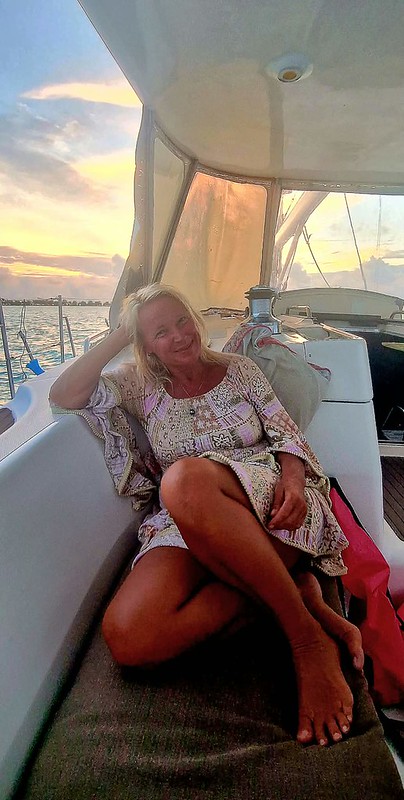
”Sailboat dead ahead of us. Fiji Navalship intend to board you!” A ship from the coast guard calls us on VHF. They don’t call our name and we can’t see any boat either with the naked eye or on the plotter. First. We answer anyway and at the same time see a ship towering diagonally ahead. We quickly lower the sails, start the engine and lie still. Shortly afterwards, a larger rubber dinghy with six people on board comes towards us. Three of whom come aboard. The other three circle around us in the dinghy as if to make sure we don’t run away or become aggressive. They tell us that they’ve seen us for a while and that they’re going to do a routine check. A lot of drugs have been smuggled from Central and South America via the Pacific nations on sailboats to Australia and New Zealand so we understand why. A man goes down into the boat and checks various cupboards, drawers and nooks, one sits and chats with us and one stands guard in the stern. We know that we have nothing illegal with us and feel quite relaxed. After about half an hour the man down in the boat is ready, they shake our hands and thank us for letting them come aboard and for our cooperation. Then we continue towards the marina.

Messenger_creation_9137F7A6-BB25-4D26-8109-AAC06EAA5C65
The navalship is coming towards us
Messenger_creation_8FD6A10B-57BB-468D-8FF7-E33564520734
Waiting outside when we are boarded
Messenger_creation_FEAB2FAB-FEA1-4928-9968-ACBACF4D858A
The nice guy who was talking to us all the time
Messenger_creation_9DFE95E7-1B4B-459A-89C5-A7B90FA829FA
The guard in the back of the boat
Messenger_creation_B50F4569-E29F-430F-A55A-5AC379BD3EC8
They are ready and have left Vilja
Messenger_creation_47319076-6EAC-4DA1-A4CA-695D370C1843
Heading back to the naval ship
Messenger_creation_9B7216C6-FB8F-4EC7-A8E0-332C4673E6CD
The coastline is different from all other places we have been in South Pacific
Messenger_creation_27DB46C1-BD7F-42A7-8427-08B0994992A2
Also this is different, full of mangrove and no palmtrees

Vilket välkomnande hit till Vuda marin på Fiji! 10 personer står och sjunger o spelar musik i säkert 15 minuter! Känner oss så tacksamma o välsignade. Har aldrig varit med om något liknande. Önskar vi skulle ha mer tid här på Fiji men vi vill ju bara reparera och sedan segla norrut igen. Går det på tre dagar är vi nöjda. Men…visst önskar vi att vi hade mer tid, minst två månader för att utforska detta fantastiska och vackra land. Med otroliga människor.

What a welcome to Vuda Marine in Fiji! 10 people standing and singing and playing music for probably 15 minutes! Feeling so grateful and blessed. Never experienced anything like it. Wish we had more time here in Fiji but we just want to repair and then sail north again. If it goes in three days we are happy. But…we certainly wish we had more time, at least two months to explore this amazing and beautiful country. With incredible people.

Messenger_creation_28BD217F-AF4E-448C-8090-6231302F8B8C
The most warnings and lovely welcome we have ever had
Messenger_creation_59B5A031-ECBD-4049-9AC9-7E959B9C3326
They are singing for us in about 10 minutes
Messenger_creation_BF1D1BAE-EEA1-4AFB-ACA9-FD08C53ADC62
And Vilja is blessed with a leaf girlang

Sedan kommer byråkratin….först ca 15 sidor papper att fylla i. Därefter genomgång av all mat vi har ombord. I alla skåp. Och kvinnan som är med mig är inte nådig. Vi har ju provianterat för att segla mot Tuvalu o har frysen proppfull av kött och fisk. O kylen full av mejerivaror. Grönsaker har vi också i mängder. Speciellt lök o Vitlök.  Brukar ha mycket av det. Kvinnan som är med mig tar allt….absolut allt av kött. T o m konserver med kött. Hon pratar med verklig avsky om griskött som bacon och salami. Som förgiftar Fiji, enligt henne. Mat för säkert 2000 kronor, och som vi inte kommer kunna få tag på här, bara försvinner o slängs. Dessutom alla grönsaker. Som tur är får vi behålla all mejeri i alla fall. Jag tömmer ur det ena skåpet efter det andra i hennes åsyn o hon väljer vad vi får behålla. Några skåp blir plomberade o vi får behålla men inte öppna när vi är här i Fiji, men det mesta förs bort, konfiskeras. Alkoholen får vi behålla men det mesta av den blir plomberat. O det är ju inga större problem. Vi skall inte vara här länge och alkohol klarar vi oss utan. Nu öser regnet ner. Lite av den känsla vi har efter att ha fått så mycket mat konfiskerat. Känns jättetråkigt. Men det är vad det är o vi får respektera varje lands regler.

Then comes the bureaucracy…first about 15 pages of paper to fill out. Then a review of all the food we have on board. In all the cupboards. And the woman who is with me is not merciful. We have provisions to sail to Tuvalu and have the freezer full of meat and fish. And the fridge full of dairy products. We also have vegetables in abundance. Especially onions and garlic. Usually have a lot of it. The woman who is with me takes everything…absolutely all meat. Even canned meat. She speaks with real disgust about pork like bacon and salami. Which poisons Fiji, according to her. Food worth probably 2000 kronor, and which we will not be able to get here, just disappears and is thrown away. Also all the vegetables. Luckily, we get to keep all the dairy anyway. I empty one cupboard after another in her sight and she chooses what we get to keep. Some lockers are sealed and we are allowed to keep them but not open them while we are here in Fiji, but most of it is taken away, confiscated. We can keep the alcohol but most of it will be sealed. Oh, that’s no big problem. We won’t be here long and we can do without alcohol. Now the rain is pouring down. A little bit of the feeling we have after having so much food confiscated. Feels really sad. But it is what it is and we have to respect each country’s rules.

Första kvällen går vi på restaurangen på marinan. Det är så underbart att få maten serverad och att sitta vid ett bord och äta isf att ha tallriken i knät och försöka äta samtidigt som båten rullar och lutar. Nu hoppas vi att allt kommer gå smidigt, att reparationen går bra och att vi förhoppningsvis kan segla vidare om tre dagar igen.

The first evening we go to the restaurant at the marina. It is so wonderful to have the food served and to sit at a table and eat instead of having the plate in your lap and trying to eat while the boat rolls and tilts. Now we hope that everything will go smoothly, that the repairs go well and that we can hopefully sail on again in three days.

Messenger_creation_F33AD1A3-F7CF-4833-BBA8-FC195388BF73
We really enjoy the dinner
Messenger_creation_DF8DD5EF-502F-4FB8-AFC0-BA914E0BACA8
Jan had a hamburger and I had lovely lamb