Huj vilken fart vi har! Det blåser 10 – 12 m/s och vi är stundtals uppe i över 8 knop. Sitter på nattvakt och genuan är ordentligt revad, bara en liten trekant kvar. Vinden kom helt plötsligt för ca 1 timme sedan utan förvarning. Inga squalls i närheten och inga starka vindar i väderprognosen. Fryser för första gången på väldigt länge. Har tre lager kläder upptill och 2 nertill men tycker fortfarande att det är kallt. Måste vara under 27 grader celcius.
Wow, what speed we have! The wind is 10 – 12 m/s and we are sometimes up to over 8 knots. I am on night watch and the genoa is completely torn, only a small triangle left. The wind came suddenly about 1 hour ago without warning. No squalls nearby and no strong winds in the weather forecast. Freezing for the first time in a very long time. I have three layers of clothes on top and 2 on the bottom but I still think it is cold. Must be below 27 degrees Celsius.

The first night we had a lot of squalls, red on the photos with us in the middle. But there was not wind

Vi har lämnat Marquesas och är på väg mot ögruppen Tuamotus som ligger på vägen mot Tahiti. På Hiva Oa hade flera av enmansbåtarna kommit in som seglar racet ”Global solo Challenge” med pytte minibåtar runt jorden, endast 5 meter långa. Vilken bedrift! Jan känner sig lite lockad men inte jag. Tala om att leva med små resurser.
We have left the Marquesas and are heading towards the Tuamotus archipelago, which is on the way to Tahiti. At Hiva Oa, several of the one-man boats had arrived who are sailing the ”Global solo Challenge” race with tiny mini boats around the world, only 5 meters long. What an achievement! Jan feels a little tempted but not me. Talk about living with little resources.


Nu har vi seglat i ca 4 dygn och vi närmar oss inloppet till vår första atoll, Raroia, och det känns väldigt pirrigt. Vi är 3 båtar som väntar in rätt tillfälle, så kallat slackvatten. Det är precis då vattnet vänder från högvatten till lågvatten och då strömmen av vatten ändras och det ”stannar upp” lite. Denna gång från att forsa in i atollen i 4 knop till att forsa ut. En liten stund är det stilla ( läs kokande o vilt) isf att forsa i flera knop. Detta krockar samtidigt med vind o vågor som är utanför atollen plus det nya vattnet som vill in så vattnet kokar verkligen i inloppet.
Now we have been sailing for about 4 days and we are approaching the entrance to our first atoll, Raroia, and it feels very nervous. We are 3 boats waiting for the right moment, so-called slack water. That is exactly when the water turns from high tide to low tide and when the flow of water changes and it ”stops” a bit. This time from rushing into the atoll at 4 knots to rushing out. For a little while it is calm (read boiling and wild) then rushing at several knots. This collides at the same time with wind and waves that are outside the atoll plus the new water that wants to enter so the water really boils in the entrance.


Många frågar oss vad en atoll är. Det är en eller flera korallöar eller rev som bildar en delvis eller helt sluten ring med en lagun i mitten. I den lagun vi är på väg in i finns en liten öppning och förutsättningarna är väldigt speciella jämfört med öppet hav.
Many people ask us what an atoll is. It is one or more coral islands or reefs that form a partially or completely closed ring with a lagoon in the middle. In the lagoon we are heading into, there is a small opening and the conditions are very special compared to the open ocean.

Väl inne skall vi snirkla oss fram mellan hundratals boomies, korallpelare som sticker rakt upp från botten till vattenytan. Ofta från mer än 20 meters djup. De vill vi inte stöta emot. Dels pga att de kan göra hål i skrovet och dessutom pga att de blir skadade.
Once inside, we will wind our way between hundreds of boomies, coral pillars that stick straight up from the bottom to the surface of the water. Often from more than 20 meters deep. We don’t want to bump into them. Partly because they can make holes in the hull and also because they get damaged.

Det är en spännande och ny upplevelse att förflytta oss mellan alla dessa ”boomies” i över två timmar. På telefonen har vi en app nedladdad med satellitbilder och den är förvånansvärt precis. Det är lätt att se boomiesarna när vi vet var vi skall se efter dem. Jag sitter i fören och tittar medan Jan sitter bak och styr. Vi kommer fram till ankringen och släpper i vårt ankare. I Marquesas snurrade vi runt ankaret flera varv varje dygn pga alla fallvindar samt stiltje pga de höga bergen. Här är det stadig vind från olika grader av ost.
It is an exciting and new experience to move between all these ”boomies” for over two hours. On our phone we have an app downloaded with satellite images and it is surprisingly accurate. It is easy to see the boomies when we know where to look for them. I sit in the bow and watch while Jan sits in the back and steers. We reach the anchorage and drop our anchor. In the Marquesas we spun around the anchor several times every day because of all the downwinds and calm because of the high mountains. Here there is a steady wind from different degrees of east.

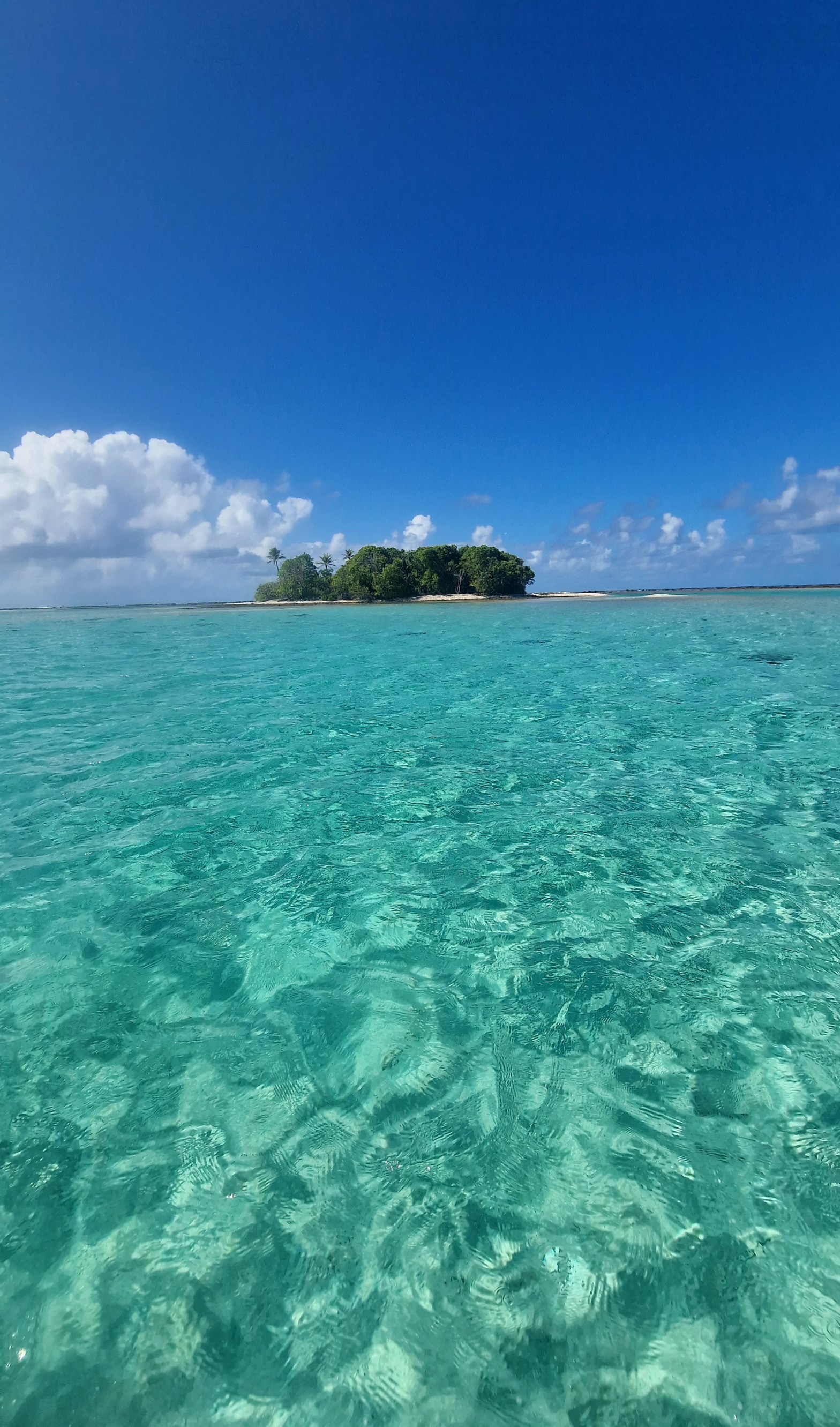
Vid ankringen ligger redan Lulu och det är jättekul att möta dem igen. Vi är inte så jättemånga segelbåtar i denna del av världen. Så att träffa vänner är självklart kul. Här i den nordöstra delen av atollen är det underbart! Kristallklart vatten…igen, stilla hav så att Vilja inte rullar från sida till sida och vi är omringade av små korallöar som är fyllda av palmer.
Lulu is already at anchor and it’s great to meet them again. We don’t have that many sailboats in this part of the world. So meeting friends is of course fun. Here in the northeastern part of the atoll it’s wonderful! Crystal clear water…again, calm seas so that Vilja doesn’t roll from side to side and we are surrounded by small coral islands that are filled with palm trees.


Vi åker ut med jollen för att hitta en plats att ha bbq på stranden. Efter en stund hittar vi den perfekta platsen. Lulu hänger på och nästa dag träffas vi där på eftermiddagen. Elden startas med vissna palmblad och torra kokosnötter och det tar sig jättebra. Jag skulle vilja ha en stor eld – bonfire men vi väljer mindre för att det är lättare att grilla. Precis i vattenbrynet dyker en första revhaj upp. Den simmar endast några meter från våra fötter som är nedgrävda i sanden. Efter den första kommer många fler och under många timmar har vi sällskap av minst 6 vuxna revhajar och dessutom otaliga mindre i olika storlekar. De minsta är så små så de är nästan genomskinliga. Det är en fantastisk upplevelse att ha dem så nära. Vi matar dem med både potatis och ben från kött och de blir helt överlyckliga för båda delarna. När köttbenen landar i vattnet endast 1 meter bort kommer de på 1 sekund och sprattlar runt i vattnet. Såååå häftig upplevelse.
We go out with the dinghy to find a place to have a BBQ on the beach. After a while we find the perfect spot. Lulu joins in and the next day we meet there in the afternoon. The fire is started with withered palm leaves and dry coconuts and it goes really well. I would have liked to have a big bonfire but we choose a smaller one because it is easier to grill. Right at the water’s edge, the first reef shark appears. It swims only a few meters from our feet which are buried in the sand. After the first one, many more come and for many hours we have the company of at least 6 adult reef sharks and also countless smaller ones of different sizes. The smallest ones are so small that they are almost transparent. It is a fantastic experience to have them so close. We feed them both potatoes and bones from meat and they are absolutely overjoyed with both. When the meat bones land in the water only 1 meter away, they come in 1 second and splash around in the water. Soooo cool experience.


Runt Vilja simmar det dagligen minst 5 revhajar. Det känns lite pirrigt att gå i och bada och att göra rent skrovet runt hela båten med revhajarna bara någon meter bort. Men de skall vara helt ofarliga för oss människor.
At least 5 reef sharks swim around Vilja every day. It feels a bit nerve-wracking to go in and swim and to clean the hull around the entire boat with the reef sharks only a few meters away. But they are supposed to be completely harmless to us humans.
Vi stannar på första ankringen i ca 1 vecka och har nu kommit till den lilla ankringsplatsen ”Single Mom”. Det är lätt att förstå hur namnet kommit till. På ön växer endast en stor palm och 1 liten palm. Även om jag nu skulle kalla den lilla palmen för tonåring i stället för litet barn. Den har växt en hel del.
We stay at the first anchorage for about 1 week and have now arrived at the small anchorage ”Single Mom”. It is easy to understand how the name came about. On the island only one large palm tree and one small palm tree grow. Although I would now call the small palm tree a teenager instead of a small child. It has grown a lot.


One big and one small palm
Vi bestämmer oss för att grilla även här och åker in till ön och samlar ihop kokosnötter. De ger en fantastiskt bra glöd. Eftermiddagen njuter vi av god mat, enastående vacker utsikt och ny underhållning av revhajar helt i närheten av oss.
We decide to have a barbecue here too and go to the island and collect coconuts. They give a fantastic glow. In the afternoon we enjoy good food, an exceptionally beautiful view and new entertainment from reef sharks right next to us.


Det här livet skulle vi kunna leva i oöverskådlig tid framöver. Tuamotus är verkligen ett paradis. Och då har vi fortfarande bara kommit till en av alla atoller. Det är så fascinerande att Franska Polynesien, som är ett och samma land, är så totalt olika i sina olika ögrupper. Marquesas där vi först var har höga grönklädda dramatiska berg som stupar rätt ner i havet och här på Toamotus är det endast delvis palmklädda korallatoller som max är ett par meter höga.
We could live this life for an indefinite time to come. The Tuamotus are truly a paradise. And we have still only reached one of the atolls. It is so fascinating that French Polynesia, which is one and the same country, is so completely different in its different island groups. The Marquesas, where we first visited, has high, green-clad dramatic mountains that plunge right into the sea, and here on the Toamotus, there are only partially palm-covered coral atolls that are a maximum of a couple of meters high.


Ny dag och ny ankringsplats bara lite söder om den förra. Denna heter Kon-Tiki eftersom Thor Heyerdahl med besättning, bl a Bengt Danielsson från Sverige, strandade här efter 101 dagar till havs på balsaflotten Kon-Tiki. Det måste ha varit en tuff resa med både stormar och stiltje och knappt någon mat eller vatten. Det var 1947 som resan gjordes och Thor Heyerdahl ville bevisa att människor kunde komma hit till Polynesien från öst eftersom vindar, vågor och strömmar kommer därifrån. En film gjordes om hans resa och den fick en Oscar.
New day and new anchorage just a little south of the previous one. This one is called Kon-Tiki because Thor Heyerdahl and his crew, including Bengt Danie from Sweden, stranded here after 101 days at sea on the balsa raft Kon-Tiki. It must have been a tough journey with both storms and calms and hardly any food or water. The journey was made in 1947 and Thor Heyerdahl wanted to prove that people could get here to Polynesia from the east because winds, waves and currents come from there. A film was made about his journey and it won an Oscar.

Även denna ankring är underbar med sitt turkosa vatten och undersköna utsikt. Vi får bra kontakt med de andra båtarna här och samlas allihop för en ”sundowner” ombord på båten Carosy från Kanada. En stor katamaran med en jättestor sittplats på taket, båtens tredje våning. Här möter vi även svenska båten Zedna och vi är båda förvånade över hur förhållandevis många svenska (och även norska o danska) segelbåtar det är i denna delen av världen. Länder med liten befolkning och så långt bort man kan komma från Skandinavien.
This anchorage is also wonderful with its turquoise water and beautiful views. We get good contact with the other boats here and we all gather for a ”sundowner” aboard the boat Carosy from Canada. A large catamaran with a huge seating area on the roof, the boat’s third floor. Here we also meet the Swedish boat Zedna and we are both surprised at how relatively many Swedish (and also Norwegian and Danish) sailboats there are in this part of the world. Countries with small populations and as far away as you can get from Scandinavia.


Nästa dag tar vi jollen till ön där Kon-Tiki strandade. Hans efterlevande har gjort ett minnesmärke av stenar mitt på ön. Som halvnorsk känns det mäktigt att komma till denna plats med historiens vingslag. Ön är, som sagt, liten och vi går runt den på endast några minuter. Den är bebodd av hundratals små vita och svarta fåglar som inte helt tycker om att vi kommer dit och hälsar på. Det är ju också möjligt att vi stör dem mitt i häckningssäsongen.
The next day we take the dinghy to the island where Kon-Tiki ran aground. His survivors have made a memorial of stones in the middle of the island. As a half-Norwegian, it feels powerful to come to this place with the wings of history. The island is, as I said, small and we walk around it in only a few minutes. It is inhabited by hundreds of small white and black birds that don’t really like us coming there to visit. It is also possible that we are disturbing them in the middle of the breeding season.


Planen var att stanna några dagar till men det skall börja blåsa lite mer i övermorgon så vi beslutar oss för att ta en dygnssegling till nästa atoll redan tidigt imorgon så vi kommer fram före vinden tilltar. Vi ser fram emot att fortsätta upptäcka de olika atollerna som vi har möjlighet att åka in i.
The plan was to stay a few more days but it will start to blow a little more the day after tomorrow so we decide to take a 24-hour sail to the next atoll early tomorrow so we arrive before the wind picks up. We look forward to continuing to discover the different atolls that we have the opportunity to go into.
 Levermittliv