Åh vad jag njuter här i vackra Bohuslän. Jag sitter i min båt, Kailani, ute bland öarna med den vackra röda graniten som är så speciell för denna delen av kusten. Säsongen här lider mot sitt slut och det är knappast en båt ute. För två till tre veckor sedan var här kaos med alla båtar som letade natthamn ute bland klipporna. Nu är det bara att välja och vraka bland de vackraste och mest skyddade och lätt åtkomliga platserna. Här ute på Skarvesäter har jag legat några dagar. Solen har skinit nästan hela tiden men det har blåst en hel del. Speciellt på natten då det varit mer än 18 meter per sekund som mest. Men jag ligger tryggt här även om det är längst ut i havsbandet. Platsen är väl skyddad med sina många fasta dubbar som Kryssarklubben har fäst i bergen.
Oh how I’m enjoying myself here in beautiful Bohuslän. I am sitting in my boat, Kailani, out among the islands with the beautiful red granite that is so special to this part of the coast. The season here is coming to an end and there is hardly a boat out. Two to three weeks ago it was chaos here with all the boats looking for a night port out among the rocks. Now it’s just a matter of picking and choosing among the most beautiful and most protected and easily accessible places. Out here at Skarvesäter, I have been lying for a few days. The sun has been shining almost all the time, but it has been quite windy. Especially at night when it was more than 18 meters per second at most. But I’m safe here, even if it’s at the far end of the ocean strip. The site is well protected with its many fixed studs that the Cruiser’s Club has attached to the mountains
Kailani is getting in to the water
On Bredholmen outside Lysekil
Time flowers growing almost on rocks
Sunset into the ocean
Varje dag åker jag ut med jollen och dörjer makrill. Det blir napp varje dag av detta havets guld. Det är inte mycket som smakar lika gott som nyrökt eller nygrillad helt färsk makrill här ute på klipporna. Vilken lyx att få ha tillgång till detta
Every day I go out with the dinghy and catch mackerel. This gold of the sea is lickt every day. There is not much that tastes as good as freshly smoked or freshly grilled mackerel out here on the rocks. What a luxury to have access to this
Time for a dinghytrip
Today catch. 3 lovely machrels
Vi har varit i Sverige i snart två månader nu sedan vi lämnade Cartagena och livet ombord på Vilja. Det är mysigt att komma hem till Sverige några månader och träffa vänner och familj, segla i Bohuslän, handla saker till Vilja, ta vaccinationer och göra läkarundersökningar och självklart jobba.
We have been in Sweden for almost two months now since we left Cartagena and life aboard Vilja. It’s nice to come home to Sweden for a few months and see friends and family, sail in Bohuslän, shop for things in Vilja, get vaccinations and do medical examinations and, of course, work.
Enjoying life on the cliffs
Jag har bland annat varit i Eskilstuna och hälsat på Tobias och Sandra. Det var såååå underbart att träffa båda två och se var de skall bo nu ett tag framöver.
I have among other things been to Eskilstuna and visited Tobias and Sandra. It was sooooo wonderful to meet both of them and see where they will be living for a while to come.
Visiting Tobias in Eskilstuna
Jag har jobbat mycket ända sedan vi kom hem till Sverige. Och det har varit jättekul! Älskar min arbetsplats där jag arbetade 17 år innan jag sa upp mig förra året. Så det är perfekt att komma in som timvikarie nu när jag är hemma. Det blev ett stort kramkalas de första dagarna när jag fick återse gamla kollegor och även några boende som jag träffat tidigare. Det gick lätt att komma in i alla arbetsuppgifter och det kändes som om jag aldrig varit utanför Sverige. Förhoppningsvis blir det ett arbetspass till innan jag flyger vidare.
I have been working a lot since we came home to Sweden. And it’s been great fun! Love my workplace where I worked for 17 years before resigning last year. So it’s perfect to come in as an hourly substitute now that I’m at home. There was a big hug party the first few days when I got to see old colleagues and also some residents I had met before. It was easy to get into all tasks and it felt as if I had never been outside of Sweden. Hopefully there will be one more shift before I fly on.
Me happy in my boat
Just another sunset
I do never get tired of this archipelago
Eftersom jag jobbar dygnspass blir det en del lediga dagar däremellan. Alla dessa har använts till att åka ut med båten till Gåsöskärgården som ligger aldeles utanför hemmahamnen i Källviken.
Since I work 24-hour shifts, there will be some days off in between. All of these have been used to go out by boat to Gåsöskärgården, which is completely outside the home port in Källviken.
All alone on the Island
Red rocks in the sunset
Love the flowers on the rocks
The very safe harbour on Skarvesäter
Det har varit en rad av sociala möten med vänner från fb-gruppen Mingel & Båtliv. Jättekul med alla möten! Vi har njutit med våra vänner och legat på några av mina pärlor i Gåsöskärgården. En underbar väninna, Gigi, som kommer till mig varje år har också hunnit komma hit. Ett dygn hade vi en mycket lyckad och vacker stjärnankring. Om jag inte tar fel så var vi tolv båtar. Blandad storlek och självklart var även två motorbåtar välkomna. Stjärnankringen blev uppmärksammad av en lokal tidning så den fick publicitet och jättemånga likes.
There have been a series of social meetings with friends from the fb group Mingel & Båtliv. Great fun with all the meetings! We have enjoyed with our friends and lay on some of my pearls in the Gåsö archipelago. A wonderful friend, Gigi, who comes to me every year, has also managed to come here. For a day we had a very successful and beautiful star anchoring. If I’m not mistaken, we were twelve boats. Mixed sizes and of course two motorboats were also welcome. The star anchor was noticed by a local newspaper so it got publicity and lots of likes.
Lars playing on his flute
Jan and me having a bbq with friends overlooking the view
Gigi enjoying her time here on the Westcoast
Star Anchoridge
Apropå det så har en tidning intervjuat även mig. Norra Halland fick nys om vår långsegling och blev jättenyfikna på mitt liv. Från det att jag sålde mitt hus i Onsala och flyttade in i min lilla segelbåt. Tills att jag träffade Jan och att vi gett oss av på vår långsegling som ser ut att bli en jordenrunt-segling.
Speaking of which, a newspaper has also interviewed me. Norra Halland found out about our long-distance sailing and became extremely curious about my life. From the time I sold my house in Onsala and moved into my little sailboat. Until I met Jan and we set off on our long voyage which looks like it will be a round-the-world voyage.
Tiden börjar gå mot sitt slut här i Sverige för denna visit. Snart flyger vi tillbaka till Colombia och vår båt Vilja. Orkansäsongen närmar sig sitt slut men vi kommer ha några månader i Colombia med bl a backpacking in i Sydamerika. Det skall bli spännande!
Time is running out here in Sweden for this visit. Soon we will fly back to Colombia and our boat Vilja. The hurricane season is coming to an end but we will have a few months in Colombia including backpacking into South America. That will be exciting!
Beautiful view in the evening
A lonely sailboat in the sunset
Sometimes the clouds are hanging over the sea
Om ett par dagar börjar vi tömma Kailani, masta av och nästa måndag lyfts hon upp på land. Riktigt kort men ändå härlig intensiv säsong. Nu väntar nya äventyr! Backpacking Sydamerika o sedan Panamas fantastiska övärld i Karibien med San Blas och kanske även Los Boccas. Följ oss för att se vart vi hamnar…blir det genom Panamakanalen eller inte? OM det blir det så blir seglingen riktigt lång framöver med många stora oceaner att korsa. Stilla Havet, Indiska Oceanen och Atlanten två gånger till.
In a couple of days we will start emptying Kailani, mast down and next Monday she will be lifted ashore. Really short but still lovely intense season. New adventures await! Backpacking South America and then Panama’s fantastic island world in the Caribbean with San Blas and maybe even Los Boccas. Follow us to see where we end up…will it be through the Panama Canal or not? IF it happens, the sailing will be really long ahead with many big oceans to cross. The Pacific Ocean, the Indian Ocean and the Atlantic twice more.
Vi är mitt ute på Karibiska havet mellan Jamaica och Colombia. Vågorna går höga, upp mot fyra meter, och havet är rulligt. Uppe på toppen av vågorna skummar det vitt. Runt fören slår vågorna högt, ibland ända bak till sittbrunnen där vi får oss en dusch lite då och då. Det är jobbiga förhållanden ombord då Vilja rycker av och an och stampar mot vågorna samtidigt som hon lutar en hel del. Just när hon lutar åt styrbord (höger) blir det extra jobbigt eftersom köket är på andra sidan och bara man öppnar en skåplucka blir man anfallen av saker som trillar ut. Matlagningen blir lidande och vi lever på redan tillagade vitkålsplättar, rödbetsbiffar och bröd. Tur att seglingen inte kommer ta så lång tid. Bara knappt fyra dygn. Vi har bra vind, runt 10 – 13 meter pr sekund och trots revade segel seglar Vilja fram i över sju knop i snitt.
We are in the middle of the Caribbean Sea between Jamaica and Colombia. The waves are high, up to four meters, and the sea is rough. Up on top of the waves it foams white. Around the bow, the waves hit high, sometimes all the way back to the cockpit where we get a little shower from time to time. It’s difficult conditions on board as Vilja jerks off and on and stomps against the waves at the same time as she tilts a lot. Just when she leans to starboard (right) it becomes extra difficult because the galley is on the other side and as soon as you open a cupboard door you are attacked by things that fall out. Cooking suffers and we live on already cooked white cabbage wedges, beetroot steaks and bread. Luckily the sailing won’t take that long. Just barely four days. We have good wind, around 10 – 13 meters per second, and despite torn sails, Vilja sails along at over seven knots on average.
Vilja during sailing
Sailboat Porrima who left about the same time as us from Jamaica towards Colombia
Dark sky above the sea
Det är sista natten på vakt på denna sidan om orkansäsongen. Det är mörkt men stjärnklart. Månen har inte kommit upp ännu. Jag sitter uppe i sju timmar innan Jan kommer och löser av mig klockan 02 på natten. Det känns fortfarande meditativt att sitta här ensam i en liten båt helt insvept i mörker i gränsen mellan himmel och hav. Det är som en egen liten kokong där Vilja är tryggheten som omsluter oss med sin säkra färd genom havet.
It’s the last night on watch this side of the hurricane season. It’s dark but starry. The moon has not risen yet. I sit up for seven hours before Jan comes and unties me at 02 in the morning. It still feels meditative to sit here alone in a small boat completely enveloped in darkness in the border between sky and sea. It’s like a little cocoon of our own where Vilja is the security that surrounds us with its safe journey through the sea.
Another beautiful sunset
Imorgon kommer vi fram till Cartagena där Vilja skall ligga still ända fram till november någon gång. Vi kommer vara kvar till 25:e juni då vi flyger hem till Sverige ett par månader under sommaren. Min båt, Kailani, skall sjösättas och det blir båtliv även i den vackra Bohusländska skärgården.
Tomorrow we arrive in Cartagena, where Vilja will lie still until sometime in November. We will stay until June 25th when we fly home to Sweden for a couple of months during the summer. My boat, Kailani, will be launched and there will also be boating in the beautiful Bohusland archipelago.
Under the skyes we can see land – Colombia
Långt innan vi kommer in till land ser vi Cartagenas skyline med alla höghus på rad. Ett Manhattan i miniatyr. Det känns både spännande och skrämmande att komma in till en miljonstad efter alla paradisöar vi har besökt. Tala om kontraster. Det är definitivt den största staden vi kommit till under hela vår gemensamma resa. När vi väl tagit oss in genom inloppet är det ett kaos av mindre båtar som åker omkring i hög fart. De flesta är partybåtar som spelar hög musik. Det gäller att hålla utkik åt alla håll för att inte köra på någon eller själva blir påkörda. Efter en timme kommer vi fram till marinan Club de Pesca där vi bokat plats. Det ligger många stora och dyra motorbåtar och det är ganska trångt mellan bryggorna där vår tilldelade plats är. De flesta båtar ligger med aktern inåt och vi tänker lägga till på samma sätt. Jan är van vid det sedan Europa där alla båtar går in med aktern. Bogpropellern har inte riktigt varit att lita på tidigare och den är ett måste för att få båten rätt. Självklart lägger den av och trots flera försök är det omöjligt. Båten kommer in på tvären. Så vi går ut och vänder båten så att fören kommer in först. En massa folk har kommit till bryggan för att hjälpa till och för att skydda båtarna på var sida om oss. Jag går fram i fören och med tre meter kvar signalerar jag att Jan måste bromsa farten. Men sittbrunnen är tom. Jan är borta. Ca fem män på bryggan tar emot Vilja så vi inte går rätt in i bryggan. En person kommer ombord och hjälper till med akterförtöjningarna. Var är då Jan? När vi åker in upptäcker han att det kommer en massa rök inne i båten och det luktar brand. Han placerar fören mellan akterstolparna och släpper direkt att styra Vilja och rusar in för att hämta brandsläckare. Det visar sig att säkringen till bogpropellern har börjat brinna och hela säkringsboxen med ytterligare säkringar är helt förstörda. Trälocket ovanpå visar tydliga spår av brand. Vi har verkligen tur i oturen.Vilken skräck om elden hade tagit sig. Tilläggningen går till historien som den sämsta någonsin och den blir nog svår att slå…
Long before we come in to land, we see Cartagena’s skyline with all the high-rise buildings in a row. A Manhattan in miniature. It feels both exciting and terrifying to enter a city of millions after all the paradise islands we have visited. Talk about contrasts. It is definitely the biggest city we came to during our entire trip together. Once we got through the inlet, it’s a chaos of smaller boats going around at high speed. Most are party boats playing loud music. It is important to keep an eye out in all directions so as not to hit someone or get hit yourself. After an hour we arrive at the Club de Pesca marina where we booked a place. There are many large and expensive motorboats and it is quite crowded between the piers where our assigned place is. Most boats lie with the stern inwards and we intend to add in the same way. Jan is used to it since Europe where all boats go in with the stern. The bow thruster has not really been reliable in the past and it is a must to get the boat right. Of course it shuts down and despite several attempts it is impossible. The boat comes in across. So we go out and turn the boat so the bow comes in first. A lot of people have come to the jetty to help and to protect the boats on either side of us. I go forward in the bow and with three meters to go I signal that Jan must slow down. But the cockpit is empty. Jan is gone. About five men on the jetty receive Vilja so we don’t go straight into the jetty. One person comes on board and helps with the stern moorings. Where is Jan then? When we go in, he discovers that there is a lot of smoke inside the boat and it smells like fire. He places the bow between the sternposts and immediately lets go of steering Vilja and rushes in to get a fire extinguisher. It turns out that the fuse for the bow thruster has started to burn and the entire fuse box with additional fuses is completely destroyed. The wooden lid on top shows clear traces of fire. We are really lucky in the bad luck. What a horror if the fire had spread. The extension goes down in history as the worst ever and it will probably be hard to beat…
Skyline of Cartagena
Going in to Cartagena towards the dock
One part that started to burn
Cartagena är en helt fantastisk stad! Vilja ligger på promenadavstånd in till Getsemane, den gamla stadsdelen, där folkvimlet är stort och mysfaktorn hög. Denna helg är det Cartagenas födelsedag och på måndag helgdagen Corpus Christi och vi tar oss självklart in till Getsemane för att se vad som händer. Det är trångt på gator och torg. Feststämningen är hög. Överallt finns gatustånd där det säljs mat, dryck, drinkar och you name it. På de flesta torg men även på gatorna spelas musik och det är dansuppvisningar, jonglering och allsköns underhållning. Som att vara på karneval. Cartagena är en stad där festen pågår alla dagar i veckan alla veckor om året. Det är lätt att bli förälskad. Uppvisningarna är helt otroliga. Dansen och rytmen sitter i kropparna och glädjen och stoltheten över landet och kulturen lyser om de som uppträder. Det är både barn och vuxna och alla är fantastiskt duktiga. Och de ser ut att ha så roligt.
Cartagena is an absolutely amazing city! Vilja is within walking distance to Getsemane, the old part of town, where the crowd is large and the cozy factor is high. This weekend is Cartagena’s birthday and on Monday the holiday of Corpus Christi and we will of course go into Gethsemane to see what is happening. The streets and squares are crowded. The party mood is high. Everywhere there are street stalls selling food, drinks, drinks and you name it. In most squares but also in the streets, music is played and there are dance shows, juggling and all kinds of entertainment. Like being at a carnival. Cartagena is a city where the party goes on every day of the week, every week of the year. It’s easy to fall in love. The displays are absolutely incredible. The dance and rhythm are in the bodies and the joy and pride of the country and culture shines through those who perform. There are both children and adults and everyone is fantastically talented. And they look like they’re having so much fun.
In a park we saw wild animals
Children on the street
Fruits and other food are sold everywhere
A foodstall selling sqewers
Danceperformance every evening on the streets
Beautiful building
Dance performance
One more beautiful building
Getsemane – the colonial part of Cartagena
Vi går in eller tar en taxi för tjugofem kronor i stort sett varje kväll. Detta är så roligt och vi njuter av livet. Här skall vi vara ända fram till slutet av november. Underbart! Det är så kul att få vara med om allt vi upplever!
We walk in or take a taxi for twenty-five kroner pretty much every night. This is so much fun and we enjoy life. We will be here until the end of November. Wonderfully! It’s so fun to be a part of everything we experience!
Many different dancers on different squares and streets
This dance is like african dance
Fram till vi flyger hem till Sverige om knappt två veckor skall vi arbeta en massa i och på Vilja. För att orka göra något i hettan har vi startat vår AC. Åh vad skönt det är att ha torr och sval ( 29 grader) luft inne i båten! Och så mycket lättare det känns att sova utan den fuktiga 38 grader varma luften. Det behövs nästan en filt för att inte frysa. Nu går det att torka ur skåp och skrymslen, vacuumförpacka, tvätta och fixa med allt utan att svetten rinner i pölar ner på golvet.
Until we fly home to Sweden in just under two weeks, we will be working a lot in and at Vilja. In order to be able to do something in the heat, we have started our AC. Oh how nice it is to have dry and cool (29 degrees) air inside the boat! And it feels so much easier to sleep without the humid 38 degree warm air. You almost need a blanket to keep from freezing. Now you can wipe out cupboards and nooks and crannies, vacuum pack, wash and fix everything without the sweat running in puddles onto the floor.
Onsdag eftermiddag lämnar vi Cienfuego. Vi har legat här med båten i sjutton dygn. Under den tiden har vi gjort två underbara resor in i landet Kuba. Havanna tog oss verkligen med storm och det är nog den mest fascinerande stad jag någonsin upplevt. Skulle hemskt gärna vilja komma tillbaka dit någon gång. Vem vet, kanske det blir så. Vår andra utflykt blev till den charmiga staden Trinidad bara en och en halv timmas resa från Cienfuego. Denna stad är med på Unescos world Heritage Site. Vi slogs av skönheten även i denna lilla koloniala stad. Inga storslagna hus som i Havanna men vackra historiska envåningshus i rader målade i pastellfärger. Gatorna utgörs av kullersten som är ganska påfrestande att gå på men absolut vackert och säkert bra massage för fötterna o träning för balanssinnet.
Wednesday afternoon we leave Cienfuego. We have been here with the boat for seventeen days. During that time, we have made two wonderful trips into the country of Cuba. Havana really took us by storm and it is probably the most fascinating city I have ever experienced. Would love to come back there sometime. Who knows, maybe it will be. Our second excursion was to the charming town of Trinidad, just an hour and a half’s journey from Cienfuego. This city is included in the UNESCO World Heritage Site. We were struck by the beauty even in this small colonial town. No grand houses like in Havana but beautiful historic one-story houses in rows painted in pastel colors. The streets consist of cobblestones which are quite stressful to walk on but absolutely beautiful and certainly good massage for the feet and exercise for the sense of balance.
One of all horses in town
It is beautiful
A nice car even here
Vi stannar i Trinidad i två dagar under vilka vi promenerar runt stora delar av dagarna. Alla människor som vi möter är även här otroligt vänliga och nyfikna. Att vi kommer från Sverige och med en liten båt imponerar. Många kvinnor ber oss om tvål och huvudvärkstabletter samt mjölkpulver. Bristen på allt är stor och så enkla saker hade hjälpt deras vardag om vi hade haft att dela ut.
We stay in Trinidad for two days during which we walk around most of the days. All the people we meet here are also incredibly friendly and curious. The fact that we come from Sweden and with a small boat is impressive. Many women ask us for soap and headache tablets as well as powdered milk. The lack of everything is great and such simple things would have helped their everyday life if we had had to hand out.
We really like the houses
In the big square there is a church
Another beautiful car
Vi sätter oss ner på en servering strax innan lunch första dagen och det dröjer bara några minuter innan ett 5-mannaband börjar spela musik. Detta är så otroligt häftigt och unikt med Kuba. All denna livemusik! Både dag och kväll och, med musiken, kommer glädjen den förmedlar och som vi ser hos lokalbefolkningen.
We sit down at a table just before lunch on the first day and it only takes a few minutes before a 5-man band starts playing music. This is so incredibly cool and unique about Cuba. All this live music! Both day and night and, with the music, the joy they convey and that we see in the locals.
Live music again
Jan enjoys a cold beer
På kvällen är det en stor musikgrupp på torget och människor samlas. De är nio eller tio i bandet och stämningen är hög. Det dröjer inte länge innan dansgolvet fylls upp. Både av turister och lokalbefolkning. Efter en kort stund går strömmen i hela staden. Publiken tänder sina tändare och bandet fortsätter spela så gott det går. Dansen fortsätter och stämningen är fortfarande lika hög. Alla gör det bästa av situationen och nya instrument, som inte kräver förstärkare, plockas fram. Det är så härligt att se hur feststämningen kvarstår och att inget får stoppa glädjen. Strömmen kommer tillbaka o salsadansen fortsätter. Troligen till långt ut på småtimmarna. Vi går och lägger oss runt midnatt då Jan brygger på en förkylning sedan några dagar tillbaka.
In the evening there is a large music group in the square and people gather. There are nine or ten of them in the band and the mood is high. It doesn’t take long before the dance floor fills up. Both by tourists and locals. After a short while, the power goes out in the whole city. The crowd lights their lighters and the band continues to play as hard as they can. The dancing continues and the mood is still as high. Everyone makes the best of the situation and new instruments, which do not require amplifiers, are picked up. It’s so wonderful to see how the party atmosphere remains and that nothing can stop the joy. The power comes back on and the salsa dancing will probably continue well into the wee hours. We go to bed around midnight as Jan has been suffering from a cold for a few days.
Dagen därpå vandrar vi runt i byn på dess kullerstensgator. Ute på gatorna sker mycket av transporten med häst och vagn. Något vi ser över hela Kuba. Det är charmigt, det är vackert och det ger en känsla av att vara tillbaka på 1500-talet. Christofer Columbus sägs ha landstigit någonstans här i trakterna för nästan 550 år sedan Han skickade iland spejare som meddelade att lokalbefolknigen var fredlig och åkte sedan vidare. Några tiotal år senare ockuperar Spanien Kuba. Vi lämnar Trinidad med en känsla av att få ha sett en speciell by. Unik på många sätt.
The next day we wander around the village on its cobbled streets. Out on the streets, much of the transport takes place by horse and cart. Something we see a lot of all over Cuba. It’s charming, it’s beautiful and it gives a feeling of being back in the 16th century. Christopher Columbus is said to have landed somewhere in this area almost 550 years ago. He sent scouts ashore to report that the local population was peaceful and then moved on. A few decades later, Spain occupies Cuba. We leave Trinidad with the feeling of having seen a special village. Unique in many ways.
Age doesn’t matter, everyone can ride
A horse hoping for food at the restaurant
More horses on the street
In a colonial restaurant
Buying vegetables
Looks fresh
En kväll är vi hembjudna till Dags kompis Alex. En polack som bott i Sverige men de senaste 20 – 30 åren på Kuba. Han är gift här och har ett litet hus med bakgård. Vi får en inblick i hur det verkliga livet på Kuba ter sig. Och vi får en fantastiskt god middag. Lite på samma sätt som när vi varit bjudna på middag i Thailand. Gästerna sitter ner vid ett bord och njuter av maten medan värdparet servar med mat och dryck. På bakgården har familjen en gris, en kalkon, en hund och några kycklingar.
One evening we are invited to the home of Dag’s friend Alex. A Pole who lived in Sweden but the last 20 – 30 years in Cuba. He is married here and has a small house with a backyard. We get an insight into what real life in Cuba looks like. And we get a fantastically good dinner. A bit in the same way as when we were invited to dinner in Thailand. The guests sit down at a table and enjoy the food while the host couple serves food and drinks. In the backyard, the family has a pig, a turkey, a dog and some chickens.
Alex with his small pig
And the turkey
Dag skall lämna oss och flyga tillbaka till Guatemala. Det är sista kvällen tillsammans och Jan och Dag sätter sig på däck för att röka var sin kubansk cigarr tillsammans. Lite som en kul grej att göra på Kuba. Dag är van vid att röka cigarr men det är inte Jan. Vilket betyder att Jan både har svårt för att få eld på cigarren och att han hostar en hel del. Det är tydligt vem som njuter mest av den! Efter en tredjedels cigarr ger Jan upp och sparar cigarren till ett senare tillfälle.
Dag will leave us and fly back to Guatemala. It’s the last evening together and Jan and Dag sit down on the deck to smoke a Cuban cigar together. Kind of like a fun thing to do in Cuba. Dag is used to smoking cigars but Jan is not. Which means that Jan both finds it difficult to light the cigar and that he coughs a lot. It’s clear who enjoys it the most! After a third of the cigar, Jan gives up and saves the cigar for a later occasion.
Dag och Jan njuter av cigarrstund
Dagen därpå drabbas även jag av förkylningen. Det är tungt att röra sig i värmen med hosta, snuva och förkyldtungt huvud. Tråkigt men förkylning är väl en del av livet. Ett par dagar går och det blir min födelsedag. Jag är inte pigg o inte heller Jan. Men vi tar oss in till Cienfuego och äter en lyxig middag på en takterrass med livemusik. Dyrt för att vara på Kuba men väl värt pengarna för att fira. Nästa dag skall vi lämna Cienfuego o segla österut längs med kusten mot slutmålet på Kuba som är Santiago de Cuba.
The next day I also get a cold. It is difficult to move in the heat with a cough, runny nose and heavy head. Sad, but colds are part of life. A couple of days pass and it’s my birthday. I’m not alert and neither is Jan. But we make it to Cienfuego and have a luxurious dinner on a roof terrace with live music. Expensive to be in Cuba but well worth the money to celebrate. The next day we will leave Cienfuego and sail east along the coast towards the final destination in Cuba, which is Santiago de Cuba.
Three red Roses on the birthday
Lovely dinner on a rooftop restaurant
And of course livemusic
Vinden lyser med sin frånvaro och vi ligger och guppar ute på havet. Vi rör oss framåt i ca en knop. Med andra ord inte alls. Plötsligt tornar mörka moln upp sig. Det börjar in över land och vi hör hur det mullrar. Oväder är definitivt på ingång. Då vi inte har radar inkopplad, eftersom den slår ut vår gps o plotter av någon anledning, så kan vi inte följa ovädret mer än med blotta ögat. Vi beslutar oss för att reva storseglet så det blir mindre segelyta uppe. Att gå för fulla segel in i ett oväder vill vi inte riskera. Det blir inte bara enorma krafter utan det sliter också på de segel som är uppe. Natten fortgår med i stort sett motorgång. Ovädret drar förbi men de svaga vindar vi har, går rakt emot oss. Det är väntat då vi går åt motsatt riktning mot hur vinden brukar blåsa. Vi går dessutom emot ett par knops ström. Jag mår riktigt dåligt i min förkylning så Jan tar hela nattskiftet och låter mig vila. Der är jag väldigt tacksam för. Vi väntas vara framme på vår ö nästa förmiddag. Efter att ha legat i inre hamnar, både inne i Rio Dulce och andra ställen, utan kristallklart turkost vatten på väldigt länge så är det verkligen det vi längtar efter. Att bada i fantastiskt hav.
The wind shines with its absence and we lie bobbing out on the sea. We move forward at about one knot. In other words, not at all. Suddenly dark clouds tower up. It starts over land and we hear how it rumbles. Stormy weather is definitely coming. Since we don’t have radar connected, because it knocks out our gps and plotter for some reason, we can’t follow the storm more than with the naked eye. We decide to take down the mainsail so that there is less sail surface up top. We don’t want to risk going full sail into a storm. Not only are there enormous forces, but it also wears on the sails that are up. The night continues with mostly motoring. The storm is passing but the weak winds we have are heading straight for us. This is to be expected as we are going in the opposite direction to how the wind usually blows. We are also going against a couple of knots of current. I feel really bad with my cold so Jan takes the whole night shift and lets me rest. I am very grateful for that. We are expected to arrive at our island next morning. After lying in inner harbors, both inside the Rio Dulce and elsewhere, without crystal clear turquoise water for a very long time, this is really what we long for. To swim in fantastic sea.
Vi har lagt till och har nu en ö helt för oss själva! Underbart! Så nu kan vi njuta av turkost vatten, öar och enskildhet i fem till tio dagar. Utan trängsel. Imorgon möter vi en vänbåt, Embla med Viveka och Erik, från Stockholm, som vi seglade över Atlanten tillsammans med och som vi mötte senast i Honduras. Det skall bli jättetrevligt! Såååå häftigt att vi båda har seglat med våra egna båtar ända från Sverige, seglade över Atlanten tillsammans och nu möts på en liten remote ö i Kuba. Hur stor är sannolikheten??? Här längs kusten finns ju knappast en enda segelbåt.
We have anchored and now have an island all to ourselves! Wonderfully! So now we can enjoy turquoise water, islands and privacy for five to ten days. Without congestion. Tomorrow we meet a friend’s boat, Embla with Viveka and Erik, from Stockholm, with whom we sailed across the Atlantic together and whom we last met in Honduras. It will be great fun! Sooooo cool that we have both sailed with our own boats all the way from Sweden, sailed across the Atlantic together and now meet on a small remote island in Cuba. How big is the probability??? Here along the coast there is hardly a single sailboat.
Swimming with the mountains of Cuba in the background
Jag har nästan svårt för att ta in det! Vi ligger med Vilja i en ganska väl skyddad naturhamn. I bakgrunden ser vi bergsmassiv på huvudön Kuba. Solen skiner, havet är turkosblått och vi har seglat ända hit!
I almost have a hard time taking it in! We lie with Vilja in a fairly well-protected natural harbour. In the background we see the mountain massif on the main island of Cuba. The sun is shining, the sea is turquoise blue and we have sailed all the way here!
Embla har kommit till oss, ett dygn efter att vi ankrat. Nu skall vi segla tillsammans eventuellt ända fram till Jamaica men åtminstone till Santiago de Cuba. Det är jättekul att ses igen och vi har så mycket att prata om. Eftersom vi inte gjort någon upptäcktsfärd med jollen ännu ger vi oss iväg med båda våra jollar ett varv runt ön. Vi kommer till andra sidan ön där det finns en lagun som vi hittar en smal öppning in till. Här finns mängder av döda träd och mangrove. Perfekt för krokodiler! Men vi ser tyvärr ingen trots att vi håller ögonen öppna. Hela ön är täckt av mangrove och det finns inte en enda strand att ta sig iland på. Men nu kan vi åtminstone säga att vi åkt runt ön.
Embla has come to us, a day after we anchored. Now we will sail together possibly all the way to Jamaica but at least to Santiago de Cuba. It’s great to see you again and we have so much to talk about. Since we haven’t made any discovery trips with the dinghy yet, we set off with both our dinghies for a lap around the island. We reach the other side of the island where there is a lagoon to which we find a narrow opening. There are lots of dead trees and mangroves here. Perfect for crocodiles! But unfortunately we don’t see anyone even though we keep our eyes open. The entire island is covered in mangroves and there is not a single beach to land on. But now we can at least say that we went around the island.
We are taking our dinghy around the Island
Nästa dag ligger vi still och tar det lugnt. Förkylningen och hostan sitter fortfarande tyvärr i. På kvällen blir vi hämtade av Erik för att äta hummermiddag ombord på Embla. Viveca o Erik bytte till sig fyra stora hummerstjärtar för några dagar sedan. Åh vad gott det smakar! Under tiden som vi sitter där ser vi en båt som kör rakt emot oss. Det är en fiskebåt som vill byta till sig rom mot hummerstjärtar. Vi nappar direkt och de får en liten flaska rom mot tre (vi trodde det var fyra) hummerstjärtar. Ca 20 kronor kostade rommen. Det får bli till en förrätt framöver. Kvällen är jättetrevlig och vi kommer tillbaka till Vilja mätta och glada. Imorgon skall vi ta oss till en ö längre västerut.
The next day we lie still and take it easy. Unfortunately, the cold and cough are still there. In the evening we are picked up by Erik to have a lobster dinner on board Embla. Viveca and Erik bought four large lobster tails a few days ago. Oh how good it tastes! While we are sitting there, we see a boat heading straight towards us. It’s a fishing boat that wants to trade rum for lobster tails. We nibble right away and they get a small bottle of rum for three (we thought it was four) lobster tails. The rum cost about SEK 20. It may become an appetizer in the future. The evening is very pleasant and we return to Vilja full and happy. Tomorrow we will make our way to an island further west.
The fishingboat
Erik and Viveka onboard Embla
Det är tidig morgon och fortfarande mörkt när klockan ringer. Planen är att komma iväg vid 07 – tiden. Det blåser ca 15 meter i sekunden och vi kommer ha motvind och troligen motström. Det är flera korallrev att ta oss förbi och därmed inget öppet hav att kunna kryssa på. Vi förstår att det kommer bli i stort sett bara motorgång och ett väldigt stampande mot vågorna. Och vi har rätt. Nu har vi varit på väg i fyra timmar av troliga minst tio timmar. Det är stampigt och obekvämt och motorn får verkligen jobba. Vi går verkligen åt ”fel håll” för att segla på sydsidan Kuba. Men har inte mycket val om vi vill se lite och komma fram till Santiago de Cuba för utcheckning innan vi seglar söderut mot Jamaica. Vinden avtar och vågorna försvinner nästan helt så sista halva sträckan är bekväm och vi kommer fram till Cayo Cuervo innan det blir mörkt. Det är en stor lagun med ett flertal öar runtomkring. Många med vackra små sandstränder. Inne i lagunen ligger en stor tvåmastad båt. Strax efter ankomst kommer ett par från båten med en vacker liten segelbåt. Det visar sig att mannen seglat i ca tjugo år och är inne på sitt tredje varv runt jorden. Kvinnan har varit med i tio år. Häftigt! Vilket liv de lever och vilka upplevelser de varit och är med om.
It is early morning and still dark when the clock rings. The plan is to leave at 07:00. The wind is about 15 meters per second and we will have a headwind and probably a headwind. There are several coral reefs to get past and thus no open sea to be able to cruise on. We understand that it will be largely just motoring and a lot of pounding against the waves. And we are right. Now we’ve been on the road for four hours out of probably at least ten hours. It’s clunky and uncomfortable and the engine really gets to work. We are really going in the ”wrong direction” to sail on the south side of Cuba. But don’t have much choice if we want to see a bit and arrive in Santiago de Cuba for check-out before sailing south to Jamaica. The wind dies down and the waves disappear almost completely so the last half stretch is comfortable and we arrive at Cayo Cuervo before dark. It is a large lagoon with several islands around it. Many with beautiful small sandy beaches. Inside the lagoon is a large two-masted boat. Shortly after arrival, a couple comes off the boat with a beautiful little sailboat. It turns out that the man has been sailing for about twenty years and is on his third lap around the world. The woman has been involved for ten years. Cool! What life they live and what experiences they have been and are part of.
Out on the sea
”Sailing” together with Embla
The French couple in their small sailingboat
We had a nice chat on Vilja
Vi sover länge nästa morgon. Lite ut på dagen är det dags för upptäcktsfärd med jollen. Första stoppet blir en liten orörd sandstrand med en mini ”gren” som i Skagen. Alltså en smal sanddyna. Det är otroligt vackert med kritvit sand, turkost hav och blå himmel. Det känns som att vara i paradiset. Efter ett dopp i havet tar vi jollen en bit bort till en pytteliten ö som såg så lockande ut igår när vi kom in med Vilja. Och vilket paradis! På ena änden av den lilla ön är det några träd och resten av ön är bara en smal sandremsa som kanske är fyrtio meter lång och femton meter bred på det bredaste. Även här med en ”Skagengren”. Här känner vi oss verkligen som Robinson Cruzoe. På stranden finns fullt av vackra snäckor och sjöborrar som lyser mot oss. Det kristallklara havet lockar och det blir bad även här. Vi känner verkligen att vi lever ett fantastiskt och priviligierat liv. Så underbart!
We sleep long the next morning. A little later in the day, it’s time to go exploring with the dinghy. The first stop will be a small untouched sandy beach with a mini ”sandbank” like in Skagen. So a narrow sand dune. It is incredibly beautiful with chalky white sand, turquoise sea and blue sky. It feels like being in paradise. After a dip in the sea, we take the dinghy a little further to a tiny island that looked so inviting yesterday when we came in with Vilja. And what a paradise! At one end of the small island there are a few trees and the rest of the island is just a narrow strip of sand maybe forty meters long and fifteen meters wide at its widest point. Also here with a ”Skagen sandbank”. Here we really feel like Robinson Crusoe. On the beach there are lots of beautiful shells and sea urchins that shine at us. The crystal clear sea beckons and there is also swimming here. We truly feel that we live a wonderful and privileged life. How wonderful!
On a lonely Island
Beautiful colours
Getting closer to a tiny Island
It’s a paradise
Robinson Crusoe Island
I just had to take a swim
Crystal clear water
On the way back to Vilja again
På eftermiddagen umgås vi med Viveka och Erik. Vi blir bjudna över till skonaren som ligger i viken och där äter vi mat, umgås, pratar och njuter fram till ganska sent på kvällen. Det är sådana här dagar och kvällar vi kommer se tillbaka på och prata om lång tid framöver.
In the afternoon we hang out with Viveka and Erik. We are invited over to the schooner which is in the bay and there we eat, hang out, talk and enjoy ourselves until quite late in the evening. It is days and evenings like these that we will look back on and talk about for a long time to come.
Cava and snacks onboard Vilja
The beautiful skonert
Bbq onboard
Idag är det dags för en ny etapp österut. Vinden är svag och rakt emot oss så det blir motorgång. Hoppas vår diesel räcker ända fram till Santiago de Cuba och att det finns att köpa mer där. Vi är strax framme och just nu förflyttar vi oss mellan korallrev, små mangroveöar och sandbankar.
Today it is time for a new stage to the east. The wind is weak and directly against us so it will be motoring. Hope our diesel lasts all the way to Santiago de Cuba and that there is more to buy there. We are almost there and right now we are moving between coral reefs, small mangrove islands and sandbanks.
Det blir bara en natt på Cayo Granada och nu är vi på väg igen. Orkansäsongen närmar sig så vi väljer att ta sträckor varje dag för att först komma till Santiago de Cuba där vi skall checka ut från Kuba och sedan segla mot Jamaica. Vi har lite tidspress då vi behöver vara i Colombia senast om en månad. Där är vi tryggare för orkaner och där kommer vi lämna båten några månader i sommar när vi åker till Sverige.
It will only be one night on Cayo Granada and now we are on our way again. The hurricane season is approaching so we choose to take routes every day to first get to Santiago de Cuba where we will check out of Cuba and then sail to Jamaica. We are under a bit of time pressure as we need to be in Colombia in a month at the latest. There we are safer from hurricanes and there we will leave the boat for a few months this summer when we go to Sweden.
Vinden är bra idag så vi kan segla! Underbart efter att ha kört så mycket för motor. Vi seglar fram i över sex knop och njuter. Sedan avtar vinden…just nu är det i stort sett stiltje och motorn får jobba igen. Även idag har vi dryga femtio nautiska mil att tillryggalägga och vi hoppas komma fram runt klockan 18 som vi gjort de andra dagsetapperna. Här på Kuba går solen inte ner förrän klockan 20 på kvällen i stället gör 18 som vi är vana vid. Det beror på olika tidszoner och jämfört med Guatemala så ligger vi två timmar före.
The wind is good today so we can sail! Wonderful after driving so much for engine. We sail along at over six knots and enjoy ourselves. Then the wind dies down…right now it’s pretty much quiet and the engine gets to work again. Even today, we have about fifty nautical miles to cover and we hope to arrive around 6 pm as we did the other day’s stages. Here in Cuba, the sun doesn’t set until 8pm, instead it’s 6pm which we’re used to. It depends on different time zones and compared to Guatemala we are two hours ahead.
Solnedgång på Cayo Granada
Ny dag och ny etapp. Vi hinner tyvärr inte se så mycket utan det är mest en transportsträcka. Inte riktigt vad jag önskar. Men, men vi får följa väderprognosen. Idag öser regnet ner så det hade inte varit någon större idé att ta sig in till den lilla byn ändå. Förhoppningsvis avtar det tills vi är framme på nästa plats. Där ligger vi kanske två nätter innan sista sträckan längre resa med nattpass.
Seglingen fortsätter. Det går trögt mot mål. Väldigt trögt. Tur att vädret är bra och att solen skiner. Vi njuter allihop av själva seglingen men anar fortfarande inte när vi kommer fram till vårt mål. Även om Predict vind påstår natt mellan onsdag och torsdag. Vindarna är inte med oss. Det blåser ordentligt, ca 24-26 knop, och vi har en riktigt bra fart. Men den envisas med att vara rakt emot oss så att vi får fortsätta kryssa. Segla norr-söder och tillbaka igen är inga problem. Vi har passerat Mexikanska ön Isla Conzumel flera gånger. Avståndet ökar lite för varje gång. Men Vilja kämpar på och gör seglingen njutbar. Sakta, sakta tar hon oss närmre målet. Hon bjuder upp till dans med fulla segel, dansar sig igenom våg efter våg och leker med det djupblå havet. Runt fören skummar det och ibland dyker hon ner såpass djupt så en våg slår över hela sittbrunnen, som för att bjuda med även oss.
The sailing continues. It is moving slowly towards the goal. Very slowly. Luckily the weather is good and the sun is shining. We all enjoy the sailing itself but still have no idea when we will arrive at our destination. Although Predict wind claims night between Wednesday Thursday. The winds are not with us. The wind is good, about 24-26 knots, and we have a really good speed. But it insists on being right at us so we continue tacking against the wind. Sailing north-south and back again is no problem. We have passed the Mexican island of Isla Conzumel several times. The distance increases a little each time. But Vilja fights on and makes sailing enjoyable. Little by little she brings us closer to the goal. She invites you to dance with full sail, dancing her way through wave after wave and playing with the deep blue sea. There is foam around the bow and sometimes she dives down so deep that a wave hits the entire cockpit, as if to invite us too.
Vi sitter ofta och drömmer oss bort. Tittar ut över hav och horisont med sina nyanser av blått. Skiftningarna som solen ger olika tider på dagen, molnen som speglar sig och månens sken gör det blå både varierande och fantastiskt. Som balsam för själen. Det är otroligt meditativt och vi tröttnar aldrig.
We often sit and dream away. Looking out over the ocean and horizon with its shades of blue. The shifts that the sun gives at different times of the day, the clouds that reflect and the moonlight make the blue both varied and fantastic. Like balm for the soul. It is incredibly meditative and we never get tired.
Sometimes more mild blue colorsAnd sometimes clear and deep blueThe sun makes the sea glitterAnd on sunset it is goldenDawn is beautiful Sunrise comes with new colors.
Tiden flyter ihop till ett och timmarna passerar utan att vi blir uttråkade på resans väg. Tankarna får tänkas klart utan att vi blir avbrutna av måsten, tider att passa eller en telefon som ringer. Det är utvecklande och nyttigt. Ett sätt att komma närmre sig själv och ett sätt att leva här och nu. Det enda vi behöver ta hänsyn till är vinden, mötande båtar och självklart säkerheten. En befriande känsla. Vi har inga tider att passa, det får ta den tid det tar.
Time flows into one and the hours pass without us getting bored on the journey. The thoughts can be thought clearly without being interrupted by musts, times to fit or a phone ringing. It is edifying and useful. A way to get closer to yourself and a way to live here and now. The only thing we need to take into account is the wind, oncoming boats and of course safety. A liberating feeling. We don’t have times to fit, it can take as long as it takes.
Jan just sitting enjoying life
Några göromål har vi förstås. Jag lagar mat och Jan o Dag diskar, vi fiskar, läser, trimmar segel och nu när vi kryssar måste vi jobba mer med själva seglingen. Vi hämtar hem väderprognoser från internet, skriver blogg och försöker hålla sittbrunn och inne i båten så rent det går. Det kan vara en utmaning när båten lutar så mycket så vi måste gå på snedden och samtidigt hålla i oss helst med båda händerna. Inte lätt att laga mat under de förhållandena. Att gå på toaletten är också ett litet konststycke. Det är svårt att dra ner byxorna utan att släppa taget om det man håller sig fast vid och ännu svårare att få dem tillbaka på plats igen. Tur att det är varmt så vi inte har mycket kläder på oss.
Of course, we have some things to do. I cook and Jan and Dag do the dishes, we fish, read, trim the sails and now that we are tacking against the wind we have to work more on the sailing itself. We download weather forecasts from the internet, write a blog and try to keep the cockpit and inside the boat as clean as possible. It can be a challenge when the boat tilts so much that we have to walk on the slant and at the same time hold on preferably with both hands. Not easy to cook in those conditions. Going to the toilet is also like an adventure. It’s hard to pull your pants down without letting go of what you’re holding on to and even harder to get them back on. Luckily it’s warm so we don’t have a lot of clothes on.
Tacking requires some jobWashing the dishesCocking is a challwhen the boat is tilting a lotSometimes we need to fix things on foredeckThe net for lifting up the fishes we catchReading is so relaxingJan and me together
Vi har med mat för ca sju dagar. Nu är vi inne på dag sex. Vår fiskelycka har gett oss flera måltider och luncherna blir oftast enkla med rester, nudlar eller annan enkel mat. I frysen finns mat för två dagar till. Sedan blir det att improvisera med torrmat som ris, pasta, torkade bönor, konserver och annan torrmat. Färska grönsaker kommer bestå av groddar. Jag har en första sats mungbönsgroddar på gång. Här finns även alfaalfa, bovete, kikärter och linser att grodda. Dricksvatten har vi tillräckligt ett bra tag till och vi snålar med kranvattnet. Det används endast till matlagning. Så det går ingen nöd på oss. Det är väl bara dusch och hårtvätt som saknas. Hygienen sköts med tvättlappar men håret behöver verkligen tvättas nu.
We have brought food for about seven days. We are now on day six. Our fishing luck has given us several meals and the lunches are usually simple with leftovers, noodles or other simple food. There is food in the freezer for two more days. Then you have to improvise with dry food such as rice, pasta, dried beans, preserves and other dry food. Fresh vegetables will consist of sprouts. I have a first batch of mung bean sprouts in the making. There are also alfalfa, buckwheat, chickpeas and lentils to sprout here. We have enough drinking water for quite a while and we skimp on the tap water. It is only used for cooking. So there is no need for us. It’s probably only a shower and a hair wash that are missing. Hygiene is managed with washcloths, but the hair really needs to be washed now.
Finally I got a quick showerPumping up drinkingwater from a big watertank to a smaller
Sjätte natten på vakt och det blåser ordentlig. Det viner kring masten och havet brusar runt mig. Vilja mer stampar sig fram nu. Det är kolsvart. Varken månen eller stjärnor syns på himmelen. Jag fick precis en ordentlig dusch då en stor våg slog över båten. Vattnet forsade över mig i sittbrunnen och nu sitter jag här dyngblöt och frusen. Det rinner från huvudet och håret ner på kroppen. Det är en konstig känsla att frysa efter all hetta vi haft senaste månaden. Alla sittdynor är dyngblöta så det blir att sitta på de hårda träbänkarna framöver. En timme kvar för mig innan vaktavlösning. Vi har ett rev i storseglet och bara stormfocken uppe. Det borde inte vara för mycket. Jag tittar ständigt på vindmätaren för att se vindstyrkan och om den ökar. Den ligger på 24 – 26 knop. Plötsligt känns det lite kusligt att sitta här ensam i mörkret. Jag har aldrig känt så tidigare men efter att jag fick duschen och jag sitter och lyssnar på vinandet känns det lite läskigt. Jag litar fullt och helt på Vilja och vi har seglat i betydligt värre vind än det här. Men ändå. Inne i båten ligger Jan och Dag och sover. Jag vet att det bara är att väcka om jag anser att vi behöver sätta ett rev till. (minska segelytan på storseglet) men beslutar mig för att avvakta lite till. Troligen till vaktbytet. Jag fortsätter hålla koll och tittar ut i mörkret. När Dag kommer upp säger jag mina tankar och vi väcker Jan så att seglet kan revas. Dessutom gör vi ett slag norrut igen. Har vi tur är detta det sista slaget.
Sixth night on duty and it’s really windy. There is wind around the mast and the sea roars around me. Willingness for more stomps forward now. It is jet black. Neither the moon nor stars are visible in the sky. I had just had a good shower when a big wave hit the boat. The water rushed over me in the cockpit and now I sit here dung soaked and frozen. It flows from the head and hair down the body. It’s a strange feeling to freeze after all the heat we’ve had in the last month. All seat cushions are dung-soaked, so you will have to sit on the hard wooden benches in the future. One hour left for me before shift change. We have a reef in the mainsail and only the storm jib up. It shouldn’t be too much. I am constantly looking at the anemometer to see the wind strength and if it is increasing. It is at 24 – 26 knots. Suddenly it feels a little eerie to sit here alone in the dark. I’ve never felt like that before but after I got in the shower and I sit and listen to the whining it feels a little scary. I completely trust Vilja and we have sailed in significantly worse winds than this. Yet. Jan and Dag are sleeping inside the boat. I know it’s only a wake-up call if I think we need to add another reef. (reduce the sail area on the mainsail) but decide to wait a little longer. Probably for the changing of the guard. I continue to keep track and look out into the darkness. When Dag comes up, I say my thoughts and we wake Jan up so that the sail can get reefed. In addition, we make a move north again. If we’re lucky, this will be the last blow.
Idag växer vågorna sig större än tidigare under seglingen. Vinden är på väg att vända mer mot SO så vi kan sträcka oss närmre mot öst än förut under veckan vi varit ute. Det känns skönt att styra nästan mot målet. Vi har ca en till två knops motström vilket självklart bromsar farten en hel del. Men med revet ute igen seglar Vilja på bra.
Today, the waves grow bigger than before during sailing. The wind is about to turn more towards the SW so we can stretch closer to the east than before during the week we were out. It feels good to steer almost towards the goal. We have about one to two knots of headwind, which of course slows down the speed quite a bit. But with the reef out again, Vilja is sailing well.
Ny dag och nu, äntligen, börjar vi närma oss Kuba. Om det går bra så har vi mindre än ett dygn kvar. Det är onsdag idag så torsdag verkar vara rimligt att komma fram. Det skall bli jättespännande att komma dit. Kuba känns exotiskt och framförallt annorlunda. Och annorlunda är det med all säkerhet. Fattigdomen är hög och det är brist på allt. Mat är en av de stora bristvarorna. Vi kommer inte kunna bunkra upp mat igen som överallt annars där vi varit. Vi får helt enkelt äta den mat vi får tag på. Förhopningsvis finns det åtminstone lite grönsaker. Ägg är tydligen en stor bristvara liksom fisk och kött. Vatten och diesel att fylla båten med finns bara på ett fåtal ställen så det gäller att ransonera. Internet kommer också vara svårare att komma åt och många vanliga sidor, så som Hotmail och Facebook, är blockerade. Jag har VPN så jag hoppas att jag kan komma igenom. Men det kan hända att det inte blir någon uppdatering på flera veckor. Vi vet inte när vår Starlink slutar fungera – vi räknar med att även den är blockerad på Kuba så detta inlägget kommer förhållandevis lång tid innan vi kommer fram. Vi hoppas, under vår vistelse, kunna göra flera resor inåt land och uppleva denna fantastiska ö som väcker mycket känslor. Vi kommer till sydsidan av Kuba så Havanna lockar självklart som ett utflyktsmål. Liksom Guantanamo och Santiago de Cuba.
New day and now, finally, we begin to approach Cuba. If it goes well, we have less than a day left. Today is Wednesday so Thursday seems reasonable to arrive. It will be very exciting to get there. Cuba feels exotic and above all different. And it is certainly different. Poverty is high and there is a lack of everything. Food is one of the major shortages. We won’t be able to stockpile food again like everywhere else we’ve been. We simply have to eat the food we get our hands on. Hopefully there are at least some vegetables. Eggs are apparently in great short supply, as are fish and meat. Water and diesel to fill the boat with are only available in a few places, so you have to ration. The internet will also be harder to access and many common sites, such as Hotmail and Facebook, are blocked. I have VPN so I hope I can get through. But it may happen that there will be no update for several weeks. We don’t know when our Starlink stops working – we expect that it is also blocked in Cuba, so this post will come a relatively long time before we arrive. We hope, during our stay, to be able to make several trips inland and experience this amazing island that evokes a lot of emotions. We are coming to the south side of Cuba, so Havana naturally attracts as an excursion destination. Like Guantanamo and Santiago de Cuba.
Skärtorsdag, Guatemala, Fest! Vi tar jollen till Backpacker bar. Det är stället med stort S man skall vara på denna kväll. Festen är redan i full gång. Vid jollebryggan står en starkt beväpnad vakt. Vi börjar bli vana vid alla dessa beväpnade vakter nu efter flera månader i Centralamerika. När vi parkerar jollen för att handla mat i affären är det alltid minst sju starkt beväpnade vakter vi passerar.
Maundy Thursday, Guatemala, Party! We take the dinghy to Backpacker bar. This is the place with a capital S to be tonight. The party is already in full swing. A heavily armed guard stands at the dinghy dock. We are getting used to all these armed guards now after several months in Central America. When we park the dinghy to buy food at the store, we always pass at least seven heavily armed guards.
Vakten tittar först på oss men när vi sedan skall komma iland sträcker han snällt fram sin ena hand för att hjälpa oss. Jan undrar om han skall skjuta med den andra då han inte släpper taget om vapnet med den.The guard looks at us at first, but when we are about to disembark, he kindly extends one of his hands to help us. Jan wonders if he should shoot with the other one as he won’t let go of the weapon with it.
Väl inne på Backpacker är det disco o karaoke om vartannat. Festen är i full gång. Guatemalierna festar loss på alla sätt. Ölen flödar, dansen är het och stämningen är hög o uppsluppen. Vi fascineras över dessa vackra kvinnor med rumpor som står rakt ut.
Once inside Backpacker, there is a disco and karaoke every second. The party is in full swing. Guatemalans party in every way. The beer is flowing, the dancing is hot and the atmosphere is high and cheerful. We are fascinated by these beautiful women with butts that stick out.
Folk är varma o svettas men inget stoppar dansen o stämningen. Olga o Dag är i feststämning o dansar utan hämningar. Vad härligt! Vilken glädje! Jublet är högt o det känns som att festen bara har börjat. Troligen pågår den fram till småtimmarna. Gammal som ung det finns inga gränser. Rytmen finns i kroppen och axlar, höfter o rumpor gungar i takt till musiken. Knappt någon sitter stilla utan alla låter musiken o rytmen strömma genom kropparna ända ut i fingerspetsarna. Många kvinnor i korta o snäva kjolar o med höga klackar. Männen i shorts, T-shirt o keps på huvudet. Alla är här för att ha kul, för att festa o för att njuta av livet . Vid en del musik gungar hela golvet i takt och alla skriker ut texten från populära låtar. Jublet visar inga gränser o alla är här och nu…I festen…I glädjen o på partyt ”Rock around the clock” just nu. Annars är det mest låtar på spanska. Vi lämnar runt midnatt när dansgolvet fortfarande är fullt och musiken dånar ut.
People are hot and sweating, but nothing stops the dancing or the atmosphere. Olga and Dag are in a party mood and dance without inhibitions. How lovely! What joy! The cheers are loud and it feels like the party has only just begun. It probably lasts until the wee hours. Old or young there are no limits. The rhythm is in the body and shoulders, hips and buttocks swing in time to the music. Hardly anyone sits still, but everyone lets the music and rhythm flow through their bodies all the way to their fingertips. Many women in short or tight skirts or with high heels. The men in shorts, T-shirts and caps on their heads. Everyone is here to have fun, to party and to enjoy life. During some music, the entire floor sways to the beat and everyone shouts out the lyrics of popular songs. The jubilation shows no boundaries and everyone is here and now…In the party…In the joy and at the ”Rock around the clock” party right now. Otherwise, it’s mostly songs in Spanish. We leave around midnight when the dance floor is still full and the music is blaring.
På väg tillbaka till båten ser vi en buske som är helt vitprickig. Det är här många vita hägrar har slagit sig till ro för att sova på natten. Vi fascineras av mängden fåglar och det är otroligt vackert med fullmånen bakom. På det kala trädet bredvid som har tappat alla sina blad sover de svarta skarvarna. Stanken är stark av all fågelspillning men vi stannar ändå ett tag i månskenet och njuter av åsynen.
On the way back to the boat, we see a bush that is completely white-spotted. This is where many white herons have settled down to sleep at night. We are fascinated by the amount of birds and it is incredibly beautiful with the full moon behind. On the bare tree next to it, which has lost all its leaves, the black cormorants sleep. The stench is strong from all the bird droppings, but we still stay for a while in the moonlight and enjoy the sight.
På långfredags morgon hade vi hört om en båtprocession så vi går upp tidigt för att inte missa den. Gissa om vi blir snopna, förvånade o lite besvikna när det endast är tre båtar som dyker upp. Vi höll på att missa den helt. I en liten båt längst fram finns en präst och ett stort kors som Jesus bär på. Prästen går iland på några redan utvalda ställen och välsignar (tror jag) bostaden eller företaget.
On Good Friday morning we had heard about a boat procession so we get up early so as not to miss it. Guess if we’ll be dumbfounded, surprised or a little disappointed when only three boats show up. We were about to miss it completely. In a small boat at the front is a priest and a large cross that Jesus carries. The priest goes ashore at some already selected places and blesses (I think) the home or business.
Sedan flyter påsken på. Det är trångt på sjön på grund av alla guatemalier som är här. Alla har plockat fram vattenskotrar och motorbåtar i alla storlekar. Helikoptrar syns tätt då många flyger hit eller härifrån. De flesta troligen från Guatemala City. Lugnet lägger sig sedan söndag kväll då alla tar sig hem för att börja arbetsveckan igen efter upp till en veckas ledighet.
Then Easter flows on. It is crowded on the lake because of all the Guatemalans who are here. Everyone has brought out jet skis and motorboats of all sizes. Helicopters are often seen as many fly here or from here. Most probably from Guatemala City. The calm settles down since Sunday evening when everyone goes home to start the work week again after up to a week off.
För oss går livet på som vanligt. Vår glädje över delen till watermakern blir kortvarig. Då den monterades igen läcker pumpen som ett såll. Så nu står vi här fortfarande utan watermaker och funderar på om vi skall chansa på att det räcker att köpa en ny pump som i så fall får bli skickad till Sverige eller Colombia eller om vi köper en helt ny watermaker i sommar. Tills dess får vi fortsätta snåla ned vattnet och köpa vårt dricksvatten
For us, life goes on as usual. Our joy over the part for the watermaker is short-lived. When it was reassembled, the pump leaks like a sieve. So now we are still standing here without a watermaker and thinking about whether we should take a chance on the fact that it will be enough to buy a new pump, which in that case has to be sent to Sweden or Colombia, or if we buy a brand new watermaker this summer. Until then, we must continue to skimp on water and buy our drinking water
Jans födelsedag kombineras med en avseglingsgrillning på Mar Marin. Vi grillar, dricker cays, letar efter gömt påskgodis, samtalar och njuter av gitarr och skönsång av några av deltagarna. Det är en riktigt lyckad kväll
Jan’s birthday is combined with a closing barbecue at Mar Marin. We grill, drink cays, look for hidden Easter candy, chat and enjoy guitar and beautiful singing by some of the participants. It’s a really successful evening
Cava to everyone is on the wayHappy participants on the bbqGitarr and singingAll of us after Hunting for eastercandy
Några dagar senare och, Äntligen, lämnar vi Rio Dulche och Guatemala (utan watermaker) Det har varit fantastiskt här med otroliga människor och vi har upplevt mycket. Men 6-7 veckor räcker och vi vill se mer. Färden går först till en vik strax innan floden ut mot Livingston o havet. När vi kommer ut ur floden och över sandbanken sätter vi segel mot Kuba. Med oss på seglingen mot Kuba följer Dag från Hönö. Vi har umgåtts en hel del och att vara en till som delar på nattpassen är aldrig fel. Det kommer troligen bli en tuff segling både mot strömmen och mot vinden – åtminstone de sista dagarna. Vi beräknar att det kommer ta ca en vecka men det kan ta längre tid än så.
A few days later and, Finally, we are leaving Rio Dulche and Guatemala (without watermaker) It has been amazing here with incredible people and we have experienced a lot. But 6-7 weeks is enough and we want to see more. The journey first goes to a bay just before the river out towards Livingston and the sea. When we get out of the river and over the sandbar, we set sail for Cuba. With us on the sailing to Cuba is Dag from Hönö. We’ve been hanging out a lot and being another sharer of the night shifts is never wrong. It will probably be a tough sailing both against the current and against the wind – at least for the last few days. We estimate that it will take about a week, but it may take longer than that.
Idag åker vi ner för floden med alla dess krökar ut mot havet. Vägen är otroligt vacker med höga berg, grönska och ett väldigt rikt fågelliv. Vi har strömmen med oss så det går fort.
Today we go down the river with all its bends towards the sea. The road is incredibly beautiful with high mountains, greenery and a very rich bird life. We have the power with us so it goes fast.
The green colours are amazingVilja in the middle of the riverMore river……and more lush green colors
Going down the river
Väl framme i Livingston går vi till Rauls kontor. Han är agent och sköter allt pappersarbete samt bokar tid med Hector som är den man som arrangerar två båtar som drar och tittar oss ut genom den grunda sandbanken. Nu är allt klart, vi är utcheckning och Vilja är klar för avsegling mot nya äventyr
Once in Livingston, we go to Raul’s office. He is the agent and takes care of all the paperwork and makes the appointment with Hector who is the man who arranges two boats to pull and look us out through the shallow sandbar. Now everything is ready, we are checking out and Vilja is ready to set sail for new adventures
Lot of pineapples for almost no money. Guatemala is a cheap countryStreetviewAnd more streetviewAn icecold beer is lovely in the heatLivingston harbour. From here it’s close to both Belize and Honduras Facing out on the big Caribbean ocean
Nu väntar ca en veckas segling åt NO innan vi når Kubas sydsida. Det kommer troligen bli en tidvis tuff segling med både motvind och motström i slutet. Eventuellt kommer vi även in i ett stiltjebälte. Vi set jättemycket fram emot det här!
Wow vilken fantastisk resa vi har gjort båda två tillsammans in till höglandet i Guatemala. Det är verkligen ett otroligt land som har rikt varierande upplevelser och hänförande natur att bjuda på.
Wow what a fantastic trip we both made together into the interior of Guatemala. It is truly an incredible country that has richly varied experiences and breathtaking nature to offer.
Vi packar våra ryggsäckar och tar en tidig buss på morgonen till Guatemala City. Det är nästan ett måste att åka tidigt om man sedan skall ta sig vidare samma dag. Resan tar även denna gång ca sex timmar och är mycket bekväm. Vi tar en Uber till det vi tror är busshållplatsen för bussar mot Antigua men väl framme visar sig det vara fel. En tungt beväpnad vakt med skottsäker väst och sin k-pist nästan skjutklar förklarar för oss på spanska. Så vi tar ytterligare en taxi som kör oss till rätt plats. Där möter en inkastare oss som visar oss fram till bussen. Man får otroligt bra service på busshållplatserna i Guatemala. Vi får våra platser längst bak i bussen och resan mot Antigua fortsätter i långsam takt. Inkastaren springer konstant utanför bussen o raggar fler passagerare – även om bussen redan är mer än till synes proppfull
We pack our backpacks and take an early morning bus to Guatemala City. It is almost a must to leave early if you are going to continue on the same day. The journey also takes about six hours this time and is very comfortable. We take an Uber to what we think is the bus stop for buses to Antigua but once there it turns out to be wrong. A heavily armed guard with a bulletproof vest and his k-pist almost ready to go explains to us in Spanish. So we take another taxi that takes us to the right place. There an usher meets us and shows us to the bus. You get incredibly good service at the bus stops in Guatemala. We get our seats at the back of the bus and the journey to Antigua continues at a slow pace. The Inca star constantly runs outside the bus and grabs more passengers – even though the bus is already more than apparently full
Jan on the Litegua bus to Guatemala City From the bus when we leave Guatemala City
Resan tar ca tre timmar för det är mitt i rusningstrafiken och det verkar dessutom bara ett stopp mitt på vägen någonstans.
The journey takes about three hours because it is in the middle of rush hour traffic and it also seems like just a stop in the middle of the road somewhere.
Vi kommer fram till Antigua och hittar lätt vårat hotell. Därefter går vi en promenad i den charmerande byn, tittar på folklivet och äter mat från ett gatustånd. Det blir en tidig kväll då vi var uppe i gryningen och hade en lång resa bakom oss. Dessutom väntar en ny resa kommande dag
We arrive in Antigua and easily find our hotel. Afterwards, we go for a walk in the charming village, watch people’s life and eat food from a street stall. It will be an early evening as we were up at dawn and had a long journey behind us. In addition, a new trip awaits the next day
Jan outside the beautiful Iglecia de la MercedIt was a wedding in the church that daySanta Catalina Arch
Att åka lokalbussarna som liknar cirkusbussar är ett äventyr. Det är fullt av liv både i och utanför bussarna, det är trångt, otroligt skumpigt och alltid lika spännande med ovissheten om vi blir tillsagda var vi skall gå av och om vi skall hinna av i tid för att byta buss. Bussarna stannar dessutom inte riktigt utan man hoppar på och av i farten med all packning. Första bytet går väldigt smidigt. En man möter oss, tar vår packning och springer i förväg till nästa buss. Det är han som är inkastare, tar betalt och organiserar allt i bussen så att chauffören endast behöver koncentrera sig på att köra bussen. Vi åker fram på serpentinvägar i full fart och om det inte hade varit så trångt i bussen hade vi haft svårt för att sitta kvar på sätet i de skarpa svängarna.
Riding the local buses that resemble circus buses is an adventure. It’s full of life both inside and outside the buses, it’s crowded, incredibly murky and always just as exciting with the uncertainty of whether we’ll be told where to get off and whether we’ll make it in time to change buses. The buses also don’t really stop, instead you jump on and off on the fly with all your luggage. The first change goes very smoothly. A man meets us, takes our pack and runs ahead to the next bus. He is the usher, takes payment and organizes everything in the bus so that the driver only has to concentrate on driving the bus. We drive along serpentine roads at full speed and if it hadn’t been so crowded in the bus, we would have had a hard time staying on the seat in the sharp turns.
Även nästa byte går smidigt o vi börjar resan ner mot Lake Atitlan i ännu snävare kurvor. Lake Atitlan ligger på ca 1500 meters höjd och vi har som högst varit uppe på ca 2100 meter.
The next change also goes smoothly and we start the journey down towards Lake Atitlan in even tighter curves. Lake Atitlan is at an altitude of about 1500 meters and we have been up to about 2100 meters at the highest.
Lake Atitlan är omgärdad av vulkaner, både aktiva och utslocknade. De reser sig ända upp till nästan 4000 meters höjd. Sjön med dess omgivningar sägs vara den vackraste i världen och den blev nominerad till ett av världens sju ”nya” underverk. Den säga också vara en av de mest unika platserna i världen. Sjön bildades genom ett vulkanutbrott för ca 84000 år sedan. Det är hänförande vackert att komma ner till sjön och se vulkanerna som omringar sjön insvepta i ett dis. Vi hade bokat rum i byn San Pedro som är den by där det är mest utvecklat för turister. Alla byar runt sjön är byggda så att det är många branta backar upp och ner från den högre delen av byn och ner mot strandkanten.
Lake Atitlan is surrounded by volcanoes, both active and extinct. They rise up to an altitude of almost 4,000 meters. The lake and its surroundings are said to be the most beautiful in the world and it was nominated as one of the seven ”new” wonders of the world. It is also said to be one of the most unique places in the world. The lake was formed by a volcanic eruption about 84,000 years ago. It is breathtakingly beautiful to come down to the lake and see the volcanoes surrounding the lake shrouded in a haze. We had booked rooms in the village of San Pedro which is the village where it is most developed for tourists. All the villages around the lake are built so that there are many steep slopes up and down from the higher part of the village down towards the shore.
Our lake- and vulcanoeview from the hotelThe beautiful viewA boat bring people between the village on Lake Atitlan The view againSan Pedro main streetThe market in the morning in San PedroThe lakeside of San PedroStreetfood in the eveningLakeview in San Pedro againNot so much variation….banans, banans and bananas
Nästa dag åker vi på en utflykt till tre olika byar. Första stoppet är Santiago Atitlan. En by med en enorm marknad. Vi promenerar igenom delar av marknaden där det bl a säljs både kött, fisk, grönsaker, frukt och vackra tyger. De trafitionella kläderna som de flesta kvinnor bär är handgjorda och tar flera månader att tillverka. Här på landsbygden går i stort sett alla kvinnor och flickor i dessa vackra kläder. Män och pojkar har däremot mer och mer börjat använda ”vanliga” kläder.
The next day we go on an excursion to three different villages. First stop is Santiago Atitlan. A village with a huge market. We walk through parts of the market where, among other things, meat, fish, vegetables, fruit and beautiful fabrics are sold. The traditional clothes that most women wear are handmade and take several months to make. Here in the countryside, pretty much all women and girls wear these beautiful clothes. Men and boys, on the other hand, have increasingly started to use ”regular” clothes.
Beginning of the big marketA Lady segling vedgetablesCandles and incence for mayan ceremoniesInside the marketColorful fruitsColorful couple with beautiful viewEven the locals want to have photos with the beautiful view of the lake and vulcanoes
Vår guide berättar att det finns ca 24 helt olika mayaspråk. Alla pratar dessutom spanska som är det gemensamma språket i Guatemala. Många är katoliker men utövar fortfarande traditionella maya-riter. En mycket uppskattad gudom i Guatemalas högland är Maximon. Vi går längs med en massa trånga gränder och kommer till sist in på en bakgård. Där inne i ett rum tillbeds Maximon. Det finns flera Maximon där inne och hans attribut kan vara solglasögon, bandana, hatt och färgstarka girlanger. I hans mun finns ständigt en brinnande cigarett och öl och sprit ställs fram till honom i glas. De som tillber honom dricker också öl under ceremonin. Maximon tillbeds bl a för lycka i arbetet, i äktenskapet, för hälsan och inför döden. Han representerar både mörker och ljus och tros ha uppstått i samband med att Spanien invaderade Guatemala. Det känns magiskt och nästan ockult att sitta där och se på Maximon och när de tillber honom.Our guide tells us that there are about 24 completely different Mayan languages. Everyone also speaks Spanish, which is the common language in Guatemala. Many are Catholic but still practice traditional Mayan rites. A highly valued deity in the highlands of Guatemala is Maximon. We walk along a lot of narrow alleys and finally come into a backyard. There, in a room, Maximon is worshipped. There are several Maximons in there and his attributes can be sunglasses, bandana, hat and colorful garlands. There is always a burning cigarette in his mouth and beer and spirits are served to him in glasses. Those who worship him also drink beer during the ceremony. Maximon is worshiped, among other things, for luck in work, in marriage, for health and before death. He represents both darkness and light and is believed to have arisen in connection with the Spanish invasion of Guatemala. It feels magical and almost occult to sit there and watch Maximon and when they worship him.
Maximon with flowers, candles and a cigaretter in his mouthTwo Girls beside MaximonMaximon
Nästa by vi kommer till är San Juan. Där lär vi oss hur de tillverkar och färgar bomullstråden de använder för att väva de vackra tygerna till kvinnornas kläder samt en mängd nyttoföremål. Vi får också se hur de tillverkar choklad av kakaobönor. Chokladen sägs ha sin födelseplats bland mayafolket i just Guatemala och de är mycket stolta över sin choklad. Orden kakao och choklad kommer från mayaspråket. Det finns lämningar från kakao ända tillbaka till 450 år f kr i de kungligas gravar och det var endast de högst uppsatta i mayakulturen som fick dricka och äta choklad. Guatemala är även känt för sitt goda kaffe. Höglandet med vulkanisk näringsrik jord skall vara perfekt för att odla kaffebönor.
The next village we come to is San Juan. There we learn how they manufacture and dye the cotton thread they use to weave the beautiful fabrics for the women’s clothing as well as a variety of useful items. We also get to see how they make chocolate from cocoa beans. Chocolate is said to have its birthplace among the Mayan people in Guatemala and they are very proud of their chocolate. The words cacao and chocolate come from the Mayan language. There are remains of cocoa as far back as 450 BC in the tombs of the royals, and only the highest-ranking in Mayan culture were allowed to drink and eat chocolate. Guatemala is also known for its good coffee. The highlands with volcanic, nutrient-rich soil should be perfect for growing coffee beans.
Here the girl dip the thread in colours from a flowerA lot of different colorsMaskingevär chokolate from the cacaobean
I San Juan finns också många konstnärer som målar på gator, trottoarer och väggar. Över dessa gator hänger också mängder av paraplyer och lyktor. Det finns också vackra krukor, läderarbete, vackra textilier och skulpturer
In San Juan there are also many artists who paint on streets, sidewalks and walls. Many umbrellas and lanterns also hang over these streets. There are also beautiful pots, leather work, beautiful textiles and sculptures
New painted streetUmbrellas and light over the painted streetLocal musiciansArt on wall
Sista byn vi kommer till är San Marcus. Det är en charmig och liten by med smala gränder, små serveringar, yogaretreats och en del små affärer där de säljer vackra vävda föremål. Här är det en större community av expaths från framförallt Nordamerika.
The last village we reach is San Marcus. It is a charming and small village with narrow alleys, small restaurants, yoga retreats and some small shops selling beautiful woven items. Here there is a larger community of expats from primarily North America.
On the boat between the villagesA farmer by the lake in San Marcus Peaceful viewVulcanoe and the lake It’s soo beautiful ä
Hela utflykten är mycket innehållsrik och vi känner oss mycket nöjda med dagen.
The entire excursion is very informative and we feel very satisfied with the day.
Tidigt nästa morgon ger Jan sig iväg på en vandring upp till toppen av vulkanen San Pedro. Den är 3020 meter hög och vandringen, som brukar ta tre timmar klarar gruppen av på endast två och en halv timma. Det är fantastisk utsikt där uppifrån och väl värt ansträngningen med klättring uppåt på den höga höjden med tunn luft. Att gå ner igen tar dock på knäna så tanken att göra en två dagar lång vulkanklättring med övernattning på toppen får Jan tyvärr avstå. Jag har inte rätt skor så ingen av vulkanturerna är möjliga för mig. Min kondition är troligen dessutom för dålig.
Early the next morning, Jan sets off on a hike up to the top of the San Pedro volcano. It is 3020 meters high and the group can complete the hike, which usually takes three hours, in only two and a half hours. It’s a great view from up there and well worth the effort of scrambling up the high altitude with thin air. However, going down again takes a toll on the knees, so Jan unfortunately has to give up the idea of doing a two-day volcano climb with an overnight stay at the top. I don’t have the right shoes so none of the volcano tours are possible for me. My fitness is also probably too bad.
More than half var up and it is beautiful Jan on top of vulcano San Pedro
Nästa morgon går vi upp redan klockan 03.30 för att promenera upp till Indian Nose där vi kommer få se soluppgången över Lake Atitlan. Det är flera stora grupper med guider som promenerar upp samtidigt för att få uppleva detta mäktiga skådespel. Vi vandrar upp i totalt mörker med pannlampor tända. För mig, och många andra,blir det en tuff vandring i den tunna luften men oj vad vackert det är. Vi ser först endast konturerna av berg och vulkaner. Himlen börjar sedan färgas i alla skiftningar från ljusgult till gult, guld, brandgult, orange, rosa och lila. Det är en magisk upplevelse. Och i fjärran syns hela tiden rök från en aktiv vulkan utanför Antigua. Vilken känsla! Det är en bild som satt sig i minnet och som kommer vara vacker att plocka fram en mörk, blåsig och ruskig novemberdag i Sverige.
The next morning we get up already at 03.30 to walk up to Indian Nose where we will see the sunrise over Lake Atitlan. There are several large groups with guides who walk up at the same time to experience this powerful spectacle. We hike up in total darkness with headlamps on. For me, and many others, it will be a tough hike in the thin air but oh how beautiful it is. At first we see only the outlines of mountains and volcanoes. The sky then begins to color in all variations from light yellow to yellow, gold, fiery yellow, orange, pink and purple. It is a magical experience. And in the distance, smoke is constantly visible from an active volcano outside Antigua. What a feeling! It is an image that stuck in my memory and that will be beautiful to pick out on a dark, windy and horrible November day in Sweden.
Smoke from the active volcano near AntigusIt’s well worth the walk up in the dark to see this sunriseThe sun is risig over Lake Atitlan Silhuettes of us on Indian NoseNow the sun has come over the vulcanoes
Dagen därpå påbörjar vi vår resa tillbaka till Vilja i Rio Dulche. Först med buss till Antigua där vi stannar en natt. Sedan blir det lokalbuss till Guatemala City där vi skall ta den lyxigare bussen vidare. Det är tur att vi inte vet vad vi har framför oss. Den resan har tidigare tagit ca sex till sju timmar. Vad vi inte vet är att det ät ett vägarbete på en bro och att det därför är kö precis hela sträckan på ca 27 mil. Vi är därför först framme i Rio Dulce vid midnatt tretton timmar senare. Pust vilken jobbig och lång resa. Stackars chauffören som får köra i kö hela denna resa. Vi har åtminstone möjlighet att luta oss tillbaka och vila ögonen.
The following day we begin our journey back to Vilja in Rio Dulche. First by bus to Antigua where we stay one night. Then there will be a local bus to Guatemala City where we will take the more luxurious bus on. It’s lucky that we don’t know what lies ahead. That trip has previously taken about six to seven hours. What we don’t know is that there is road work on a bridge and that there is therefore a queue for the entire distance of about 27 miles. We therefore first arrive in Rio Dulce at midnight thirteen hours later. Breathe, what a hard and long journey. Poor driver who has to drive in line this whole trip. At least we have the opportunity to sit back and rest our eyes.
A stop in Antigua on the way backMarket in Antigua A cute girl Playing with the dovesThree generationsWe bought a bottle of wine, some cheece and olives in the evening
Nu sitter vi ombord på Vilja och väntar fortfarande på delar till watermakern.
Now we are sitting on board Vilja and still waiting for parts for the watermaker.
Tillbaka i båten och tillbaka i Placencia. Det var uppiggande och intressant med en kulturell utflykt men samtidigt skönt att vara hemma i segelbåten igen. Nu hoppas vi komma ut i Belize skärgård med alla cays.
Back in the boat and back in Placencia. It was invigorating and interesting with a cultural excursion, but on the same time, nice to be back home in the sailboat. Now we hope to get out into the Belize archipelago with all the cays.
One of all cays
En fascinerande upplevelse med att segla i Belize är att man kan vara ute på havet i flera timmar utan att se en enda annan båt. Visst händer det att det är några andra båtar vid en populär cay men oftast är man ensam i paradiset. På en del av dessa cays, framförallt utanför Placencia, kommer det turbåtar ett par timmar på dagen. Men på kvällen har man ön för sig själv igen. Turismen är, som sagt, i sin vagga här med några få undantag.
A fascinating experience with sailing in Belize is that you can be out at sea for hours without seeing a single other boat. Of course it happens that there are a few other boats at a popular cay, but usually you are alone in paradise. On some of these cays, especially outside Placencia, there are tour boats for a couple of hours a day. But in the evening you have the island to yourself again. Tourism is, as I said, in its infancy here with a few exceptions.
Totally alone on the seaLooks like open sea but here are coralreefs everywhere
Vi sticker tyvärr ofta för djupt, 2.10, vilket begränsar oss mer än vi önskar. Många cays kommer vi inte fram till över huvud taget även om det ser ut att vara öppet hav och vi måste ofta släppa ankaret långt ut från de vi faktiskt kan komma fram till. Det beror på korallreven som är en egen värld under havsytan. För att navigera oss fram använder vi en bok av Freya Raucher som med sina handritade kartor och utförliga beskrivningar är som en bibel för alla seglare.
Unfortunately, our draft is too deep, 2.10 meters, which limits us more than we wish. We don’t reach many cays at all, even if it looks like open sea, and we often have to drop the anchor far from the ones we can reach. It depends on the coral reefs that are one own world under the sea surface. To navigate our way, we use a book by Freya Raucher, which with its hand-drawn maps and detailed descriptions is like a bible to all sailors.
Vi stannade i Placencia ett par dagar innan vi åkte ut mot nya mål. Båten behövde städas och fixas med och vi hade mycket tvätt som skulle tvättas. Även i detta liv finns det en vardag och praktiska saker som måste ordnas. Det var skönt att inte stressa iväg någonstans dessutom. Men efter två dagar satte vi kursen i rak motvind och motström mot idylliska Moho Cay. En palmklädd ö några timmar från Placencia.
We stayed in Placencia for a couple of days before heading out to new destinations. The boat needed cleaning and fixing and we had a lot of laundry to wash. Even in this life there are everyday and practical things that have to be arranged. It was also nice not to rush off somewhere. But after two days we set course in straight headwind and headwind towards idyllic Moho Cay. A palm-covered island a few hours from Placencia.
We do never get tired of this viewA dream to sit here looking out on the seaRestrooms with a viewRobinson Cruise lifeHundred of palmtrees, with a lot of coconutsVilja out in the sea and we took the dinghy in on shore
Än en gång har vi kommit till ett paradis med kristallklart turkost vatten, fantastiska rev och en palmklädd sandö. Tror aldrig vi tröttnar på det. Stillheten, utsikten och känslan av att vara i paradiset. Dagarna gick sin gilla gång och en dag blev plötsligt till tre. Vi njuter i sanning av varenda dag. Tänk att få leva det liv vi verkligen älskar och önskat oss!
Once again, we have arrived at a paradise with crystal clear turquoise water, fantastic reefs and a palm-clad sand island. I don’t think we’ll ever get tired of it. The silence, the view and the feeling of being in paradise. The days went by and one day suddenly turned into three. We truly enjoy every single day. Imagine living the life we really love and wished for!
Another beautiful sunsetTurquoise crystal clear water with palmtrees
På Moho bor det två män som sköter om ön. De städar, krattar och tar in betalning från gästande båtar och dagturister. Och viktigast av allt, de serverade kokosnötrom! Vi beställde var sin och de gick då ut bland palmerna med sina machete och högg ner två kokosnötter. Vi fick dricka ur en del av kokosnötvattnet och sedan fyllde de på med mörk rom. Ända upp till kanten så de snålade inte. Det var jättegott och en kul grej på en paradisisk palmklädd lite cay.
There are two men living on Moho who take care of the island. They clean, rake and collect payment from visiting boats and day tourists. And most importantly, they served coconut rum! We each ordered one and they then went out among the palm trees with their machetes and chopped down two. We got to drink some of the coconut water and then they topped it up with dark rum. Right up to the edge so they didn’t skimp. It was delicious and a fun thing to do on a paradisiacal palm-covered little cay.
It must be a dream to have this as workplace. He has worked here for five years and still loves itCoconutrum – with plenty of rumIt was delicousLovely place to relax and look at the phone
Det blåste en hel del och våra möjligheter att hitta en ny plats där vi får lä bakom en pytteliten ö var begränsad.Vi stannade därför i tre nätter innan vi begav oss tillbaka till Ranguana Cay. Där hade vi ju varit förut och visste ungefär hur bra ankaret grävde sig ner i sanden och att vi kunde komma relativt nära. Väl framme blev vi mötta med glada hälsningar då de kom ihåg oss. Även här stannade vi och badade och kopplade av i tre dagar. Vinden fortsatte tyvärr blåsa vilket gjorde det svårare för oss att ta oss iland med dingen och att snorkla var uteslutet.
It was very windy and our opportunities to find a new place where we could shelter behind a tiny island were limited. We therefore stayed for three nights before heading back to Ranguana Cay. We had been there before and knew approximately how well the anchor dug into the sand and that we could get relatively close. Once there, we were greeted with happy greetings as they remembered us. Here too we stayed and bathed and relaxed for three days. Unfortunately the wind continued to blow which made it more difficult for us to get ashore with the dinghy and snorkeling was out of the question.
Ranguana is a real Robinson Cruise IslandShell of a Conch. Widely eaten in the CaribbeanPalmtrees againAnd againWeather is not more difficult than this 😘Relaxing on the foredeckWalking on the beach
Då vinden skulle tillta ytterligare beslutade vi oss för att åter gå in till Placencia. Med sorg eftersom vi så gärna hade velat komma till fler cays som ligger längre bort. Men, Placencia är ju en fin liten stad i alla fall. Med många serveringar o barer – även med livemusik.
As the wind was about to pick up, we decided to go into Placencia again. With sadness because we would have loved to come to more cays that are further away. But, Placencia is a nice little town anyway. With many restaurants and bars – also with live music.
The ”Lyrical King” dedicates almost all his songs to someone in the audienceThe Lyrical King of Placencia. He is said to have played with both Bob Marley and The Rolling Stones
Här har vi, läs Jan, tagit tag i att försöka reparera både watermaker och plotter som båda har varit ur funktion i över en månad. Vi köpte fem stora tjugolitersdunkar med dricksvatten redan innan vi lämnade Honduras för dricksvatten måste alltid finnas i denna värme. Till allt annat har vi fått snåla, men det går alldeles utmärkt att använda saltvatten till t ex disk och dusch om man måste. Det enda är att allt rostfritt börjat rosta och våra kroppar och håret längtar efter en lång dusch i sötvatten.
Here, read Jan, we have taken to trying to repair both the watermaker and the plotter, which have both been out of order for over a month. We bought five large twenty liter cans of drinking water even before we left Honduras because drinking water must always be available in this heat. For everything else, we have been allowed to be stingy, but it is, for example, perfectly possible to use salt water for dishes and showers if you have to. The only thing is that everything stainless has started to rust and our bodies and hair are longing for a long shower in fresh water.
Plottern visade sig vara strömtillförseln som är dålig. Nu har vi gjort en tillfällig lösning och det fungerar igen. Likaså fungerar watermakern. Där var det en del, ett relä, som hade ärgat. Nu håller vi alla tummar och tår för att de båda fortsätter fungera.
The plotter turned out to be the power supply that is bad. Now we have made a temporary solution and it works again. Likewise, the watermaker works. There was a part, a relay, that had been upset. Now we’re all keeping our fingers and toes crossed that the both continue to work.
Väder och framförallt vind gjorde att vi, till stor besvikelse, tyvär inte kom ut igen. Vi ville inte riskera att dragga eller på annat sätt stöta emot koraller. Inte bara det att båten skulle kunna skadas. Dessutom väntar dryga böter och straff den som stöter emot koraller.
Unfortunately, the weather and above all the wind meant that we didn’t get out again, much to our disappointment. We didn’t want to risk pulling or otherwise bumping into corals. Not only that the boat could be damaged. In addition, hefty fines and penalties await those who collide with corals.
Vårt visum på en månad löpte dessutom ut, alldeles för fort, och vi checkar ut och lämnar Belize efter fyra härliga veckor. Ett land vi tagit till oss med sin vackra natur, vänliga människor och fantastiska mayakultur.
Also, our one month visa expired, way too soon, and we are checking out and leaving Belize after four lovely weeks. A country we embraced with its beautiful nature, friendly people and fantastic Mayan culture.
Vi seglar fram i sakta mak. Endast fyra knop. Vi är på väg tillbaka till Honduras och till ön Utila som vi aldrig kom till när vi var i Honduras sist. Båten gungar lite lätt och sövande genom vågorna. I denna fart är vi framme runt 04.00 imorgon bitti så vi kommer behöva sakta ner farten ytterligare för att slippa komma fram när det fortfarande är mörkt.
Sailing is beautiful
We sail forward at a slow pace. Only four knots. We are on our way back to Honduras and to the island of Utila which we never got to when we were in Honduras last time. The boat sways slightly and sleepily through the waves. At this speed we will arrive around 04.00 tomorrow morning so we will have to slow down further to avoid arriving when it is still dark.
Just det problemet infann sig inte…Natten blev betydligt svårare och jobbigare än vi någonsin kunde ana. Från mörkrets inbrott började vinden snurra från alla håll och kanter. Vindstyrkan varierade lika mycket. Från en minut till en annan kunde vinden vrida 180 grader och hur vi än försökte parera så verkade vinden gå rakt emot oss. Under några timmar styrde vi alla väderstreck och 360 grader runtomkring men vinden, som oftast var svag, var alltid rakt emot oss. Utom ett par minuter då och då. Till sist fick vi starta motorn. Vi kom fram alldeles slutkörda och utmattade nästa morgon. Vi checkade in och sov sedan i nästa tjugo timmar. Nu väntar vi på att upptäcka Utila.
That particular problem did not occur…The night turned out to be significantly more difficult and troublesome than we could have ever imagined. From the onset of darkness, the wind began to spin from all directions and edges. Wind strength varied just as much. From one minute to another, the wind could turn 180 degrees and no matter how we tried to parry, the wind seemed to go straight at us. For a few hours we steered all directions and 360 degrees around but the wind, which was usually weak, was always directly against us. Except for a few minutes now and then. Finally we had to start the engine. We arrived completely exhausted and exhausted the next morning. We checked in and then slept for the next twenty hours. Now we are waiting to discover Utila.
Regnet öste ner och vinden var rätt emot oss när vi lämnade Roatan i Honduras vid lunchtid. Havet var ganska rufft då det blåst ordentligt i några dagar innan och vågorna inte hade hunnit lägga sig.
The rain was pouring down and the wind was right against us as we left Roatan, Honduras at lunchtime. The sea was quite rough as it had been quite windy for a few days before and the waves had not had time to subside.
Resan skulle ta ca femton timmar men på grund av väderförhållanden var vi framme först klocka arton tretti nästa kväll. När vi närmat oss Belize fastland skulle vi leta oss igenom ett pass i världens näst största korallrev, kallat Great Mayan reef. Till hjälp hade vi en bok med handritade kartor där alla pass, olika skärningspunkten och kurser var inritade. Med hjälp av den vågade vi oss igenom och det fungerade perfekt. Vi valde att inte lägga oss vid en liten cay första natten då klockan redan hunnit bli mycket och vi kände oss lite osäkra på alla dessa rev. Så vi tog oss ända in till den charmiga lilla staden Placencia i stället.
The trip was supposed to take about fifteen hours, but due to weather conditions we didn’t arrive until 18:30 the next evening. As we approached mainland Belize, we would search through a pass in the world’s second largest coral reef, called Great Mayan reef. To help us, we had a book with hand-drawn maps where all passes, different intersections and courses were plotted. With the help of it we ventured through and it worked perfectly. We chose not to lie down at a small cay the first night as it was already late and we felt a little unsafe on all these reefs. So we made it all the way to the charming little town of Placencia instead.
Another sunsetLunch at a small foodstall in Placencia Handpainted signs
Dagen därpå var det dags för inklarering och att skaffa tillstånd att segla runt i Belize fantastiska övärld. Vi hade turen att både immigration och customs var på plats inne i Placencia så vi slapp ta oss den långa vägen som vi annars hade behövt ta. Personalen var jättetrevlig och vi kom ut med våra tillstånd och stämpel i passen ca trehundrafemtio us dollar fattigare.
The following day it was time for clearance and obtaining permission to sail around Belize’s fantastic island world. We were lucky that both immigration and customs were in place inside Placencia so we didn’t have to take the long way that we would have otherwise had to take. The staff was very nice and we came out with our permits and stamps in our passports about three hundred and fifty US dollars poorer.
Placencia är en supercharmig och laidback liten by med skön atmosfär. Här ligger barer, restauranger, små souvenirbutiker och hostels sida vid sida längs med en gågata. Allt inom max tio minuters gångavstånd. Längs med byn är det en lång vit sandstrand kantad av palmer. En semesterort med få turister där det är lätt att trivas och alla är vänliga.
Placencia is a super charming and laid back little village with a nice atmosphere. Here, bars, restaurants, small souvenir shops and hostels lie side by side along a pedestrian street. Everything within a maximum ten minute walking distance. Along the village is a long white sandy beach lined with palm trees. A resort with few tourists where it is easy to enjoy yourself and everyone is friendly.
Palmtrees on the beach in Placencia It’s a long and lovely beachAn Iguana close to us
Dagen därpå kom Jans systerdotter Johanna hit och vi seglade ut mot vår första Cay. På en bar hade vi, kvällen innan, blivit rekommenderade Wippary Cay av en i lokalbefolkningen. Så vi styrde dit mellan alla rev och på rekommenderade kurser. Där la vi i ankaret och tog jollen in mot ön som även skulle ha en liten servering. När vi närmade oss möttes vi av en man som berättade att serveringen var stängd sedan två år. Han sa att vi var välkomna in på ön men han informerade oss samtidigt om att han hade en hund som sprang lös. Vi hade hört hunden ”voffa” men det är ju vanligt med hundar överallt så vi tyckte först att det inte spelade någon roll. Då berättade han att det var en opålitlig Pitbull som kunde vara snäll men helt plötsligt börja bitas. Flera personer hade, enligt mannen, blivit bitna av hunden. Vi lämnade då omgående och seglade tillbaka till Placencia. Nu i efterhand undrar vi om han kanske inte ville att vi och andra seglare skulle komma till ön. Ingen chansar ju på att gå iland där en opålitlig Pitbull går lös.
The following day, Jan’s niece Johanna came here and we sailed out towards our first Cay. At a bar, the night before, we had been recommended Wippary Cay by one of the locals. So we steered there between all reefs and on recommended courses. There we anchored and took the dinghy towards the island, which would also have a small service. As we approached, we were greeted by a man who told us that the restaurant had been closed for two years. He said we were welcome on the island but he informed us at the same time that he had a dog that ran loose. We had heard the dog barking but it’s common with dogs everywhere so we thought at first that it didn’t matter. Then he told me that it was an unreliable Pitbull that could be kind but suddenly start biting. According to the man, several people had been bitten by the dog. We then immediately left and sailed back to Placencia. Now in retrospect we wonder if maybe he didn’t want us and other sailors to come to the island. After all, no one stands a chance of going ashore where an unreliable Pitbull runs loose.
Me stearing Vilja using our new Intercom so we can speak and have good contact when arriving and leaving and we are on different parts of the boat. Love it!Johanna enjoyes life onboard Vilja
Vårt nästa mål var Lime cay. Den ligger längst söderut på korallreven och tillhör Sapodilla Cays. Det var en härlig segling och relativt lätt navigering dit. Till skillnad mot många andra Cays där man får zick-zacka sig fram på ett till synes öppet hav. Men överallt finns koraller under vattenytan vilka vi inte ville stöta på. Det skall dessutom vara höga böter om man stöter på ett korallrev. Vi kom fram på eftermiddagen och nästa dag tog vi jollen in till Lime cay. Där vi badade och promenerade runt lite. En cay är en liten och låg ö av sand byggd på koraller ofta med palmer. Men några har mangrove och Casuarinaträd i stället eller en blandning.
Our next destination was Lime cay. It is located in the southernmost part of the coral reef and belongs to the Sapodilla Cays. It was a lovely sail and relatively easy navigation there. In contrast to many other Cays where you have to zig-zag your way on a seemingly open sea. But everywhere there are corals under the water’s surface which we did not want to come across. There should also be heavy fines if you come across a coral reef. We arrived in the afternoon and the next day we took the dinghy into Lime cay. Where we swam and walked around a bit. A cay is a small and low island of sand upon corals often with palm trees. But some have mangroves and casuarina trees instead or a mixture.
On Lime cay. There were a daytourboat on the same time as usAn almost undpoiled IslandSerene and with lovely water
Vi fortsatte med jollen till närliggande Hunting Cay och därefter till Nicholas Cay. Alla tre var små paradisöar men vi tyckte bäst om Nicholas cay. Där bodde en familj med två barn. Familjen städade bort ilandspolat skräp och skötte om ön på ett utmärkt sätt. För det ville de ha en liten summa pengar av oss som besökte ön. Helt rimligt då de levde av detta.
We continued by dinghy to nearby Hunting Cay and then to Nicholas Cay. All three were little paradise islands but we liked Nicholas cay the best. A family with two children lived there. The family cleaned up trash washed ashore and took excellent care of the island. For that they wanted a small amount of money from us who visited the island. Totally reasonable as they made a living from this.
Footsteps in the white sandJan and me ❤️Another day in paradise There were some trees with the signs ”Boat Park”In the dinghy towards a cayIn paradise Cheers
Här promenerade vi runt den paradisiska lilla ön och njöt. Några dopp i det kristallklara vattnet blev det självklart på vägen. Det var också ett tiotal väldigt orädda pelikaner som spanade efter och fångade fisk alldeles vid strandkanten.
Here we walked around the paradisiacal little island and enjoyed. A few dips in the crystal clear water were of course on the way. There were also about ten very fearless pelicans who scouted for and caught fish right at the edge of the beach.
Say mo moreIt’s a paradiseLot of lovely areasOne of all pelicansWe love itThere were some pelicans and other birds always around usOn the way back to Vilja in the backgroundVilja in pristine water outside Lime CayLime cayDriftwood can make a beautiful pictureLike Robinson Cruice
Tillbaka vid båten, efter några timmar, simmade vi i det helt stilla havet. Johanna och jag badade och flöt runt i en enhörningssimring medan Jan skrapade bort tillväxt på båten långt under vattenlinjen. Ett ständigt pågående jobb då det växer mycket i det ca trettio grader varma vattnet. Perfekt arbetsfördelning. Vi var då så långt söderut man kan komma längs med revet och i Belize. Söder om oss såg vi bergsmassiven i norra Honduras och vi tror att vi skymtade även Guatemala i Sydväst. Närmsta fastland härifrån är Honduras då Belize och Guatemala ligger längre bort.
Back at the boat, after a few hours, we swam in the completely calm sea. Johanna and me swam and floated around in a unicorn swimming ring while Jan scraped away growth on the boat far below the waterline. A constantly ongoing job as it grows a lot in the approximately thirty degree warm water. Perfect division of labor. We were then as far south as you can get along the reef and in Belize. To the south of us we saw the mountain massif of northern Honduras and we think we also glimpsed Guatemala in the southwest. The nearest mainland from here is Honduras, while Belize and Guatemala are further away.
Resan med Vilja fortsatte sedan längs med korallreven norrut i ca fyra timmar. Vi kom då fram till Ranguana Cay, ännu en paradisö med palmer, sand, kristallklart vatten och fantastiska rev runtom att snorkla på. Här såg vi bland annat små hajar och olika arter stingrockor. Dels från jollen och dels vid snorkling. På den lilla ön fanns det tre små stugor att hyra samt en bar och restaurang. Maten fick man beställa i förväg och dag två bjöd Johanna oss på en underbar hummermiddag! Tack Johanna! Vi satt med fötterna barfota i sanden och åt en helt ljuvlig och lyxig middag i en alldes fantastisk och paradisisk miljö. Kvällen gick från vacker solnedgång till mörker med stjärnklar himmel. Och vi kände att livet är underbart att leva.
The journey with Vilja then continued along the coral reef to the north for about four hours. We then arrived at Ranguana Cay, another paradise island with palm trees, sand, crystal clear water and fantastic reefs around for snorkeling. Here we saw, among other things, small sharks and various species of stingrays. Partly from the dinghy and partly when snorkelling. On the small island there were three small cottages for rent as well as a bar and restaurant. The food had to be ordered in advance and on day two Johanna treated us to a wonderful lobster dinner! Thanks Johanna! We sat with our feet barefoot in the sand and ate an absolutely lovely and luxurious dinner in an absolutely fantastic and paradisiacal environment. The evening went from a beautiful sunset to darkness with a starry sky. And we felt that life is wonderful to live.
Rompunch on the foredeckJohanna outside Ranguana CayLiving Robinson cruise lifeLobster dinner
Dagarna på Ranguana njöt vi av lugnet, miljön och känslan av att ”bara vara” på en av de mest idylliska platser vi upplevt. Ett minne för livet och en önskan att komma tillbaka infann sig.
During the days at Ranguana, we enjoyed the peace, the environment and the feeling of ”just being” in one of the most idyllic places we have experienced. A memory for life and a desire to come back presented itself.
Serene and beautiful Vilja is far out on anchorCan life be more relaxed?A cold beer in the sun can be lovely Lovely Ranguana Palmtrees and white sand everywhereLocal beer – LandsharkRelaxing timeAt the beachRanguana CayA pelicans that is not afraid of humansHammock between palmtrees – can it be more lovelyTwo really cute dogs
Efter ett par dagar rörde vi oss vidare mot nästa Cay. Vi gjorde ett försök att gå till Laughing bird cay men dit fick inga segelbåtar komma utan endast dagbåtar med guider. Ett sätt att bevara ön och dess koraller gissar vi. Även om ön var ganska full av folk.
After a couple of days we moved on to the next Cay. We made an attempt to go to Laughing bird cay but no sailboats were allowed there, only day boats with guides. A way to preserve the island and its corals, we guess. Although the island was quite full of people.
Den dagen blev det i stället South Long Cocoa Cay. Vi kom än en gång fram på eftermiddagen och planerade ett besök in till ön nästa dag. Vid midnatt väcktes vi av ankaralarmet och insåg att båten låg på endast två och en halv meters djup med aktern in mot land och där troligen ännu grundare. Troligen stötte rodret emot några stenar eller koraller då det rörde sig fast vi låst fast det. Det blev full fart på oss med att starta motorn, ta upp ankaret och i det kolsvarta mörkret sedan lägga i ankaret på nytt. Resten av natten sov Jan i sittbrunnen och våra ankarlarm varnade ett flertal gånger. Vi visste att vinden skulle vrida men det skulle vara svaga vindar. Vilket det inte var och tidig morgon ökade vindstyrkan ännu mer. Det blev full fart på oss ännu en gång. Denna gång fick vi kämpa lite med att få upp ankaret och hålla oss borta ifrån land och rev. Det blev ett litet äventyr men det gick bra och vi styrde i stället in mot Placencia, ännu en gång. Där vi tillbringat några dagar innan fortsatt äventyr som kommer bli med hyrbil i fyra dagar till djupa södern ner mot Gustemala med mycket sevärdheter och sedan längst västerut i Belize även det in mot gränsen till Guatemala. Detta äventyr ser vi fram emot.
That day it became South Long Cocoa Cay instead. We arrived once again in the afternoon and planned a visit to the island the next day. At midnight we were woken up by the anchor alarm and realized that the boat was only two and a half meters deep with the stern towards the shore and probably even shallower there. Probably the rudder hit some rocks or corals as it moved but we locked it. It was full speed for us to start the engine, take up the anchor and in the pitch black darkness then drop the anchor again. The rest of the night Jan slept in the cockpit and our anchor alarms warned several times. We knew the wind would turn but it would be light winds. Which it wasn’t and early morning the wind strength increased even more. It was full speed on us once again. This time we had to struggle a bit with getting the anchor up and staying away from land and reefs. It turned out to be a bit of an adventure, but it went well and we instead steered towards Placencia, once again. There we spent a few days before continuing the adventure, which will be with a rental car for four days to the deep south down to Gustemala with lots of sights and then to the far west of Belize, also towards the border with Guatemala. We look forward to this adventure.
Regnet öste ner i flera dagar men förra onsdagen hittade vi en lucka med mindre regn. Så vi gav oss iväg mot den lite större och bitvis mer exploaterade ön Roatan. Resan tog ca fyra timmar och vi fick gå för motor hela vägen då det var stor sjö efter oväder och dessutom rak motvind.
The rain poured down for several days but on Wednesday we found a gap with less rain. So we set off towards the slightly bigger and here and there more exploited Island Roatan. The journey took about four hours and we had to motor the whole way as there was large waves after a storm and a direct headwind.
Leaving Guanaja and new friends for Roatan
Vikarna på Roatans södra sida är omgärdade av korallrev och mangrove. Detta gör att det kan vara svårt att navigera sig in då det är både grunt och dålig sikt. Med hjälp av lokalbor och information vi läst hittade vi in i viken Kalabash som ligger vid byn Oak Ridge på östra delen av Roatan, där vi ankrade.
The bays on Roatan’s south side are surrounded by coral reefs and mangroves. This means that it can be difficult to navigate in as it is both shallow and poor visibility. With the help of locals and information we read, we found our way into Kalabash Bay, located by the village of Oak Ridge on the east side of Roatan, where we anchored.
We heard fishes jumping the whole first evening and night. And the next morning we found three small fishes in the dinghy
Dagen därpå tog vi jollen genom smala kanaler, innanför rev, förbi alla färgglada hus som står sida vid sida på styltor och in i vik efter vik. Här skall det t o m finnas krokodiler men vi såg inga. Oak Ridge kallas Honduras Venedig och vi förstår varför med alla dessa kanaler. Vi mötte flera anerikanare och kanadensare som bosatt sig här i det ”vilda” Roatan.
The next day we took the dinghy through narrow channels, inside reefs, past all the colorful houses standing side by side on stilts and into cove after cove. There are even supposed to be crocodiles here, but we didn’t see any. Oak Ridge is called the Venice of Honduras and we understand why with all those canals. We met several Anericans and Canadians who settled here in the ”wild” Roatan.
Houses in Kalabash bayOne of all canalsDriving through a lot of mangroveStilthouses in Oak Ridge Another channelHere is a channel with Reef on one side and an Island the other side. Small stilts show where we can go with the dinghyLot of fishing boats everywhereWith names to remember Almost the whole village is buildings on stilts
More houses
Vi hittade sedan en flytande bar som öppnade tidigare än vanligt då vi önskade en drickapaus. Där satt vi och njöt med perfekt utsikt över vattnet och båtlivet.
We then found a floating bar that opened earlier than usual as we wanted a drink break. There we sat and enjoyed a perfect view of the water and boating.
Jan drinking a beer in the bar with a Pirate in front of himI also enjoyed a beer or three…Road signs, or should we say boat signs A bar driving around through the village and channels
Oak ridge är ett område dit turismen knappt hittar. Fantastiskt om man vill besöka det ursprungliga Roatan och Honduras.
Oak ridge is an area where tourism barely finds its way. Fantastic if you want to visit the original Roatan and Honduras.
Efter Östra Roatan sätter vi kursen mot den västra delen
After Eastern Roatan, we set course for the western part
Det känns exalterande att ha kommit till Centralamerika och till ett land som räknas som områdets ”Bad boy”. Där det för ett tiotal år sedan knappt var något som fungerade alls, våld var ständigt närvarande och det var platser som tillhörde världens mest farliga städer. För ca tio år sedan låg Honduras på plats nummer ett i världen över högst antal mord. Sedan dess har landet gjort mycket för att förbättra denna statistik och nu är det relativt tryggt här. Även om man bör undvika vissa platser. Speciellt dessa tre öar norr om fastlandet Honduras är lugna. Det känns och märks att vi kommit till en ny kultur, annorlunda än de Östkaribiska öarna. Det lilla vi hittills har sett så är befolkningen i stort betydligt fattigare men det är väldigt autentiskt och ytterst få turister. Honduras har kritvita stränder, världens näst största barriärrev, djunglar och mayaruiner så här finns mycket att upptäcka. De flesta pratar endast spanska här, även om det på de här tre öarna är vanligt att även prata engelska då de tidigare tillhört Storbritannien.
It feels exciting to have come to Central America and to a country that is considered the area’s ”Bad boy”. Where ten years ago there was hardly anything that worked at all, violence was constantly present and there were places that belonged to the world’s most dangerous cities. About ten years ago, Honduras ranked number one in the world for the highest number of murders. Since then, the country has done a lot to improve these statistics and now it is relatively safe here. Although certain places should be avoided. Especially on these three islands north of mainland Honduras are calm. It is felt and felt that we have arrived at a new culture, different from the Eastern Caribbean islands. The little we have seen so far, the population in general is significantly poorer, but it is very authentic and very few tourists. Honduras has chalk white beaches, the world’s second largest barrier reef, jungles and Mayan ruins, so there is a lot to discover here. Most people only speak Spanish here, although it is common on these three islands to also speak English as they used to belong to Great Britain.
The small main town with buildings close, close, all the way out to sea on stiltsThe island’s harbor with ships at the quayHere, too, you can see how the settlement grows out over the seaOne of two petrol stations by the sea. All transport is by boat and not a single vehicle is on landInside immigration to get passports stamped and permission to be in the countryNow we are welcome. It even happened with a handshakeSo to the next instance – Harbouroffice, where we got permission to sail around the islands
Här lever vi ett väldigt härligt och laid back liv. Slappar, badar, läser o tar jollen in till staden. En väldigt speciell stad. Den stora ön Guanaja är knappt bebyggd alls och det går bara en väg på hela ön. Så huvudorten ligger i stället på en liten liten ö som är totalt fullbebyggd. Inte ett hus till får plats. Den är så liten så man går runt hela ön inklusive återvändsgator på mindre än tjugo minuter. Men där finns både bensinstationer, supermarkets, immigration, port officer, frisörsalong, nagelsalong, bank och ett flertal barer och små serveringar. En bar mitt på ön är centrum. Sitter man där får man med sig allt som händer på ön och redan efter två besök är det många som hälsar.
Here we live a very lovely and laid back life. Relaxing, swimming, reading and taking the dinghy into town. A very special city. The large island of Guanaja is hardly inhabited at all and there is only one road on the entire island. So the main town is instead on a tiny little island that is completely built up. Not one more house will fit. It is so small that you walk around the entire island, including dead ends, in less than twenty minutes. But there are gas stations, supermarkets, immigration, port officer, hairdresser, nail salon, bank and several bars and small restaurants. A bar in the middle of the island is the center. If you sit there, you get to know everything that happens on the island, and already after two visits, many people say hello.
The ”big” street on the island where people sit and watch life from their chairsMore folk life. All transport on the island takes place with carts on two wheels, as in the photoLife goes on
Den här lilla staden åker vi in till åtminstone varannan dag. Promenerar runt lite, handlar, går till banken och sätter oss o tar någon öl på en bar. Jan var också hos öns frisörer och fick klippt bort mycket av det slitna håret. Fyrtio kronor kostade det.
We go into this small town at least every other day. Walk around a bit, shop, go to the bank and sit down and have a beer at a bar. Jan also went to the island’s hairdressers and had much of the worn hair cut off. It cost forty kroner.
A ship from the mainland comes in with vegetables and goods once a weekJan at the hairdresser’sOne of all small alleysIn addition to lots of dogs and cats, we also found a monkey and parrotAt the bar with two other sailors. A Canadian and an AmericanCute childrenIt’s the rainy season and then it’s nice to seek shelter under a roof when the sky opens up in torrentsAt the bar in the centerMore street lifeThe island’s supermarket is also easily reached by boatVilja before we moved to the bayA break in the heatSometimes a Coke is really goodThe houses on stilts with sheltered boats in betweenln the middle of the village there is a small canal
Vi ligger med Vilja i en vik norr om ön. Vitbröstade fregattfåglar och pelikaner flyger över våra huvuden här vi ligger i den stilla viken som är omgiven av grönskande kullar och hus med palmbladsklädda tak. Det ligger endast fyra båtar här förutom oss. Underbart att slippa de populära vikarna med uppemot tvåhundra båtar som var vanligt i Östra Karibien. Det mest spännande som har hänt är att vi höll på att bli nedseglade av ett flytande litet ”hus” som slet sig från förankringen en kväll. Men det upptäcktes och de var snabbt ute med en båt och drog in huset till stranden igen.
We lie with Vilja in a bay north of the island. White-breasted frigatebirds and pelicans fly over our heads here as we lie in the quiet bay surrounded by verdant hills and houses with palm frond roofs. There are only four boats here besides us. Wonderful to avoid the popular bays with upwards of two hundred boats that were common in the Eastern Caribbean. The most exciting thing that has happened is that we were about to be crash by a floating little ”house” that tore away from its mooring one evening. But it was discovered and they were quickly out in a boat and pulled the house back to shore.
Tropical greenery and houses with palm roofs surround the bay Vilja is anchored inSunset from the restaurant in the bayThe little ”house” that was about to collide with our boat when it toreHouse on stilts even on open waterMany boats are lifted out of the water and have the boathouse above themBoat cemetery can also be found here, like in most Caribbean IslandsMore sunset……and even more
Här i viken finns en restaurang med palmtak där restaurangens sittplatser flyter på pontoner ute i vattnet. De serverar jättegod stenugnsbakad pizza och är vikens samlingsplats. Där sitter vi nästan varje kväll och pratar med seglarna från de andra båtarna. Det finns även en annan restaurang som endast har öppet två kvällar i veckan.
Here in the bay there is a restaurant with a palm roof where the restaurant’s seats float on pontoons out in the water. They serve great pizza baked in a stone oven and are the bay’s gathering place. We sit there almost every evening and talk to the sailors from the other boats. There is also another restaurant that is only open two evenings a week.
The restaurant we hang out at that floats on pontoonsFrom inside the restaurantFrom inside the other restaurant, which for many years was run by a southern German couple who have lived here for twenty-five years
Dagarna flyter på i stilla mak och nu väntar vi på att regnet skall lätta så vi kan segla vidare till nästa ö i ögruppen Islas de la Bahía
The days go by at a leisurely pace and now we are waiting for the rain to ease so we can sail on to the next island in the Islas de la Bahía archipelago
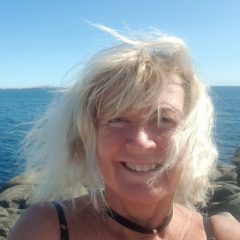
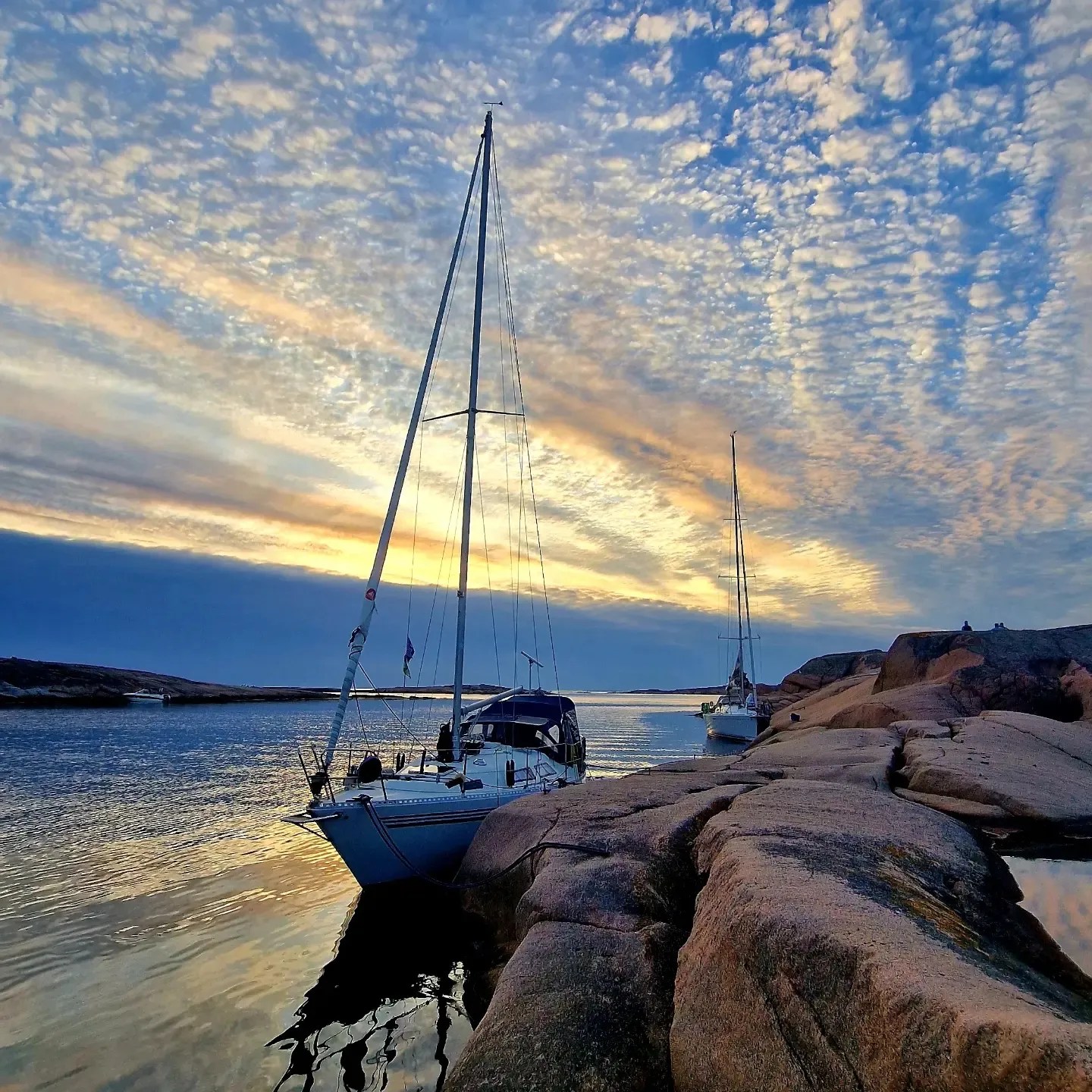


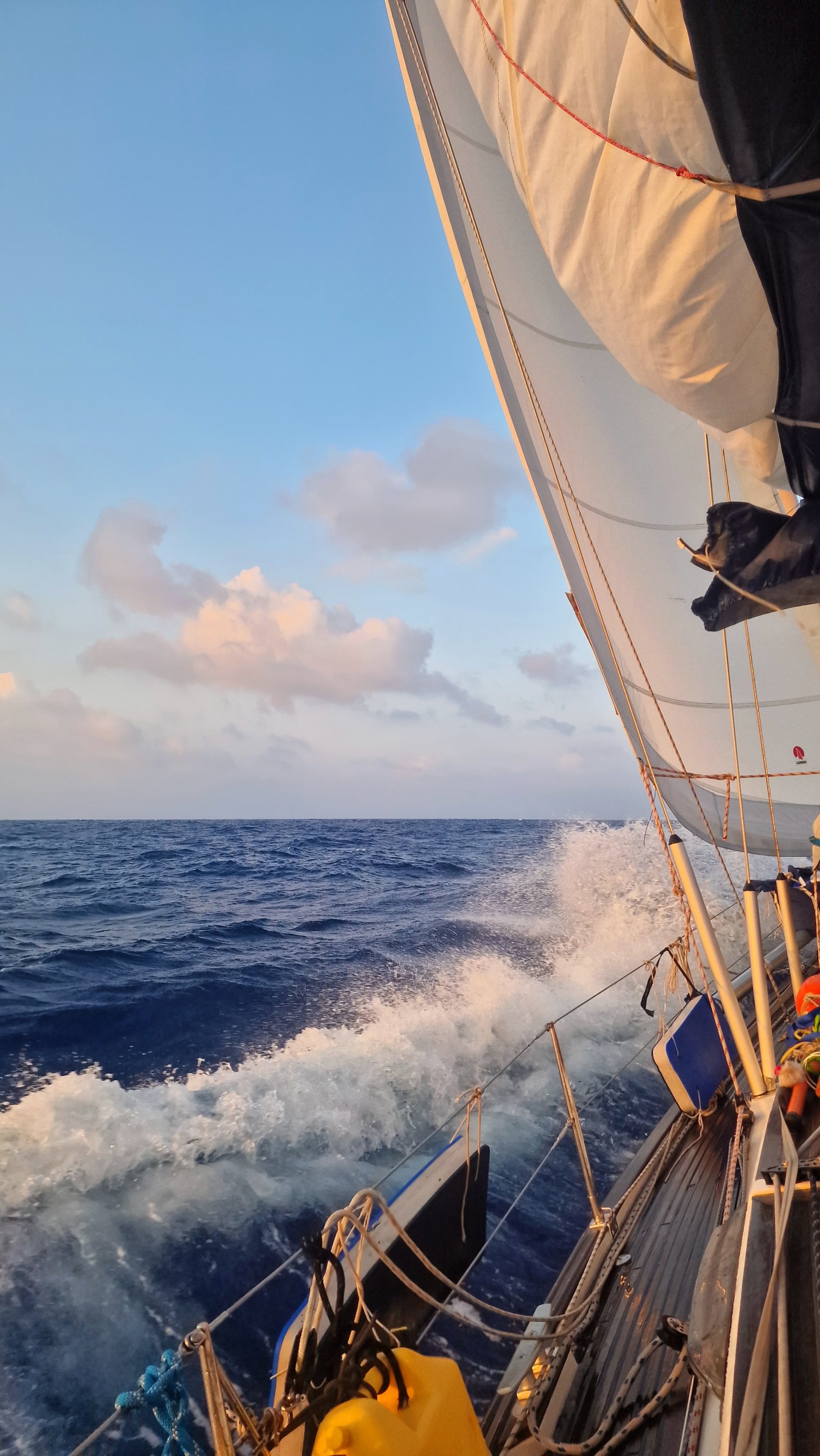

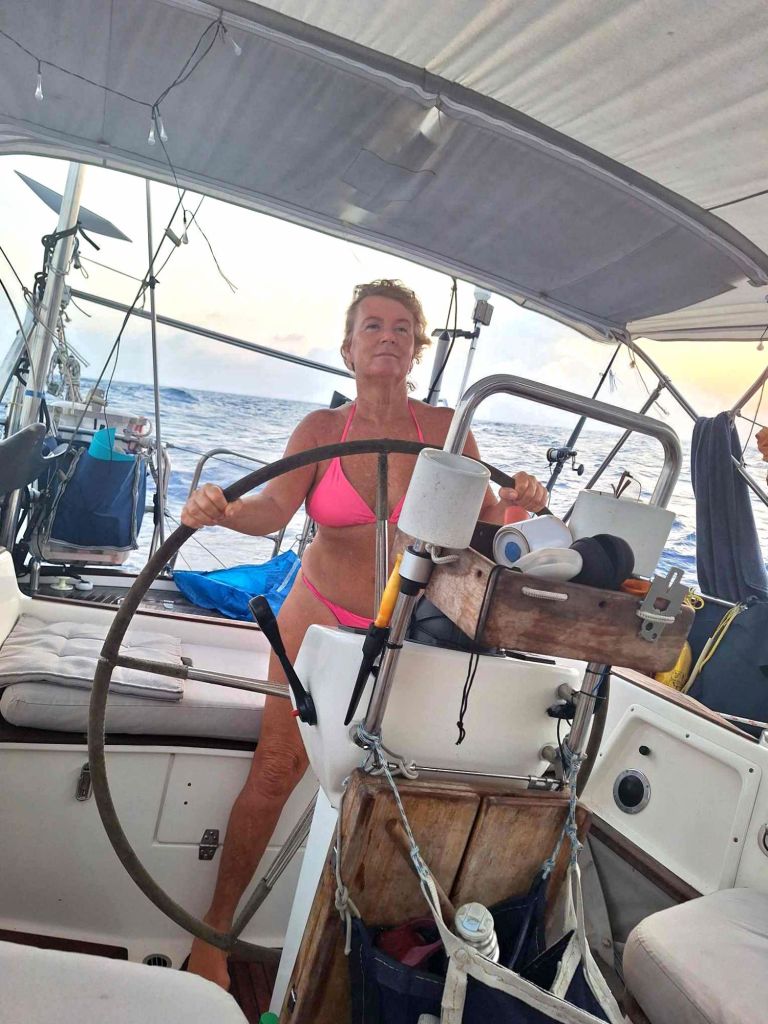
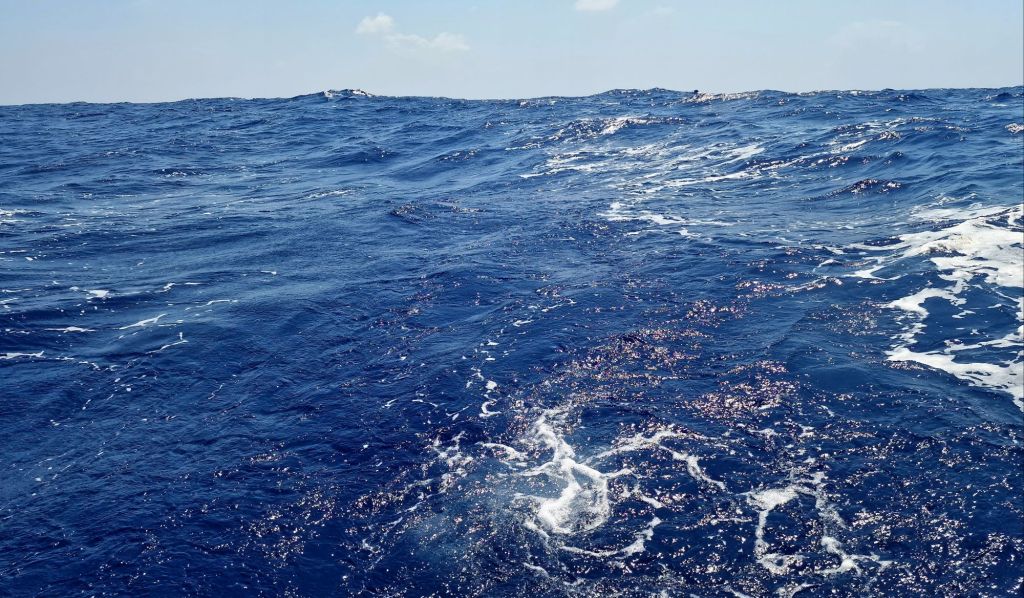
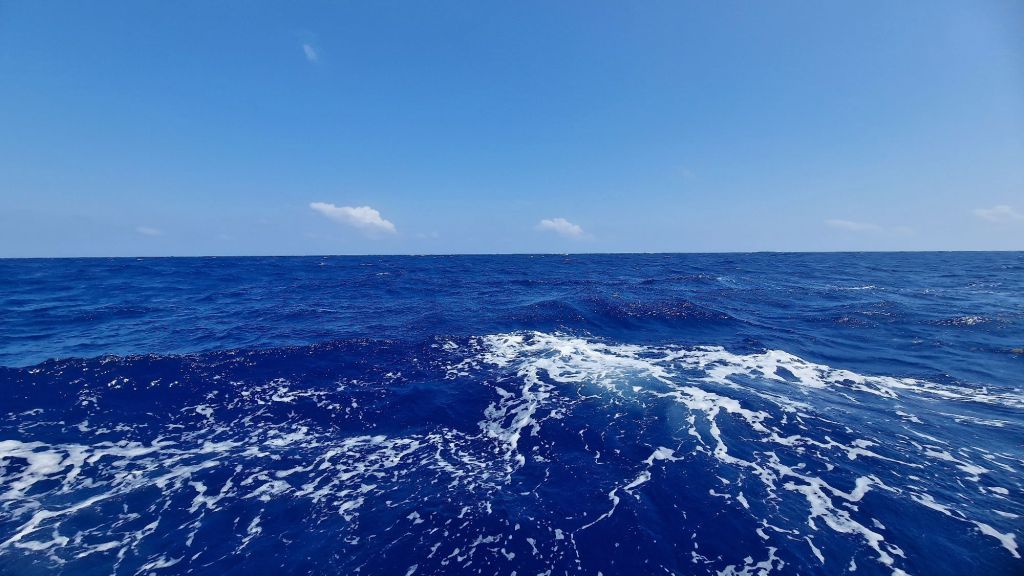
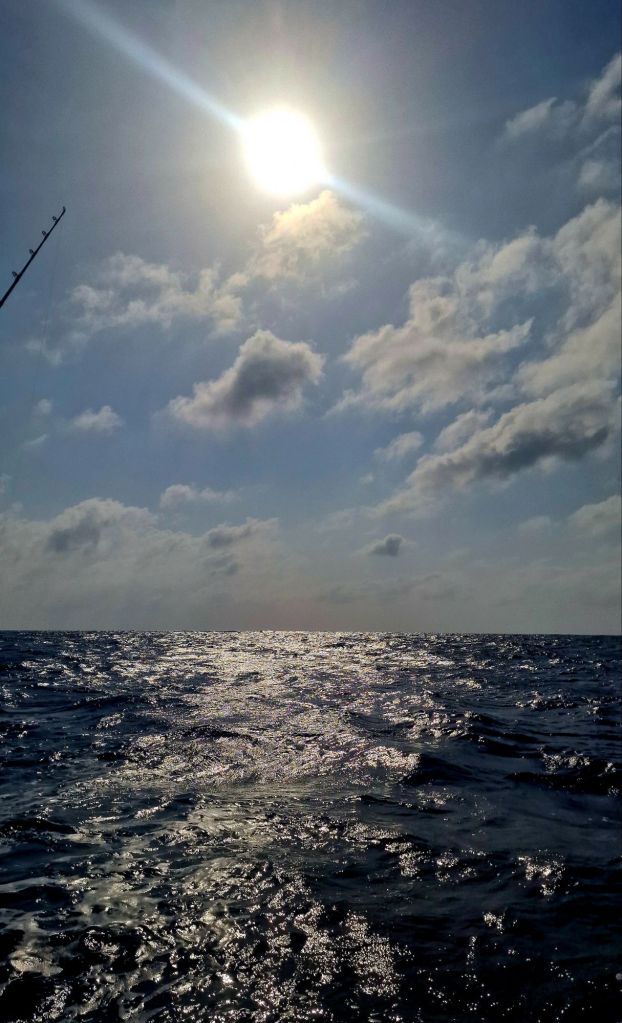
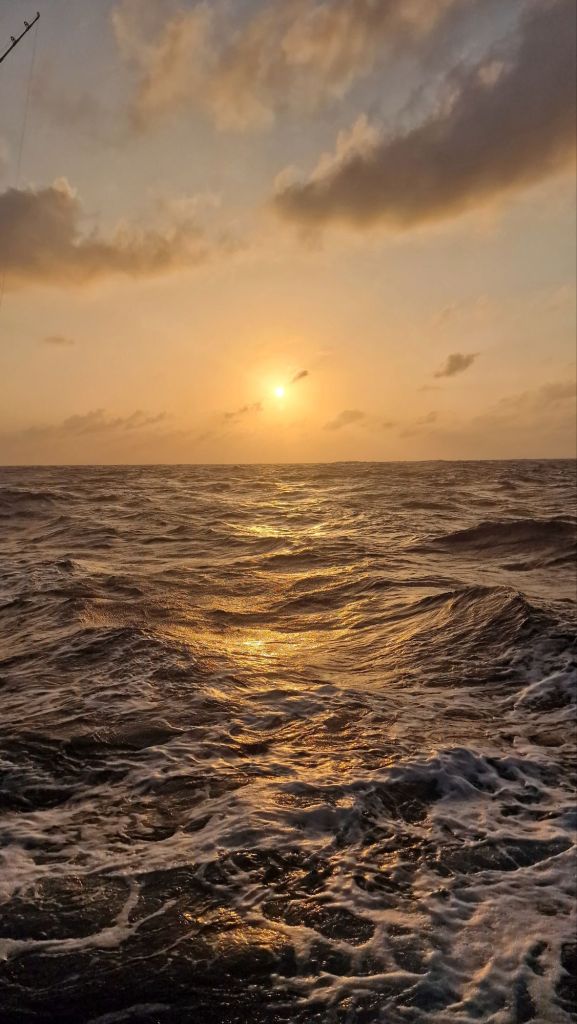

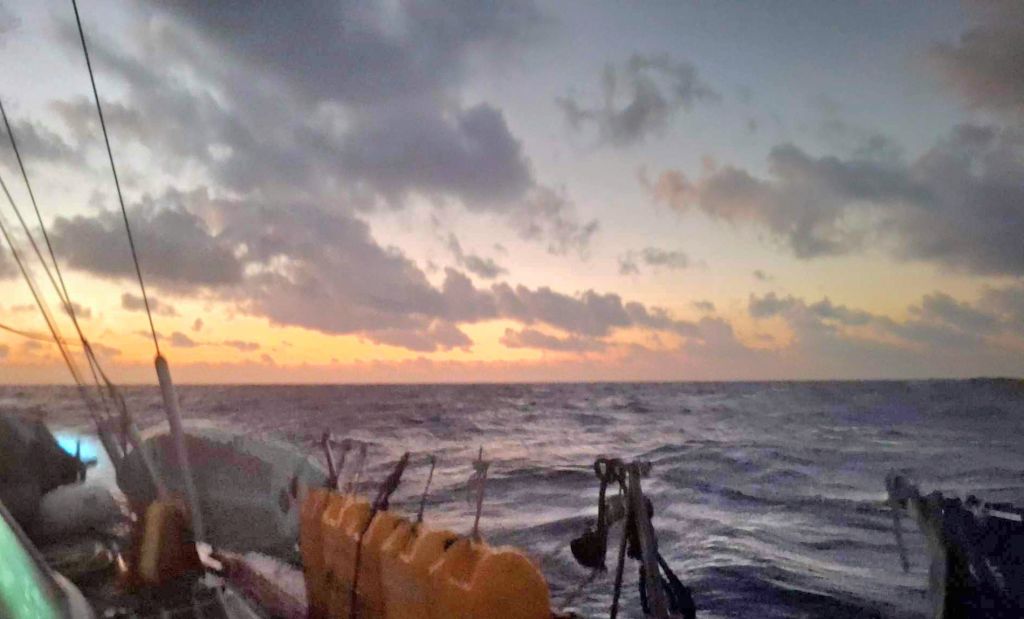
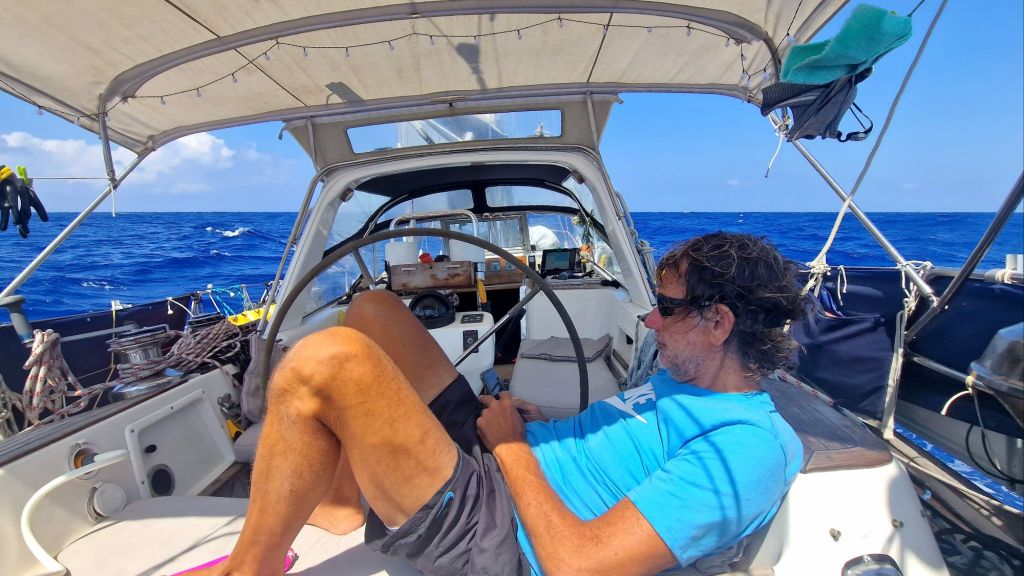


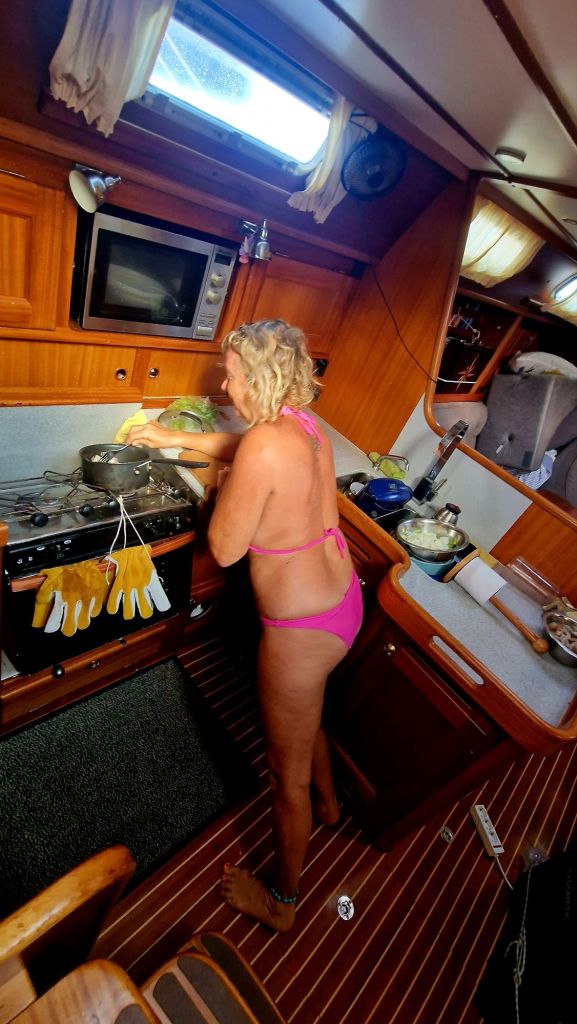
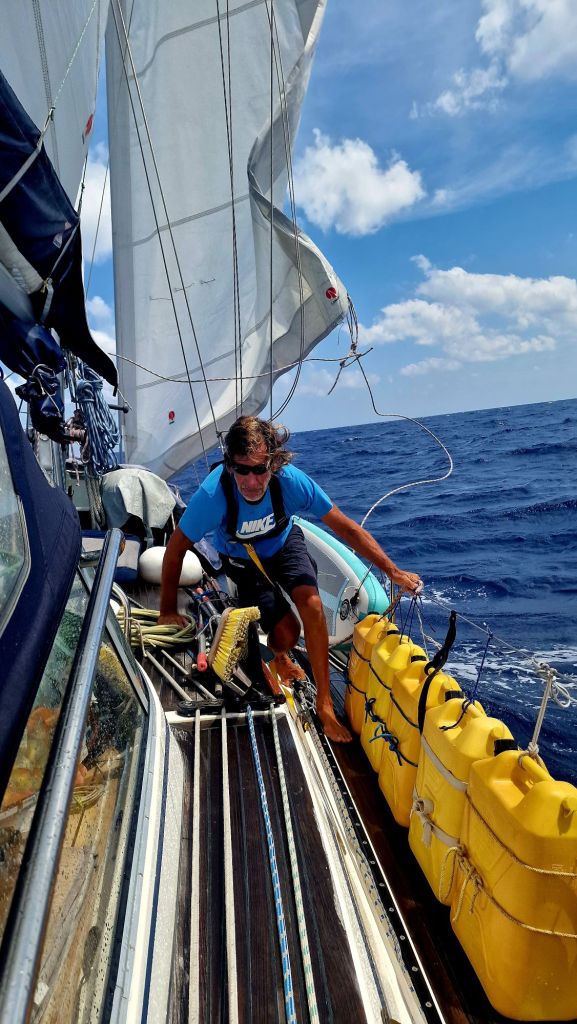
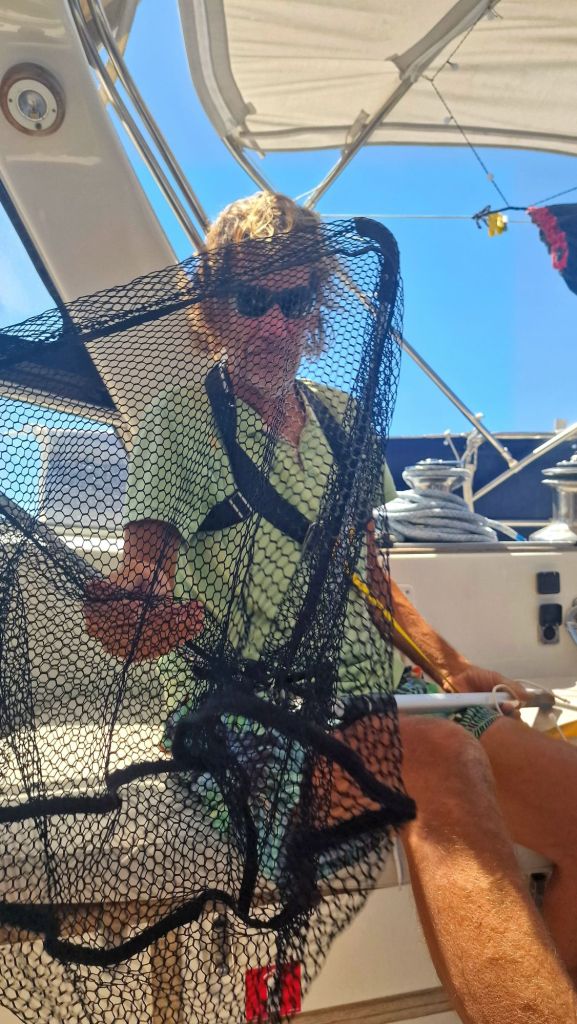
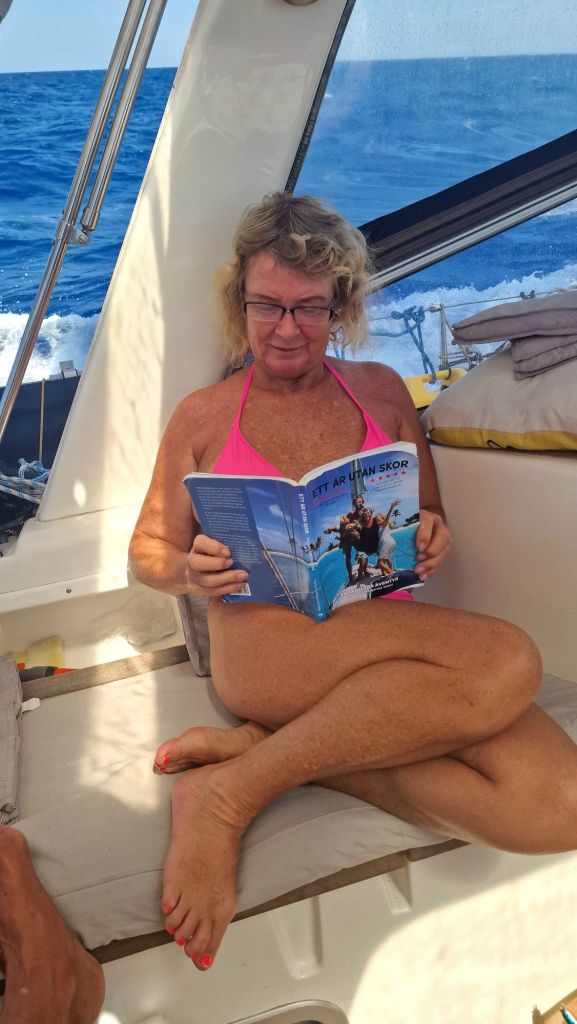

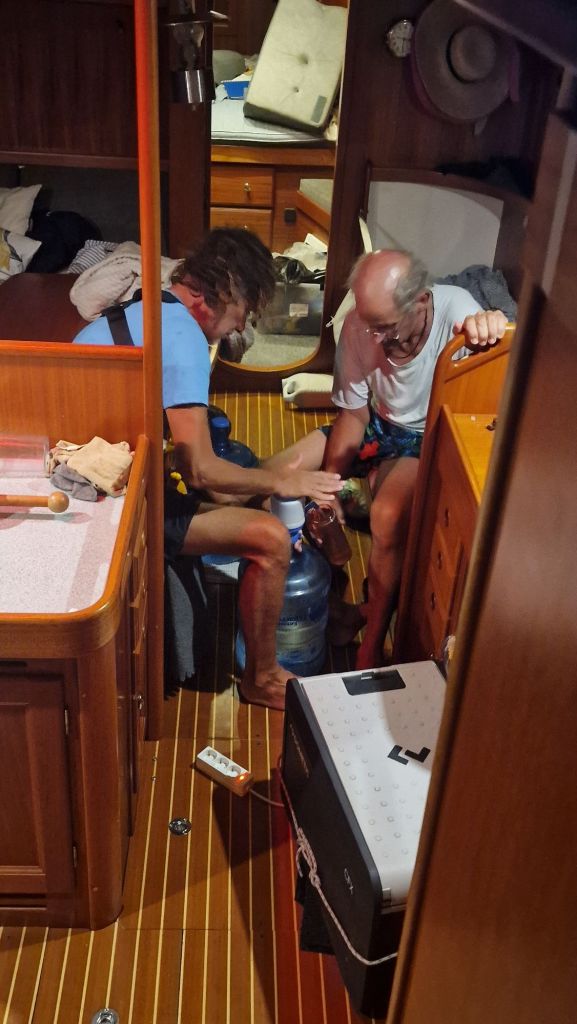
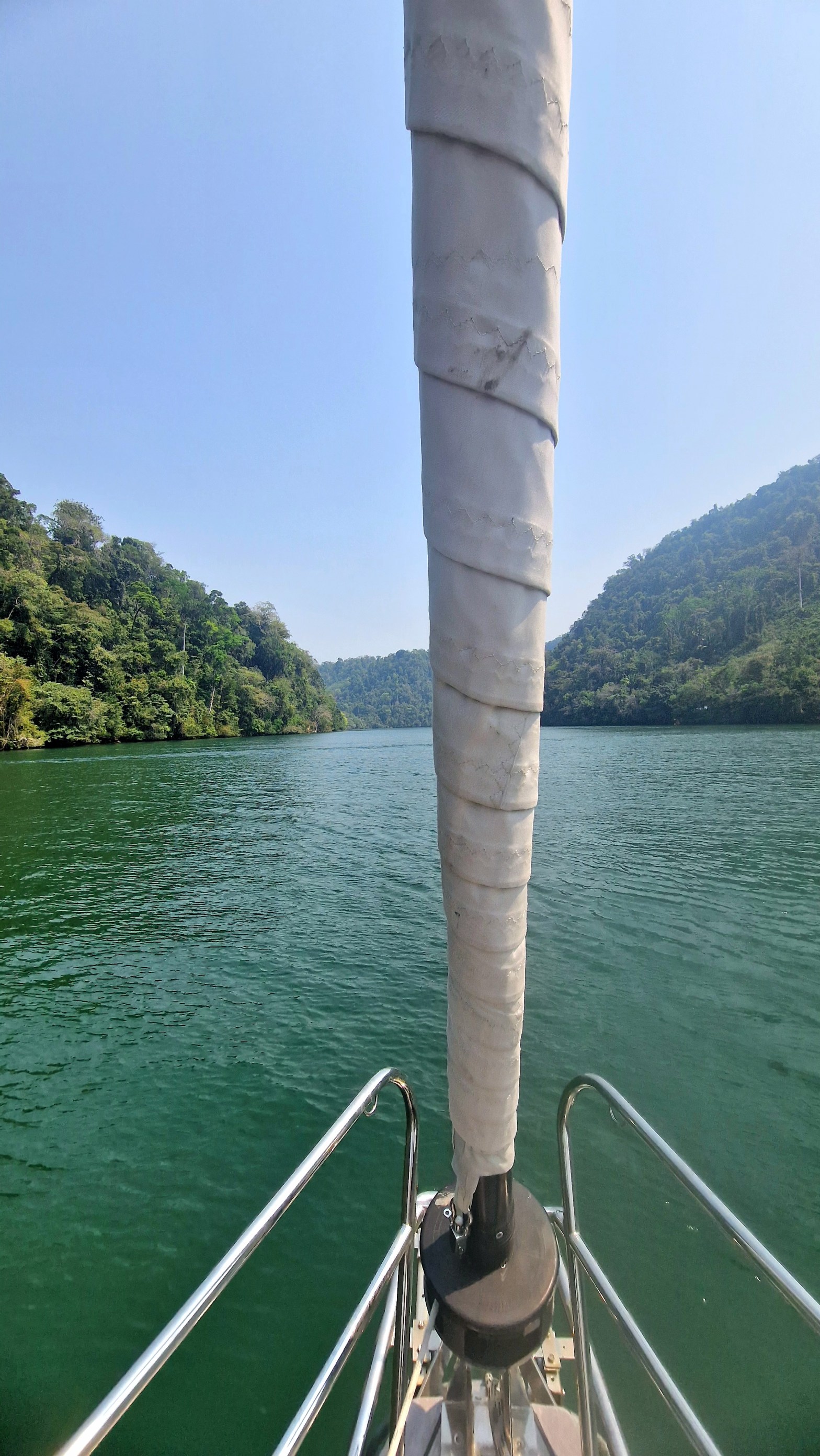


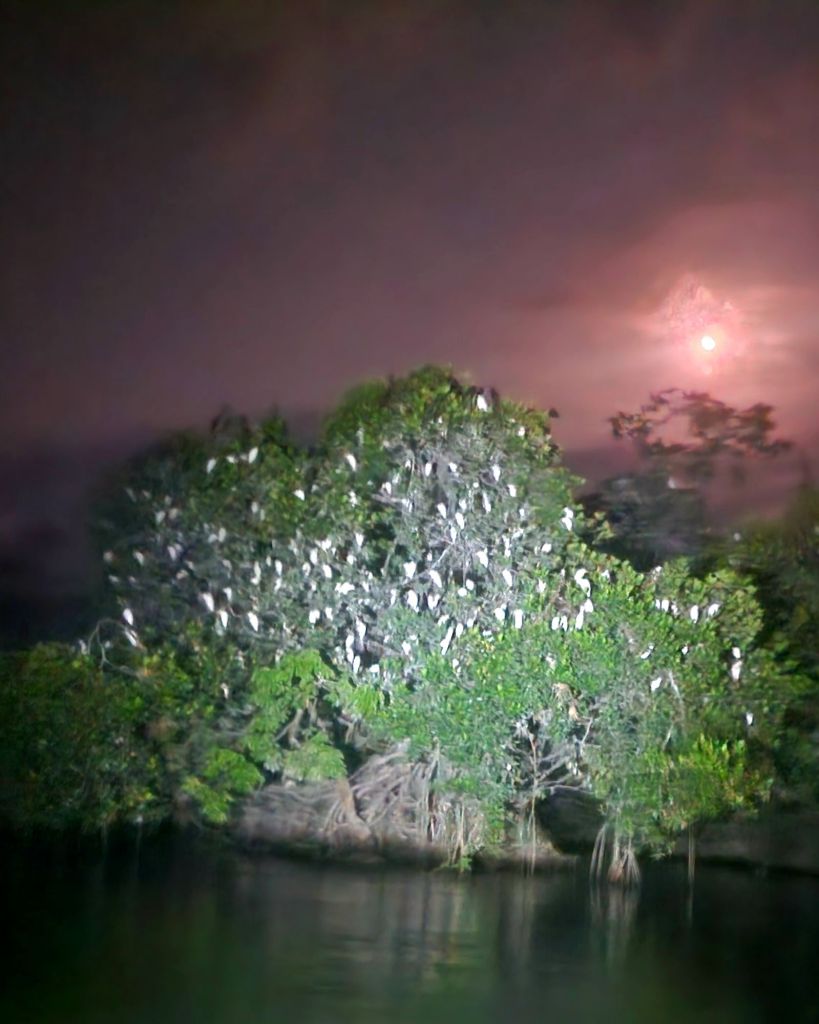
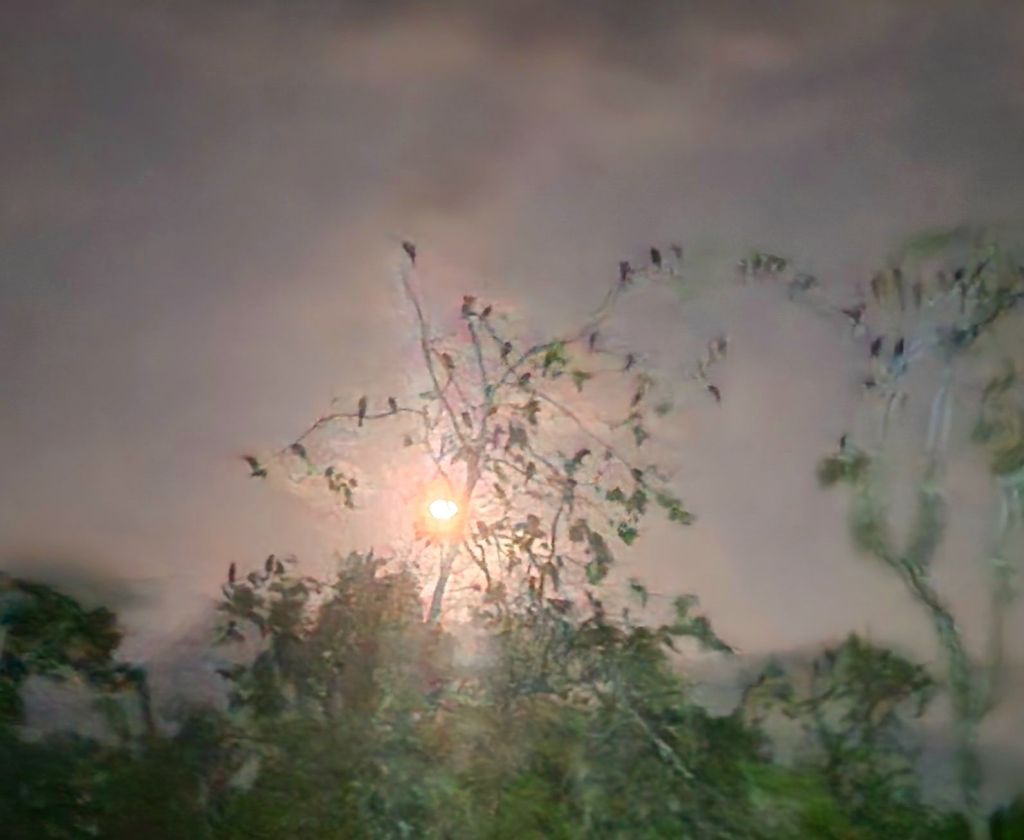
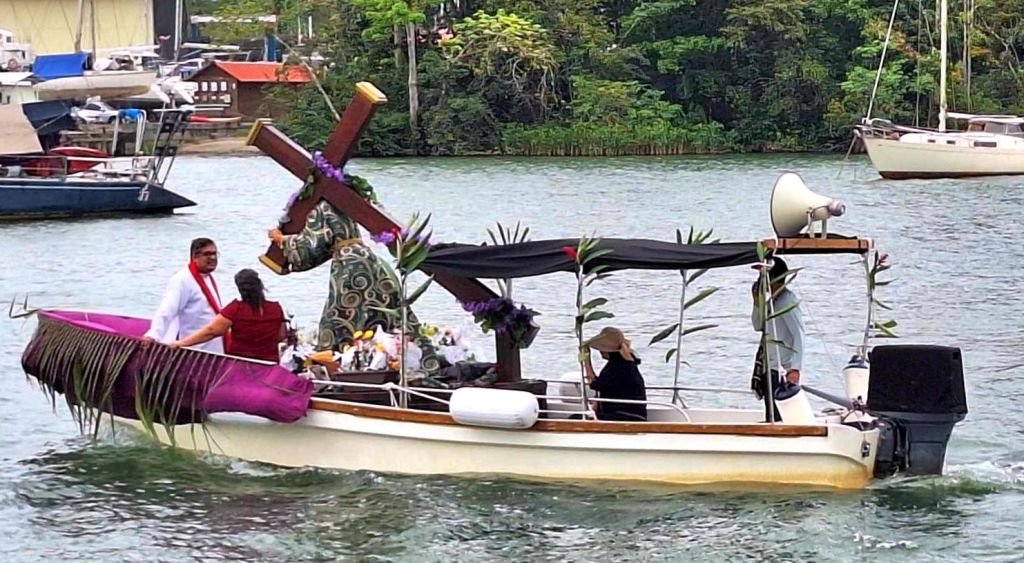

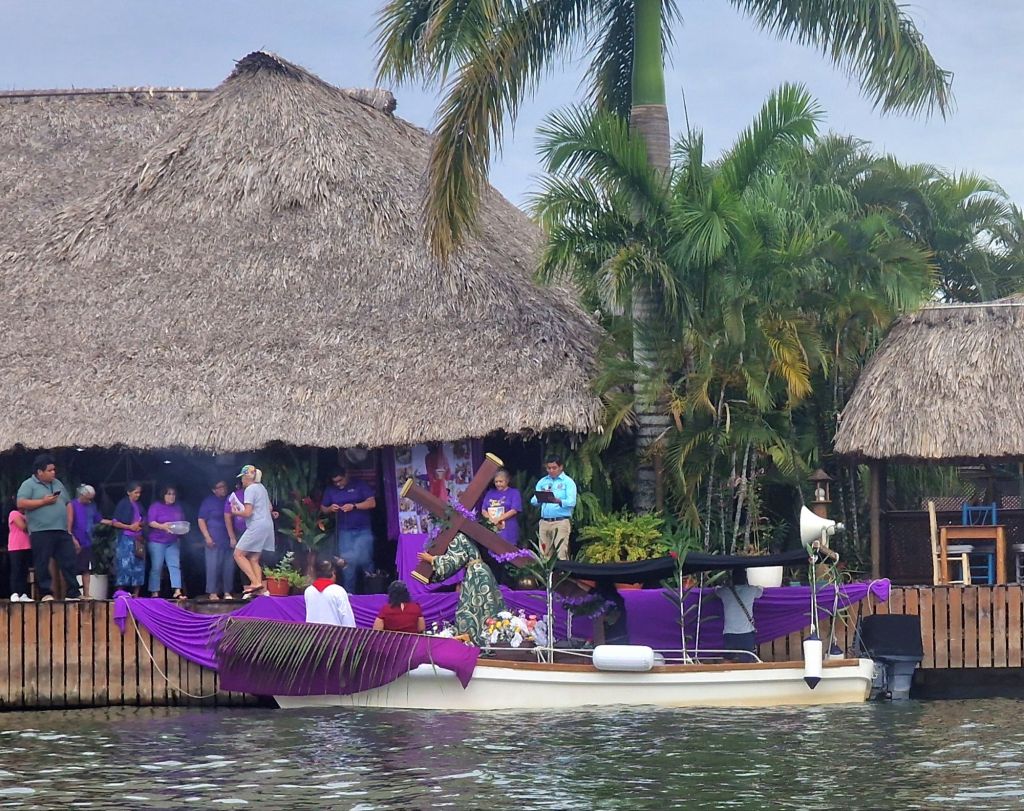
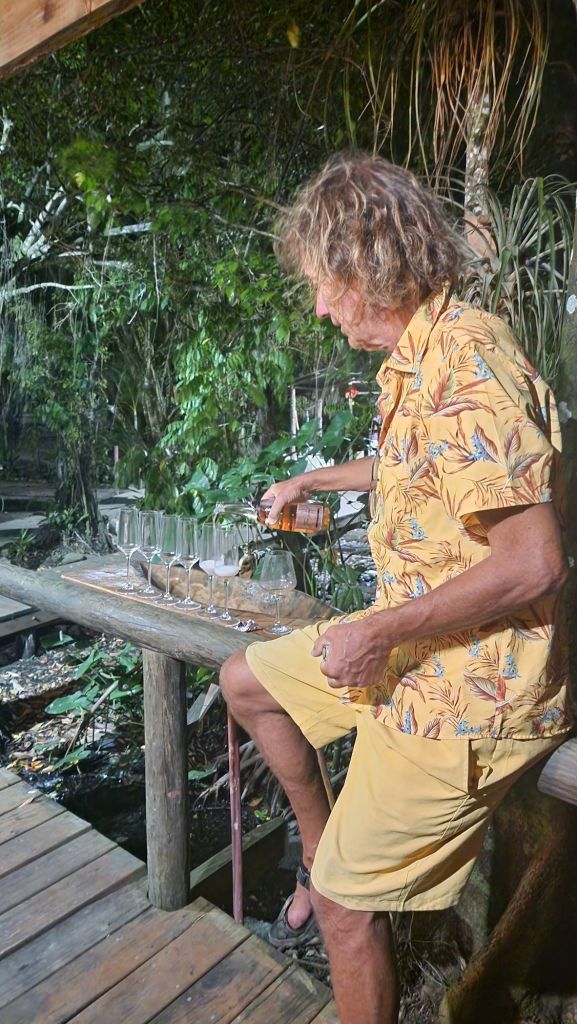
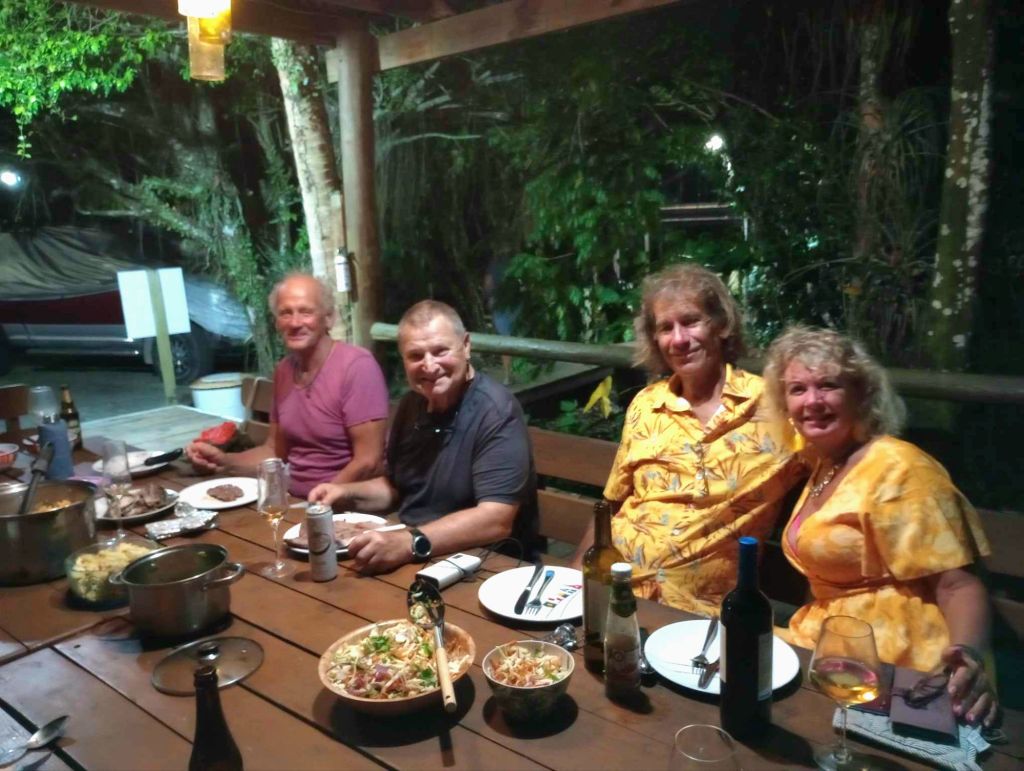
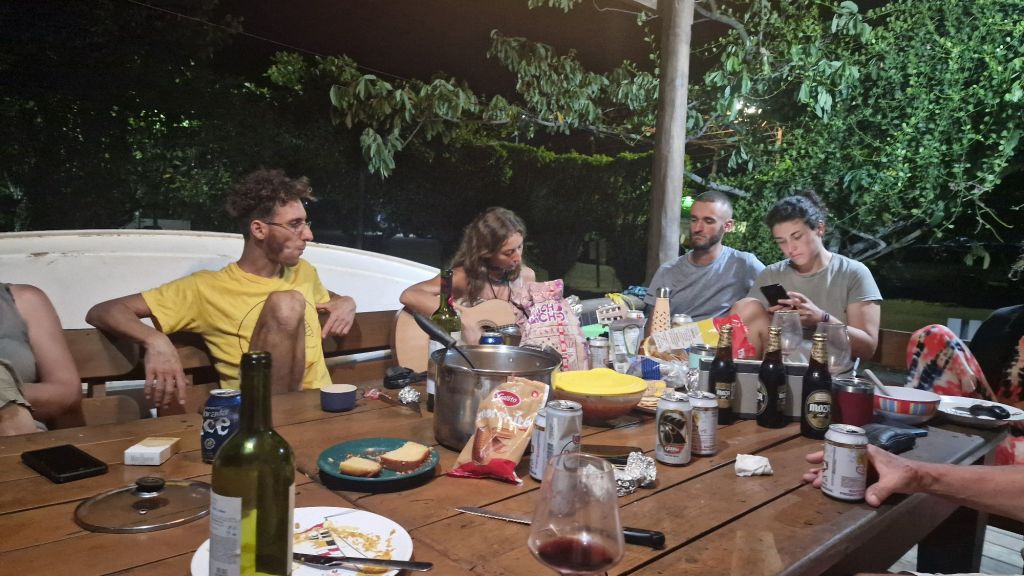
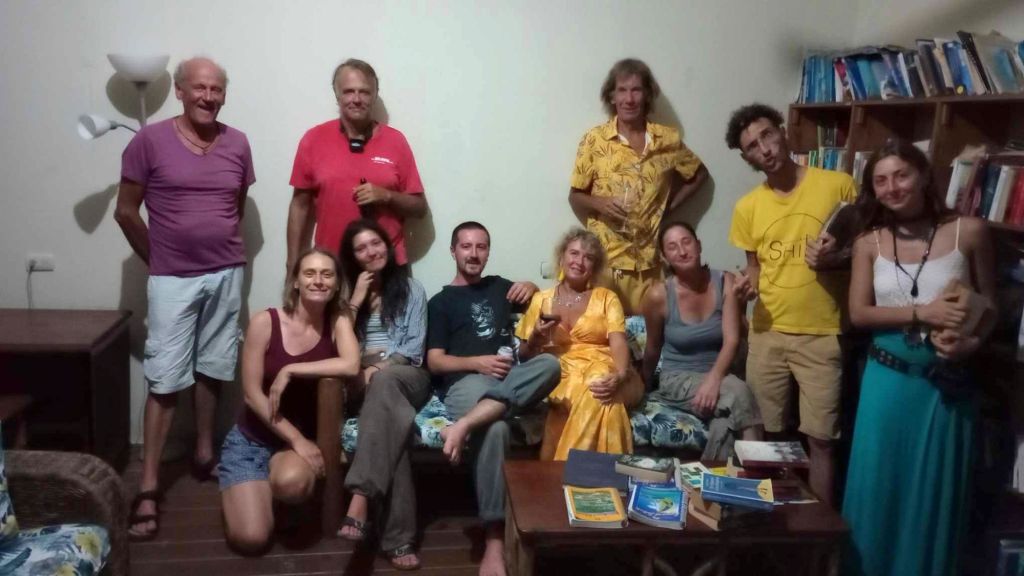
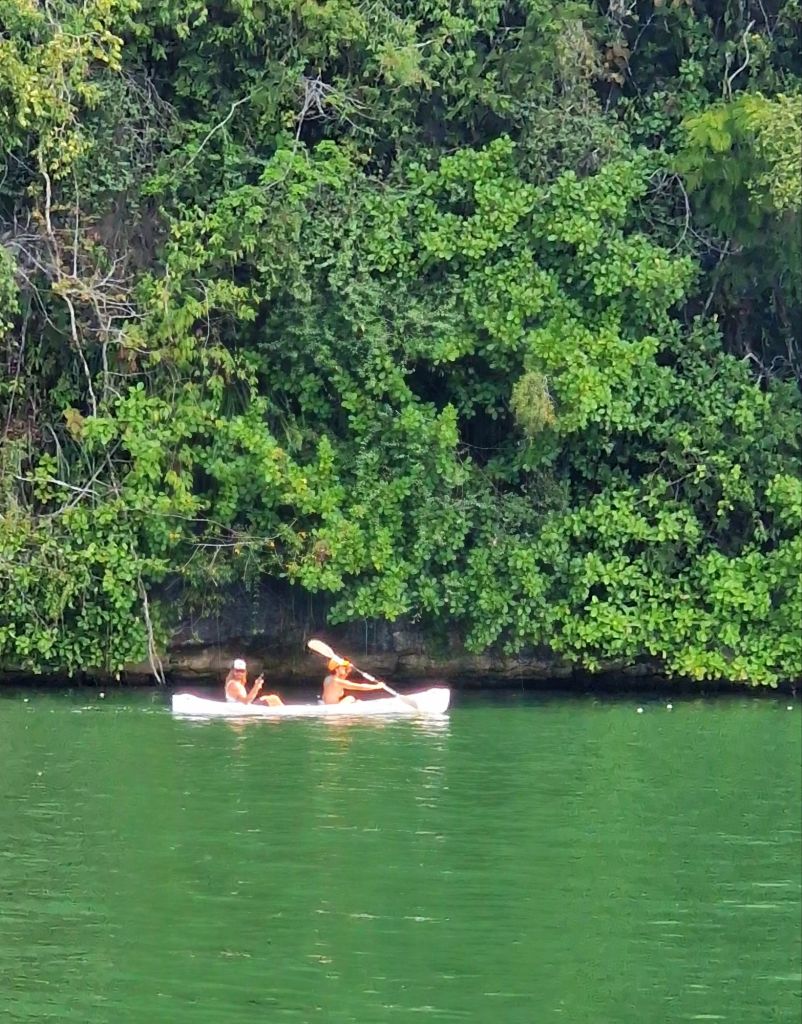
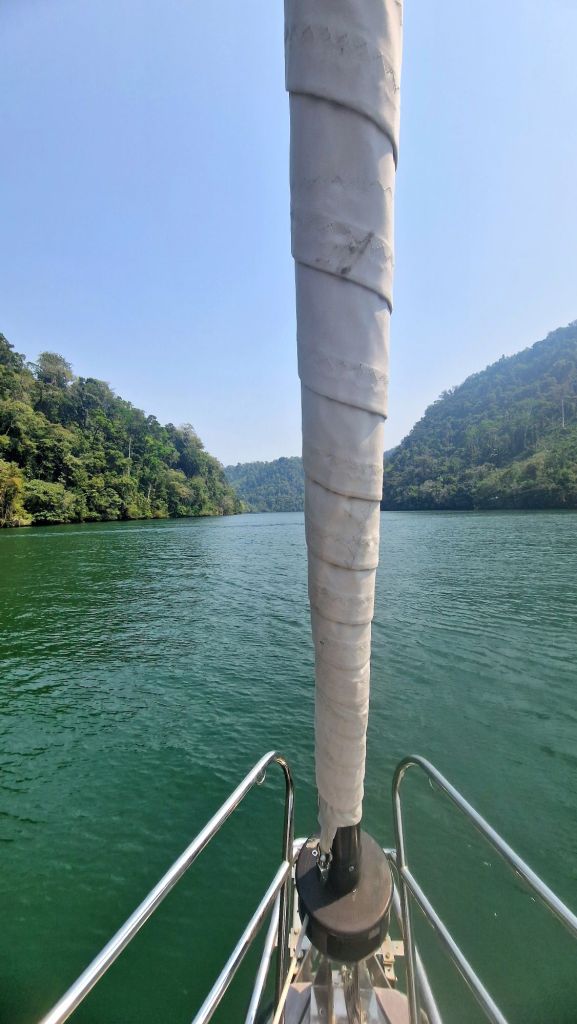

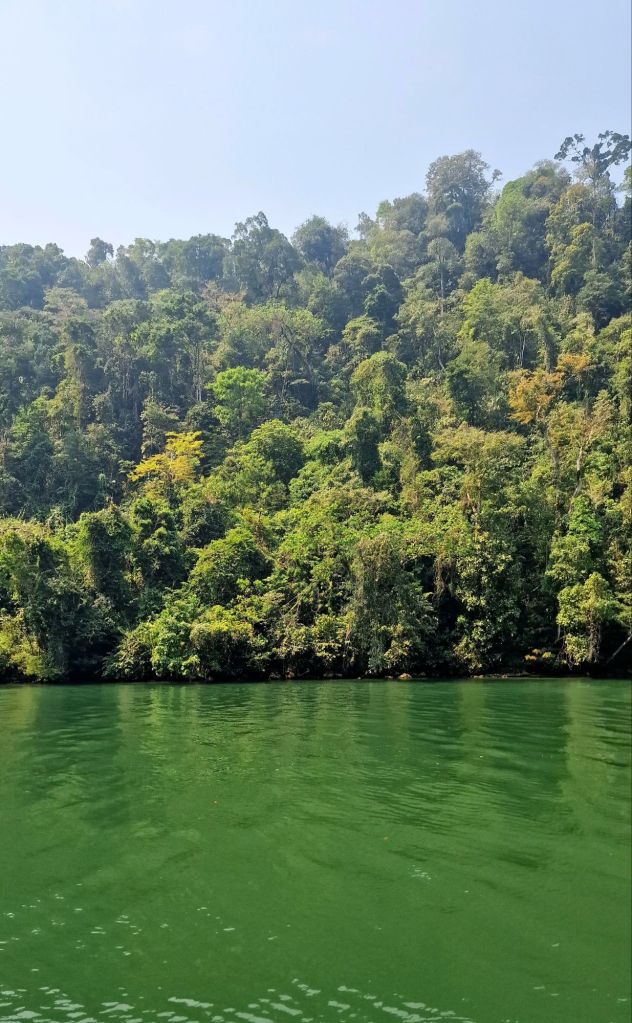
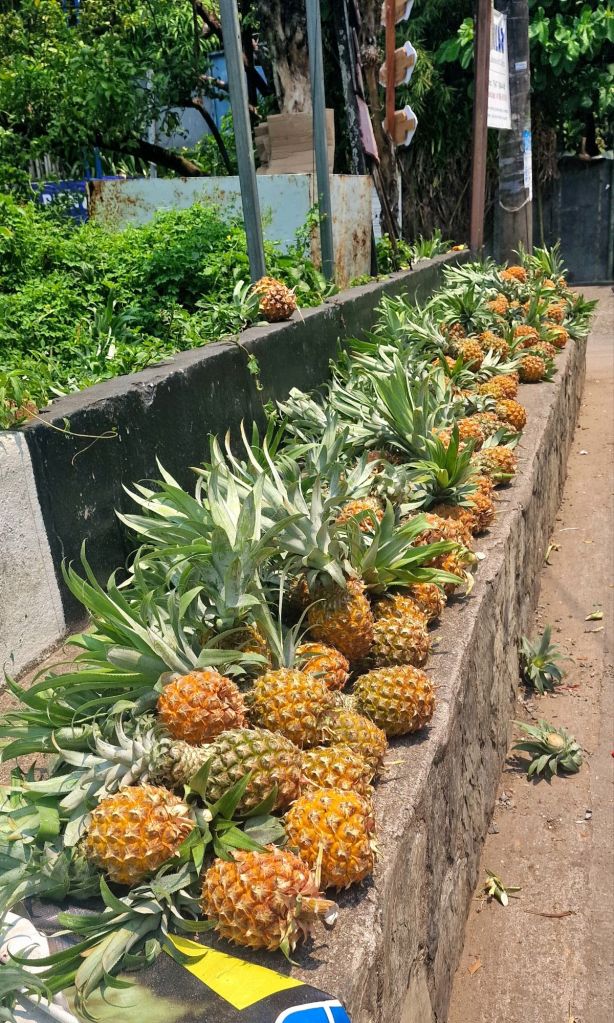
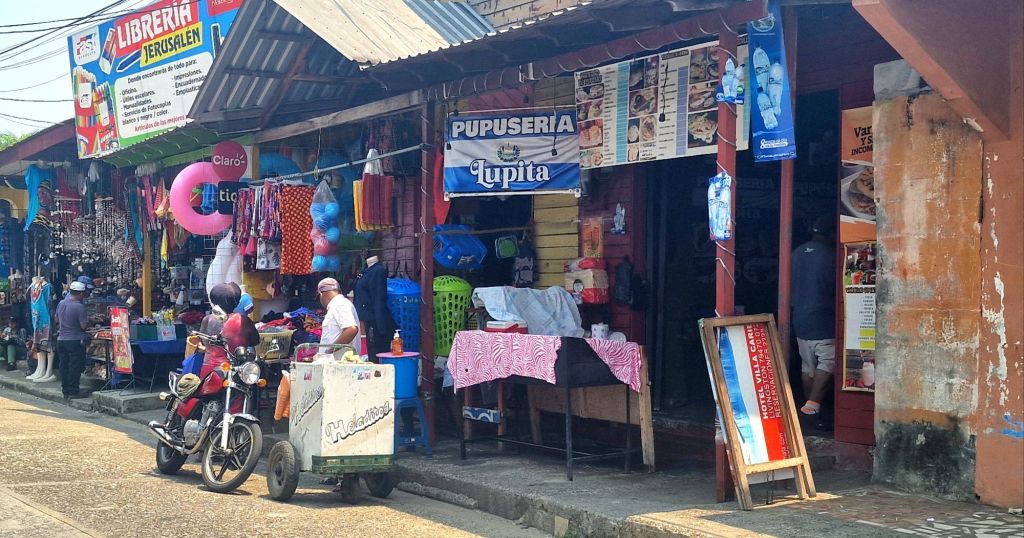

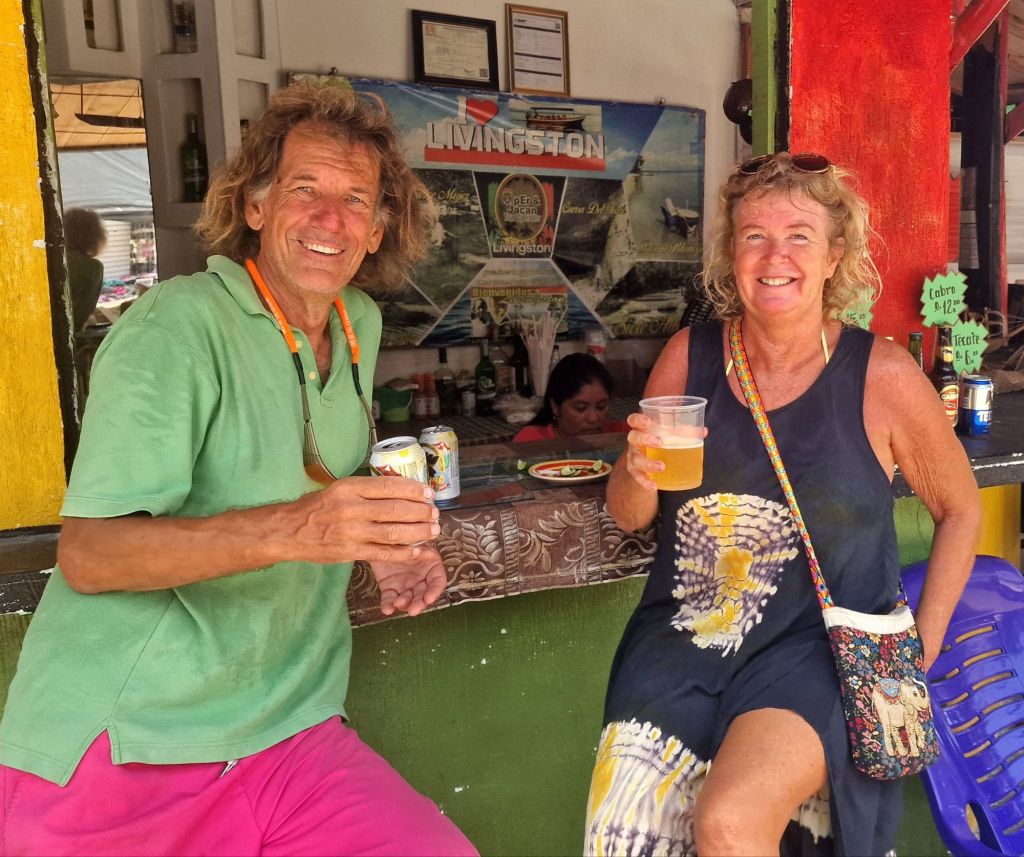
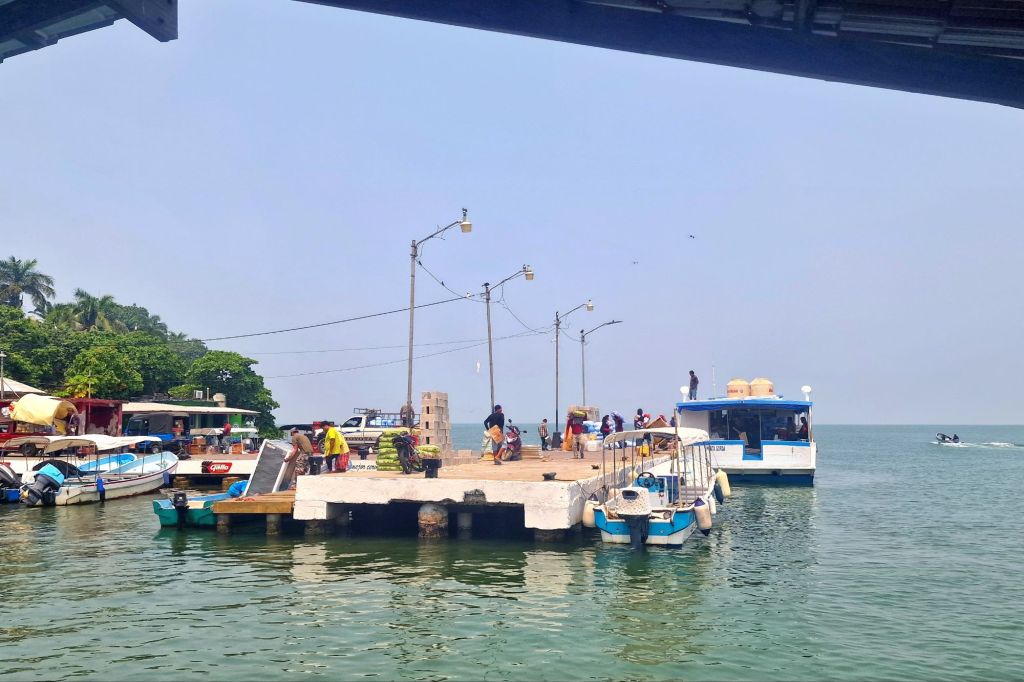
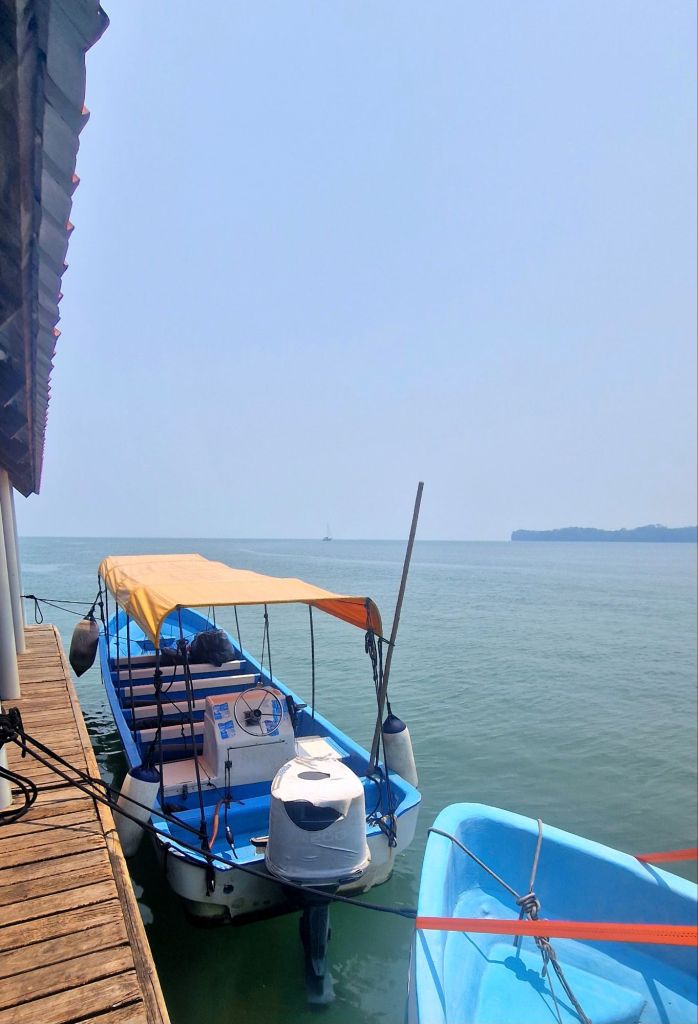

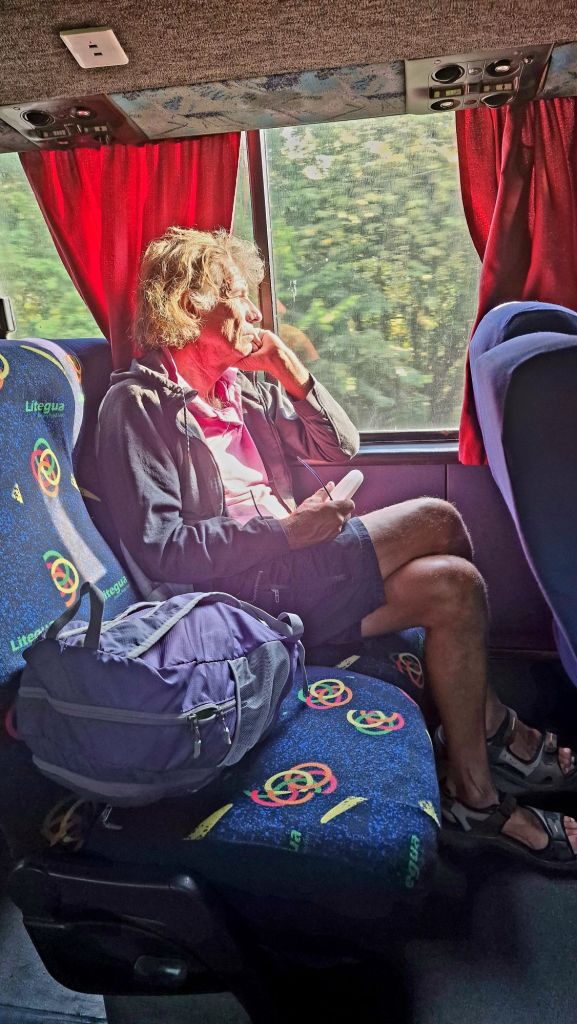
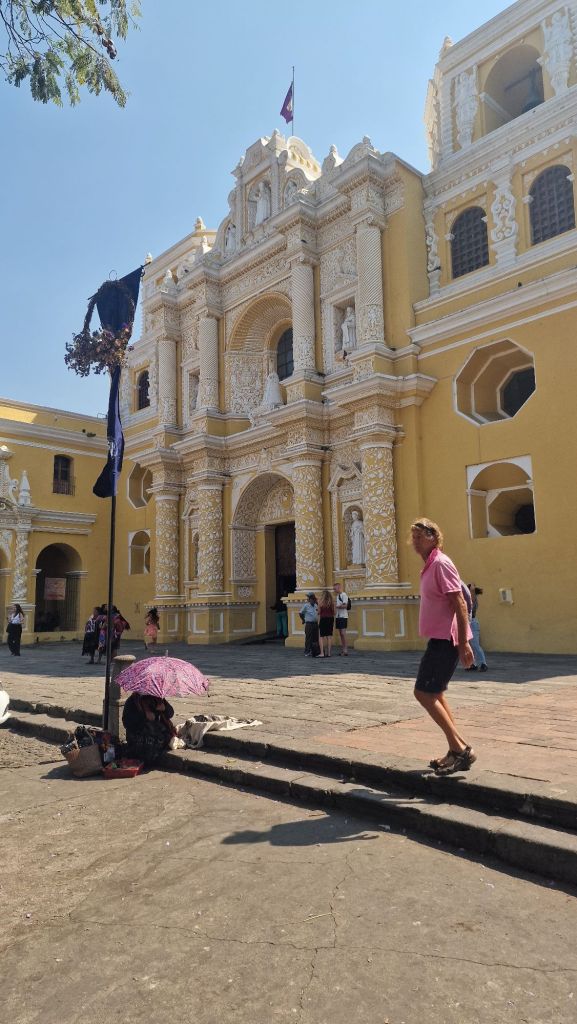
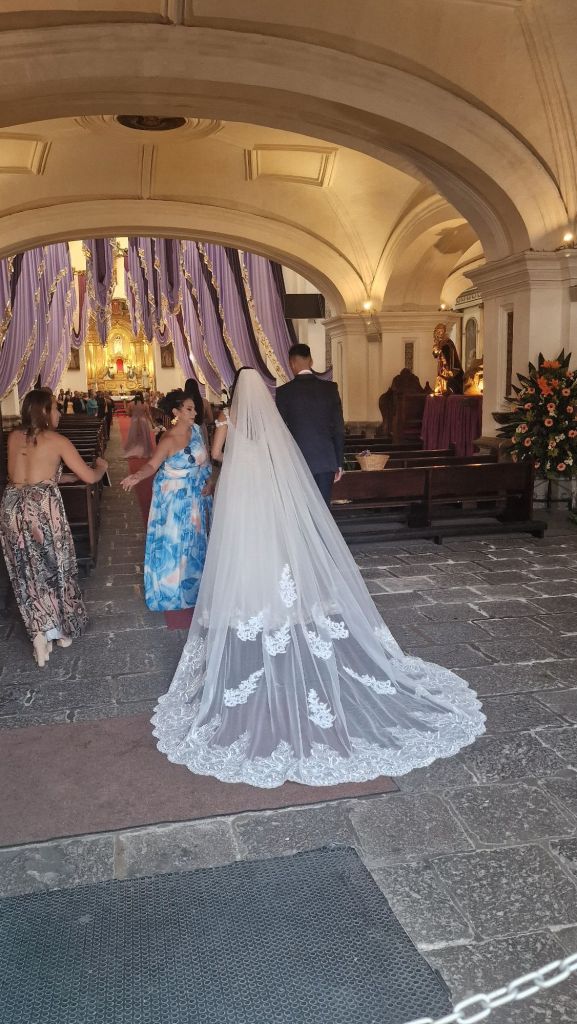
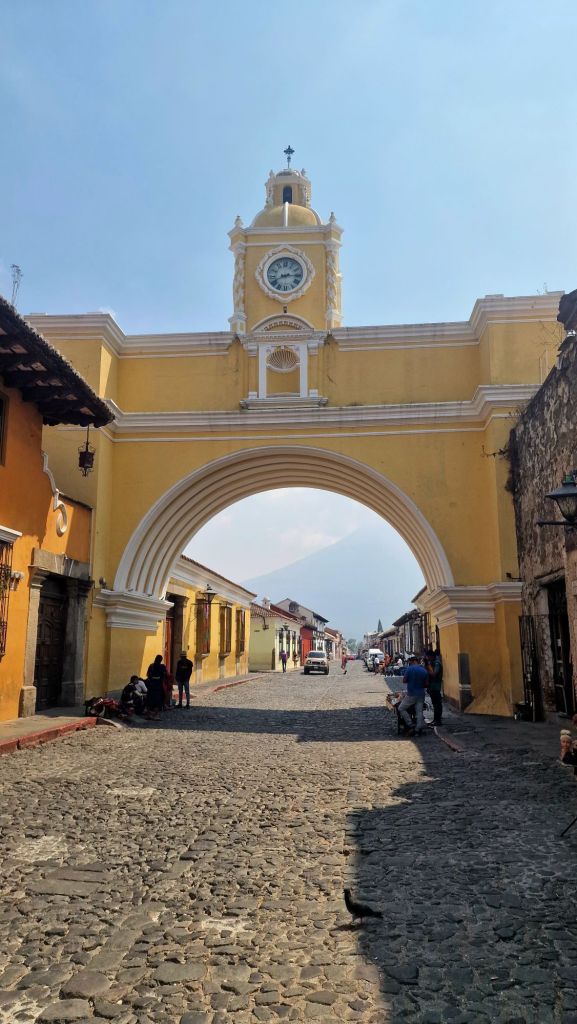
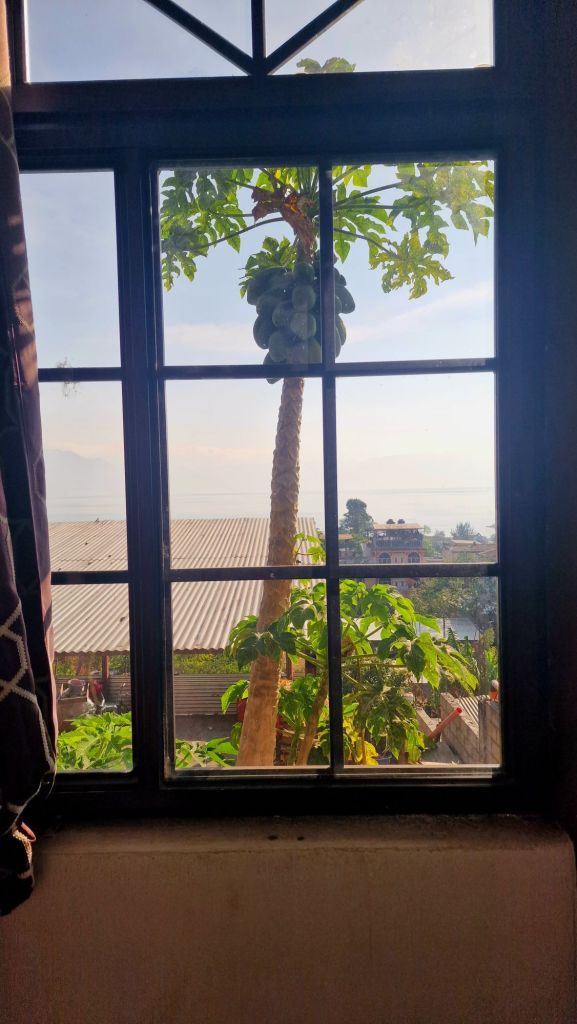
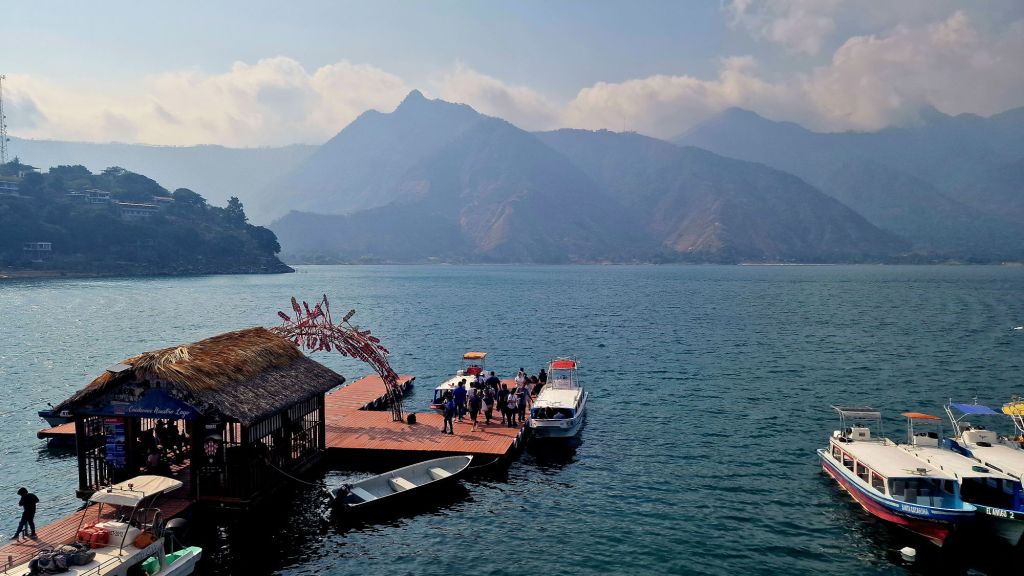
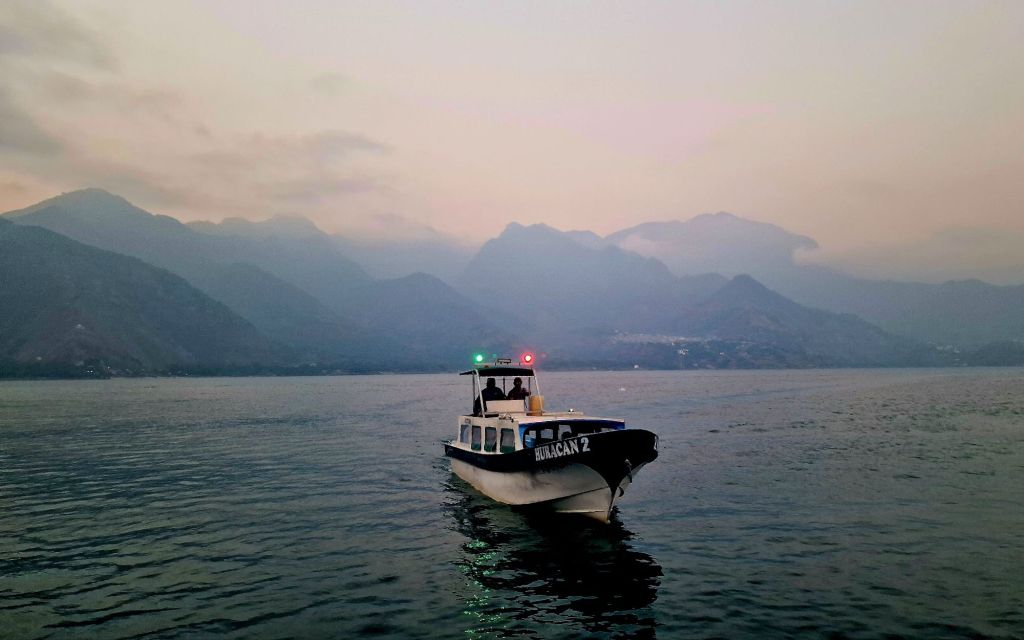
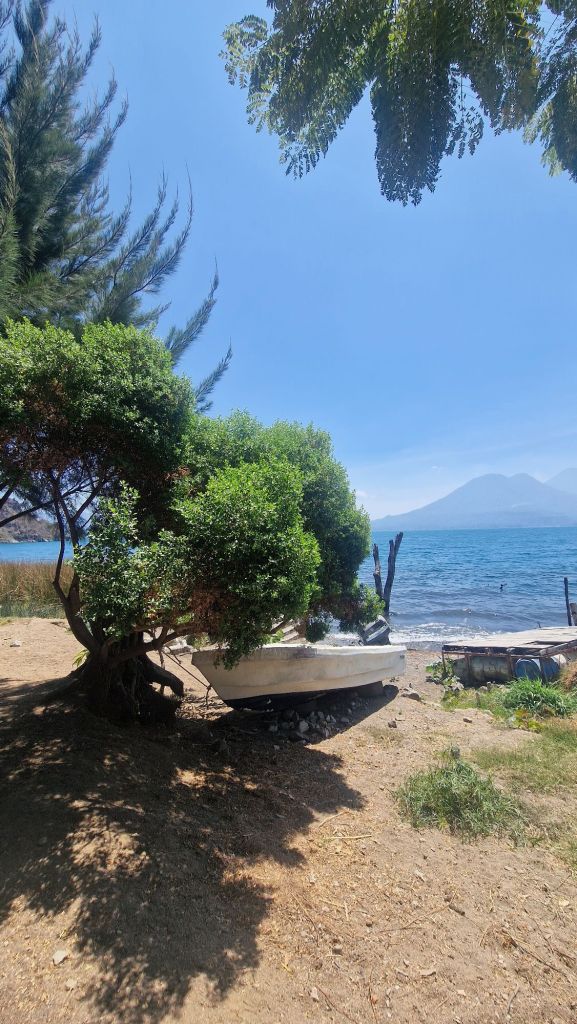
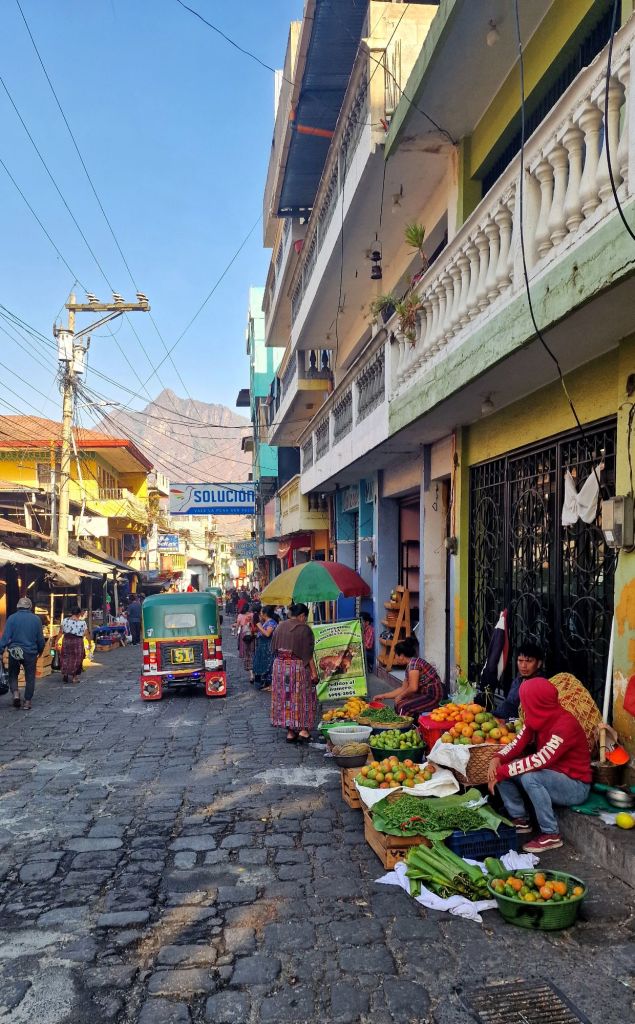
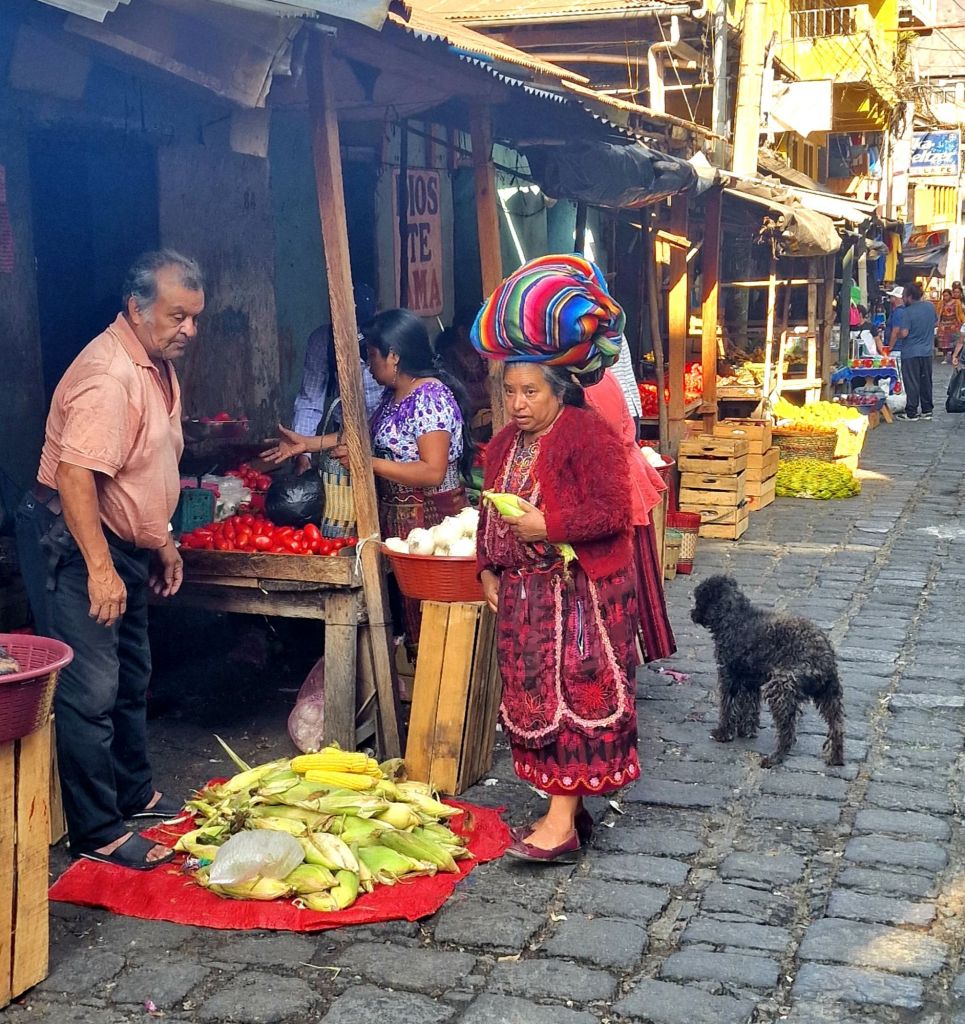
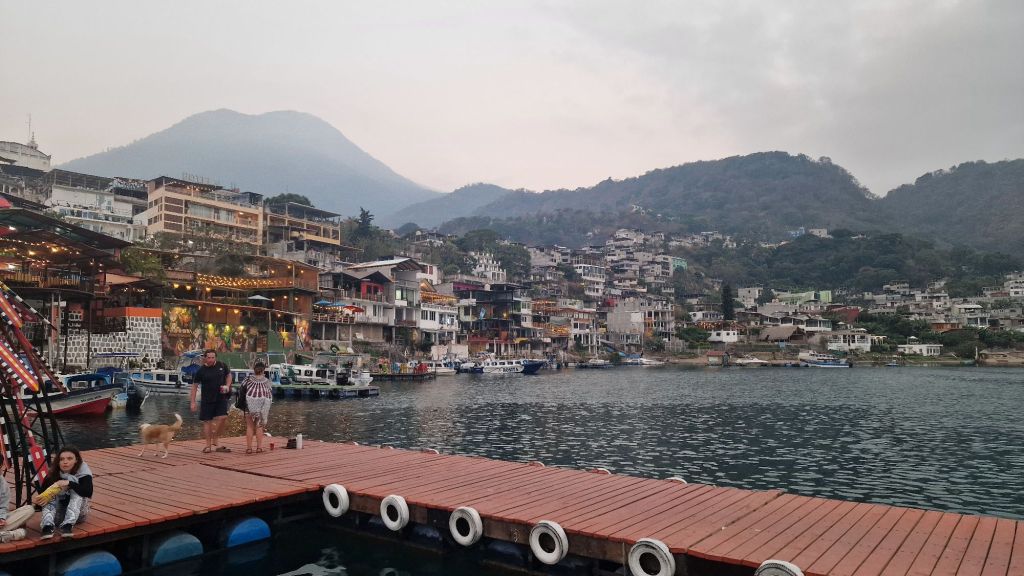
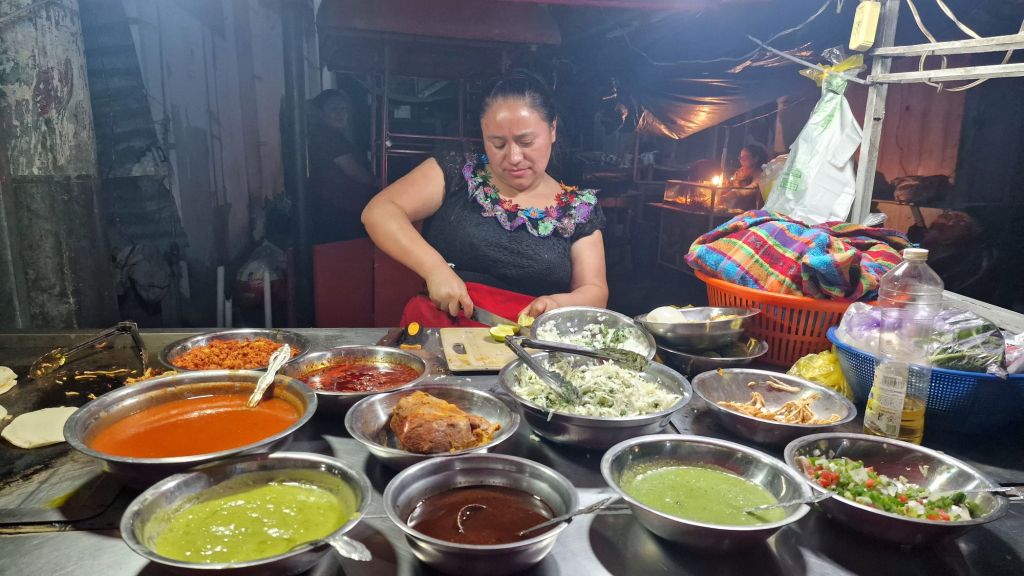
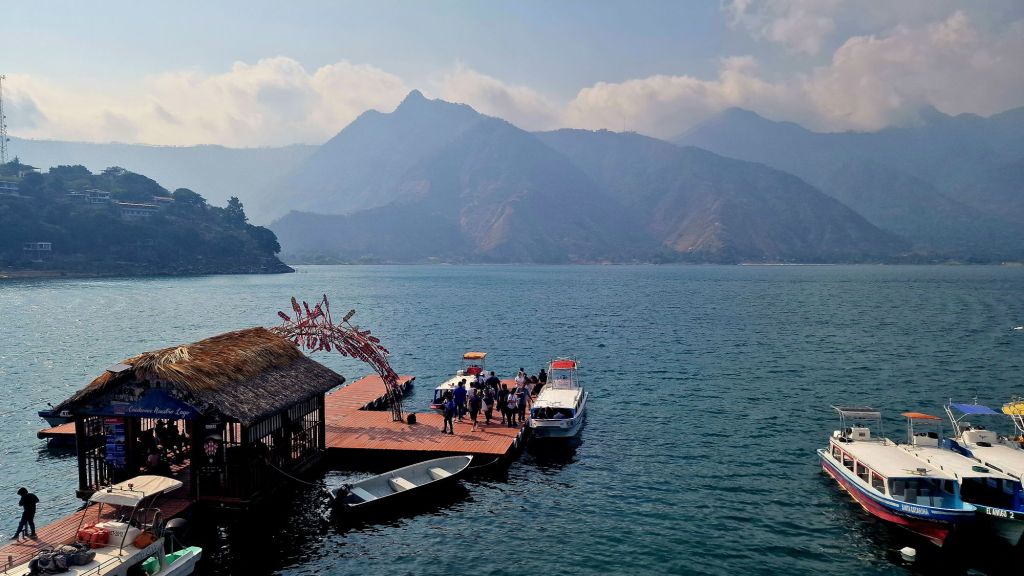
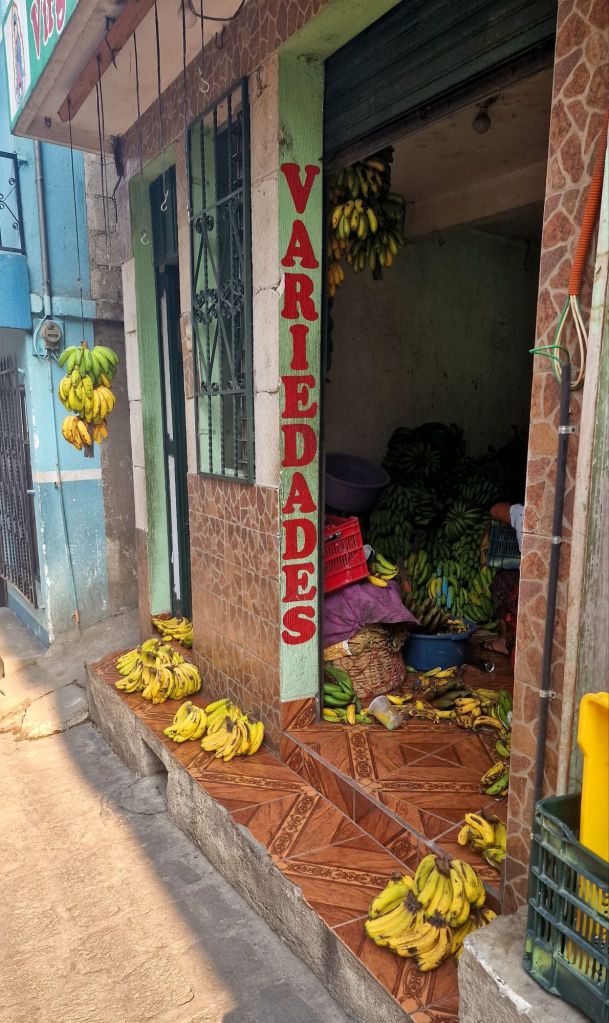
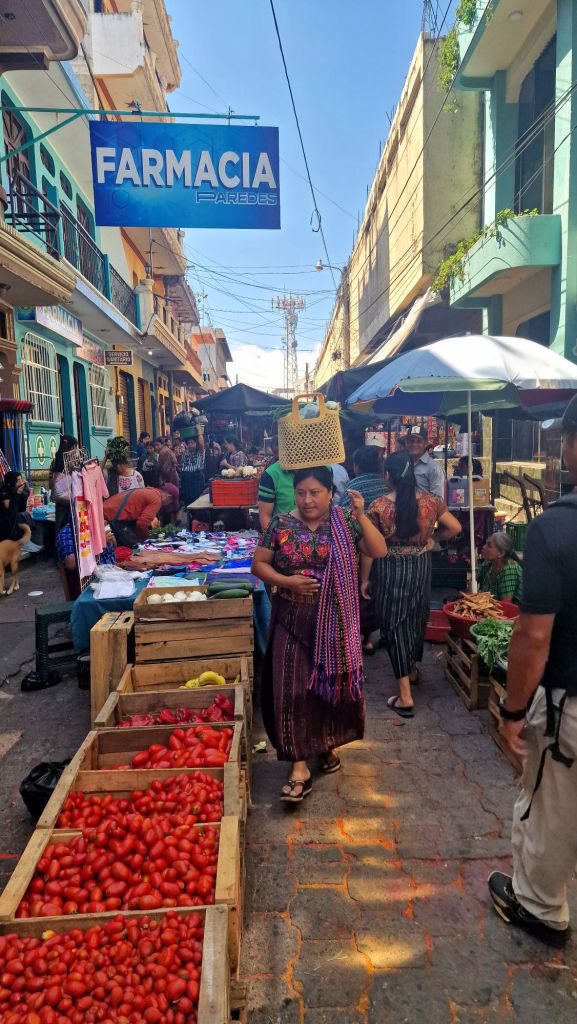

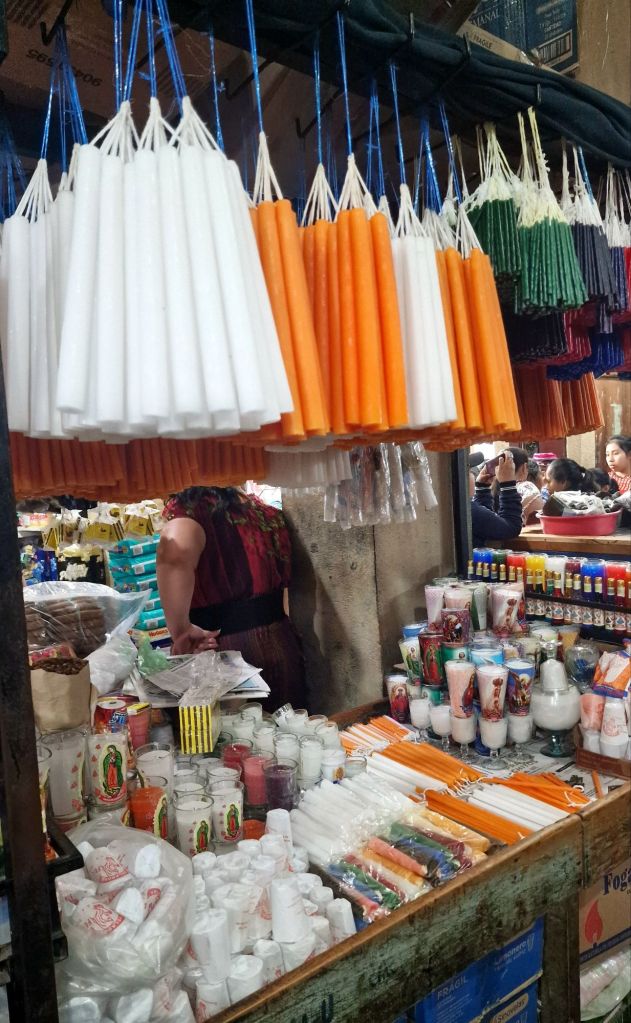

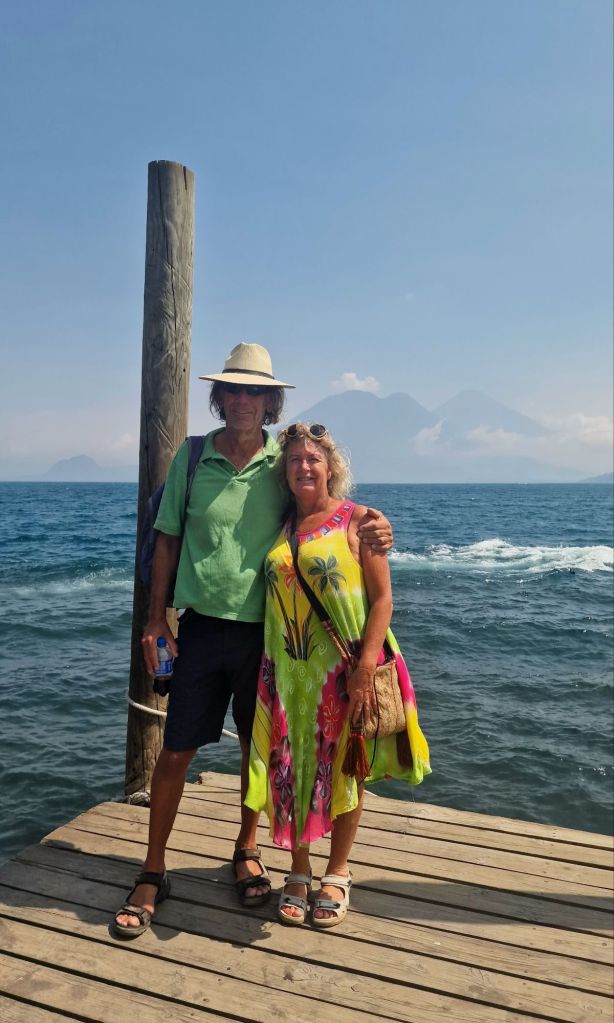
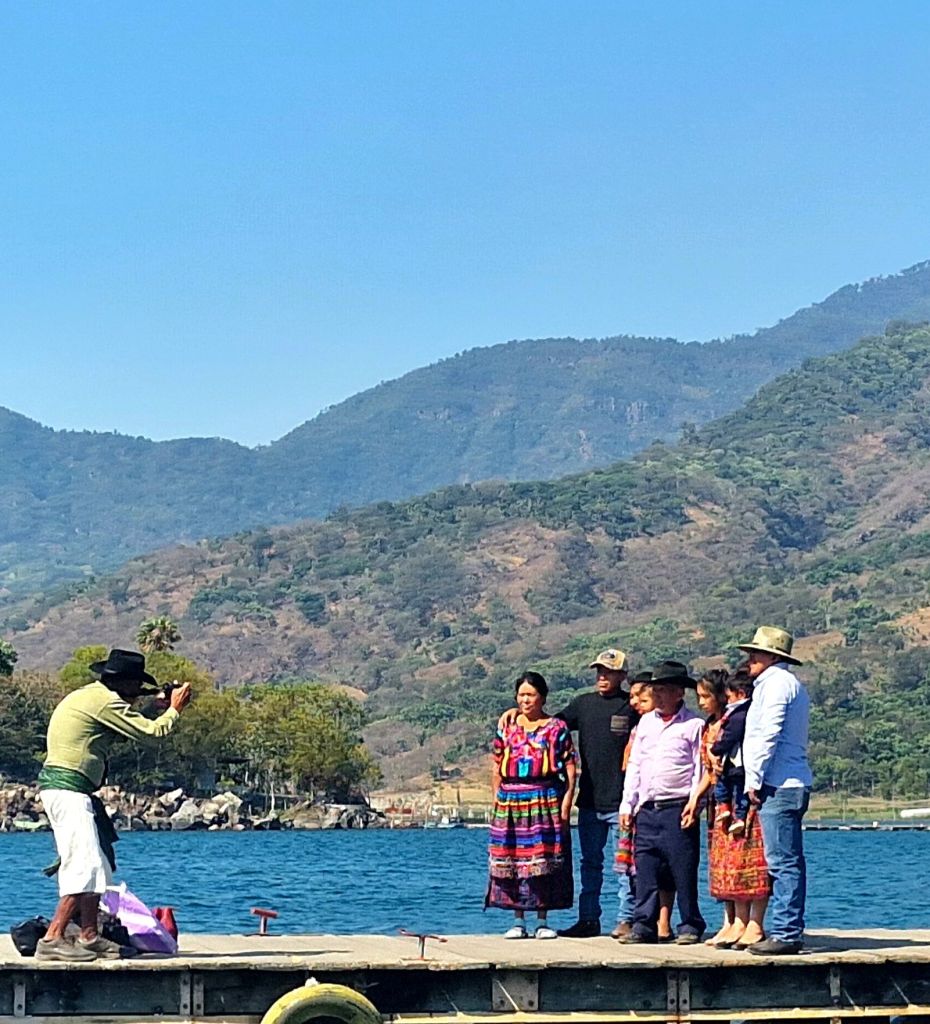

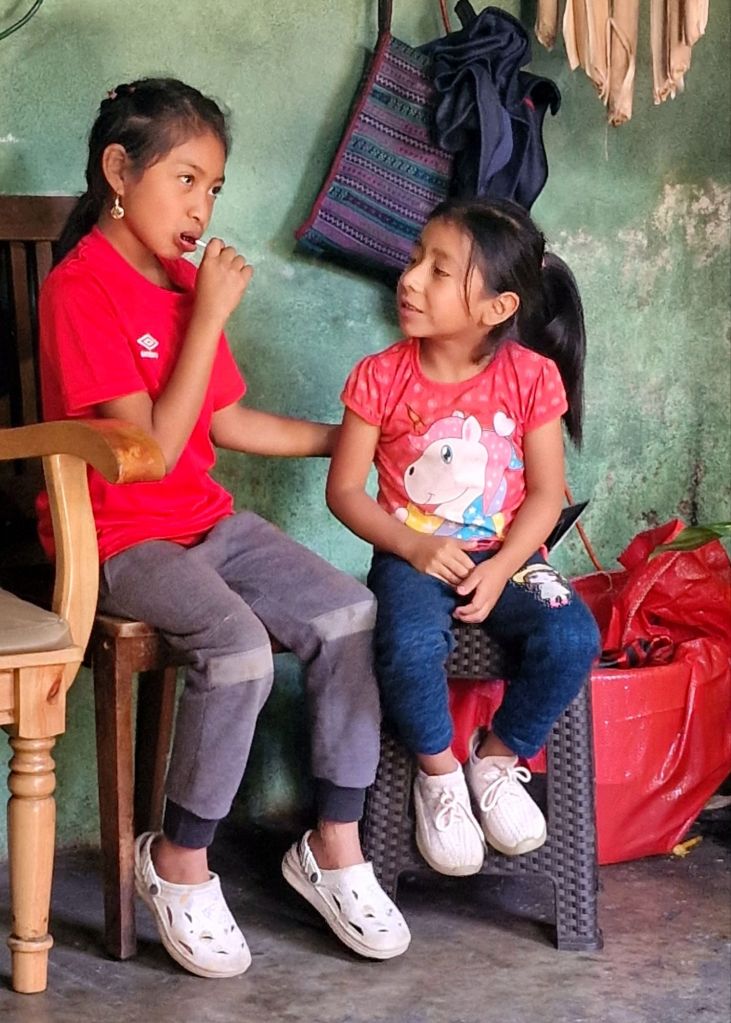
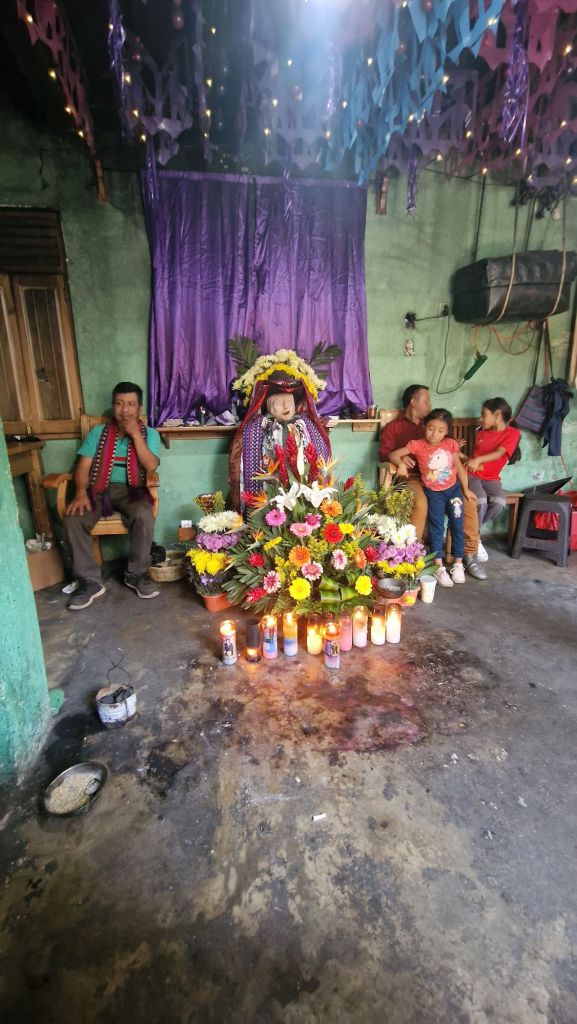
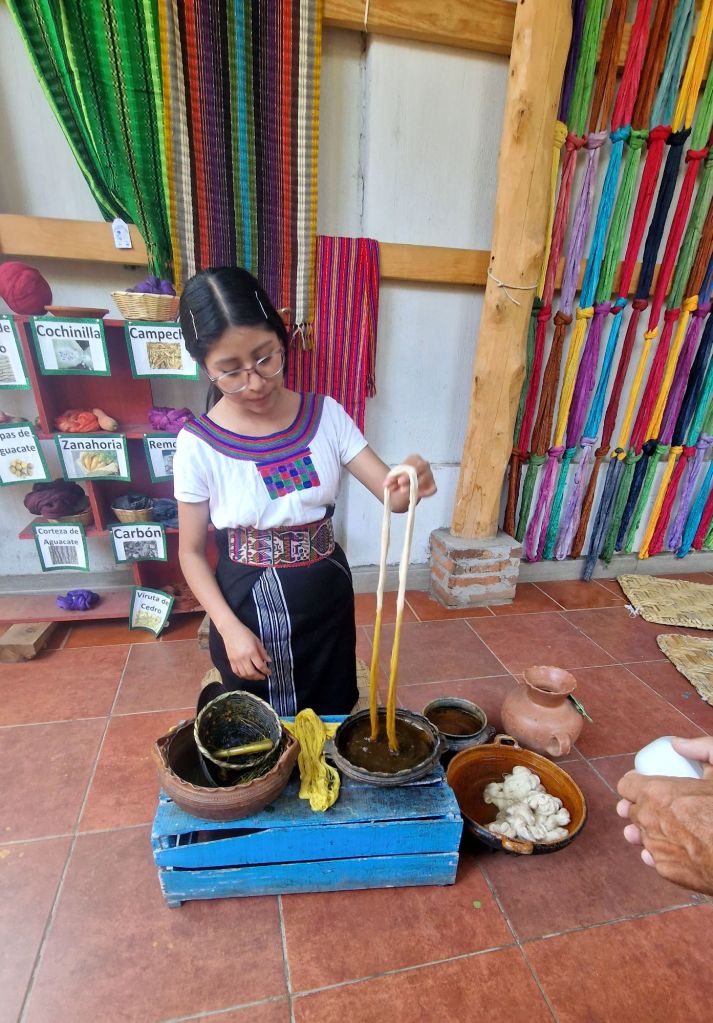
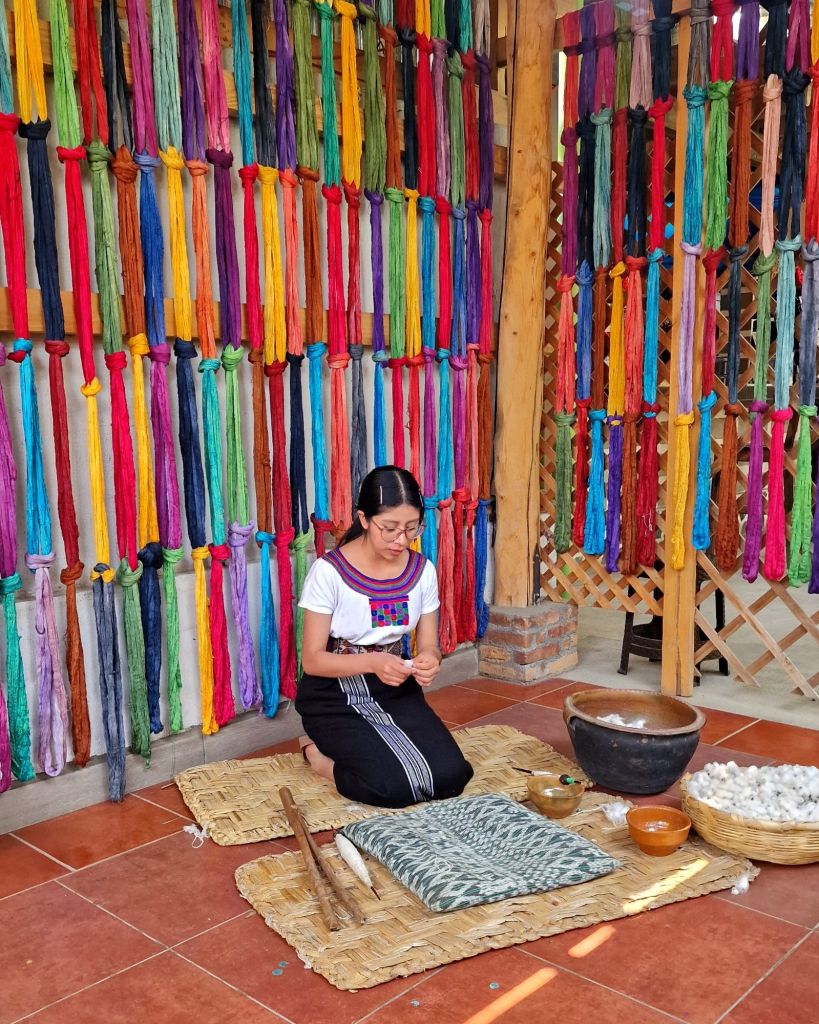
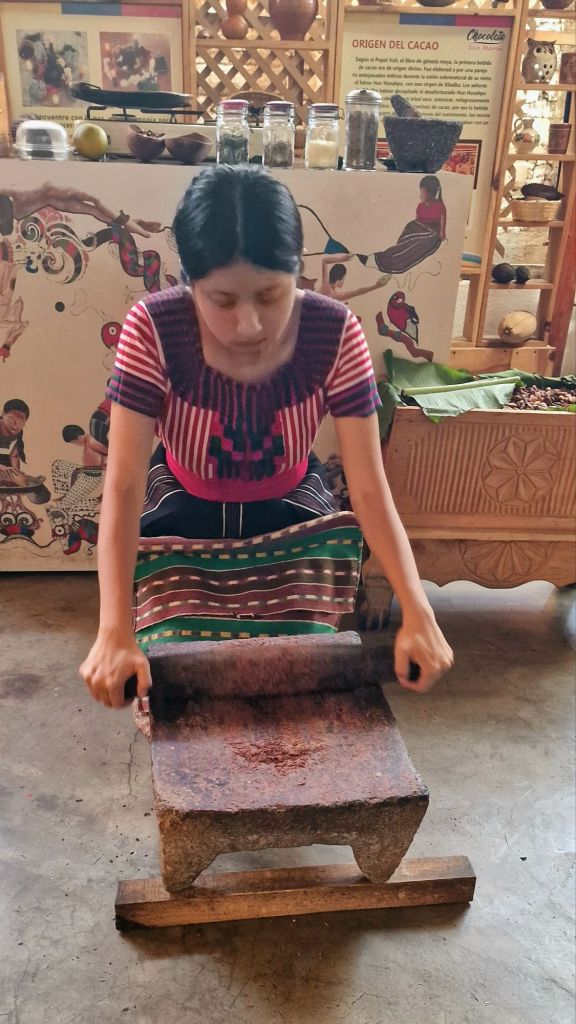
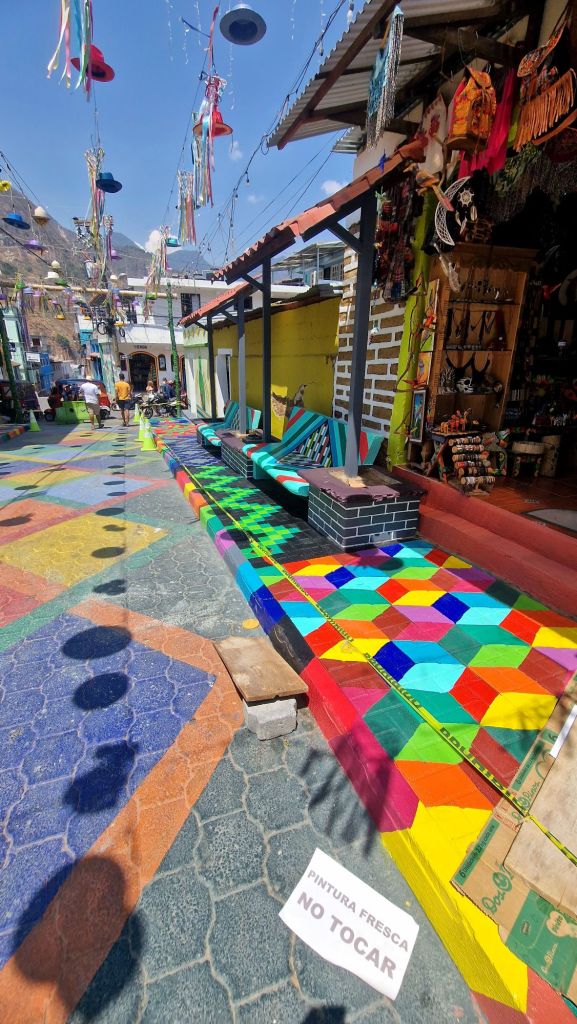

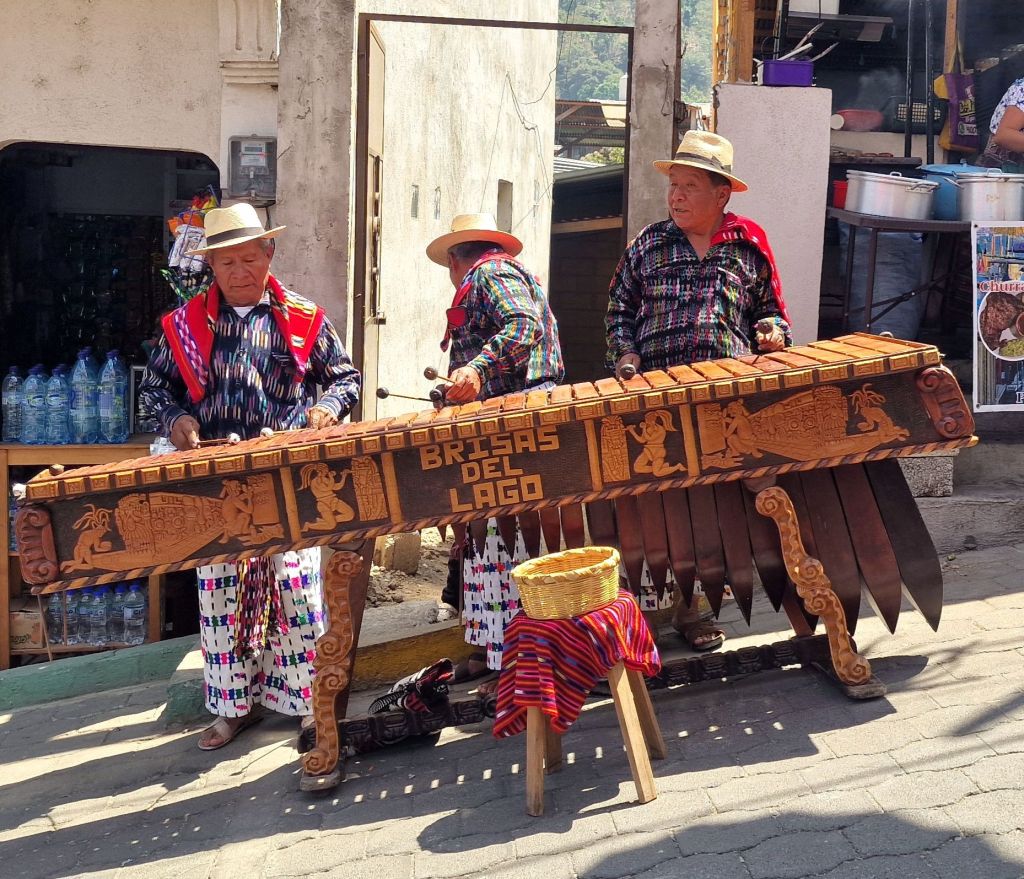


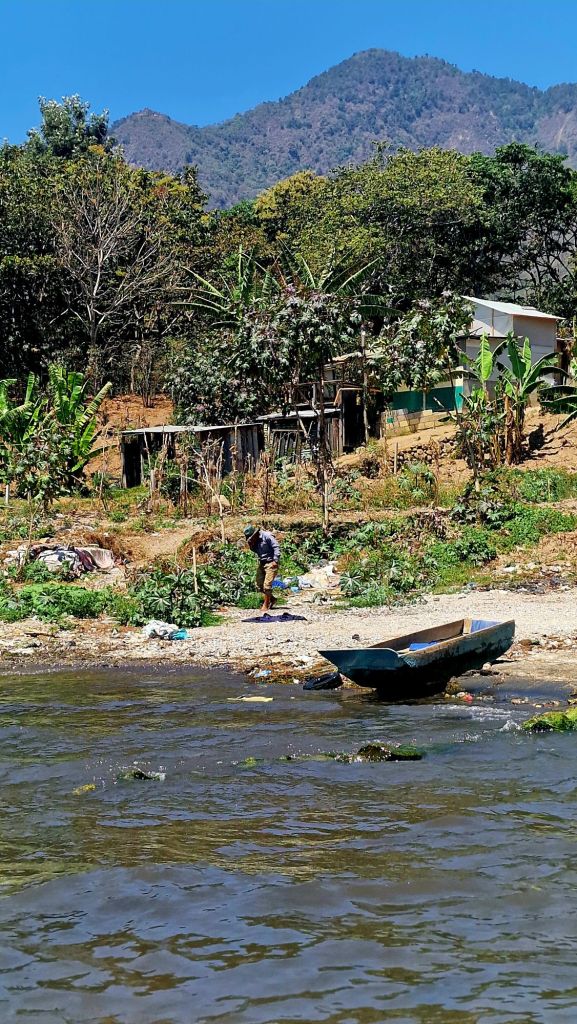

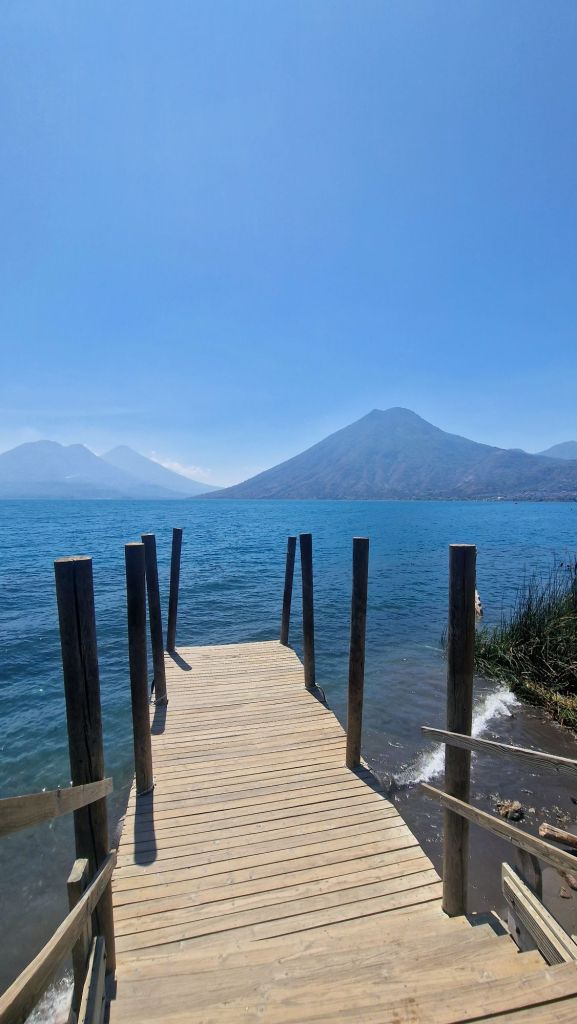
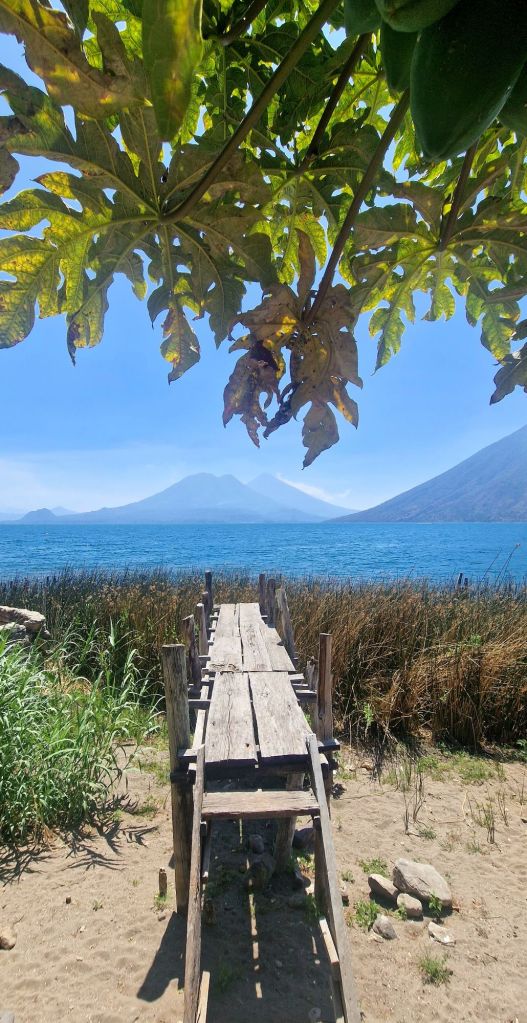
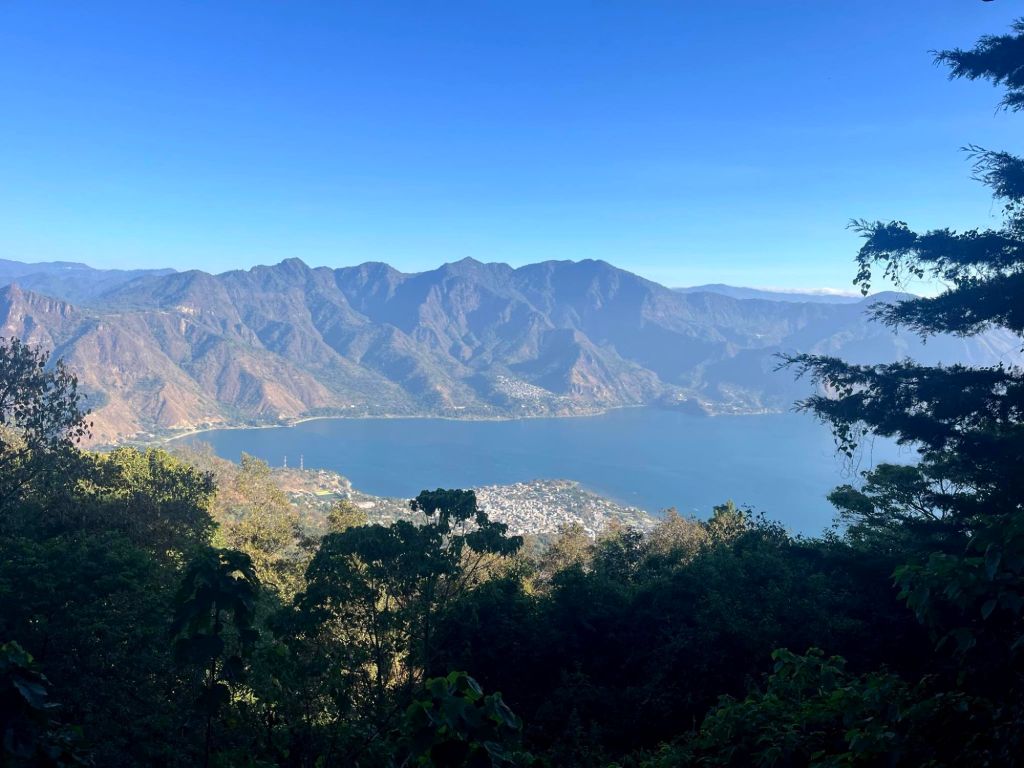
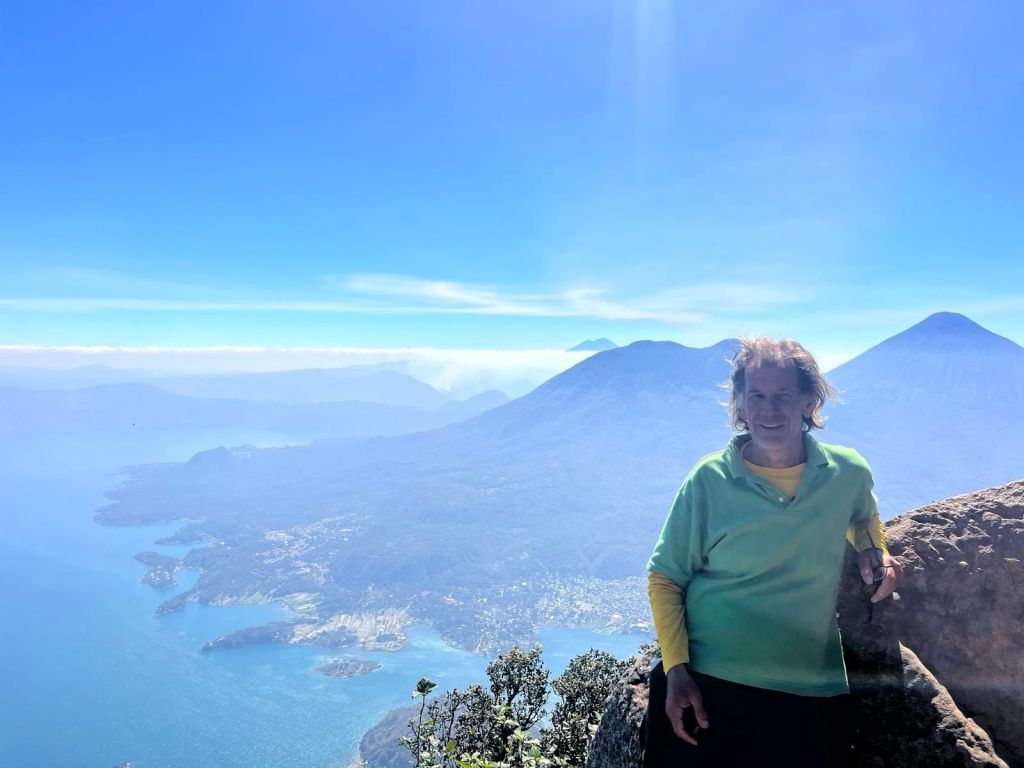
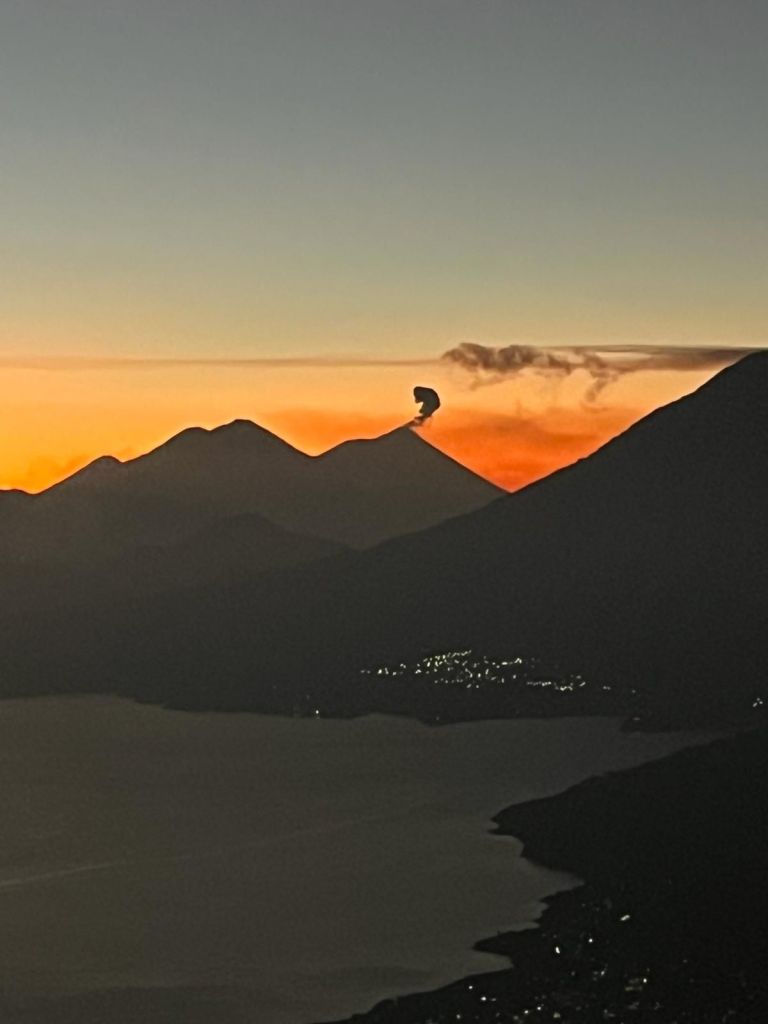
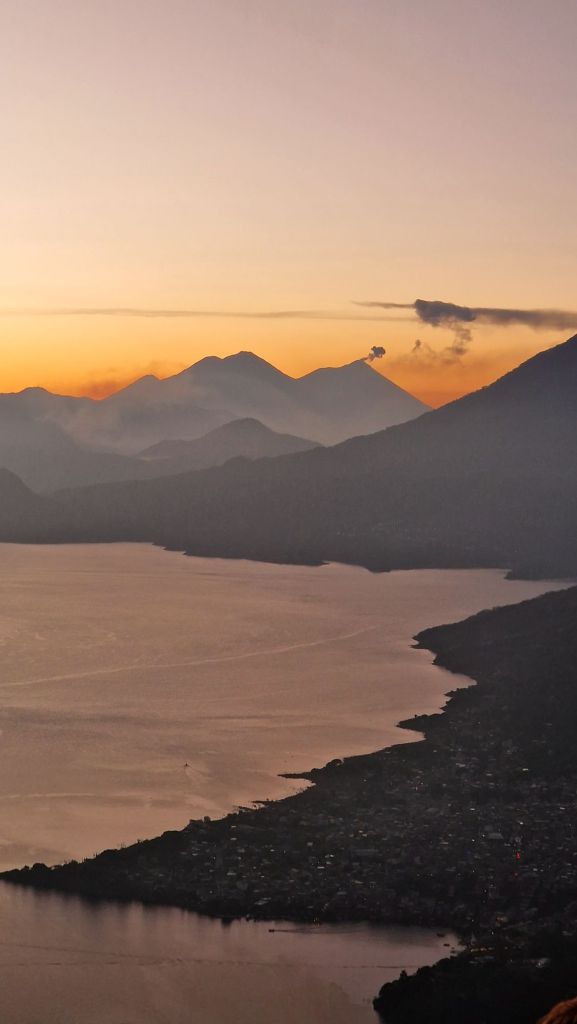
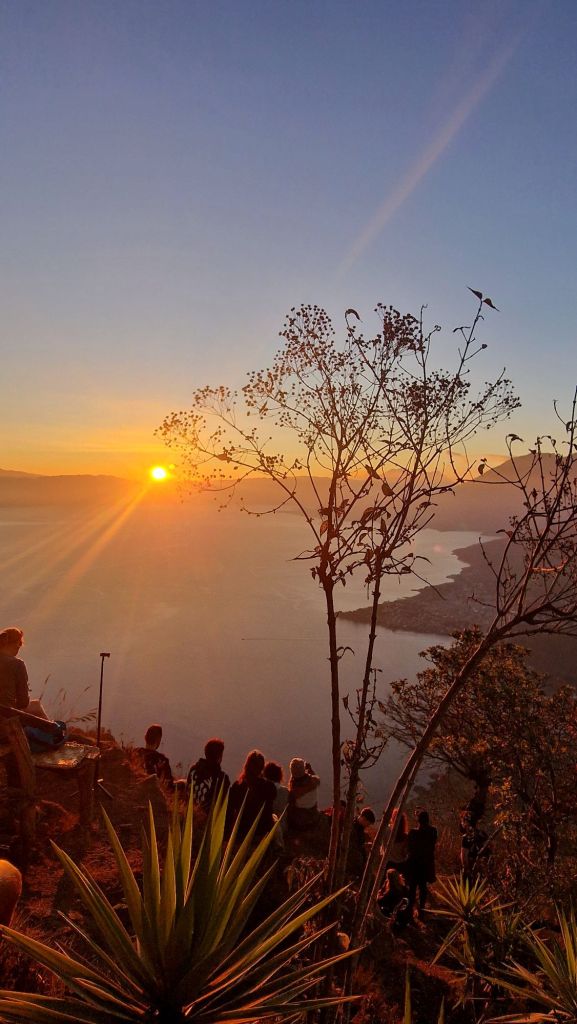
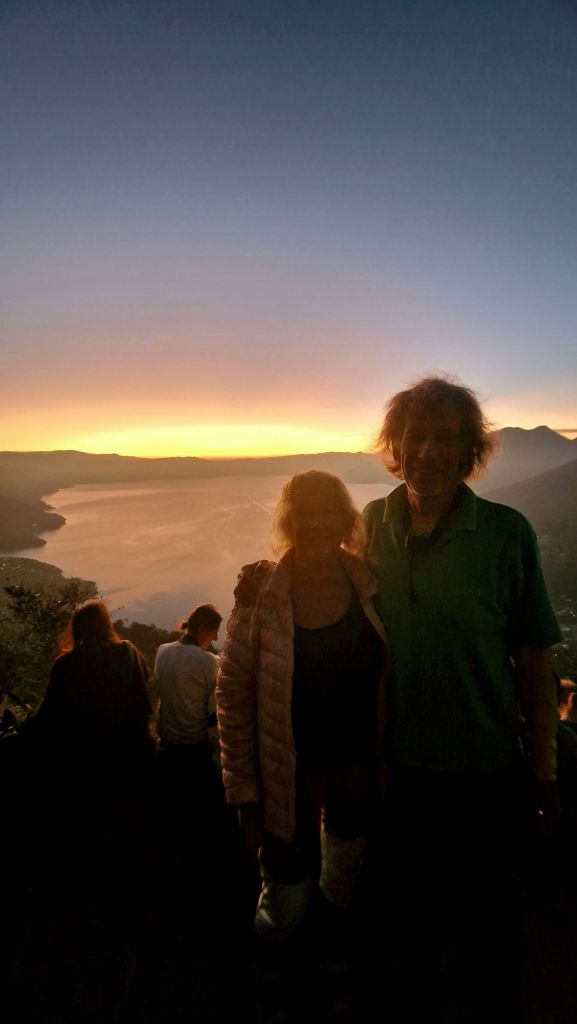
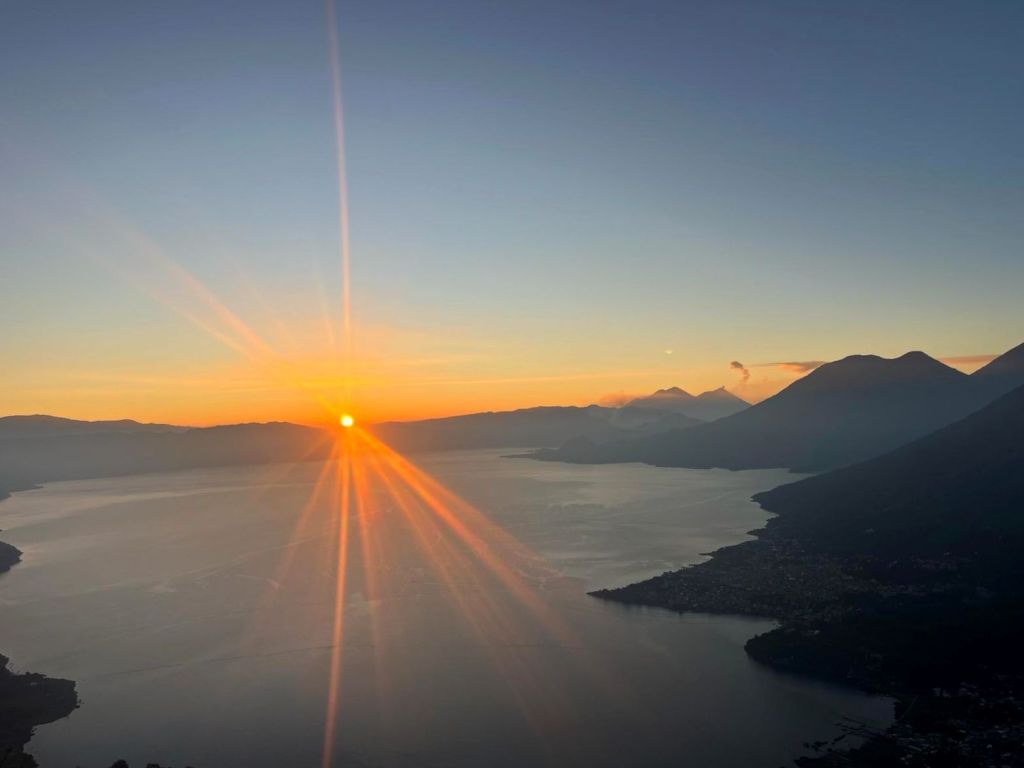

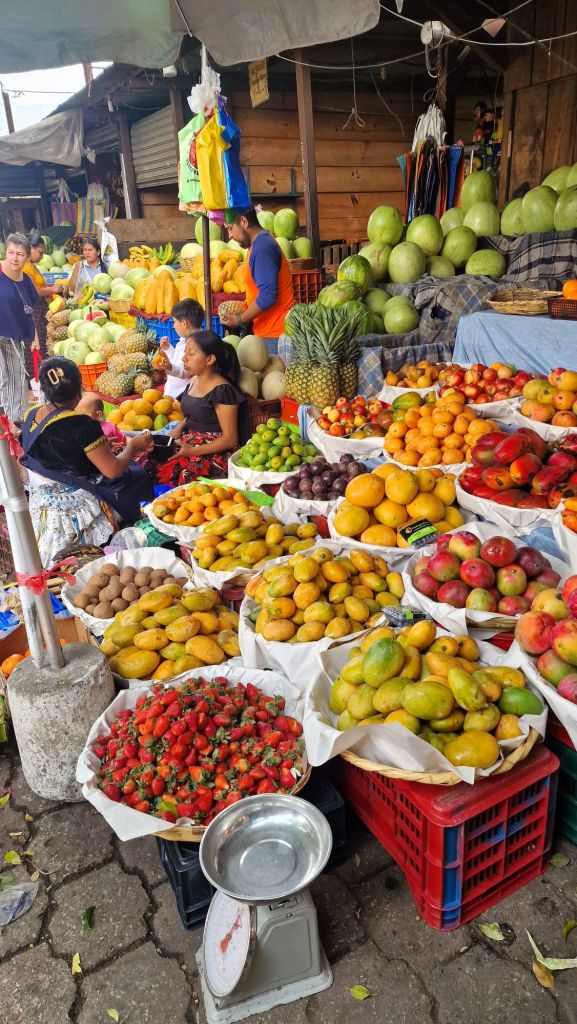

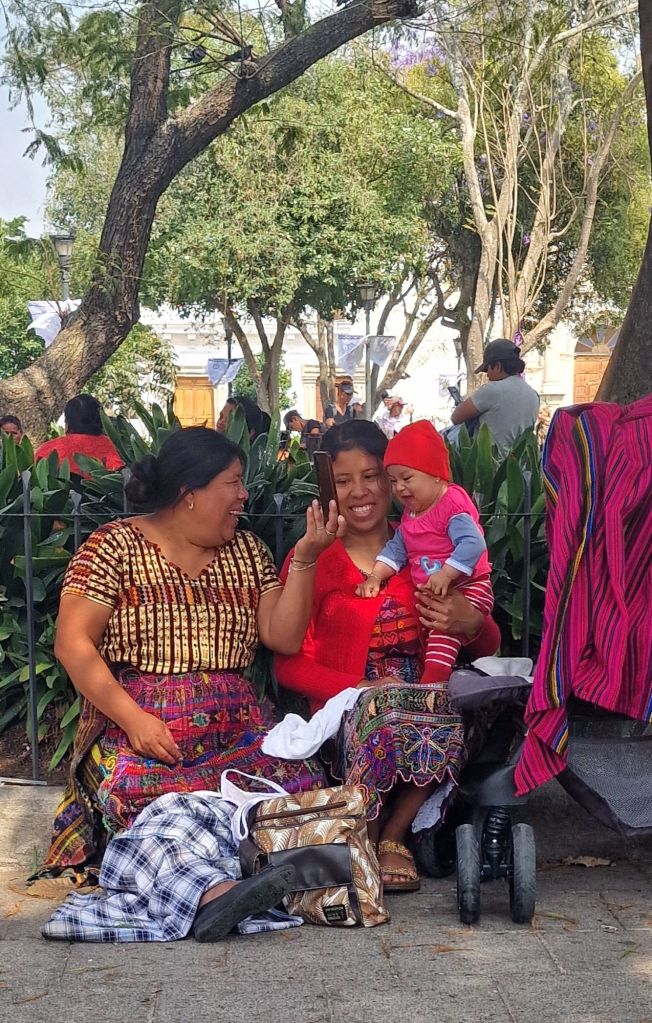

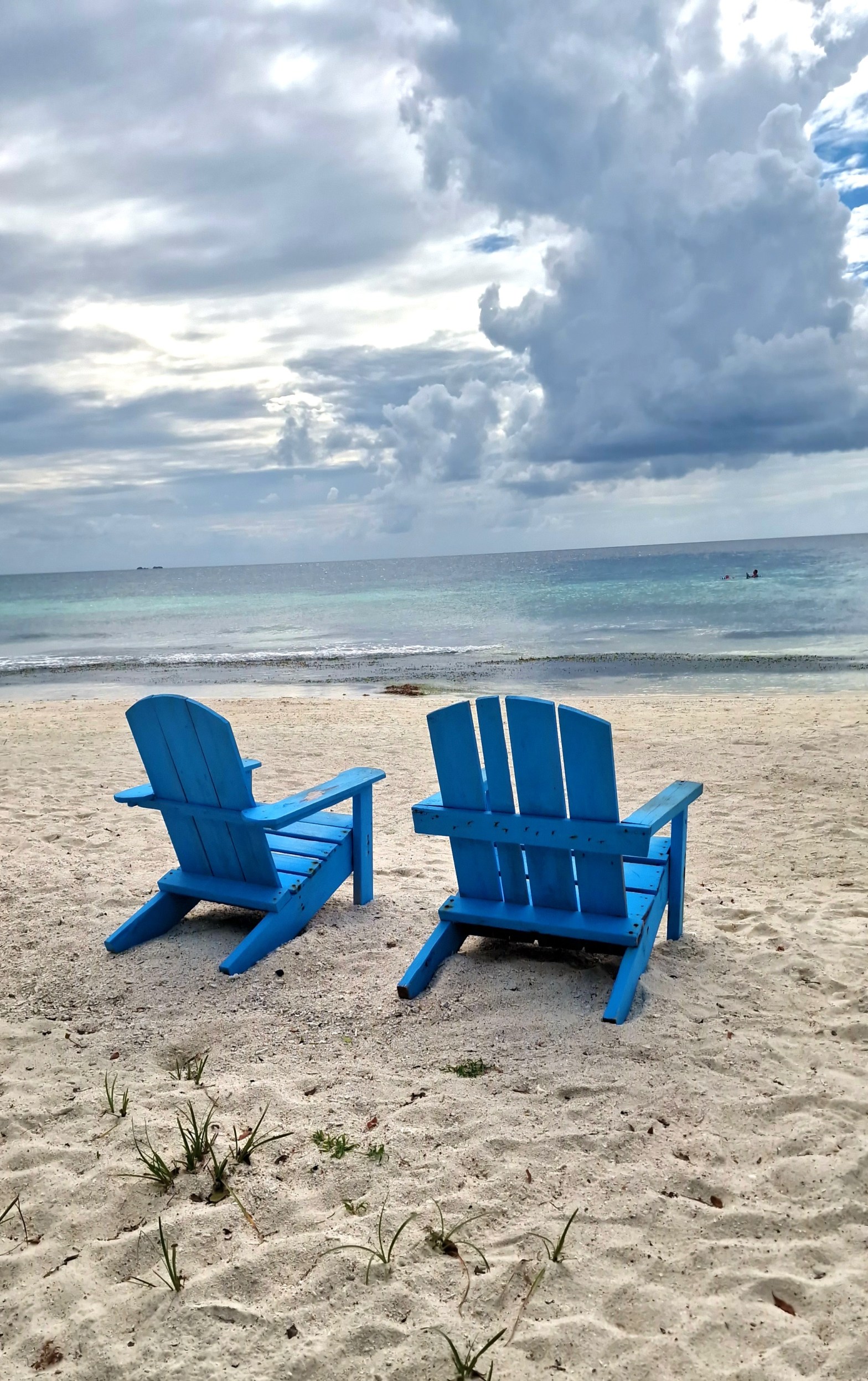

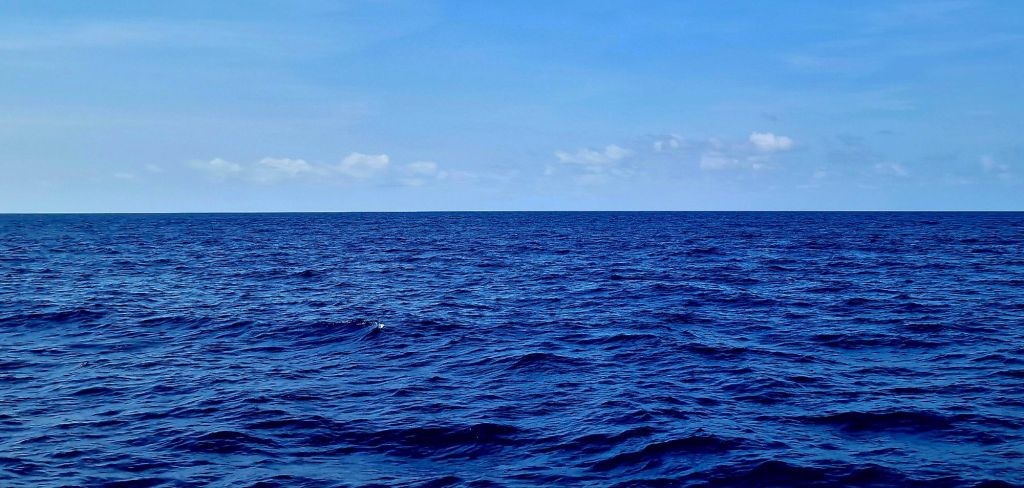
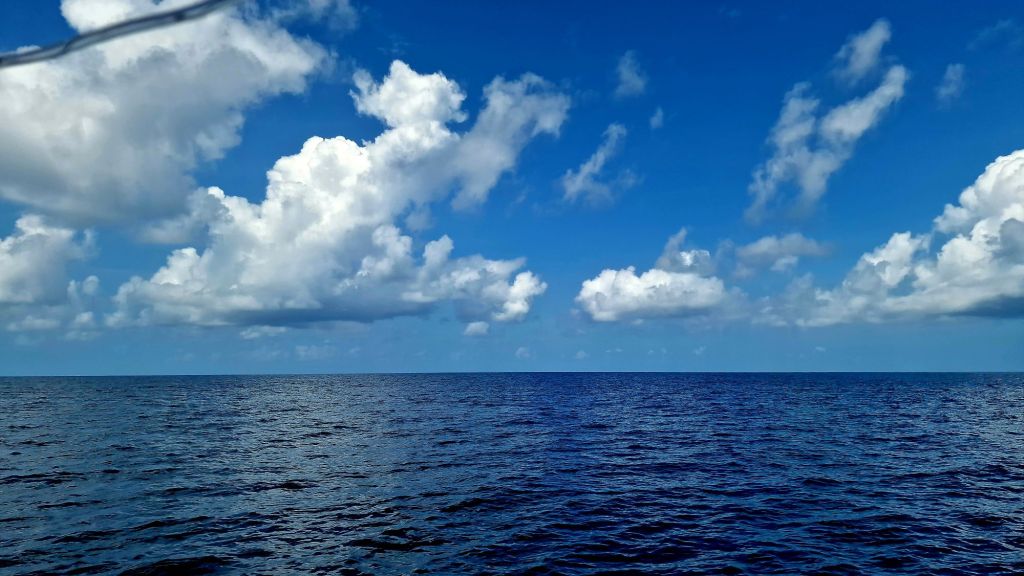
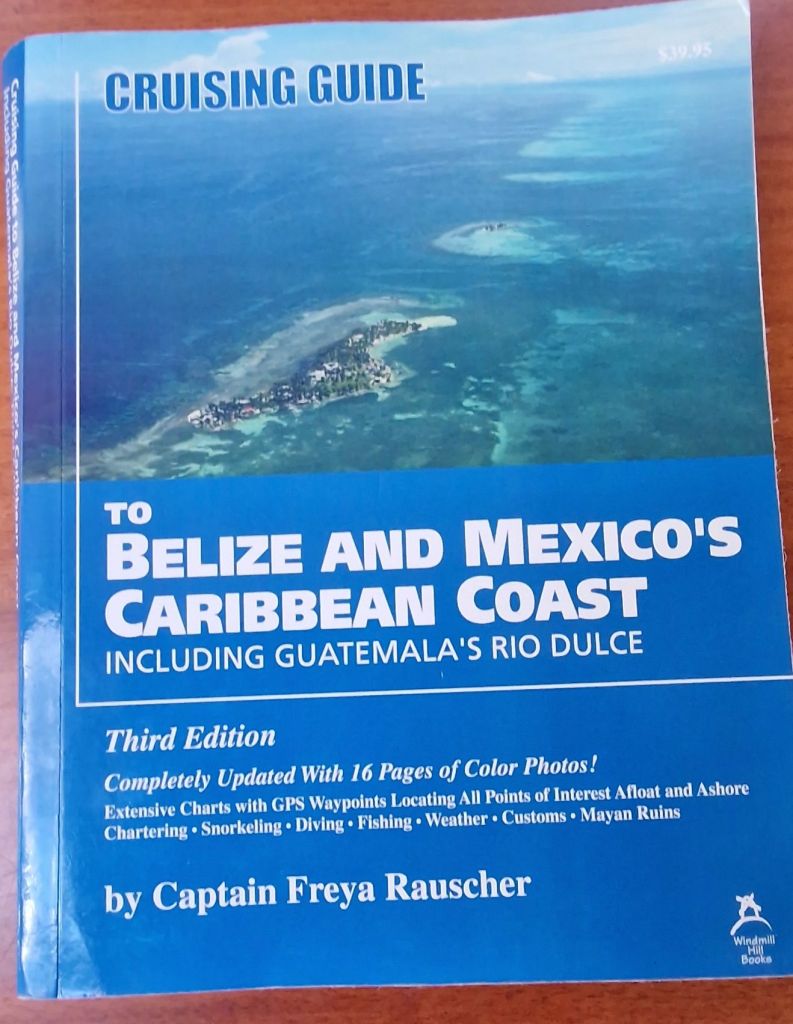
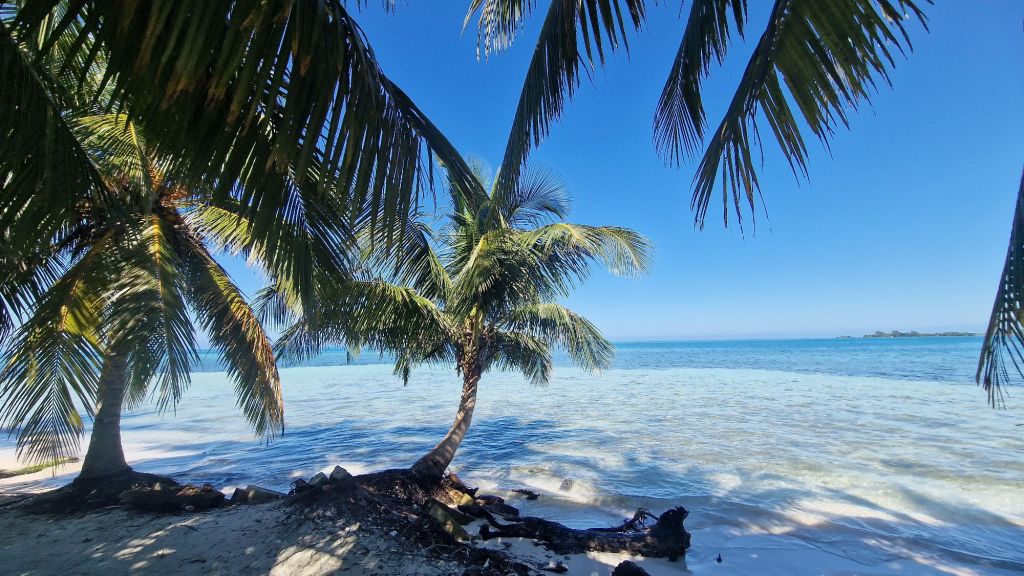

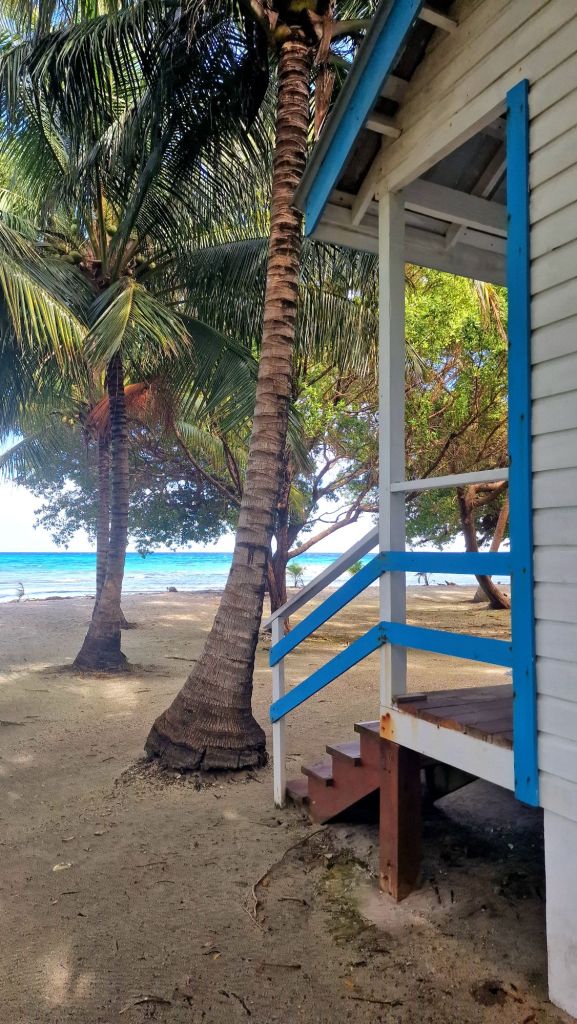
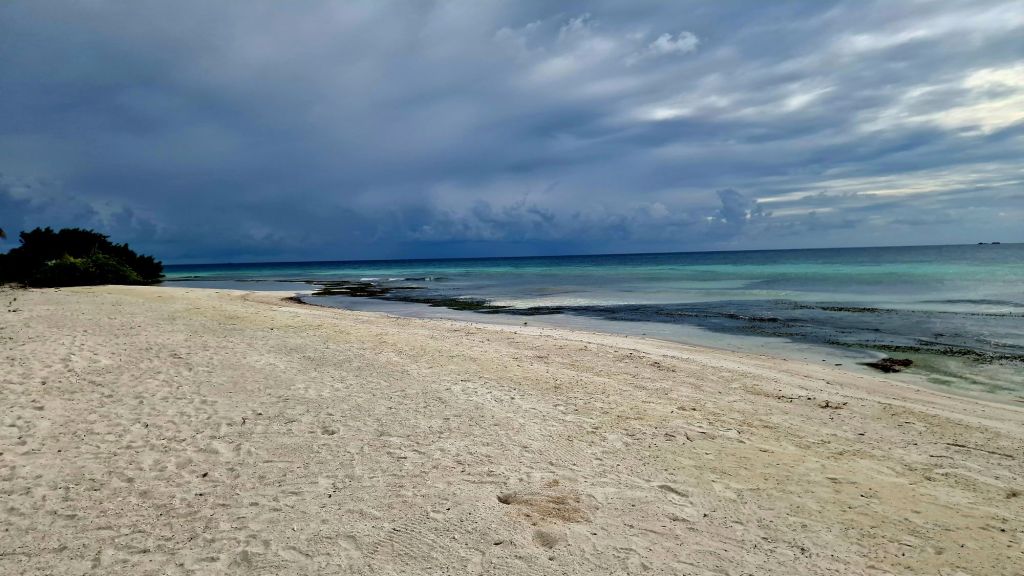

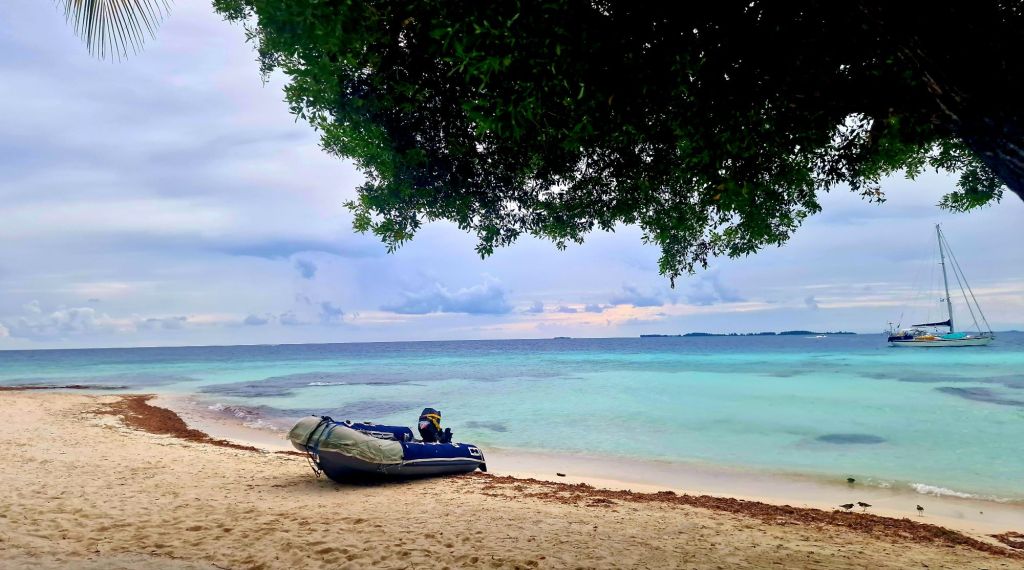
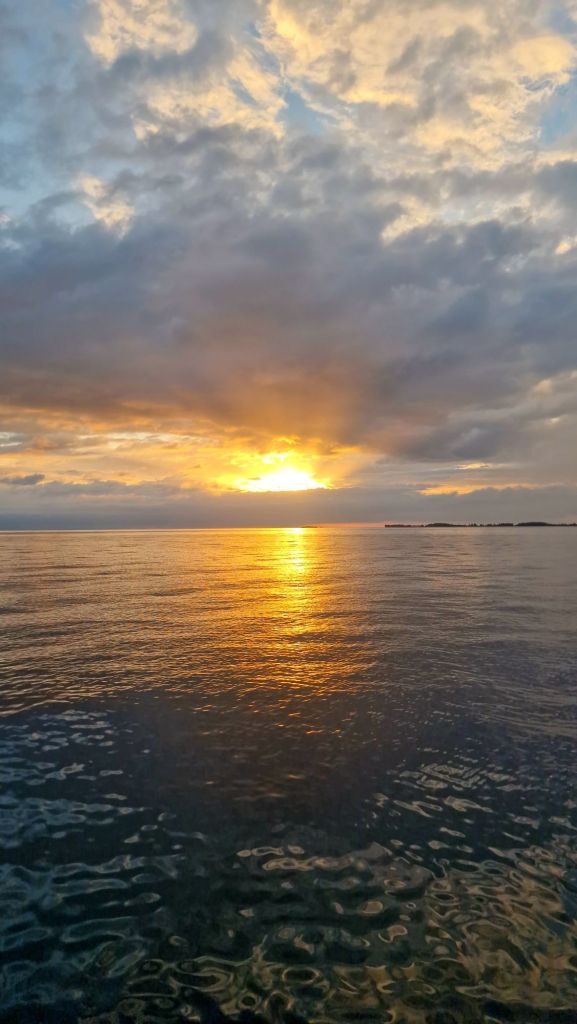
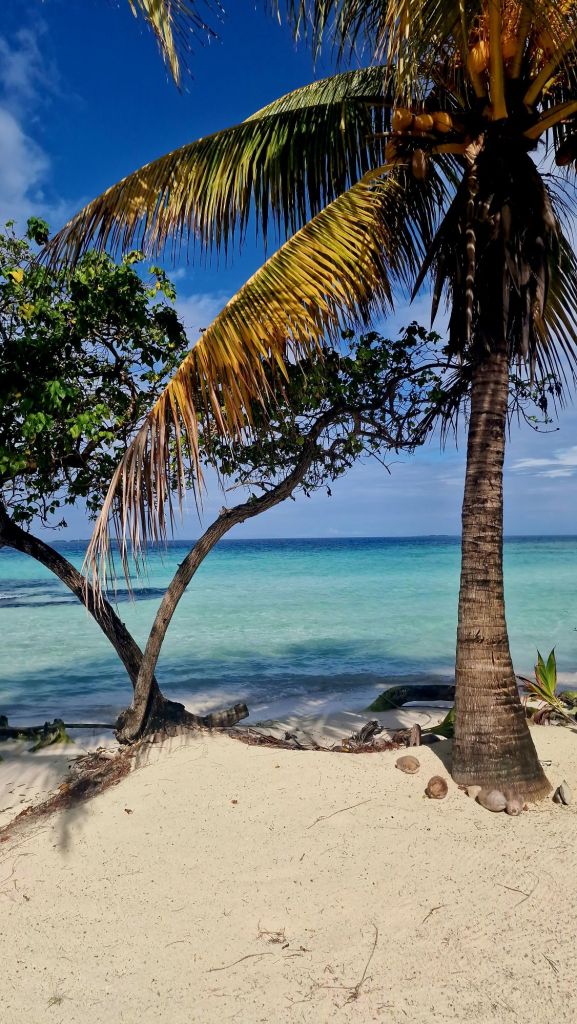
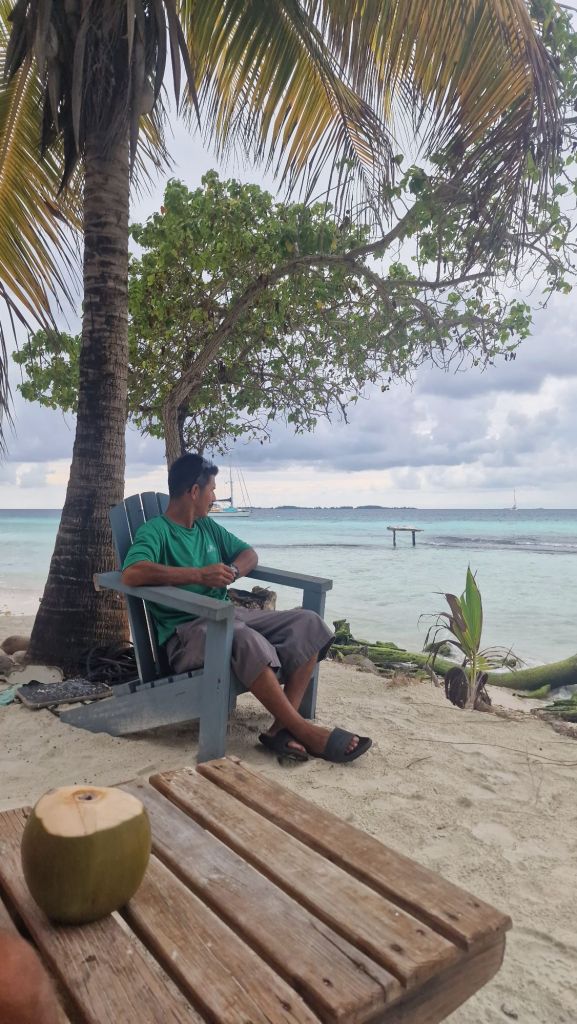
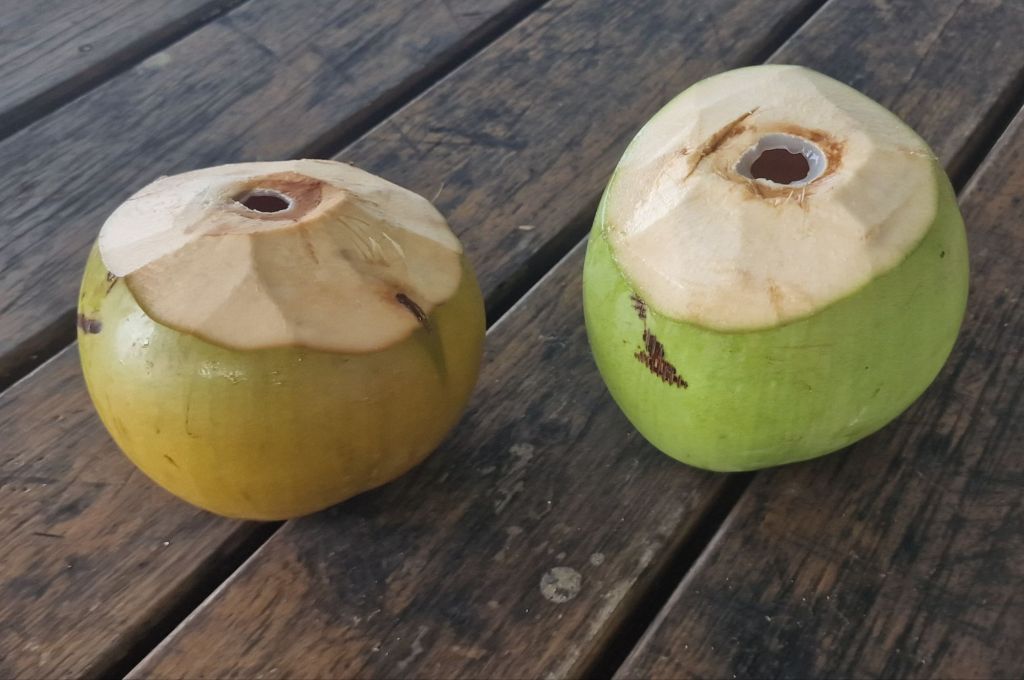

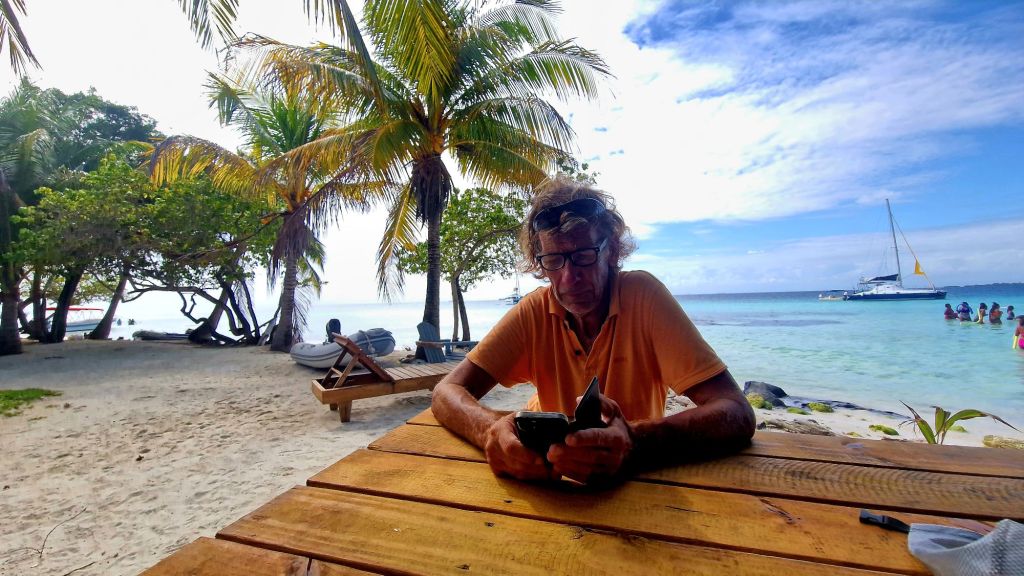
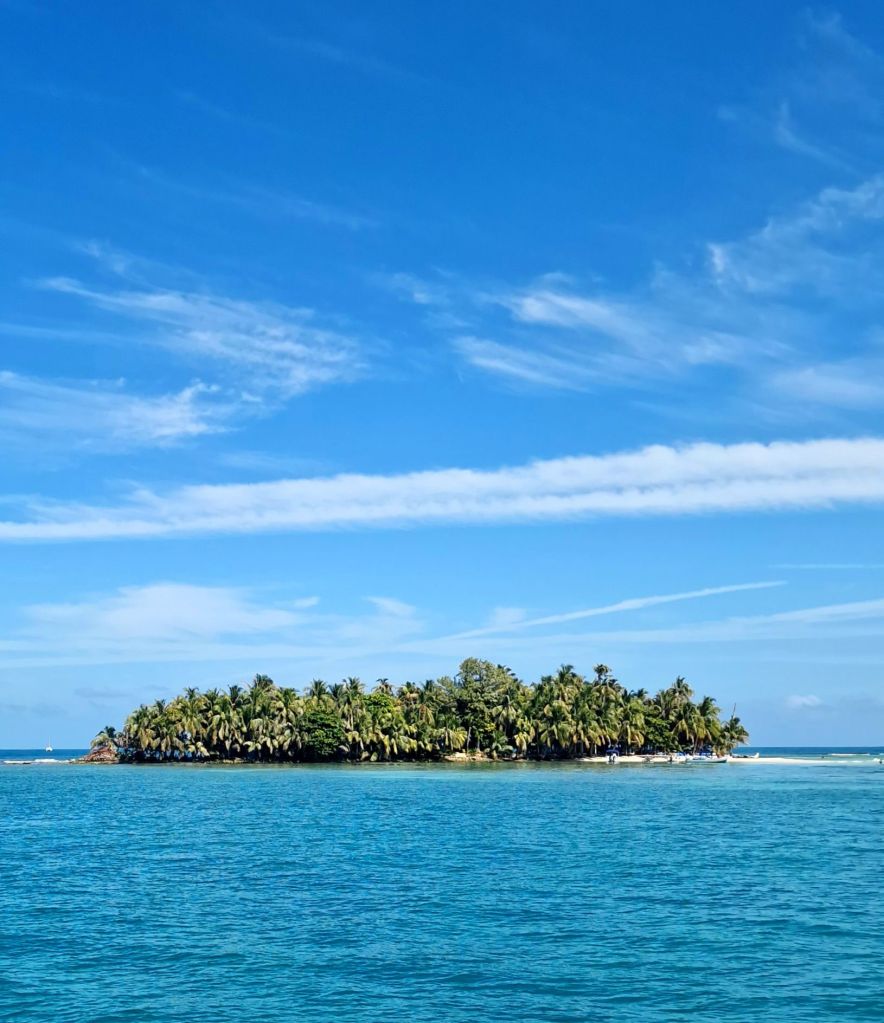

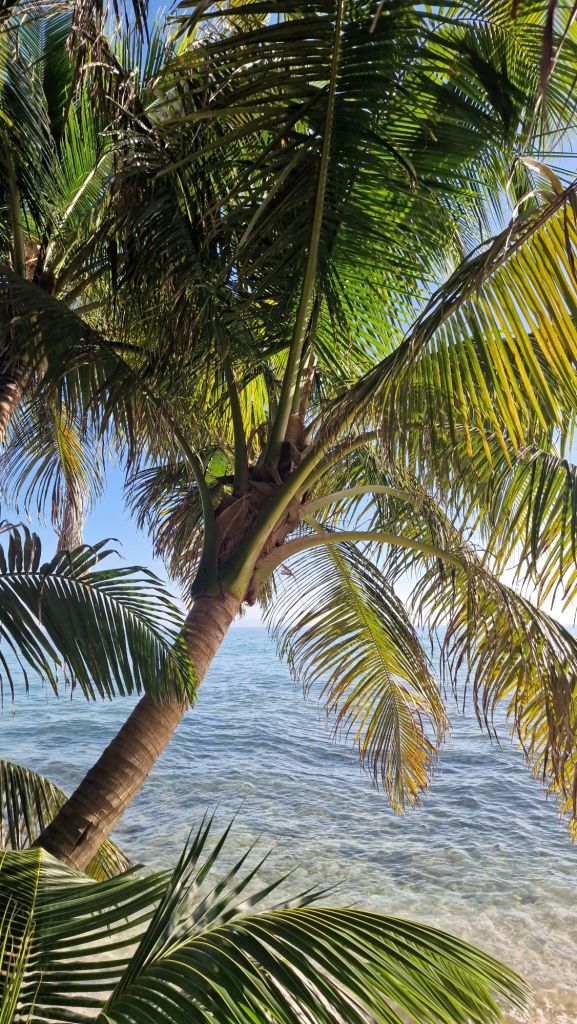
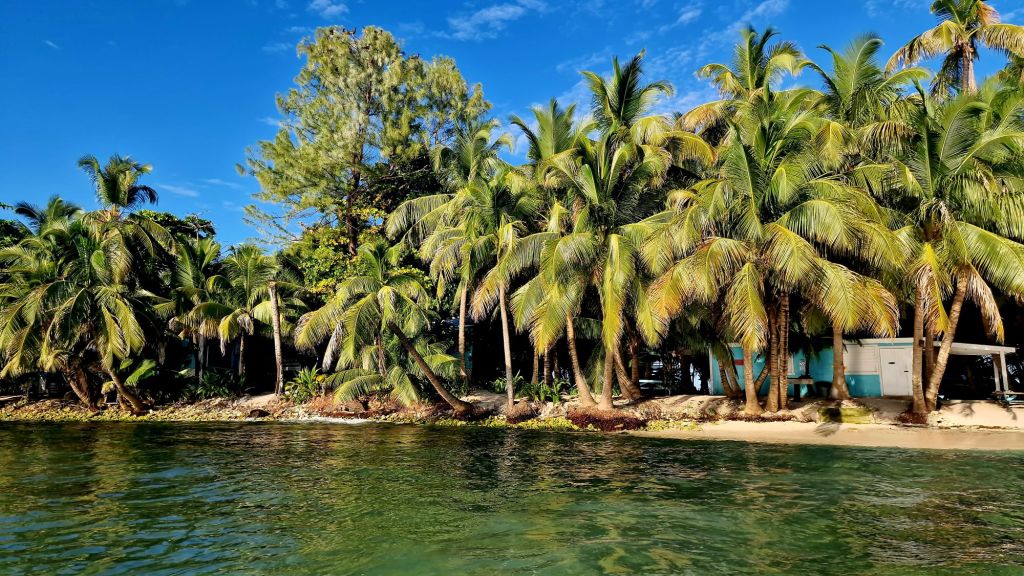
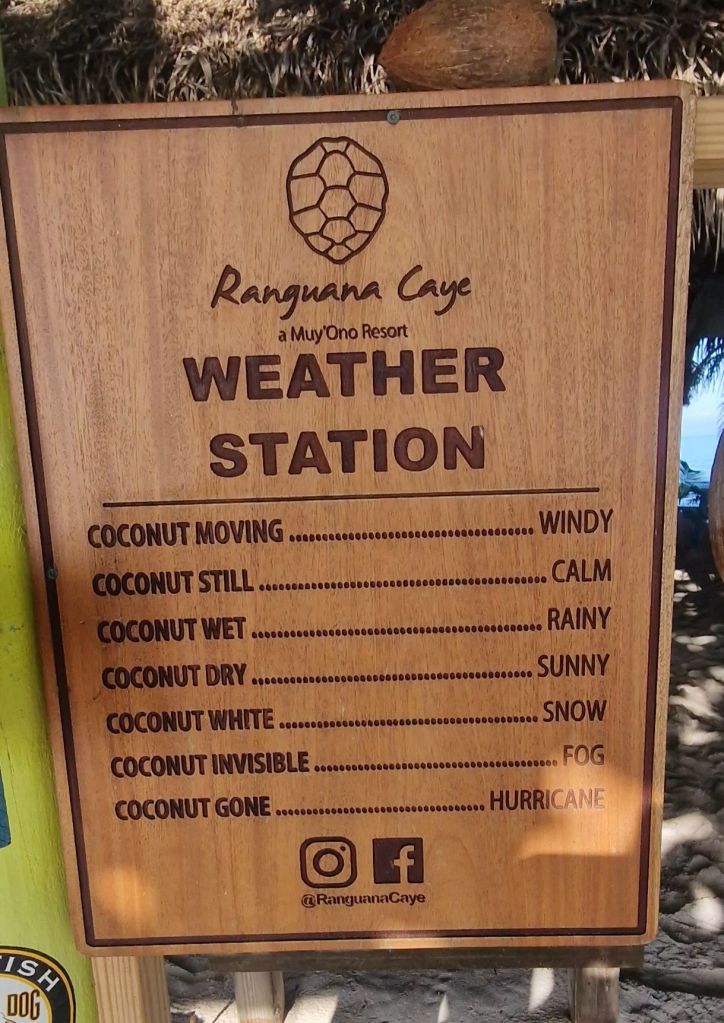
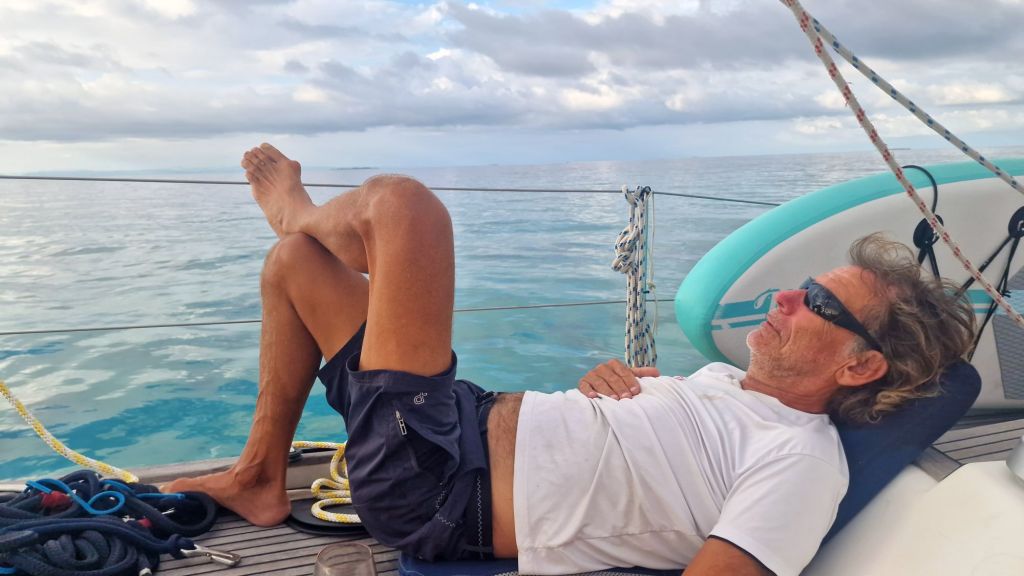
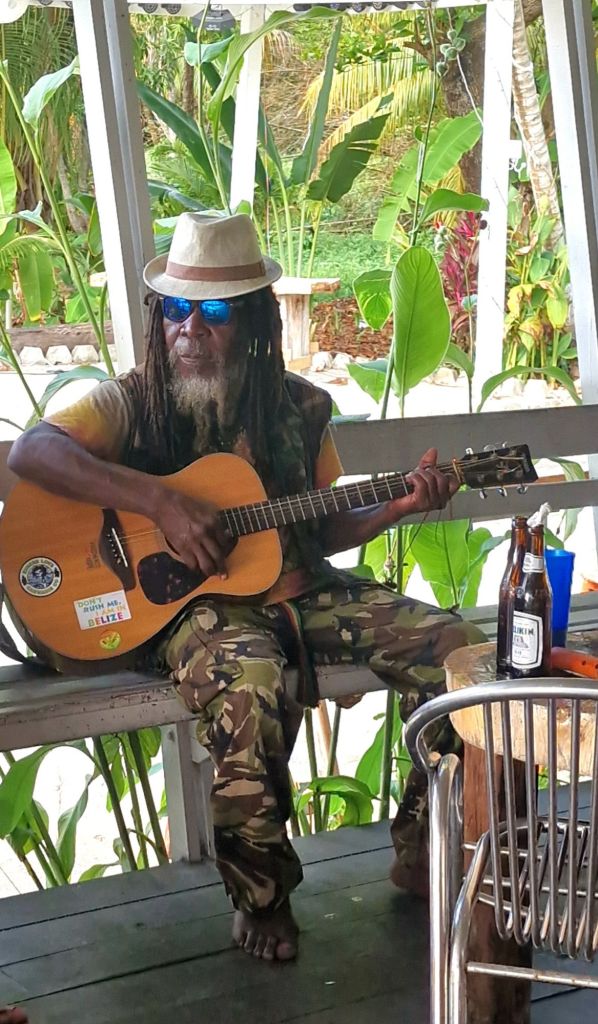
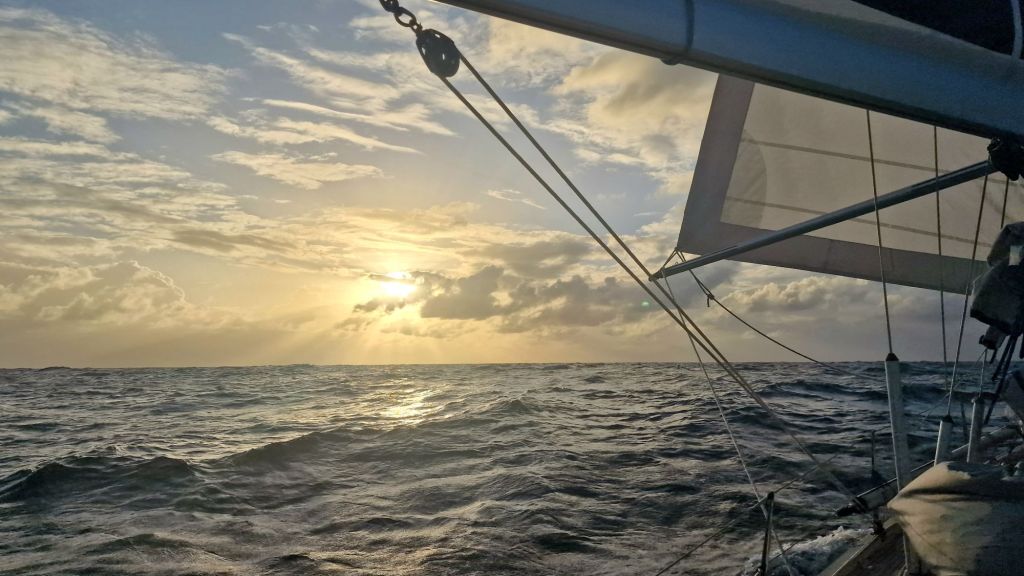
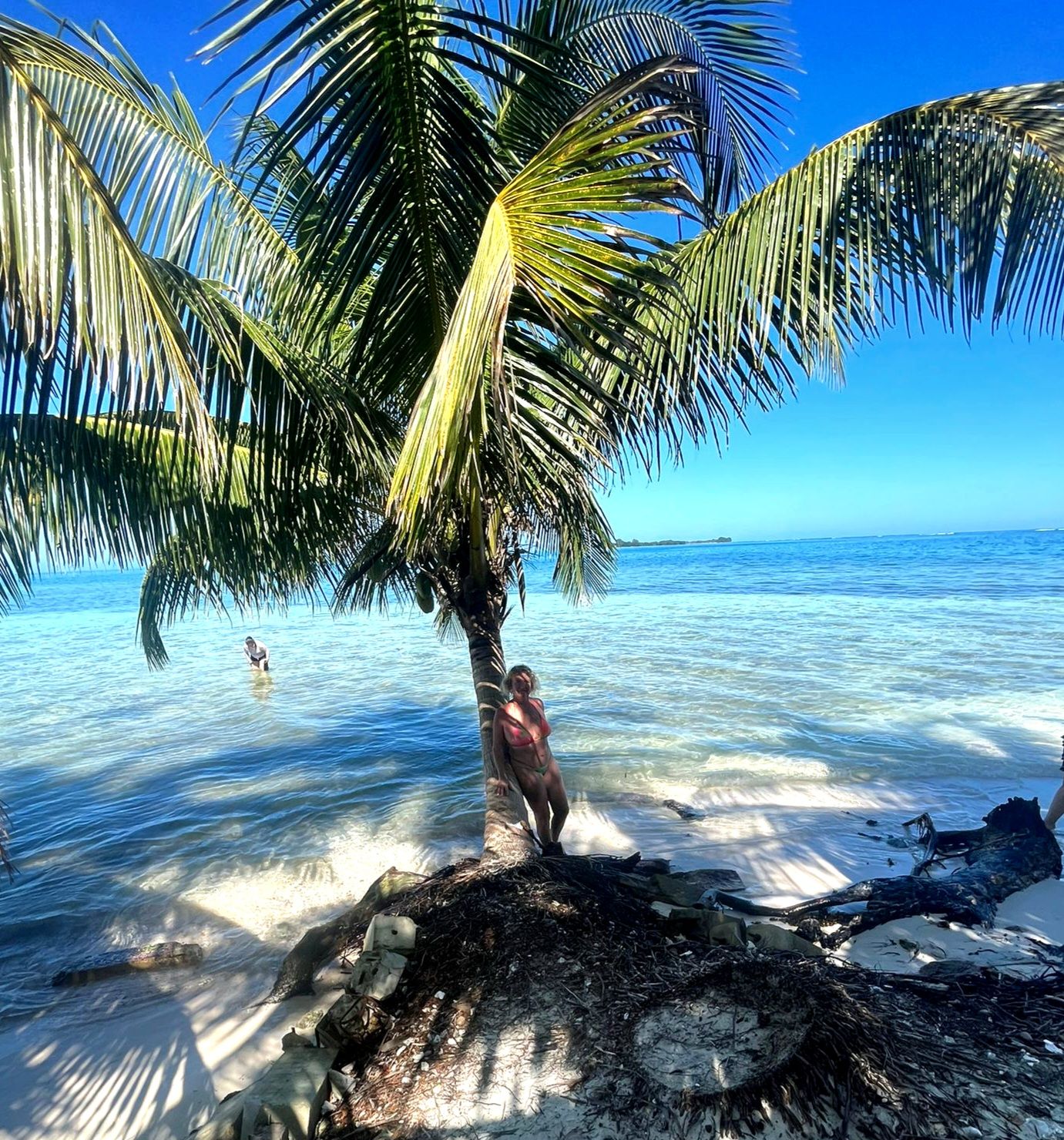
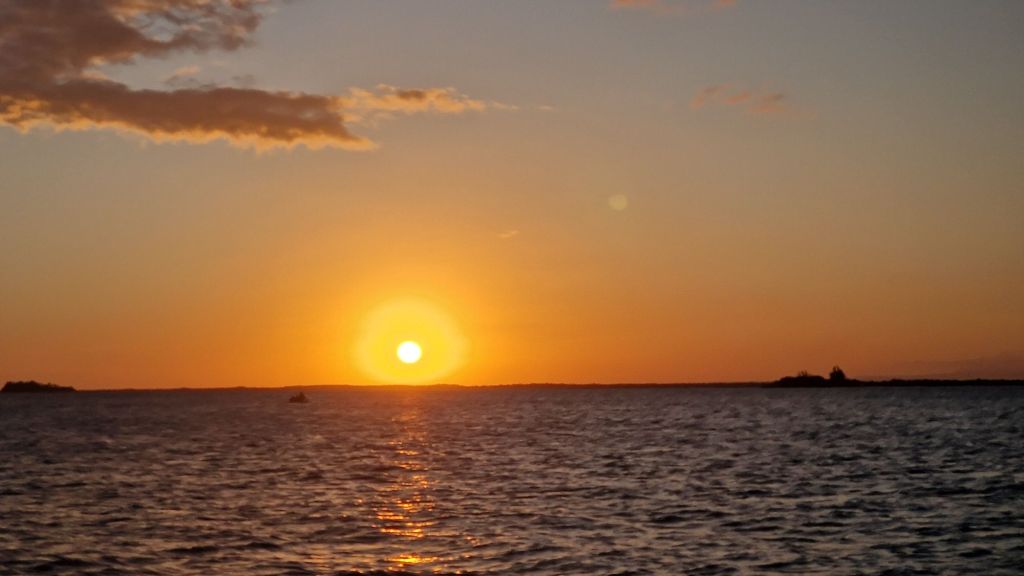
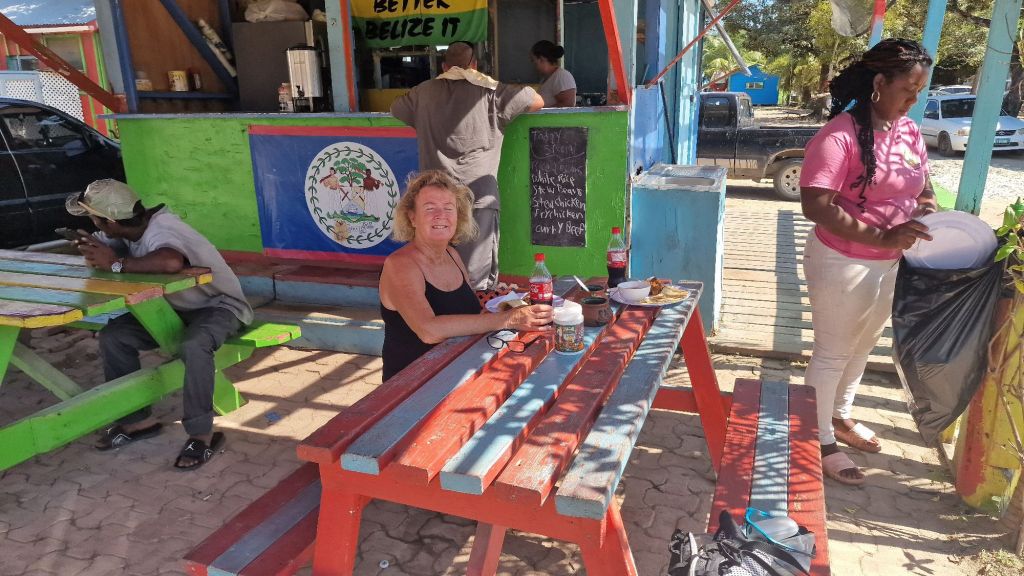
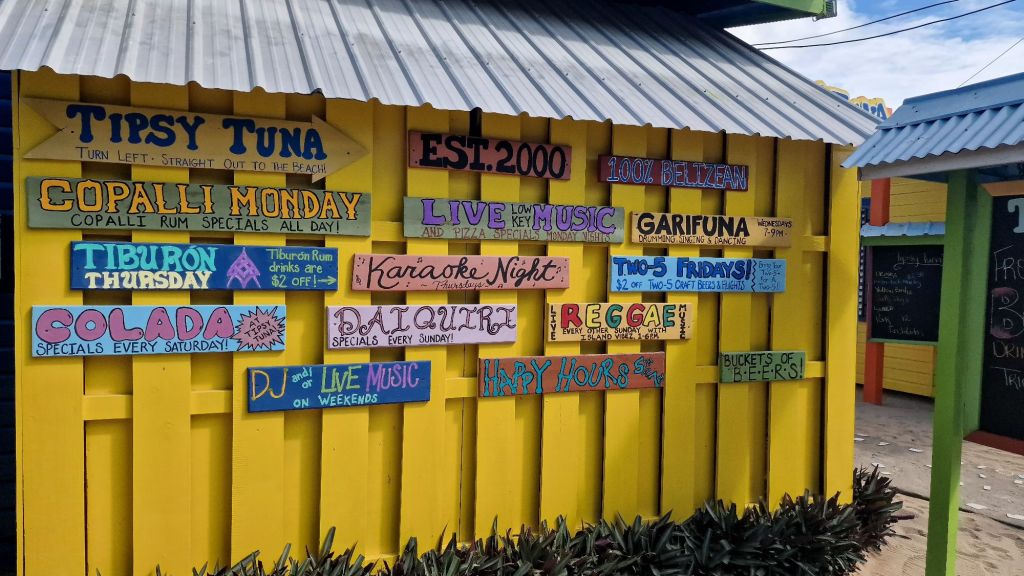

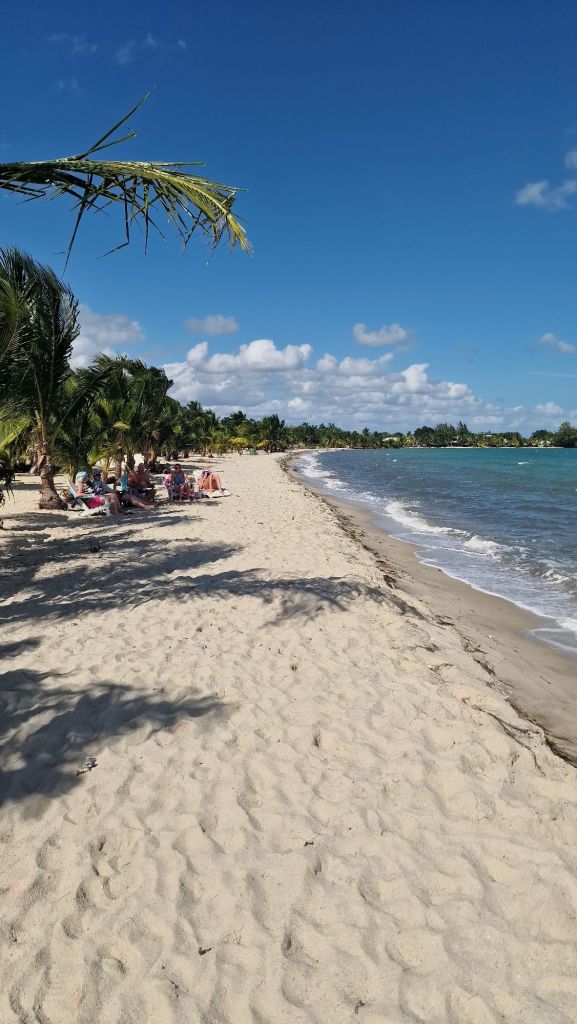
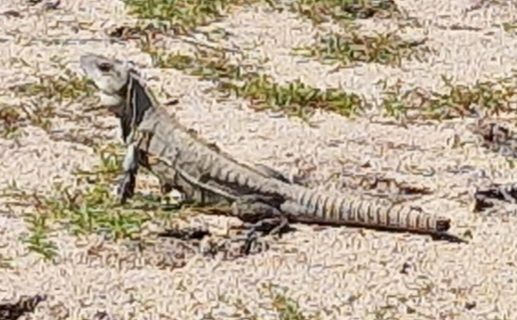
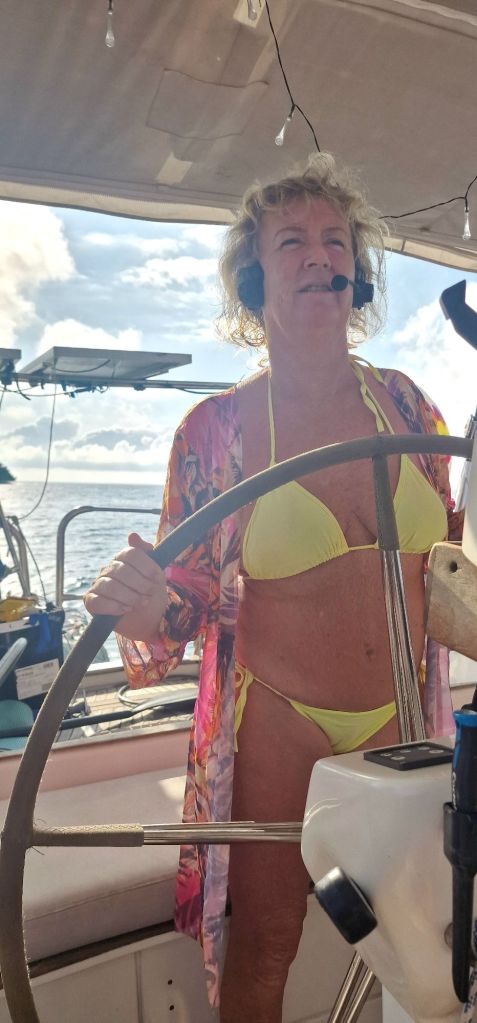

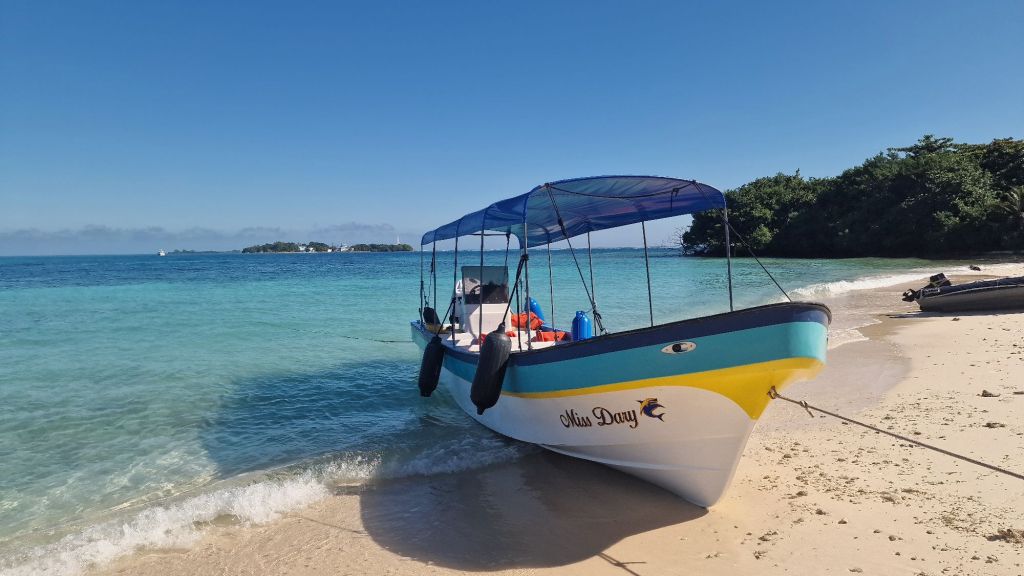
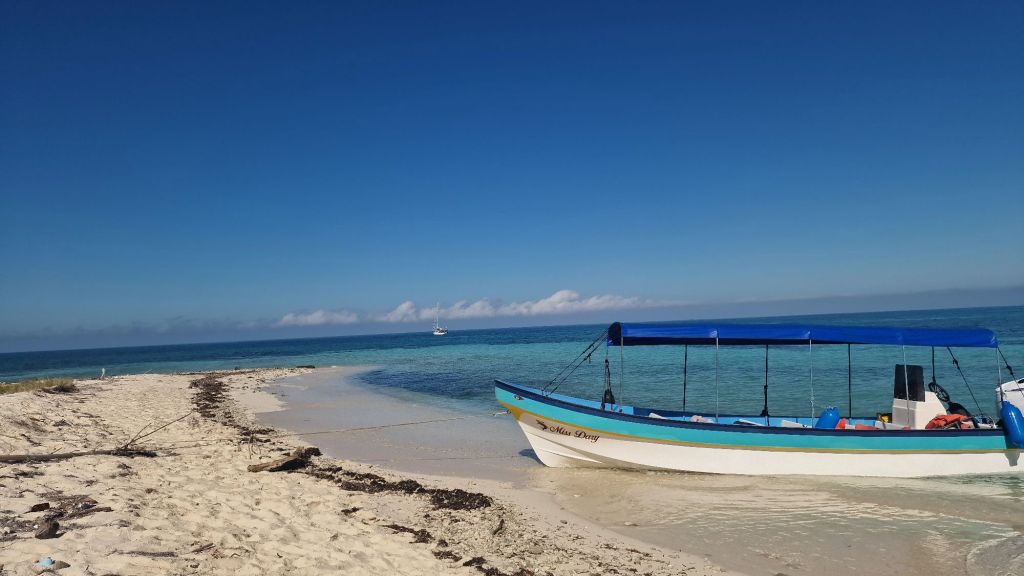
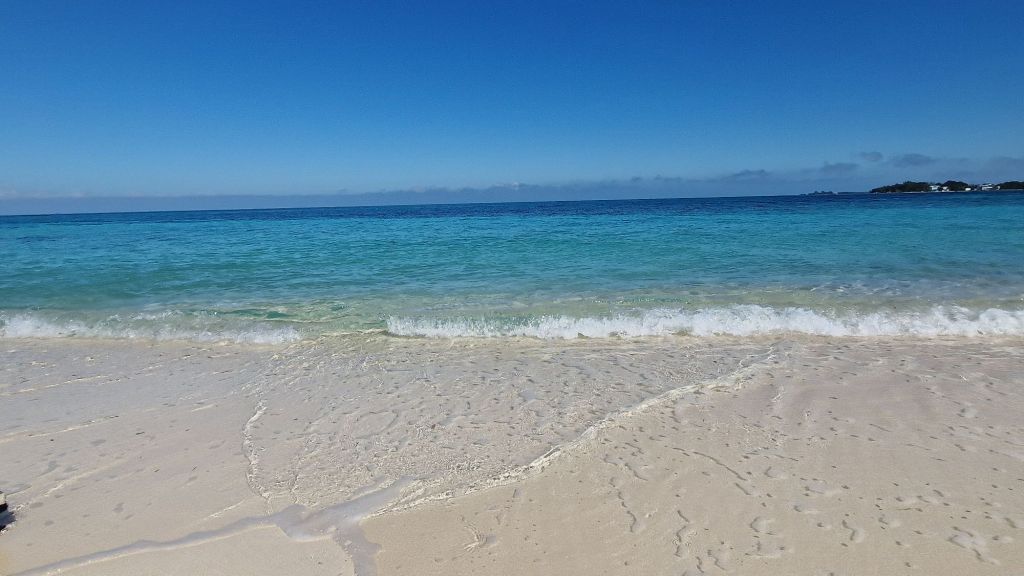
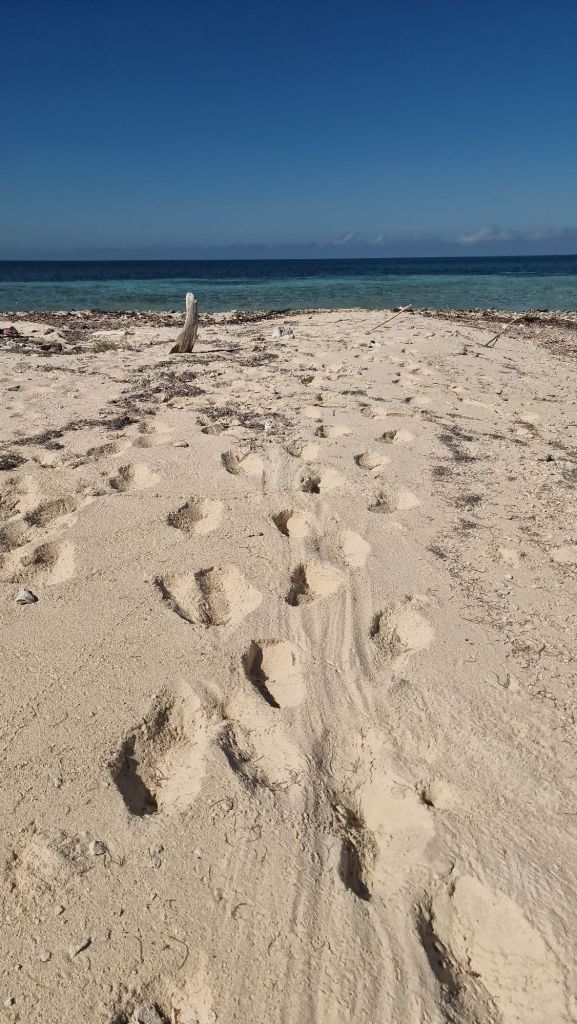
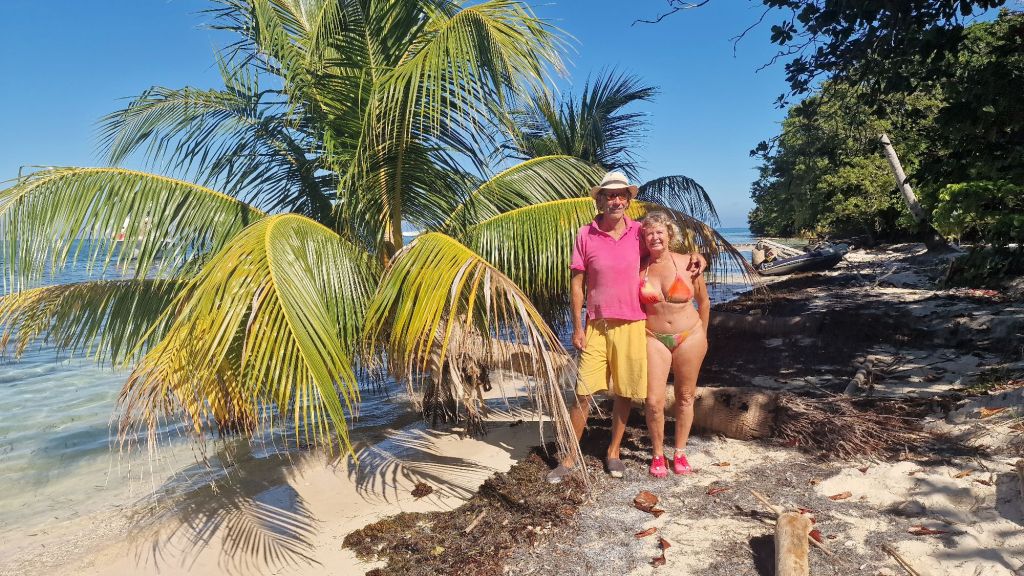
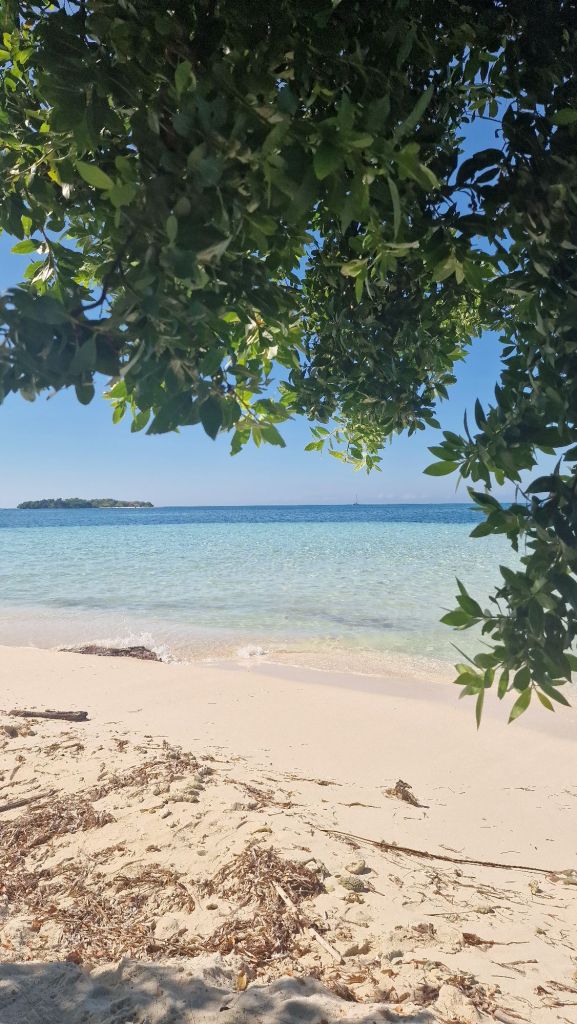
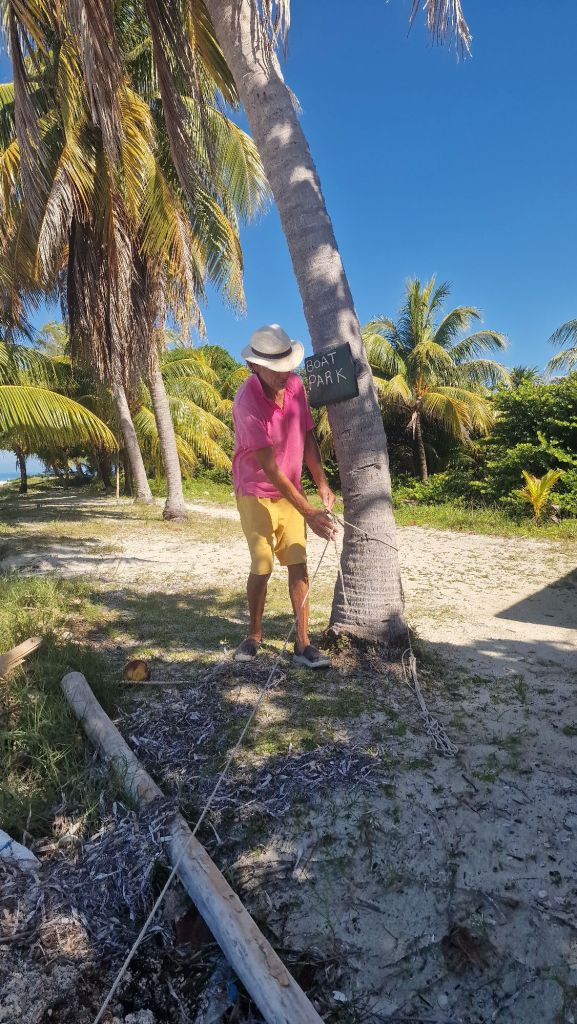
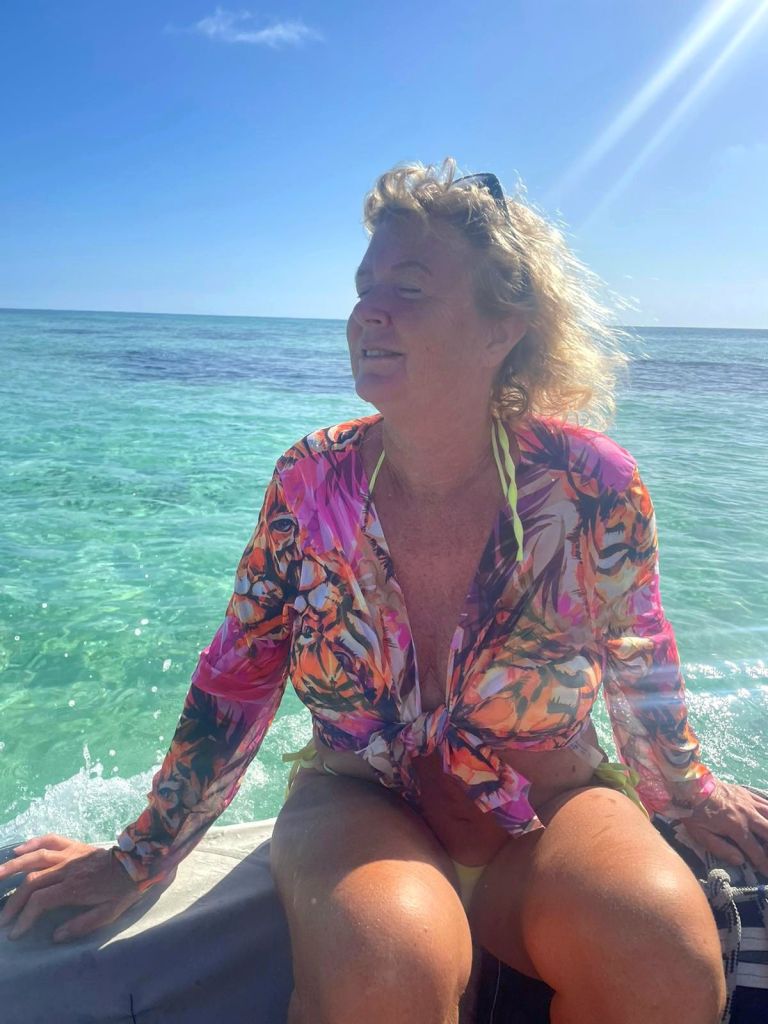
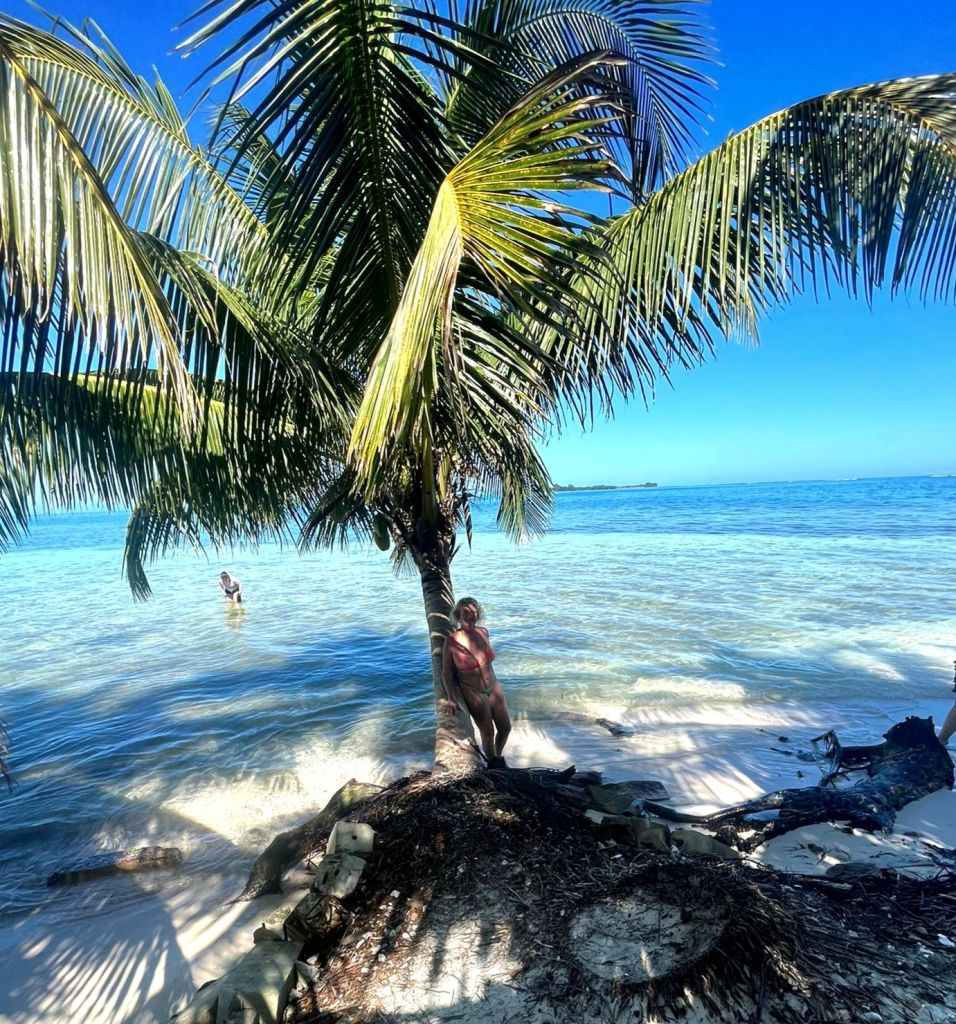
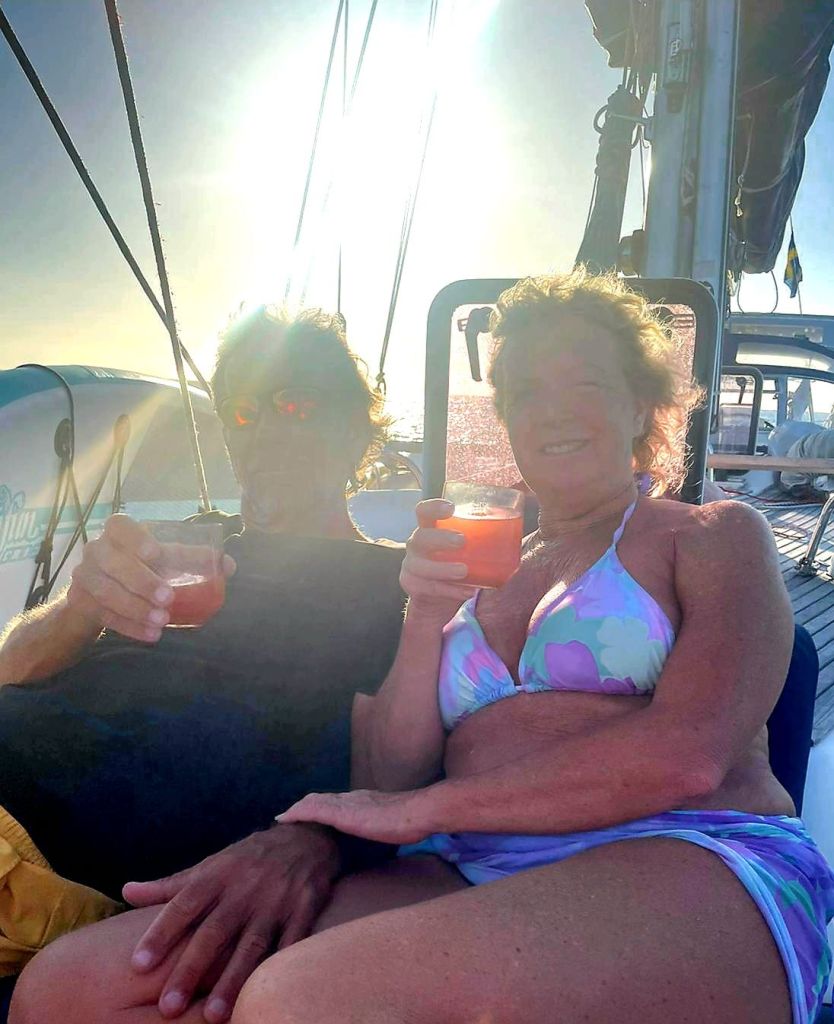
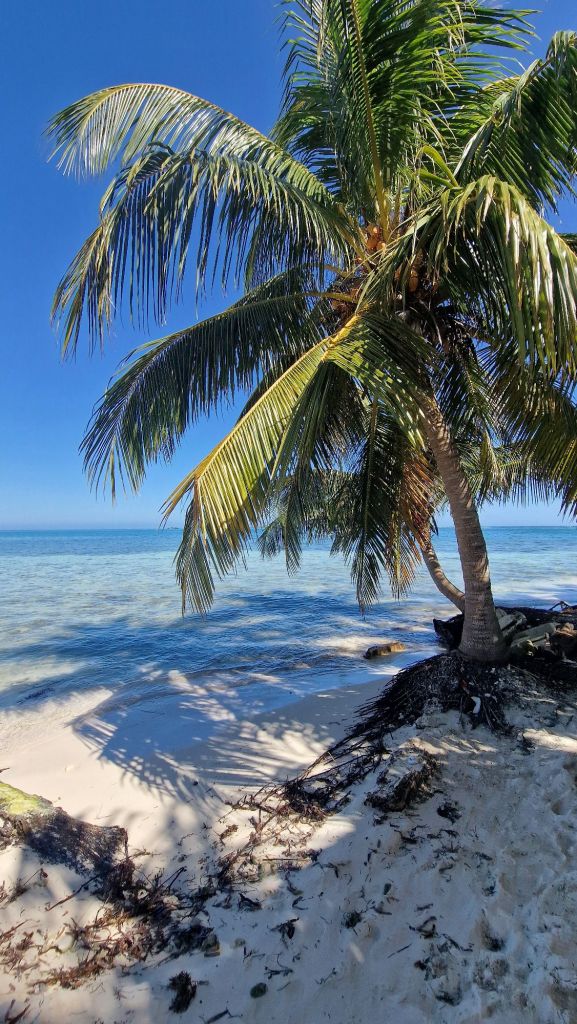
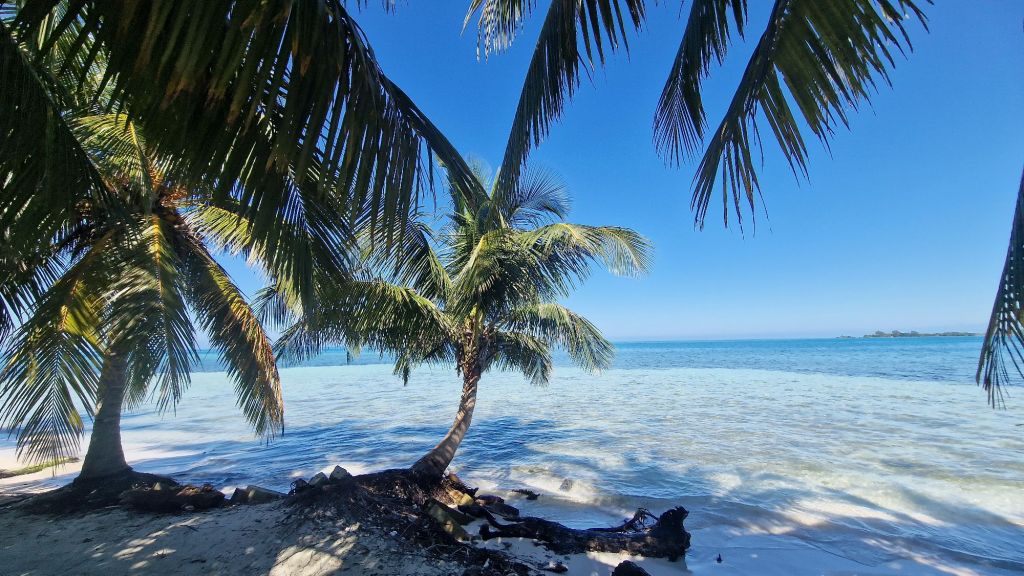
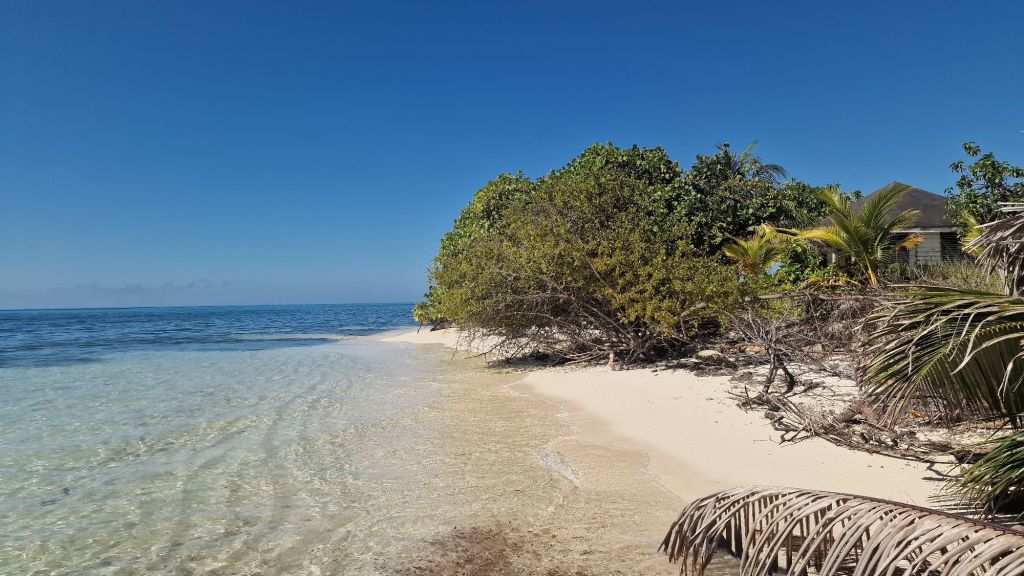
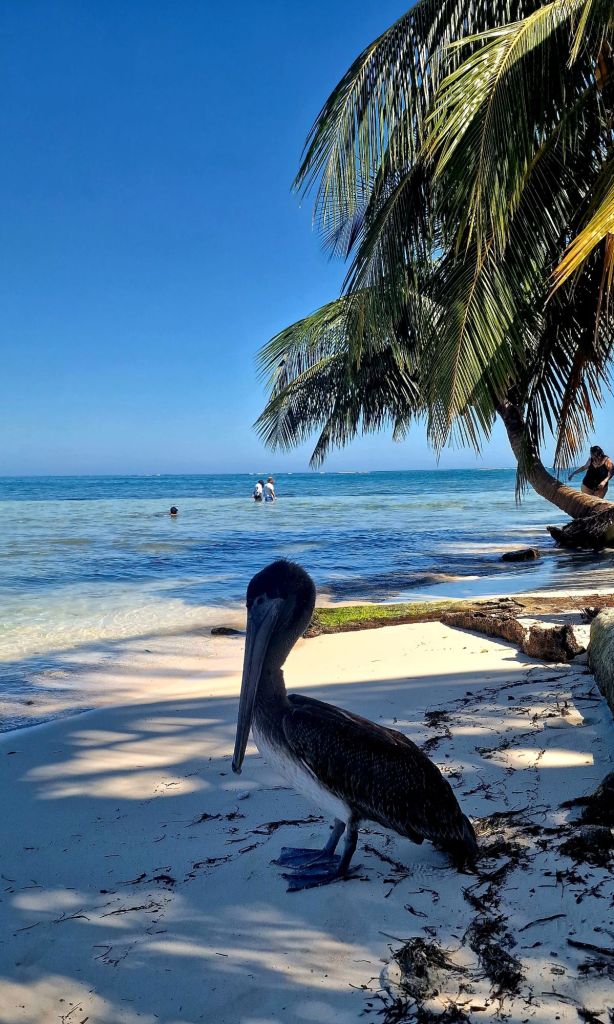
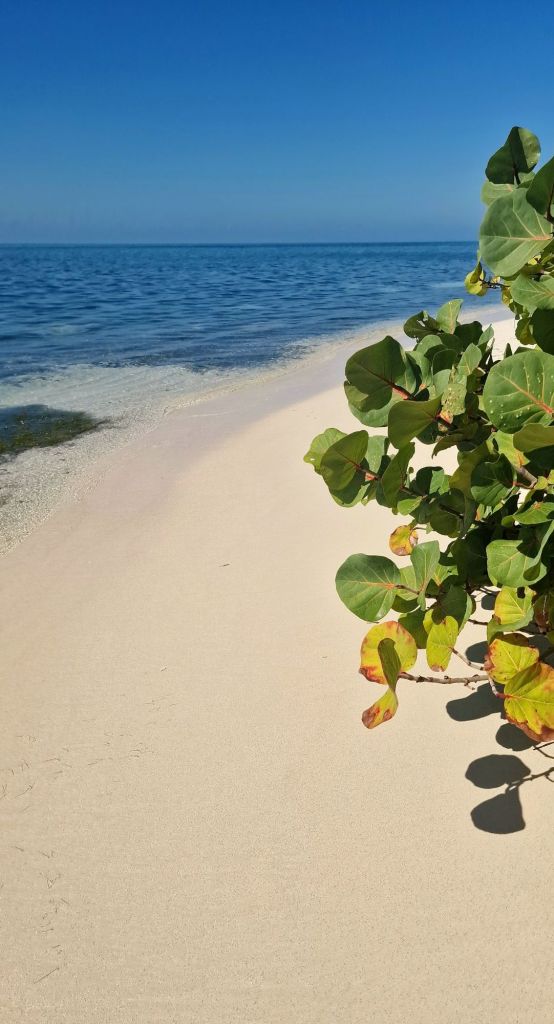
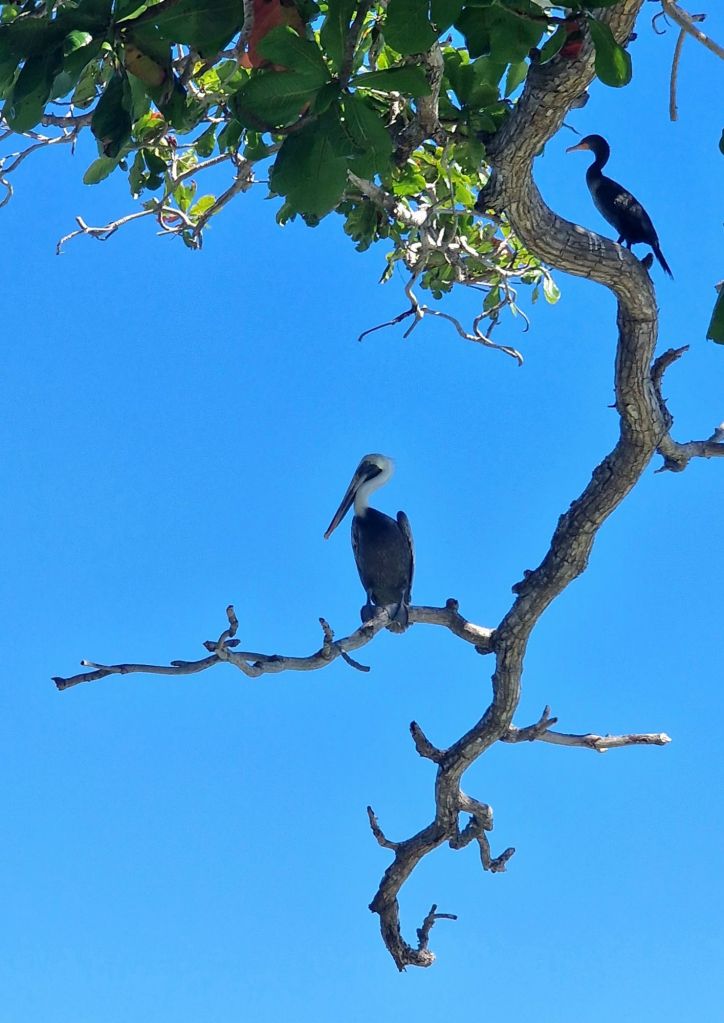
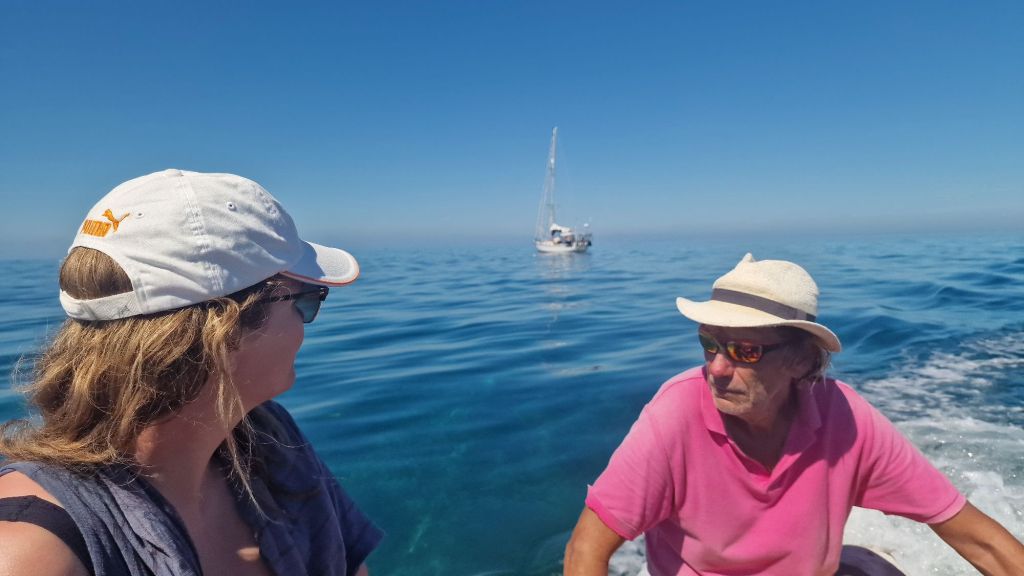
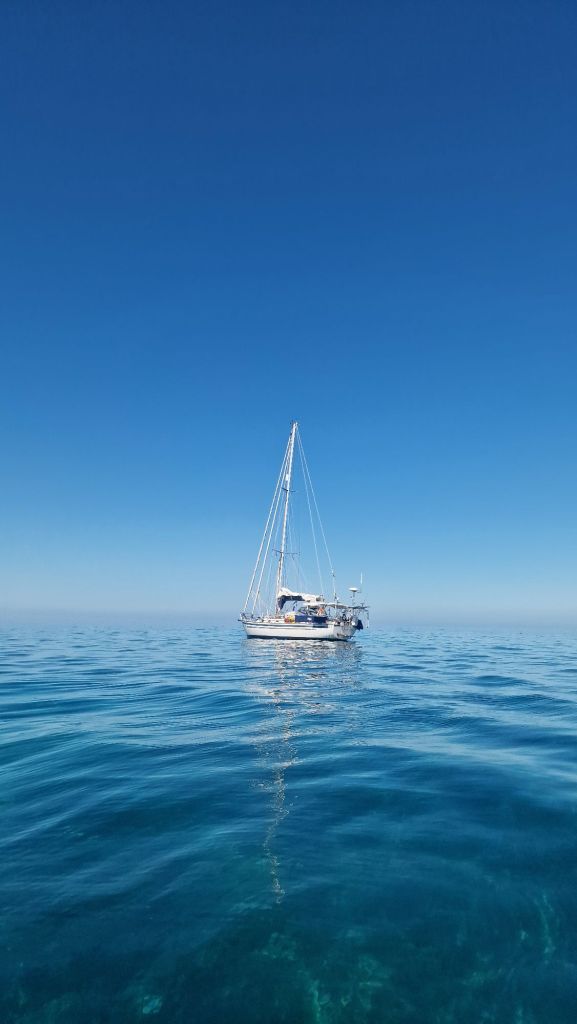
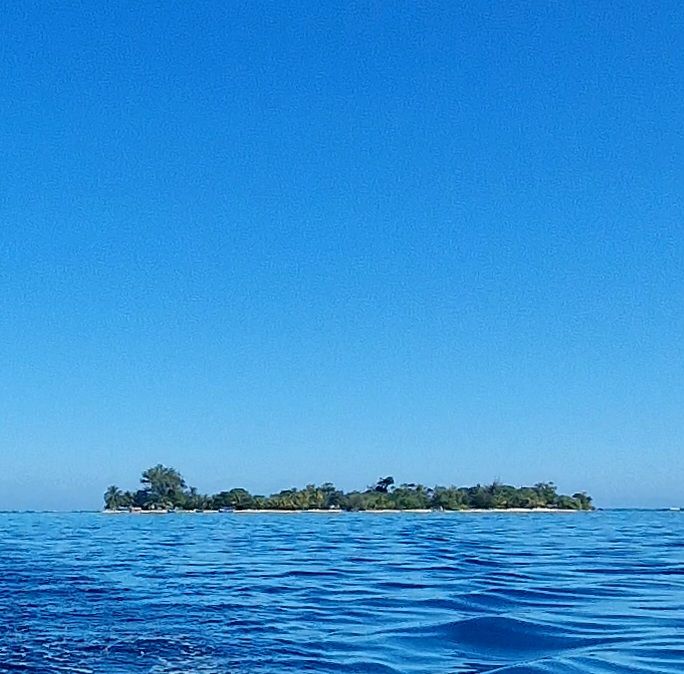

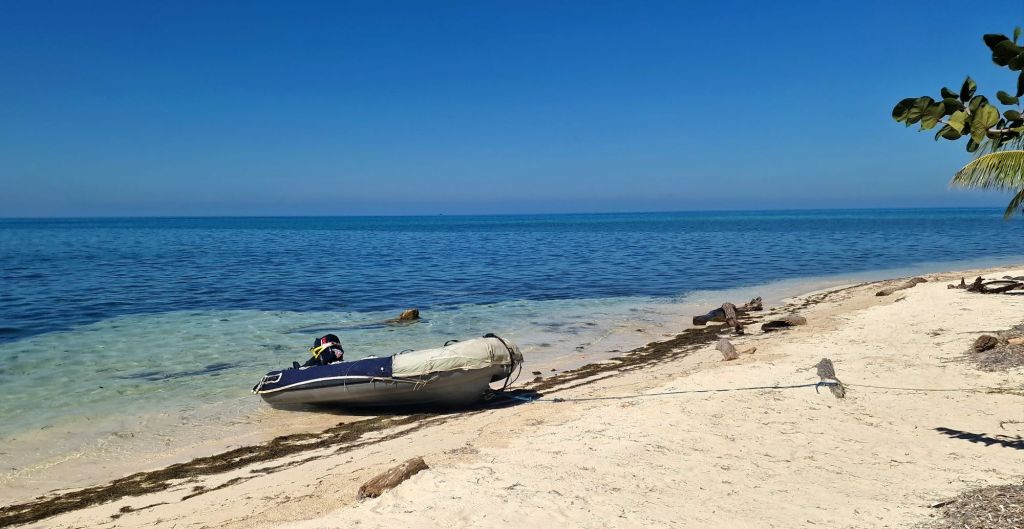
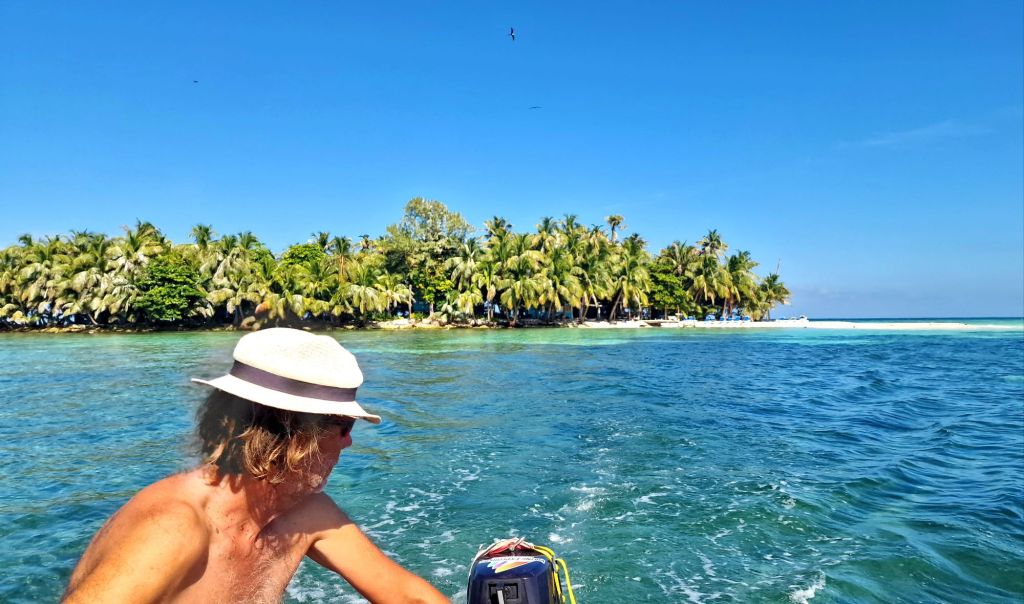

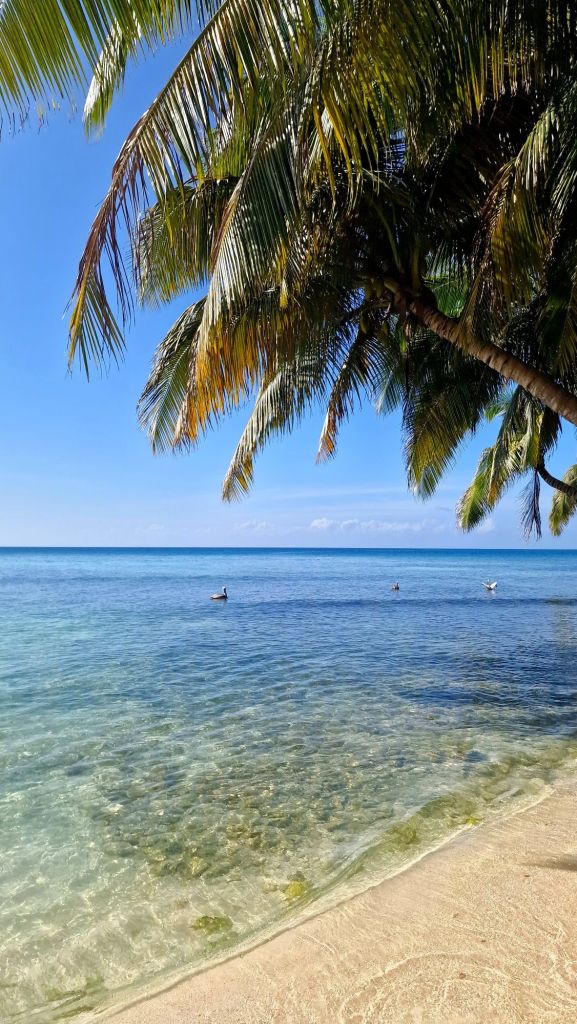

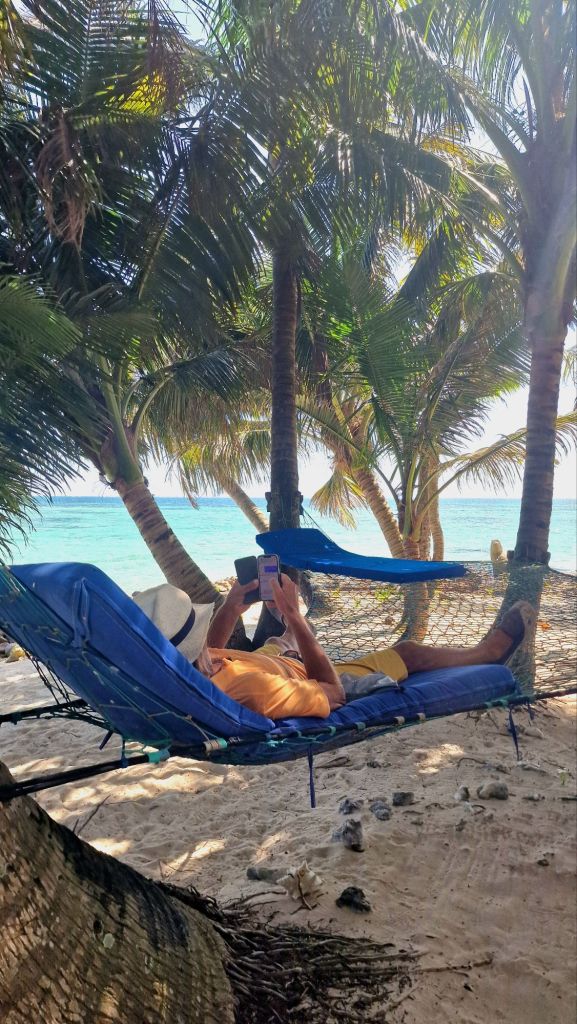
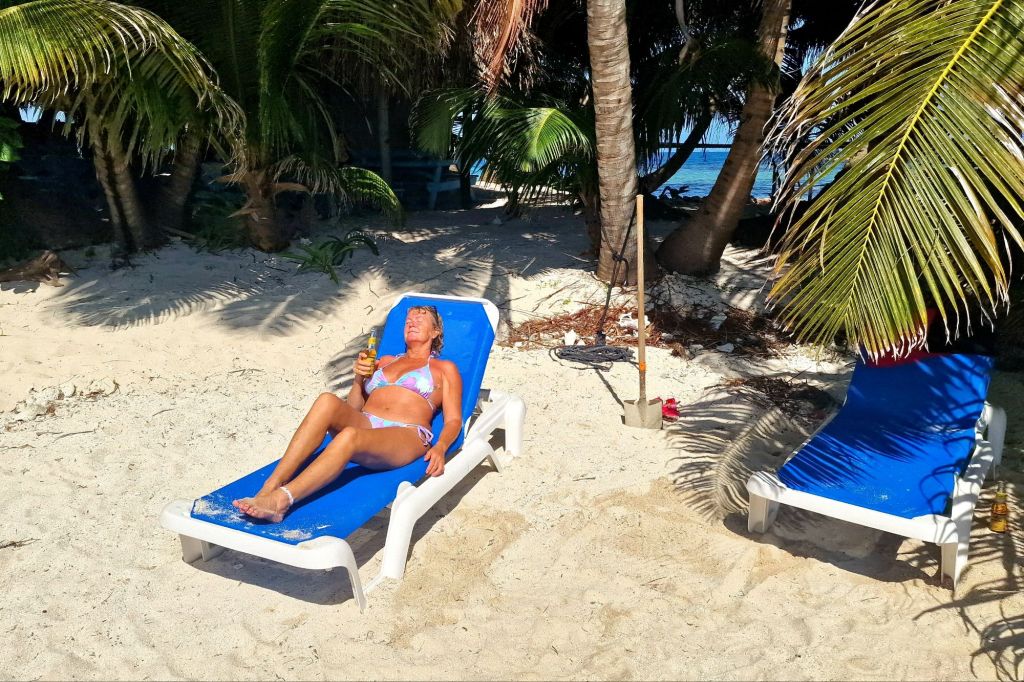

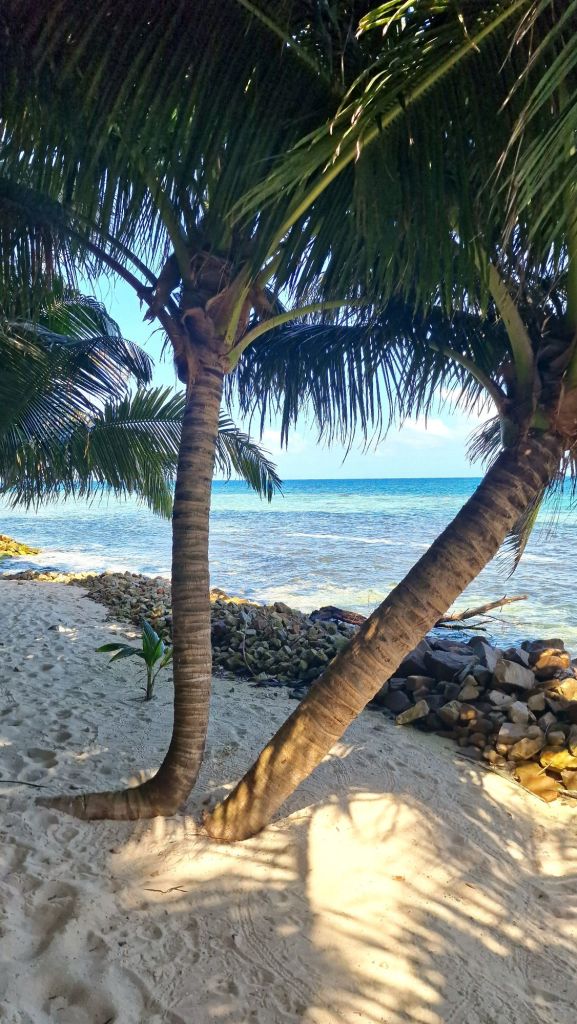
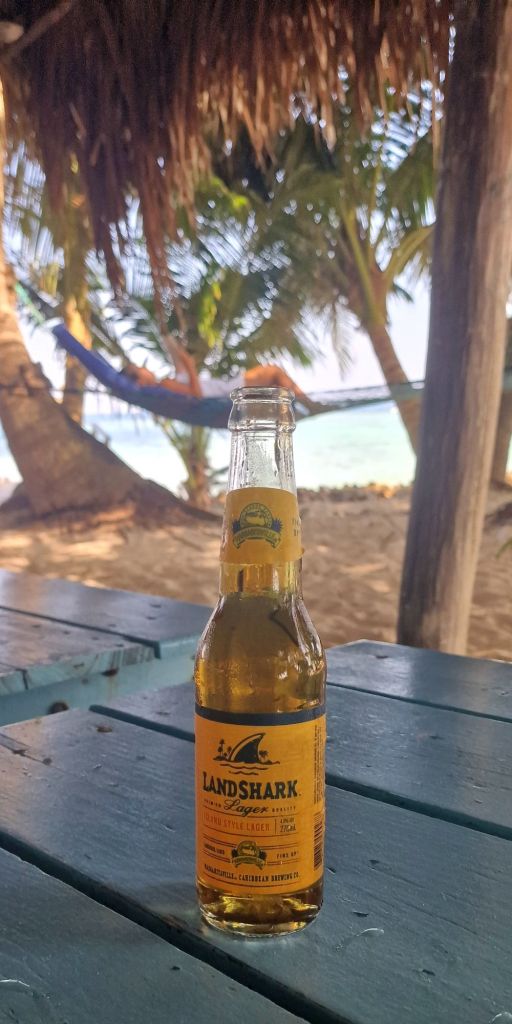

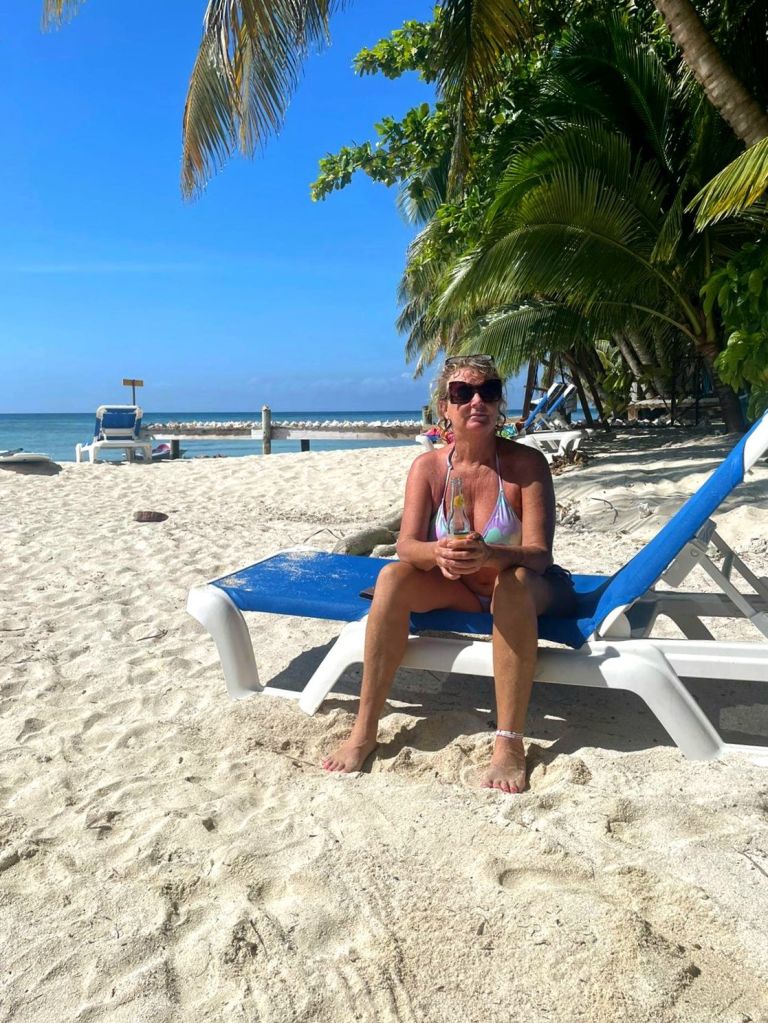


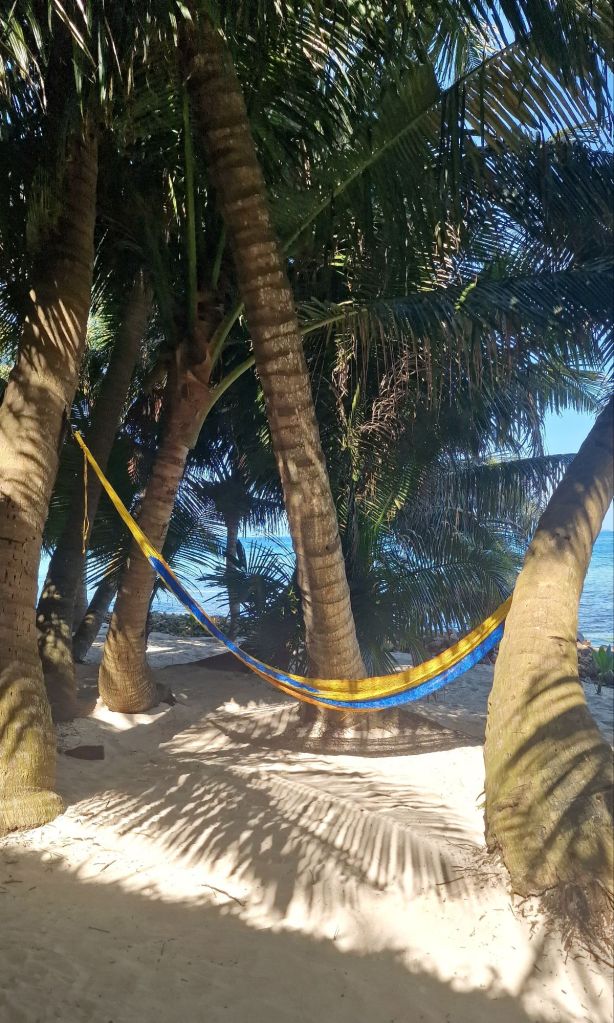
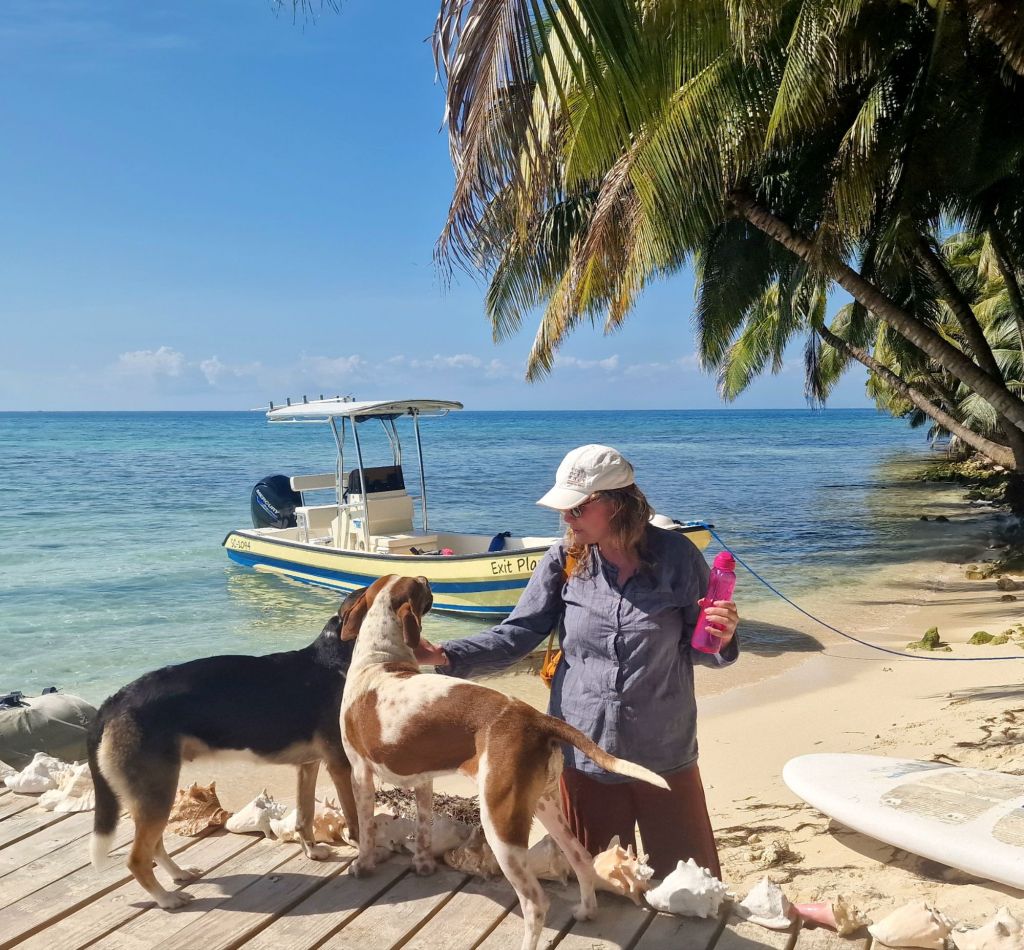
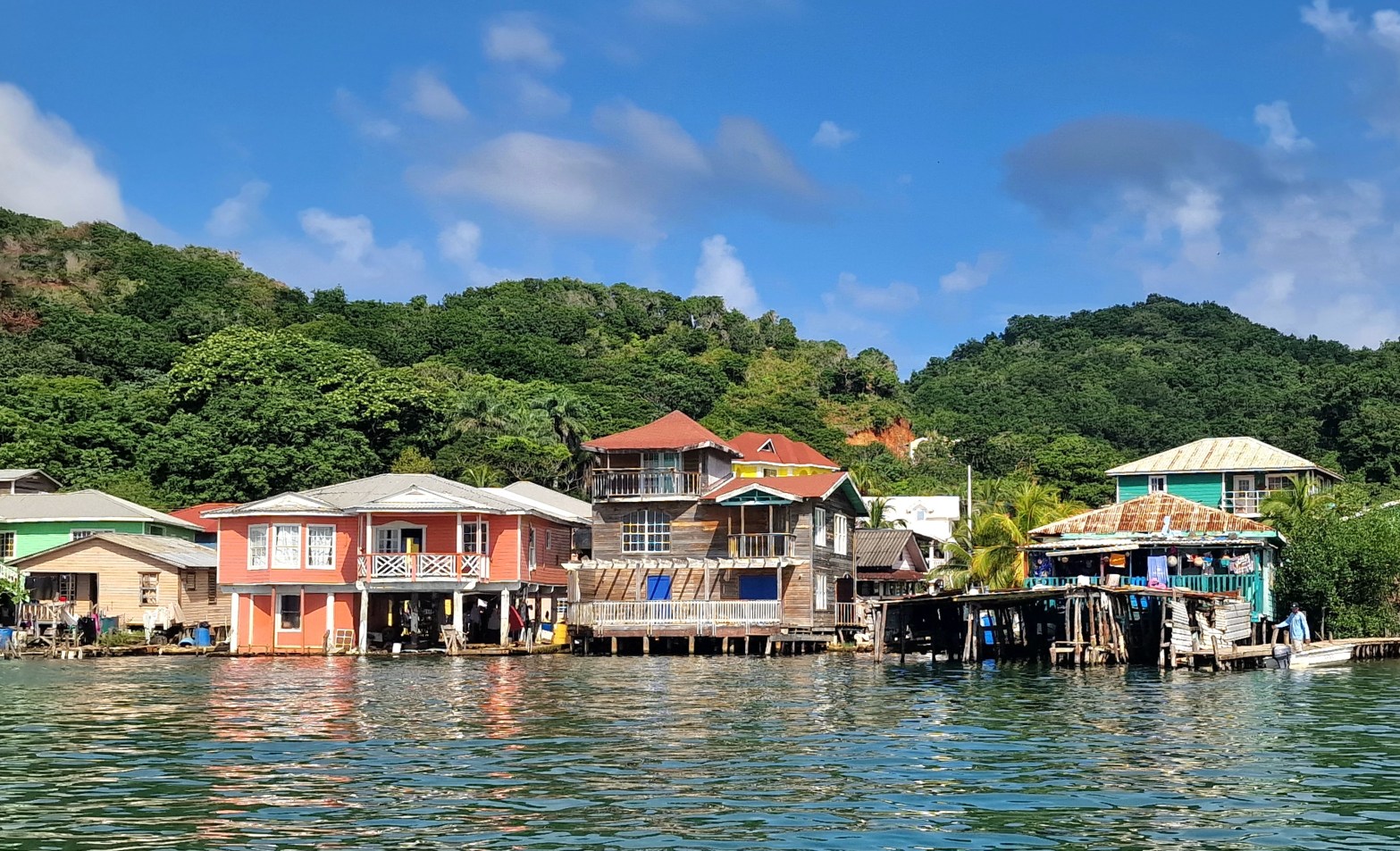
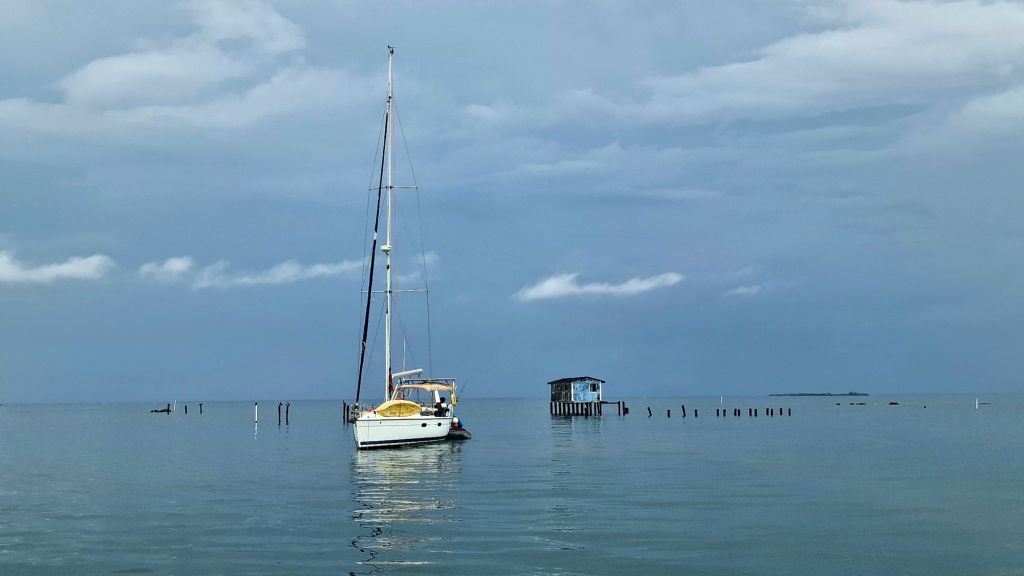
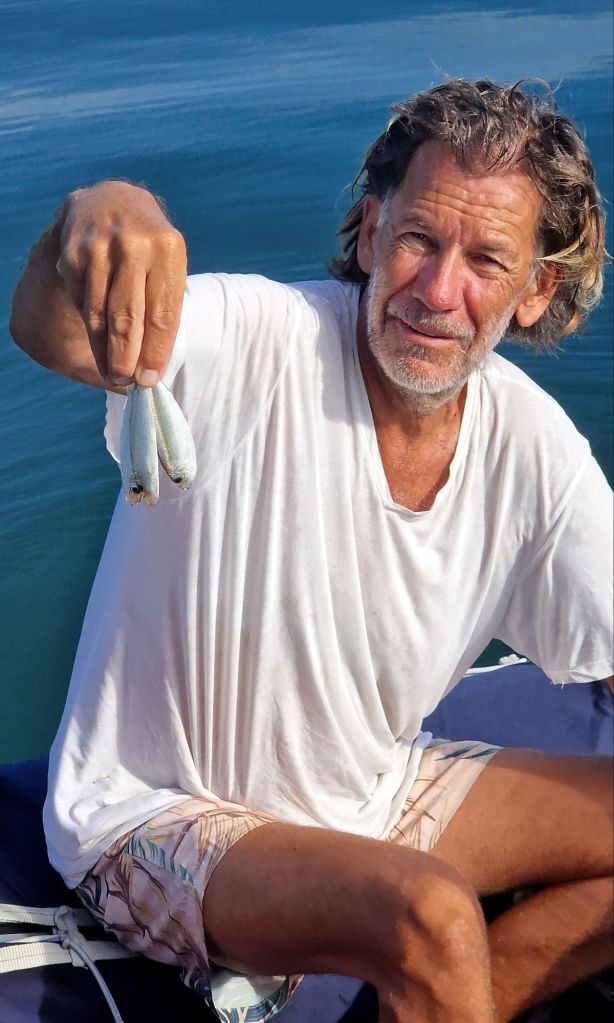
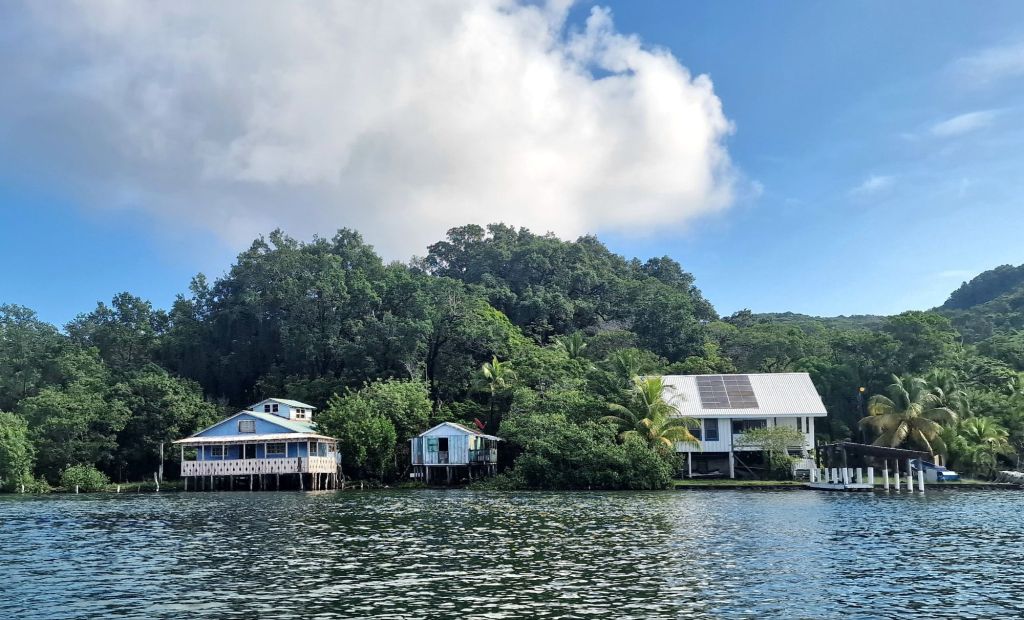
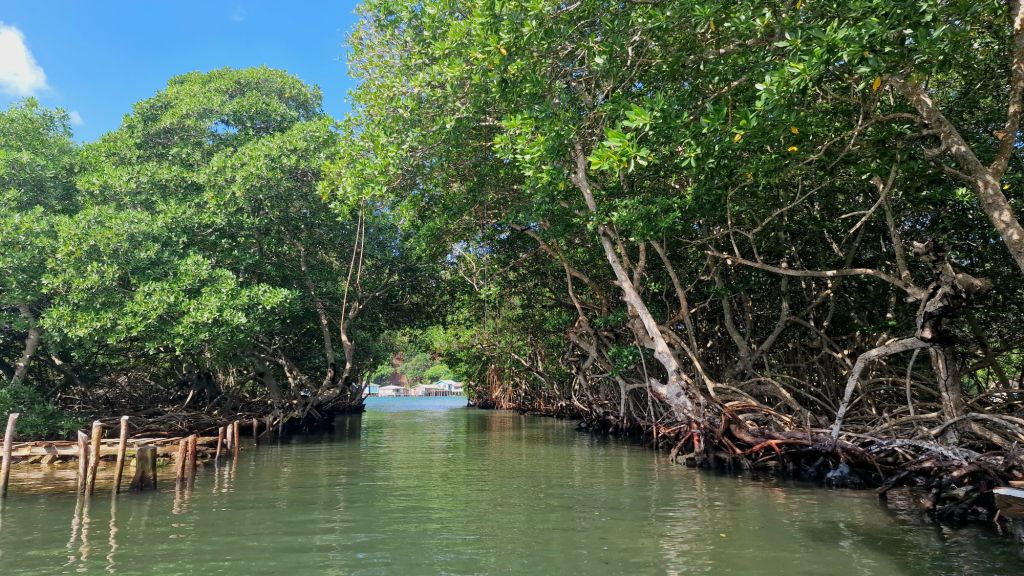
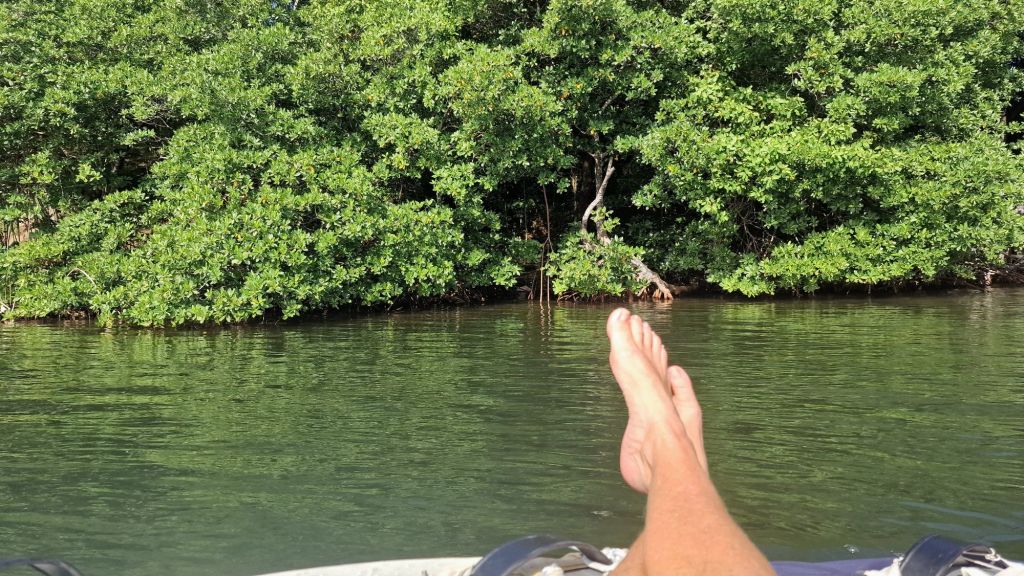
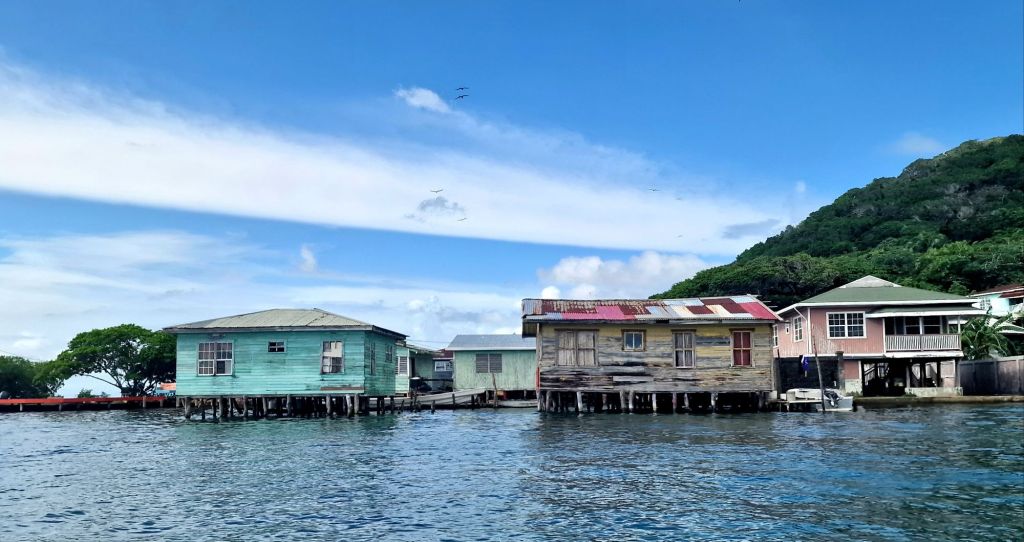
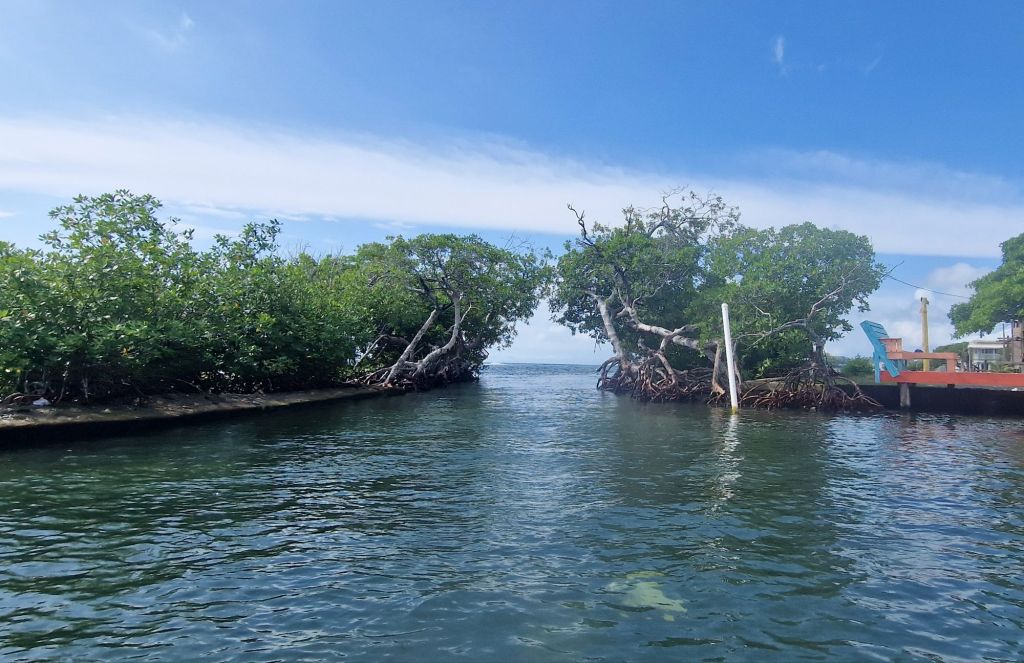
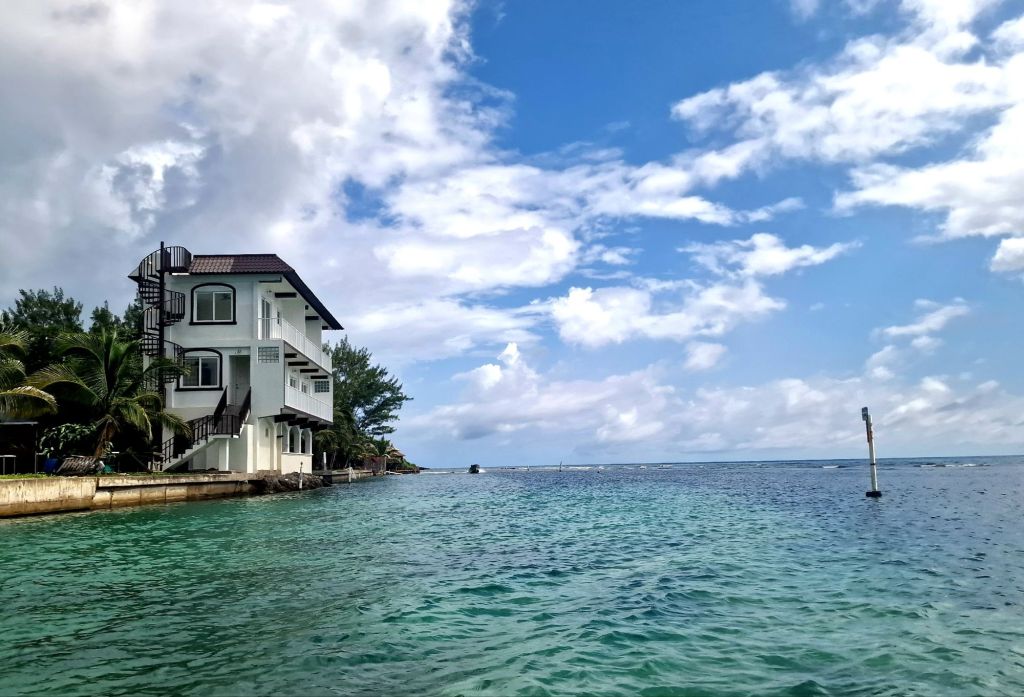
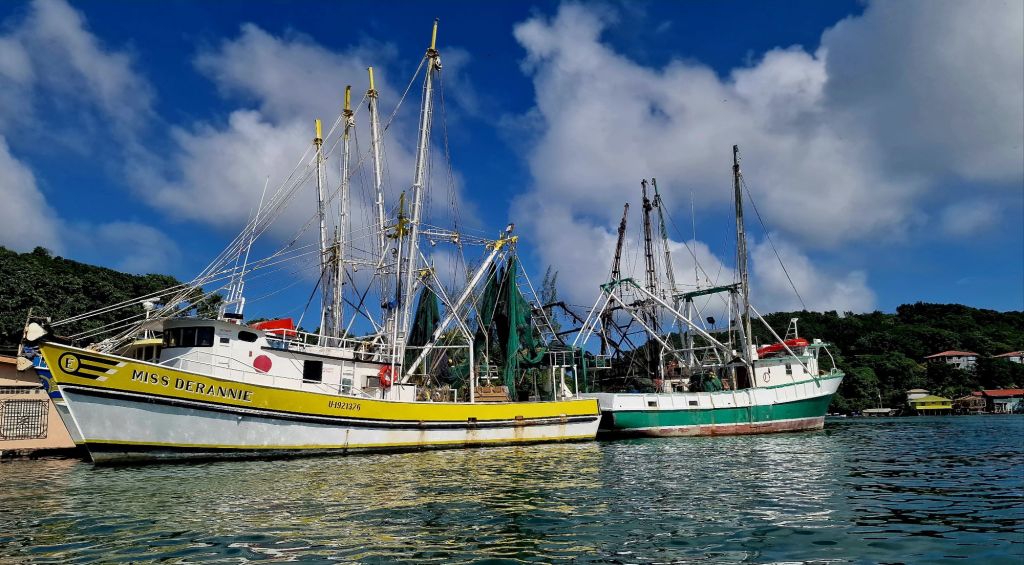
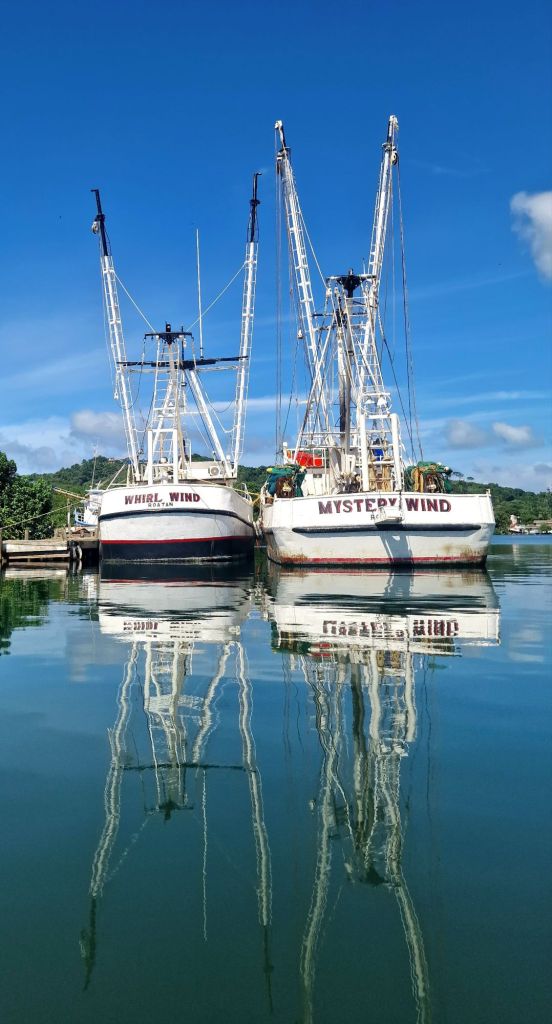
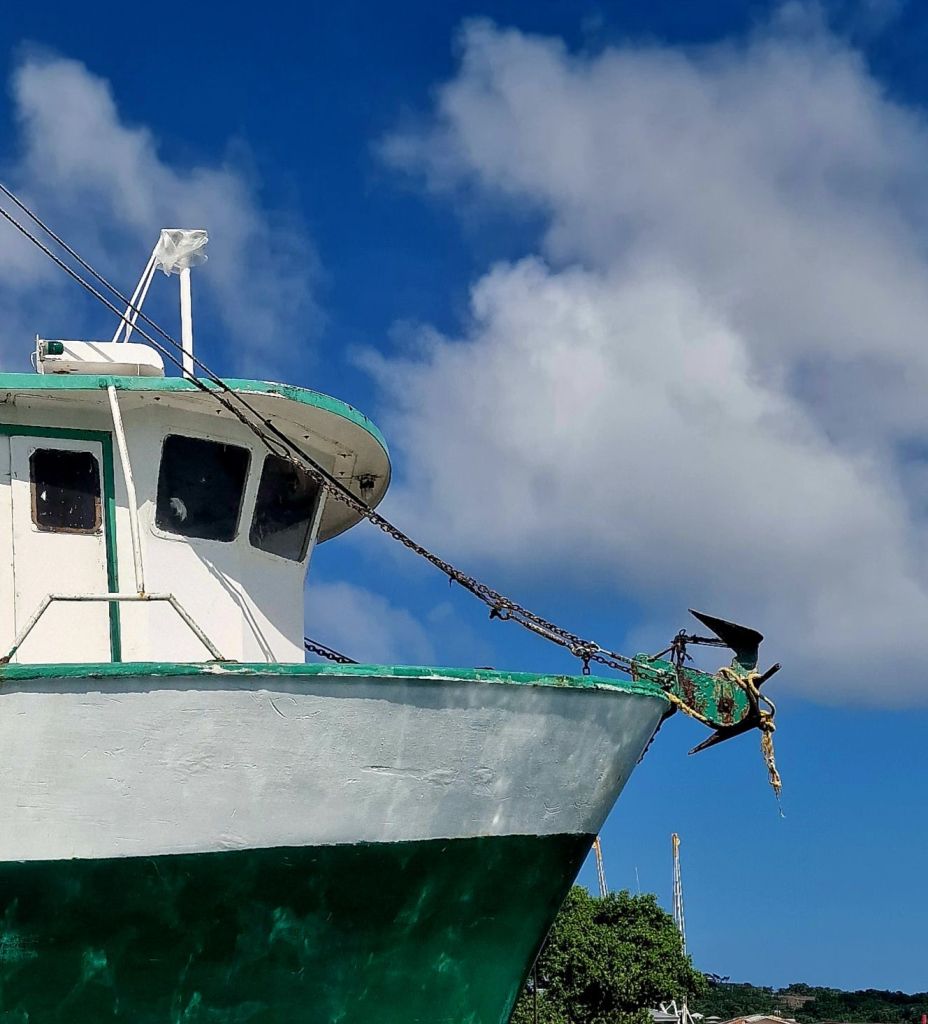


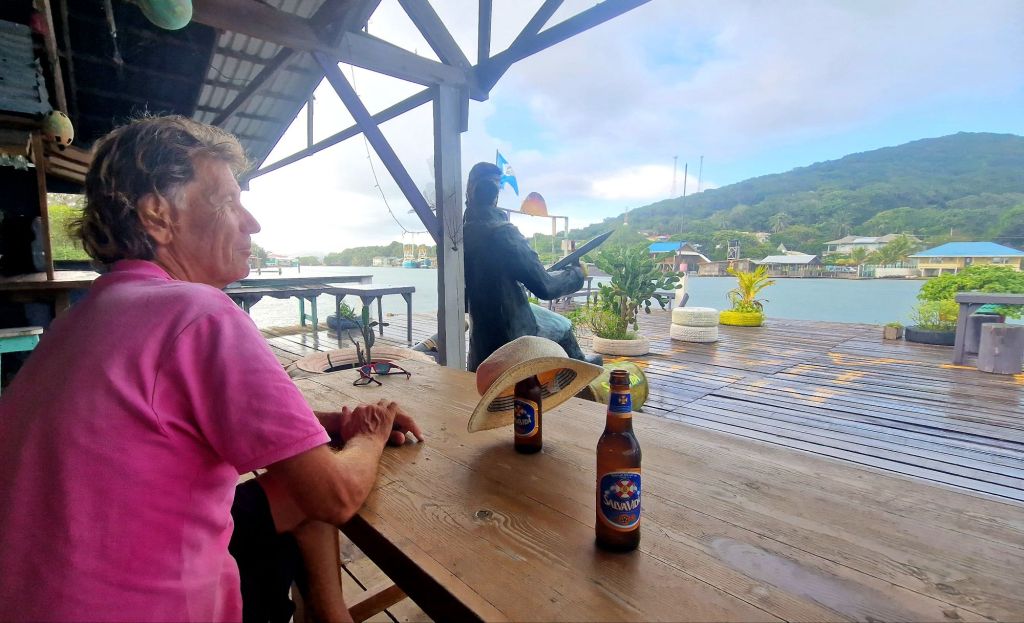
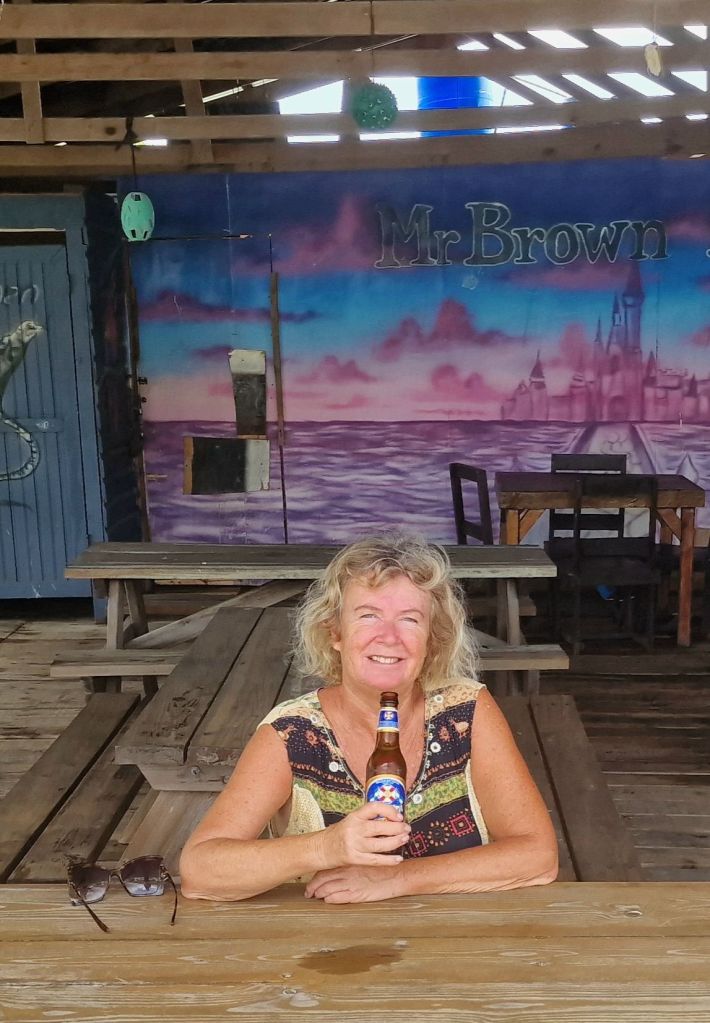
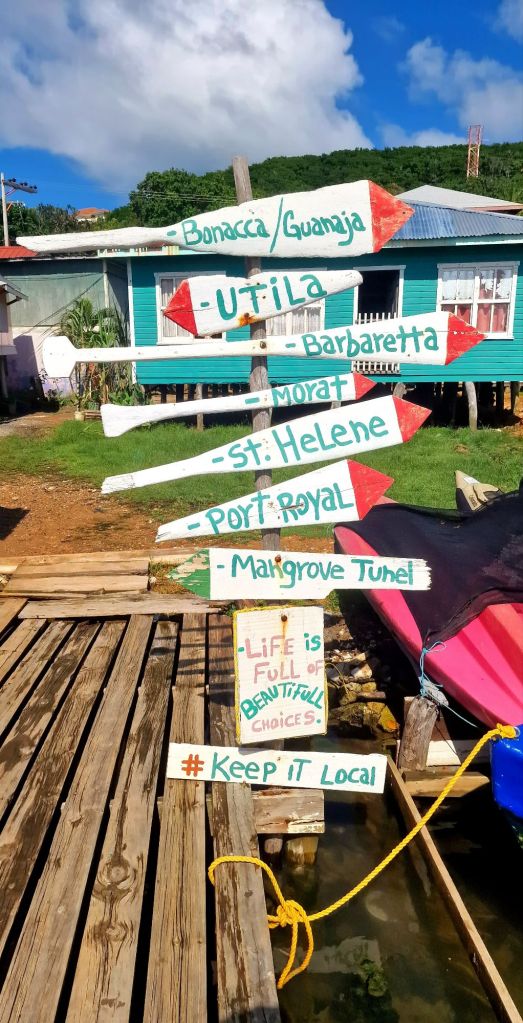

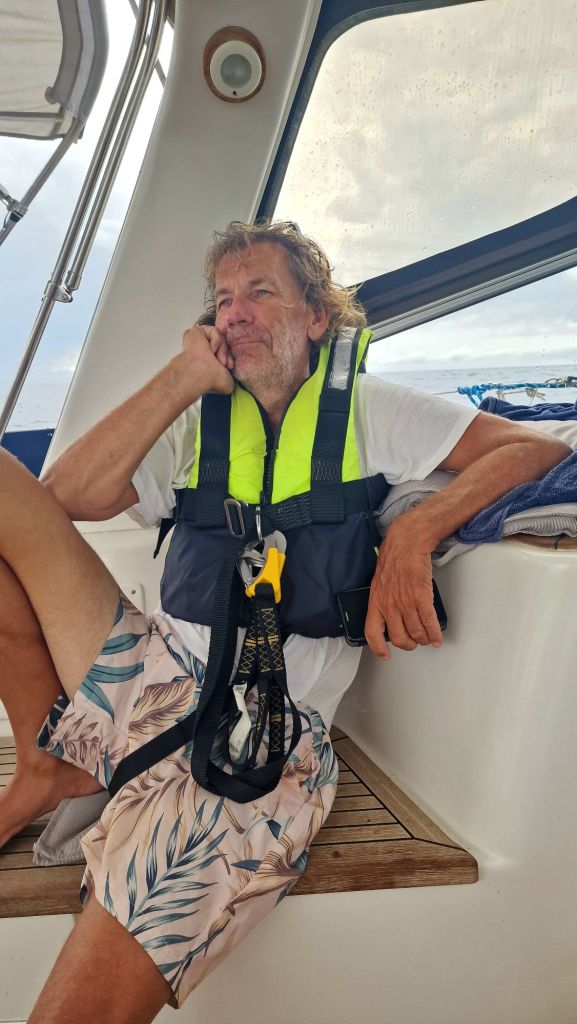

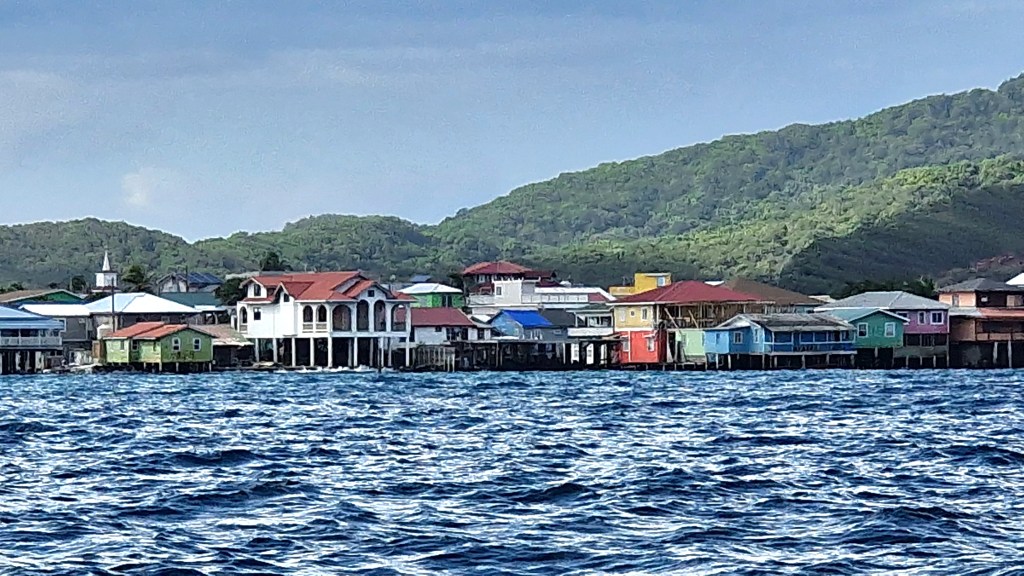

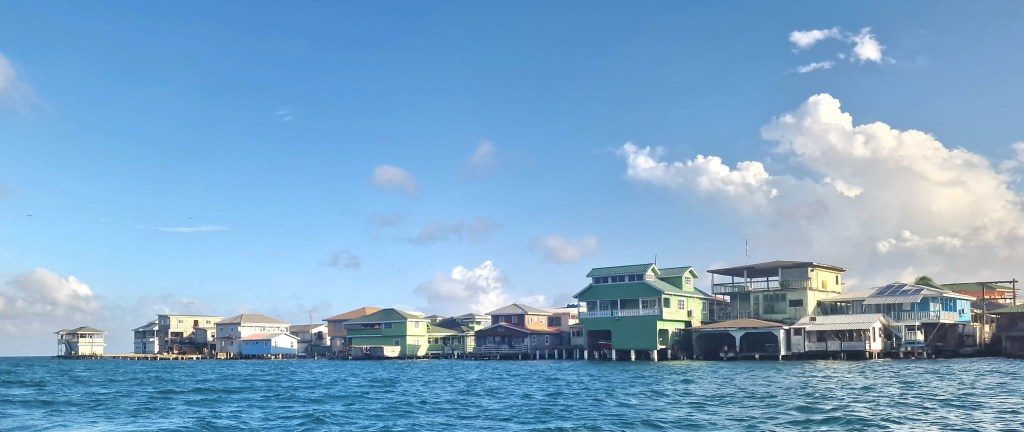
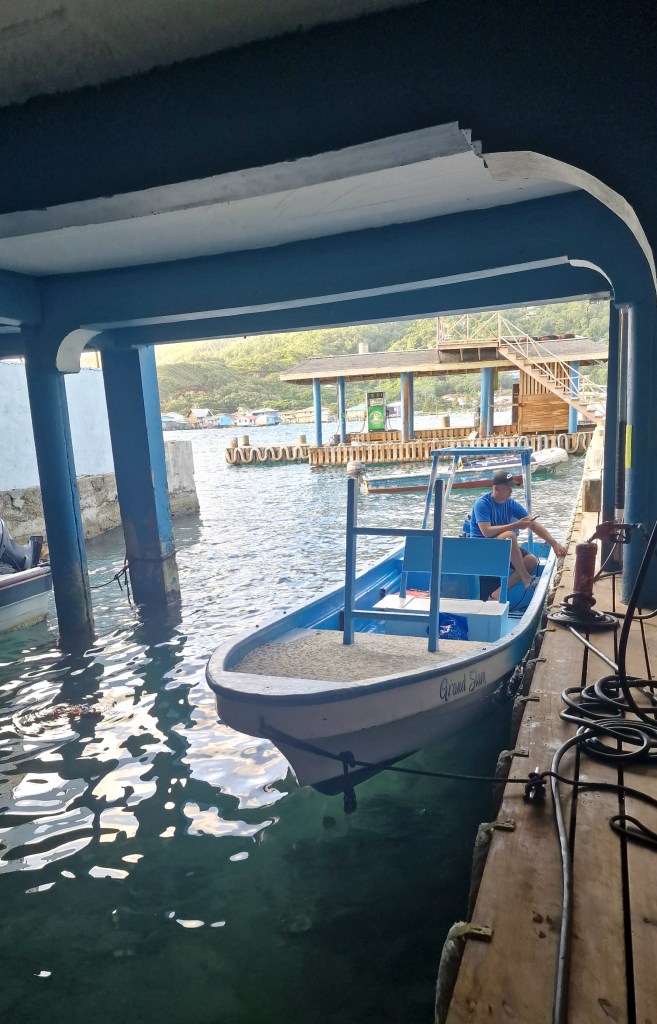
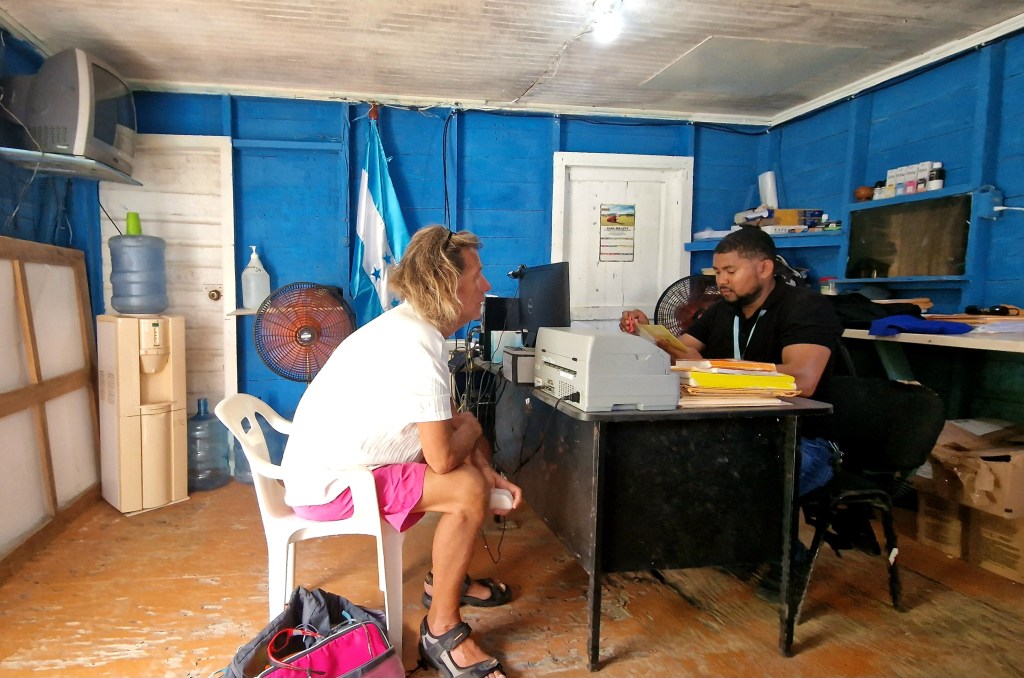
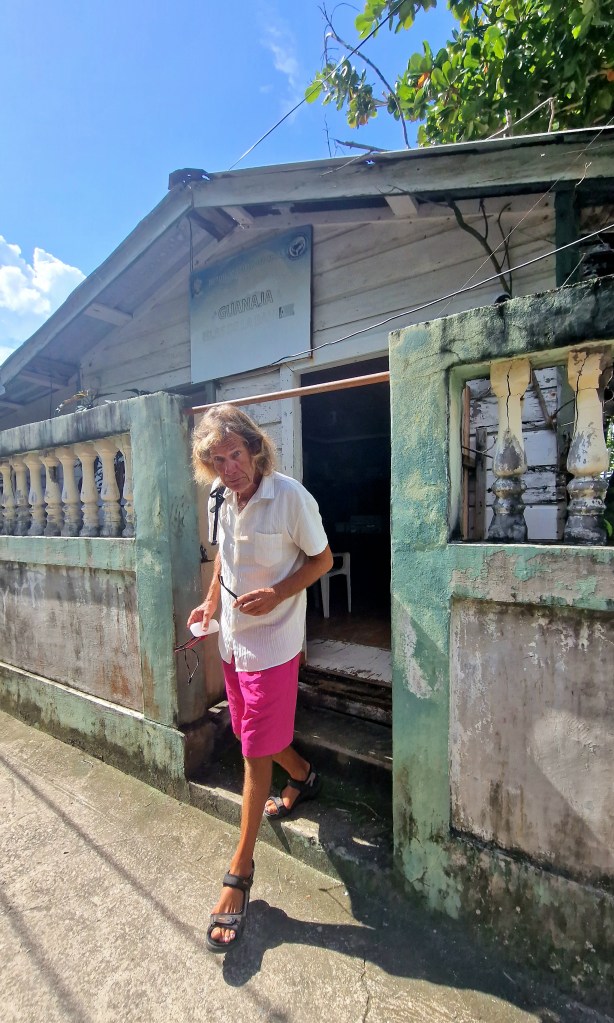

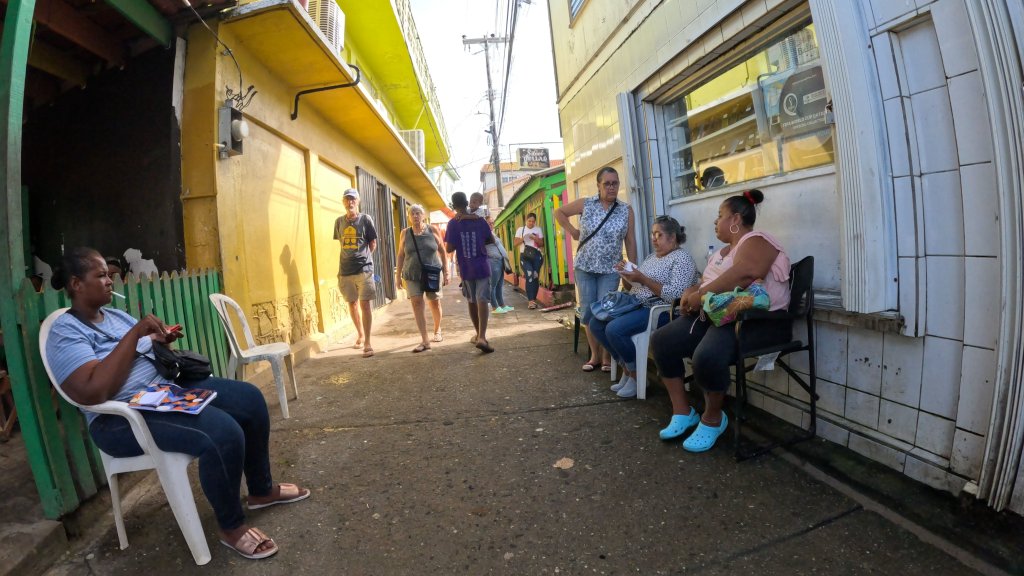
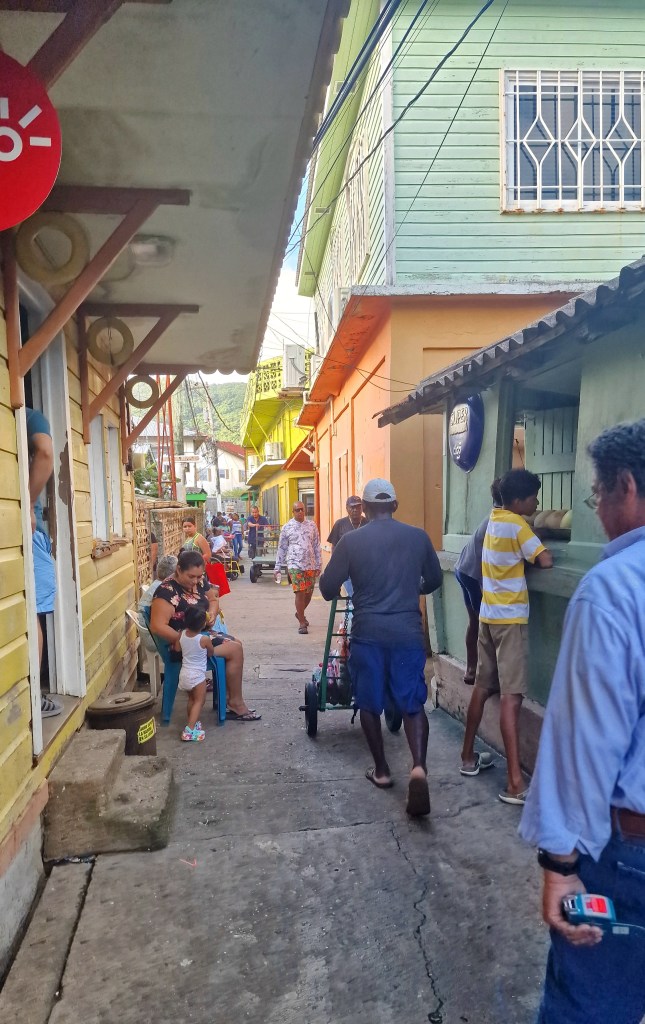

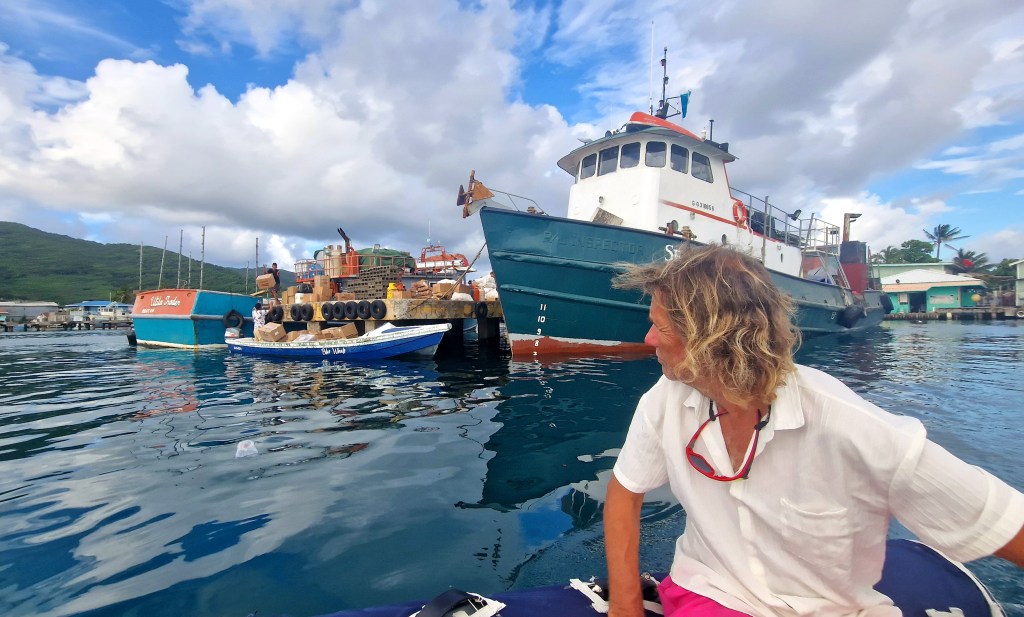
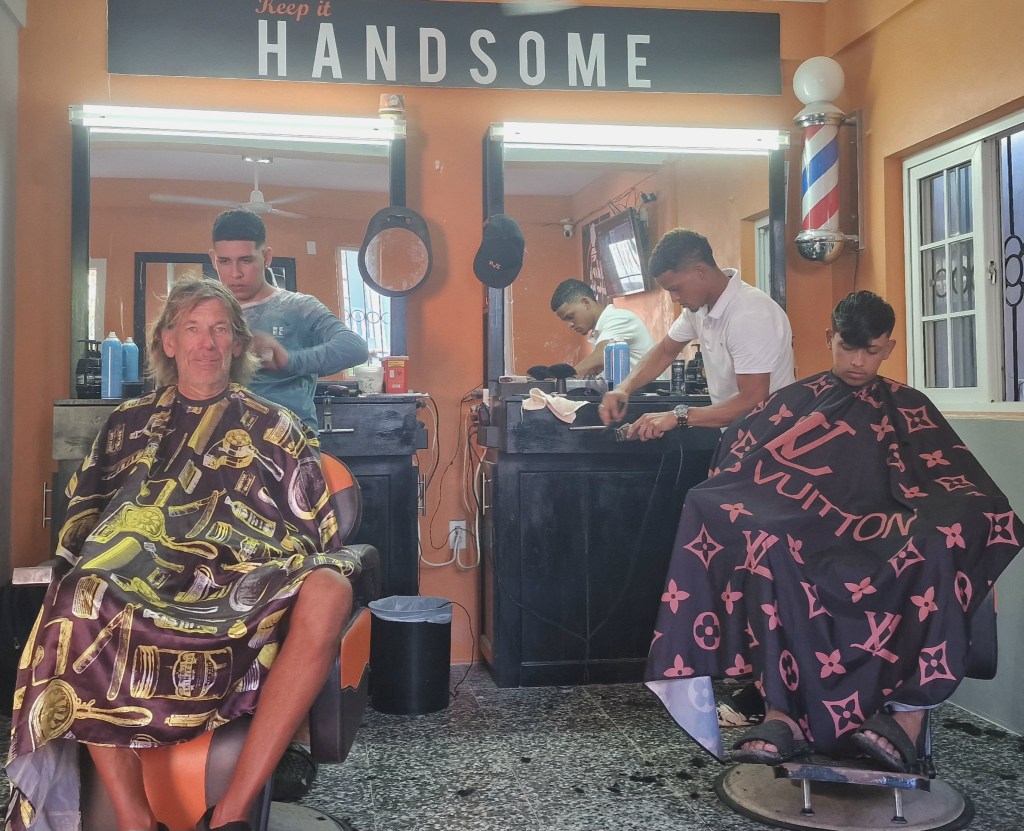
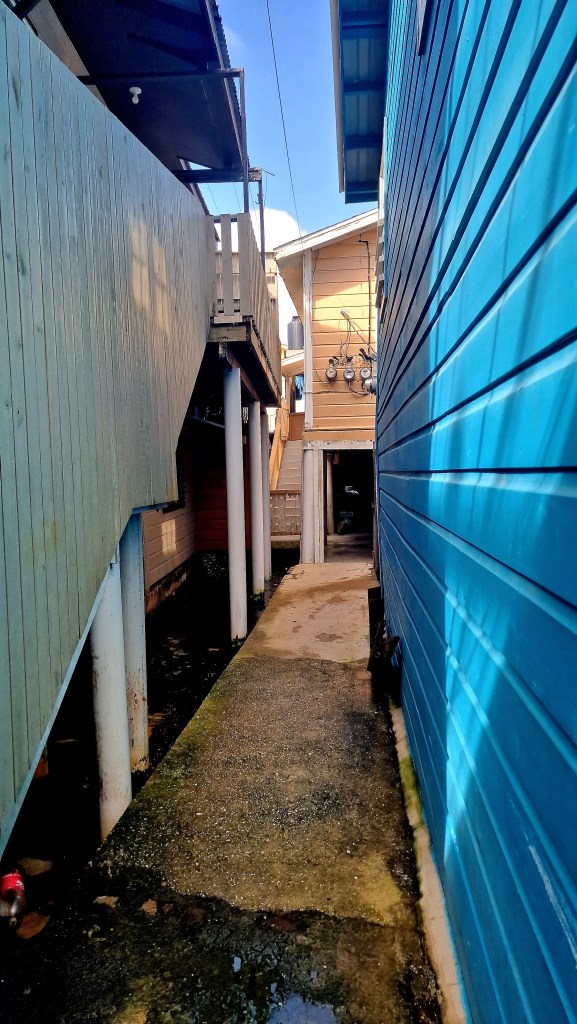
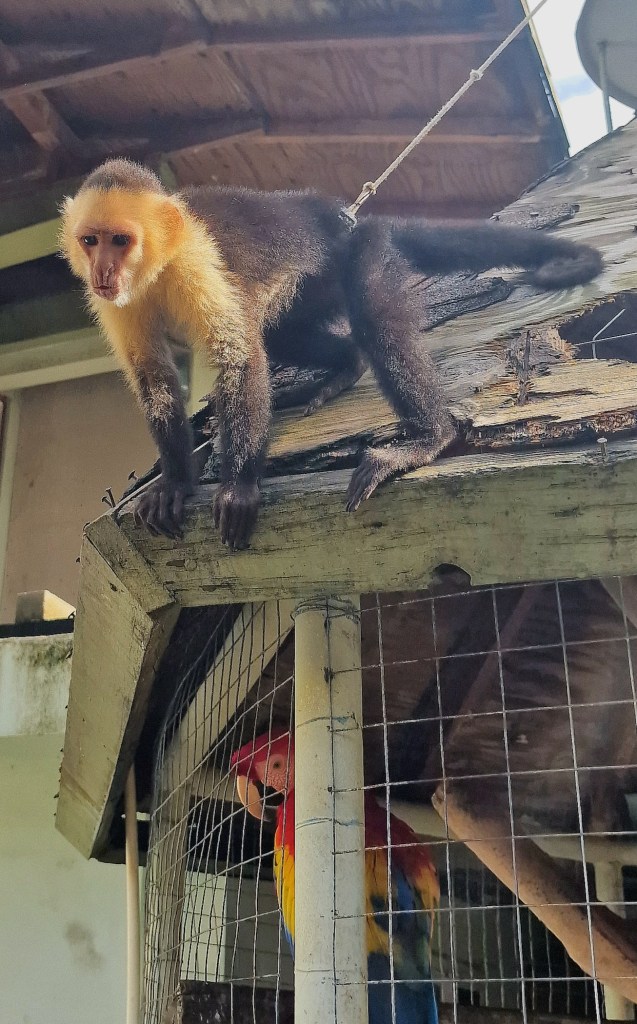
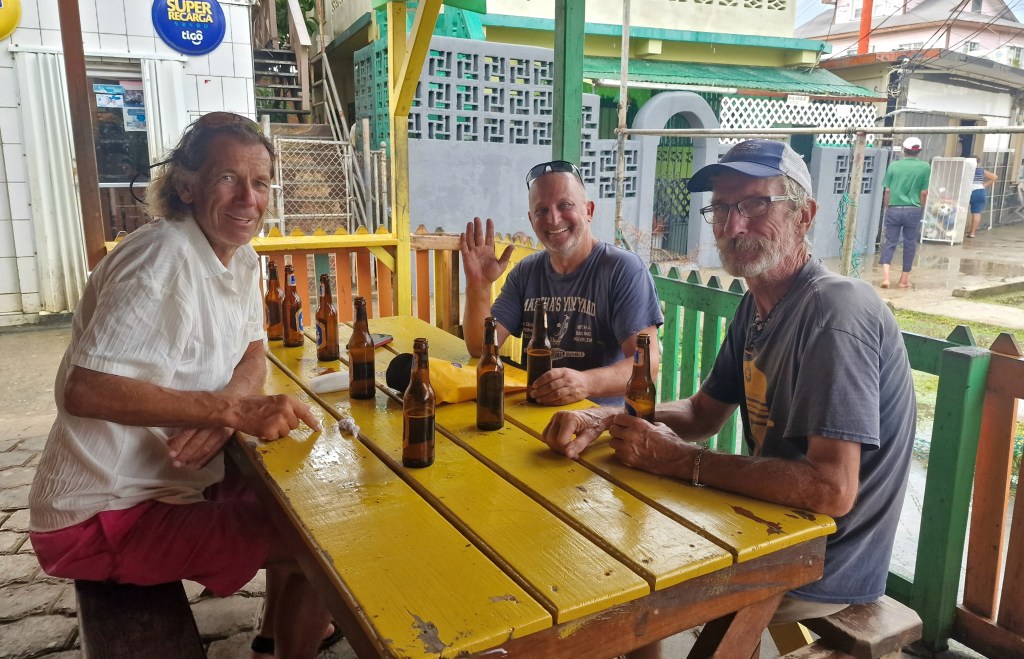
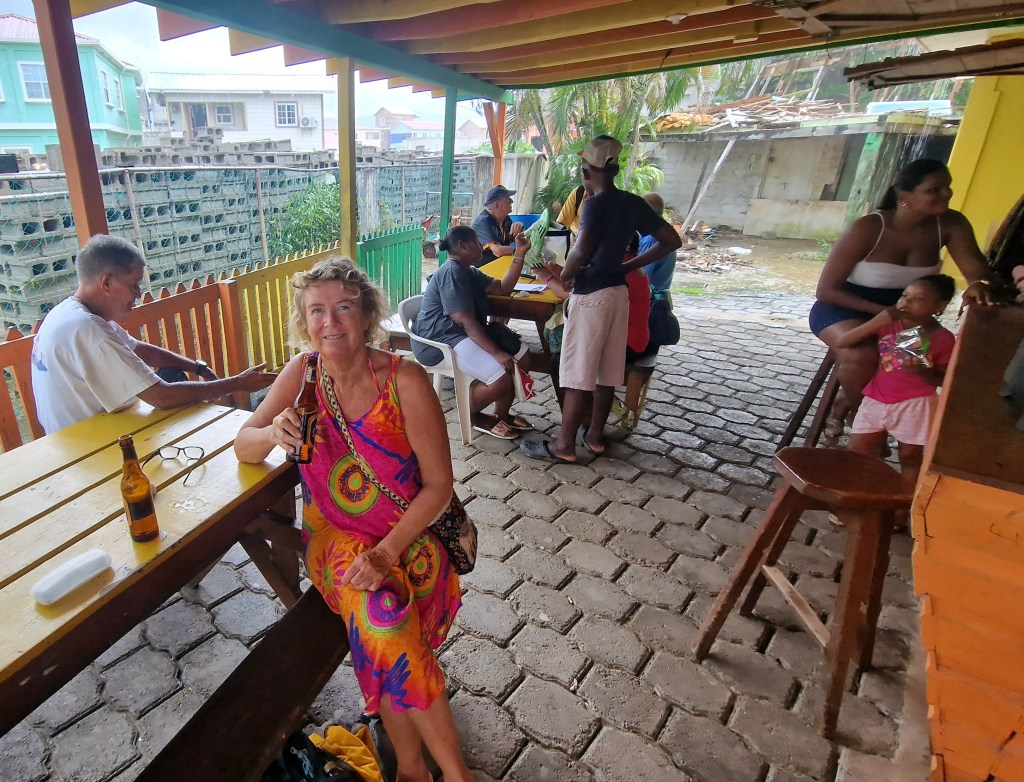
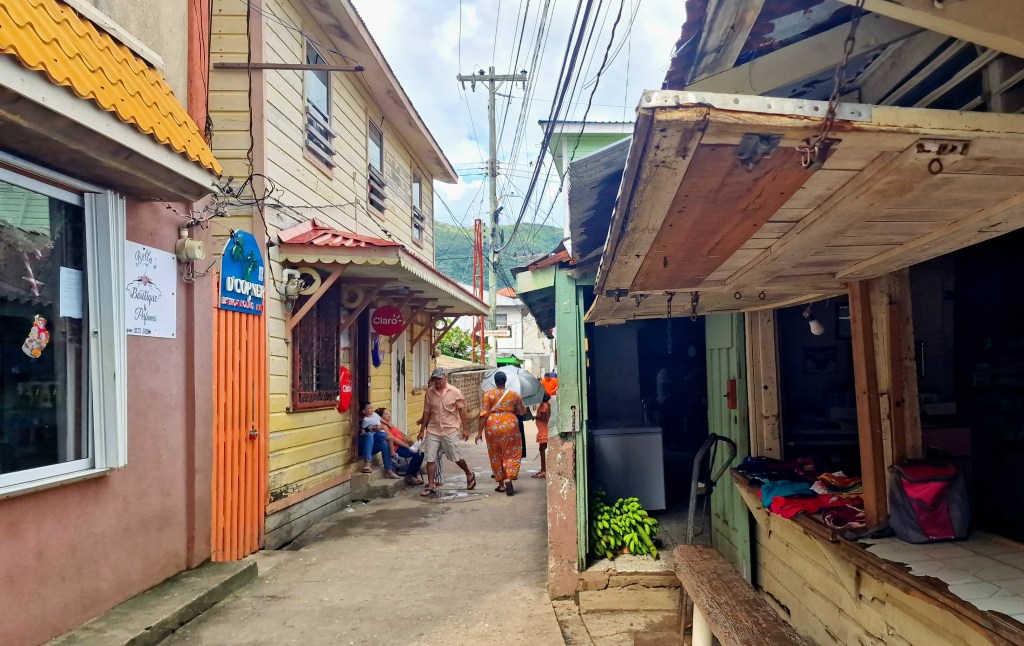
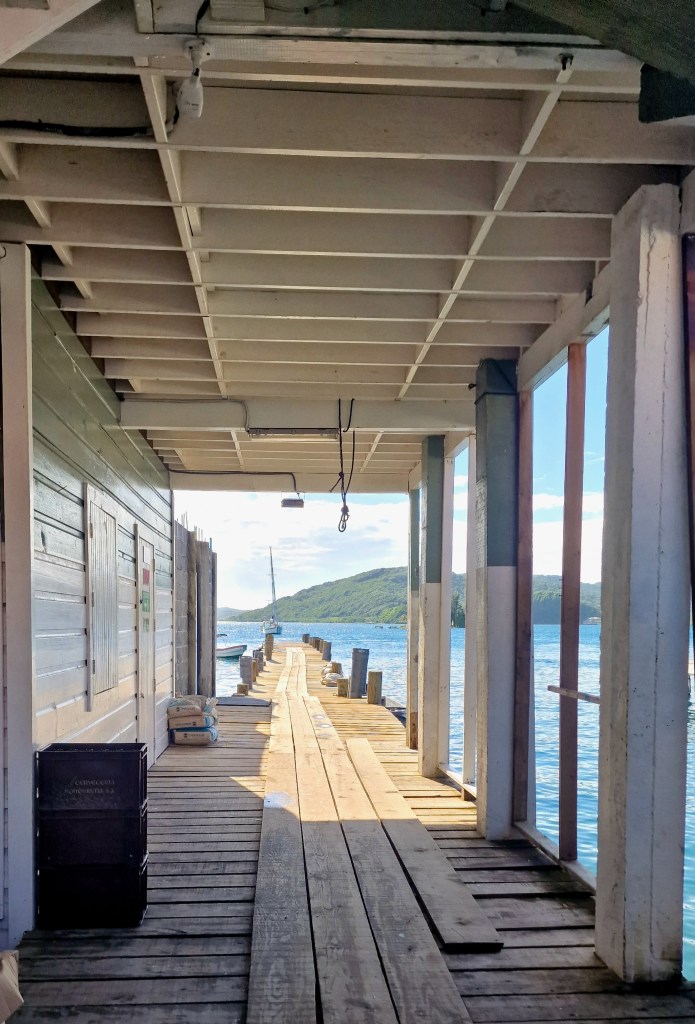

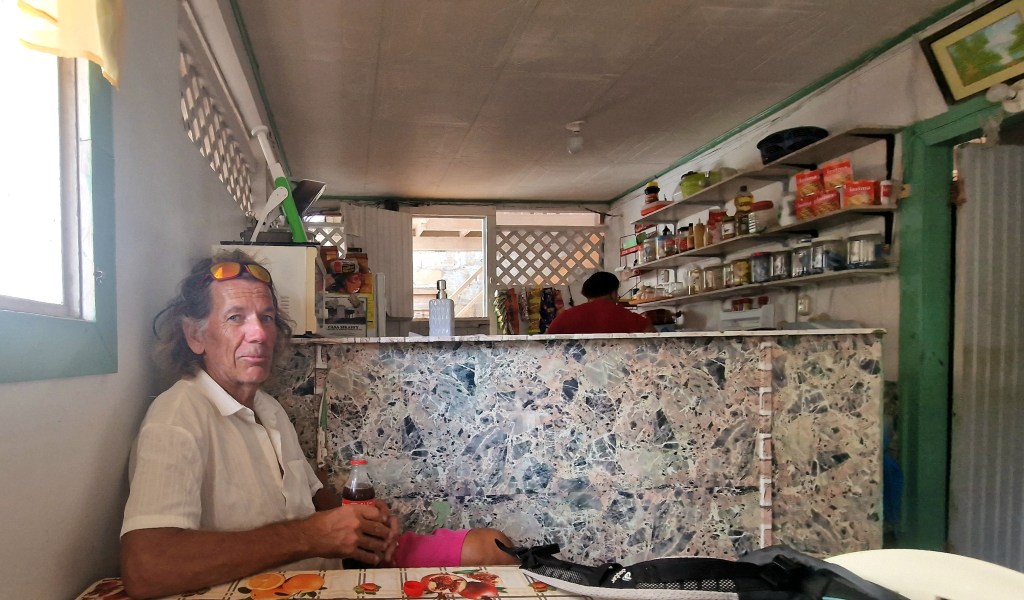

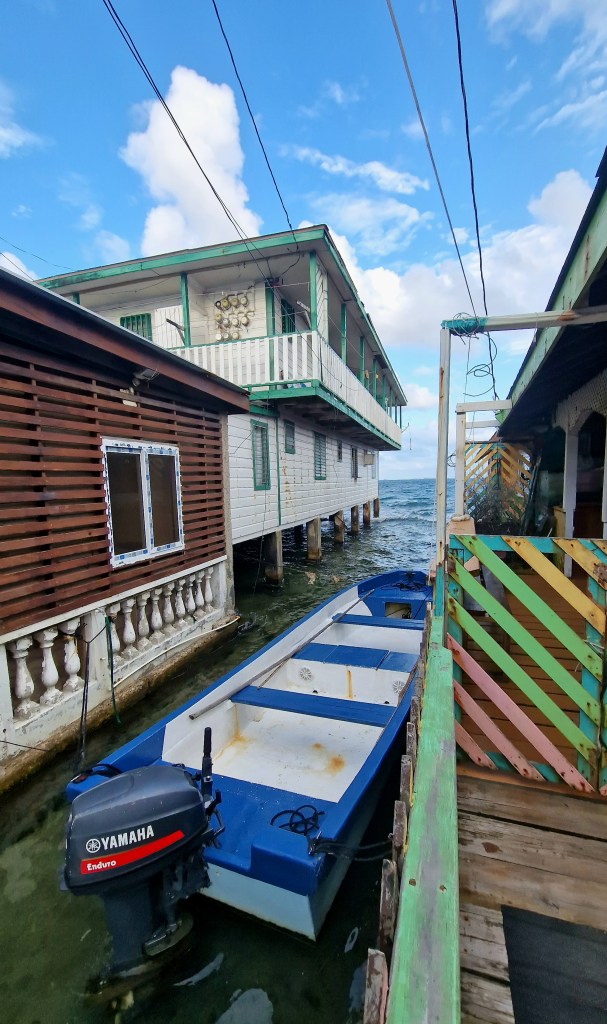
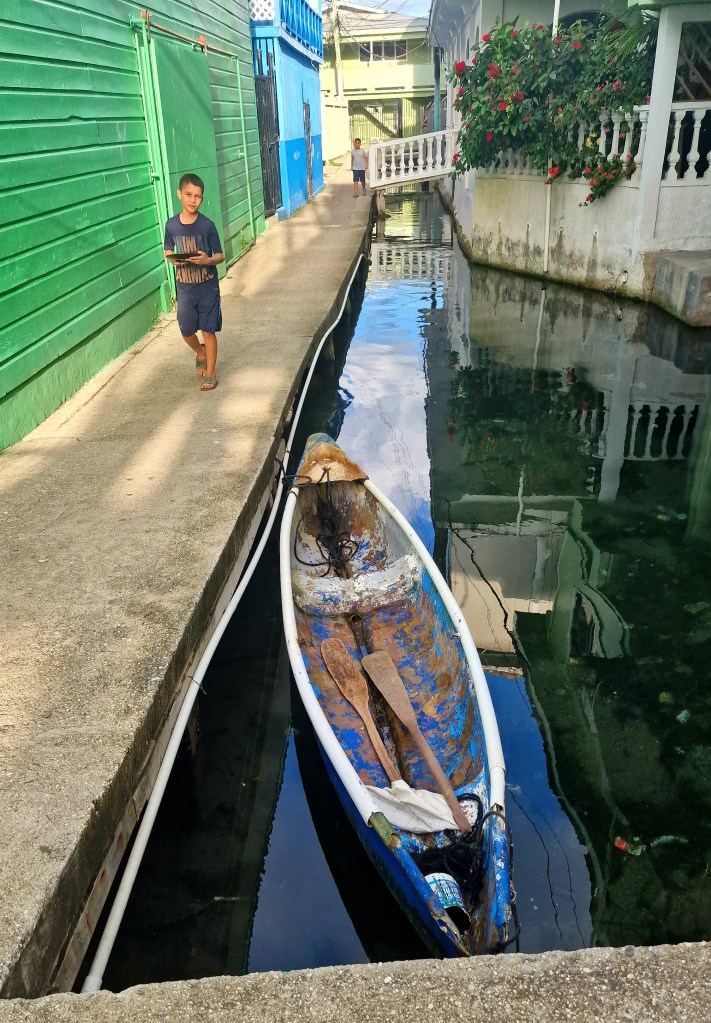
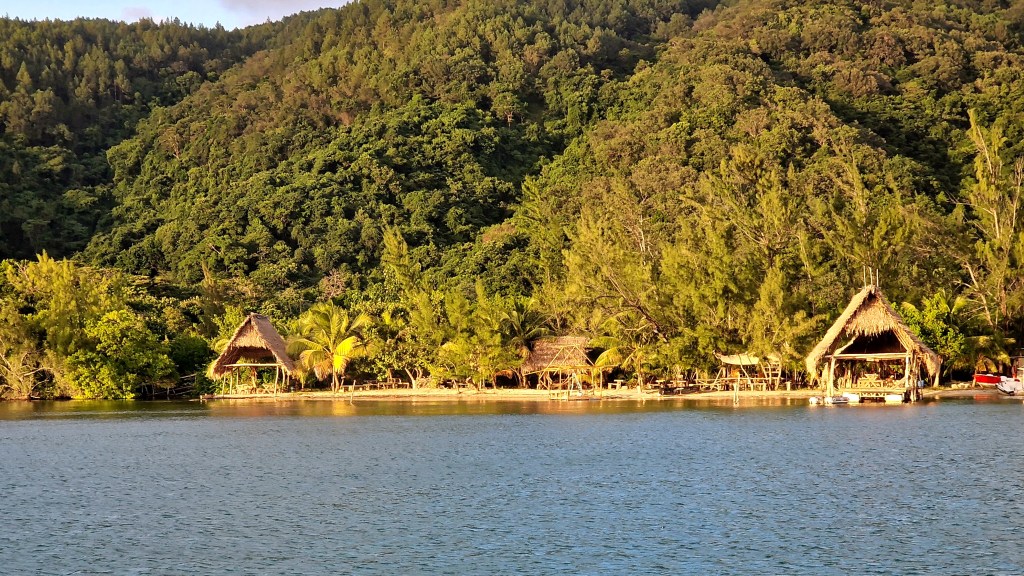
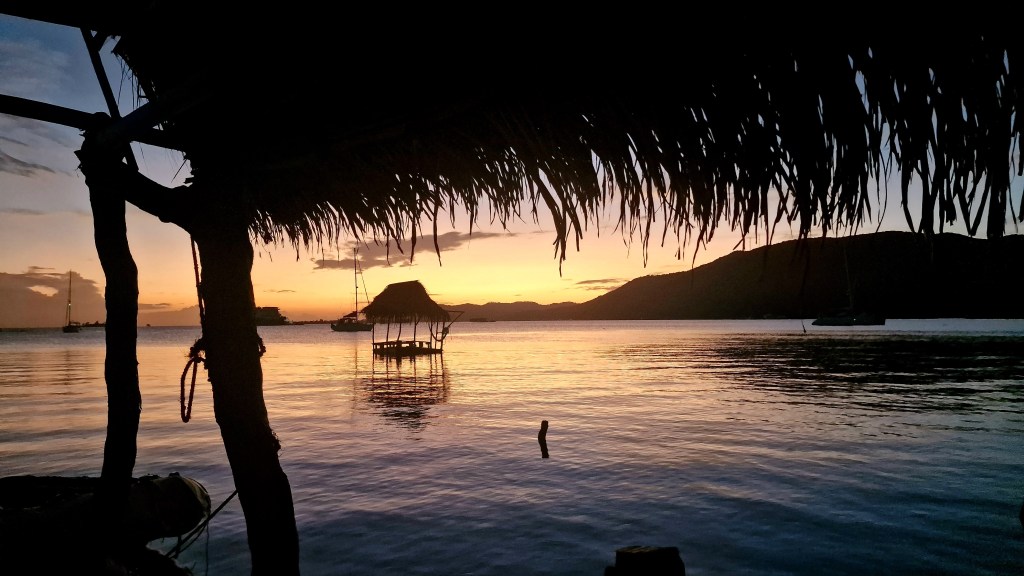

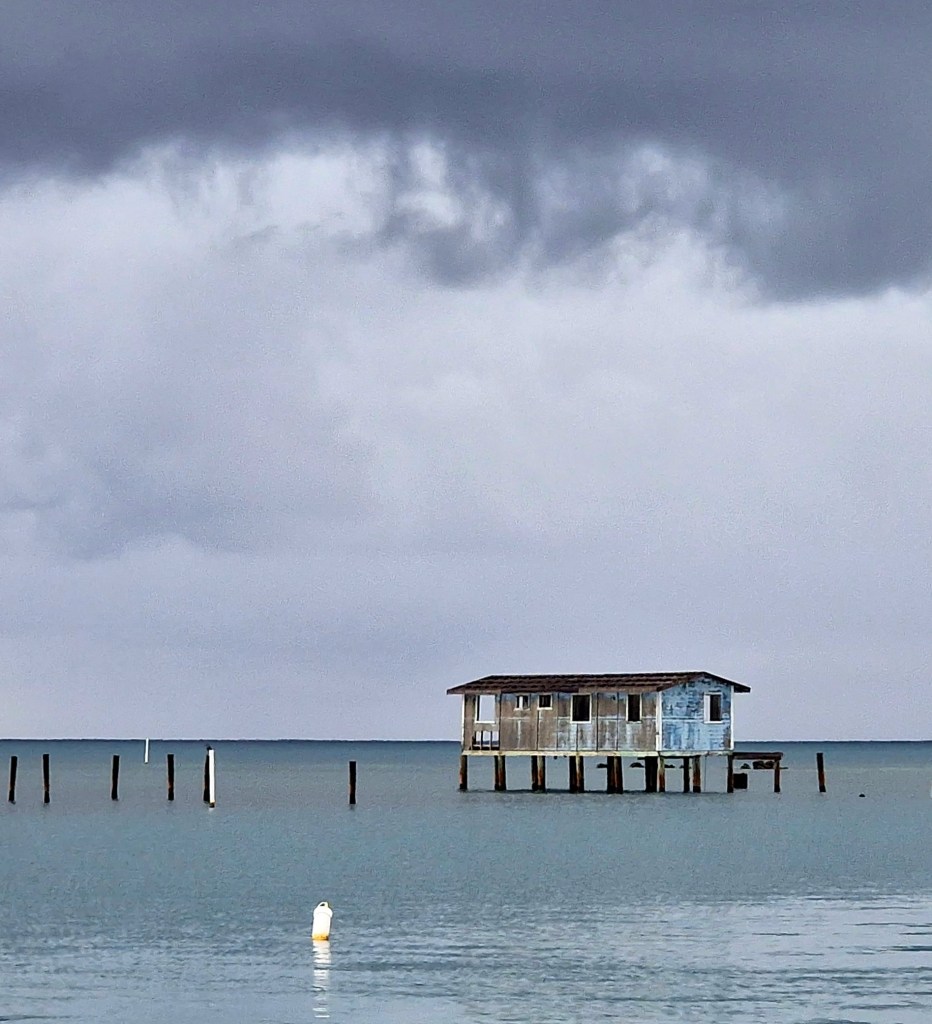
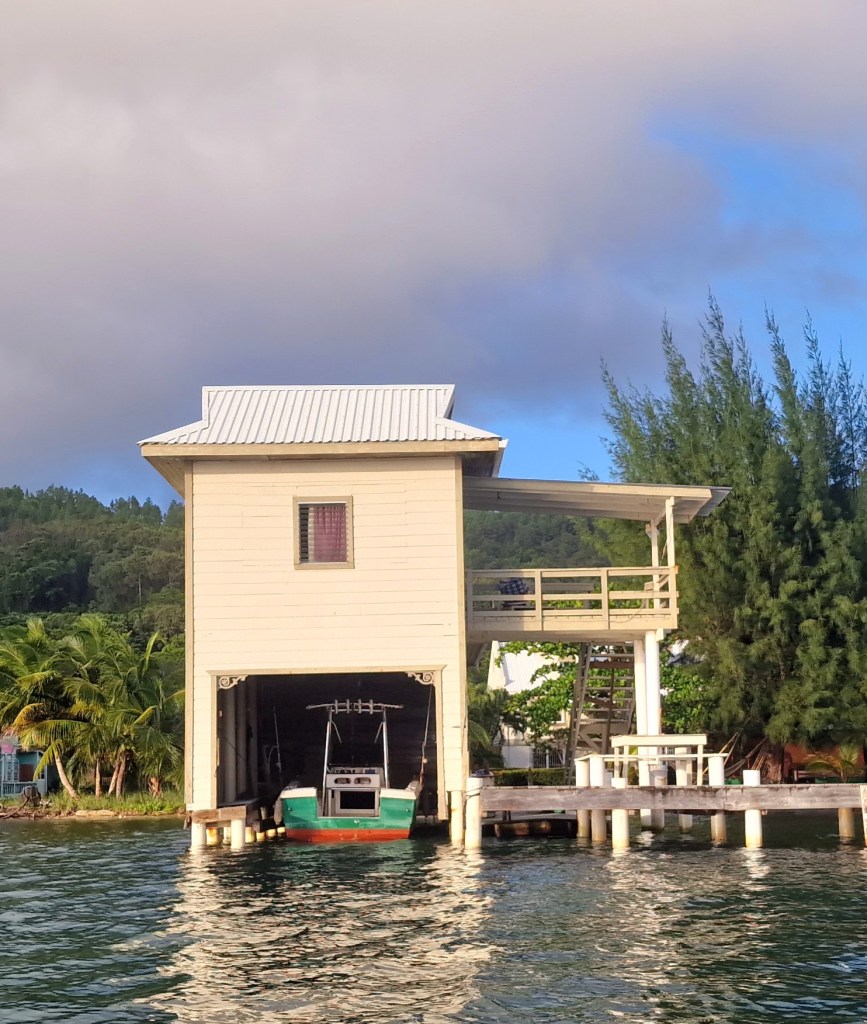

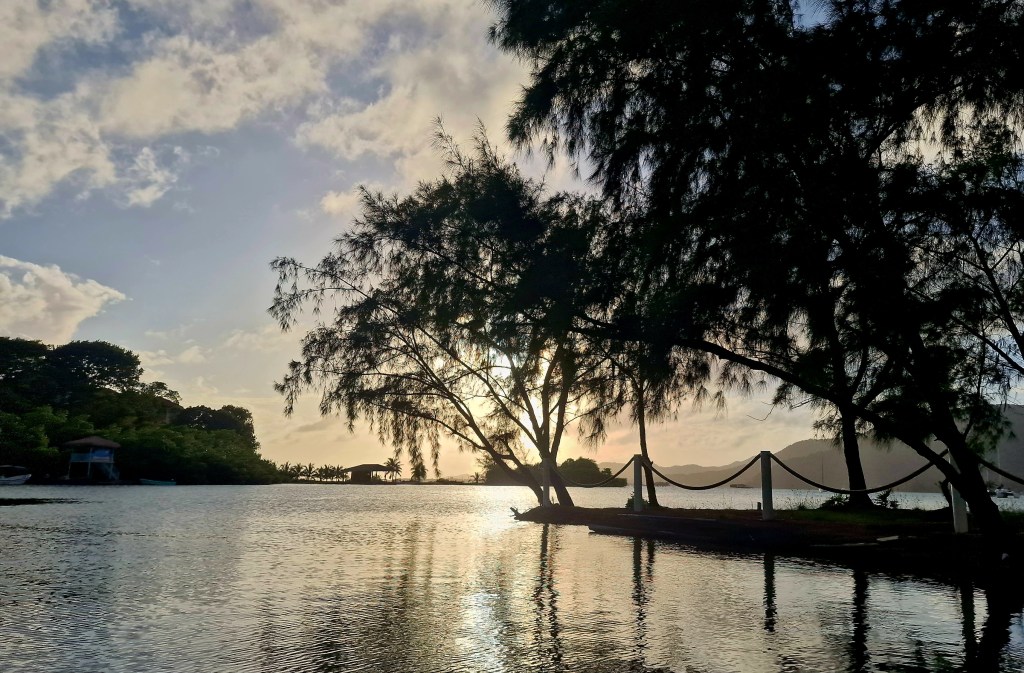

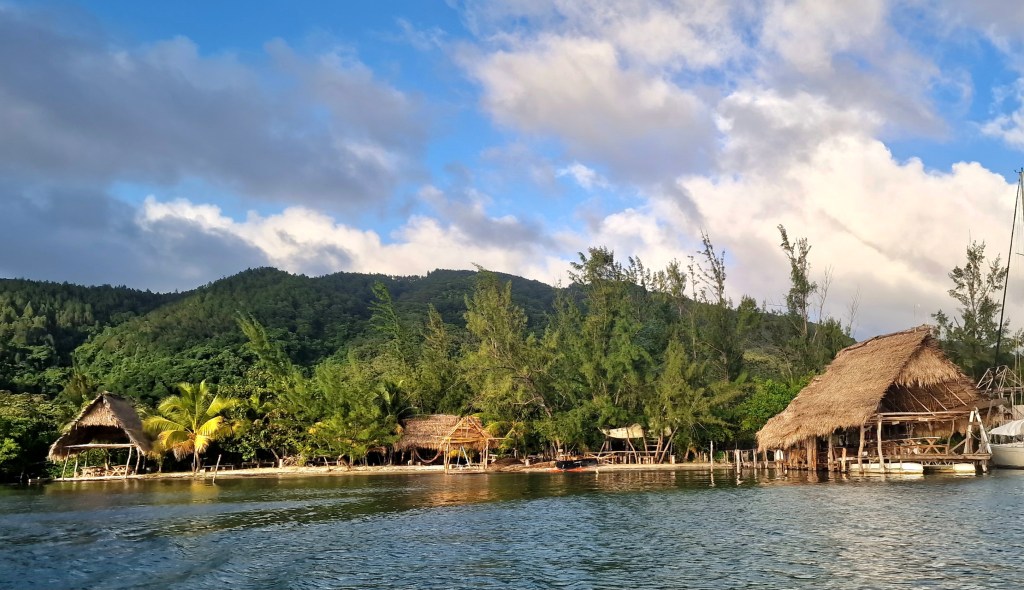
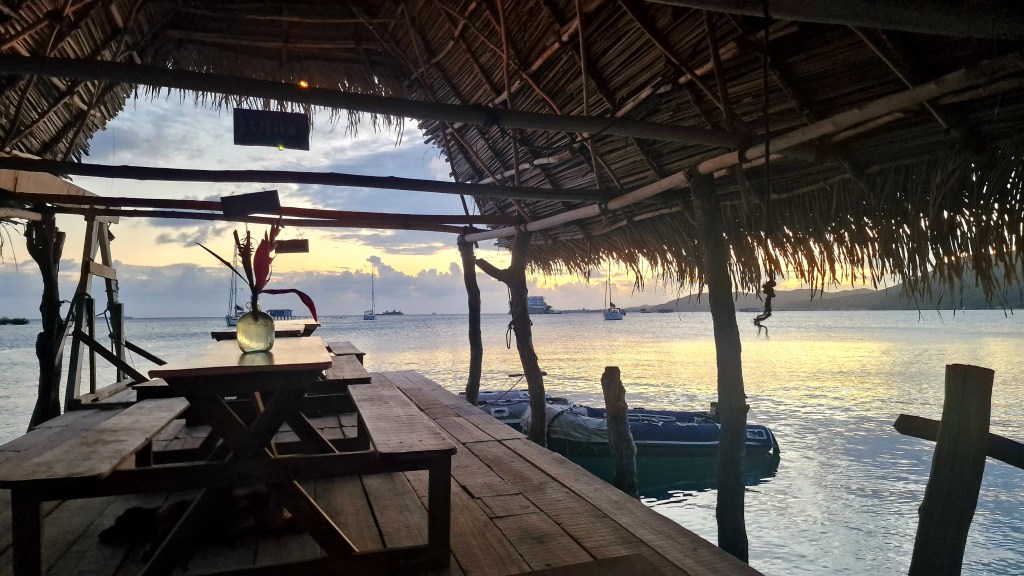
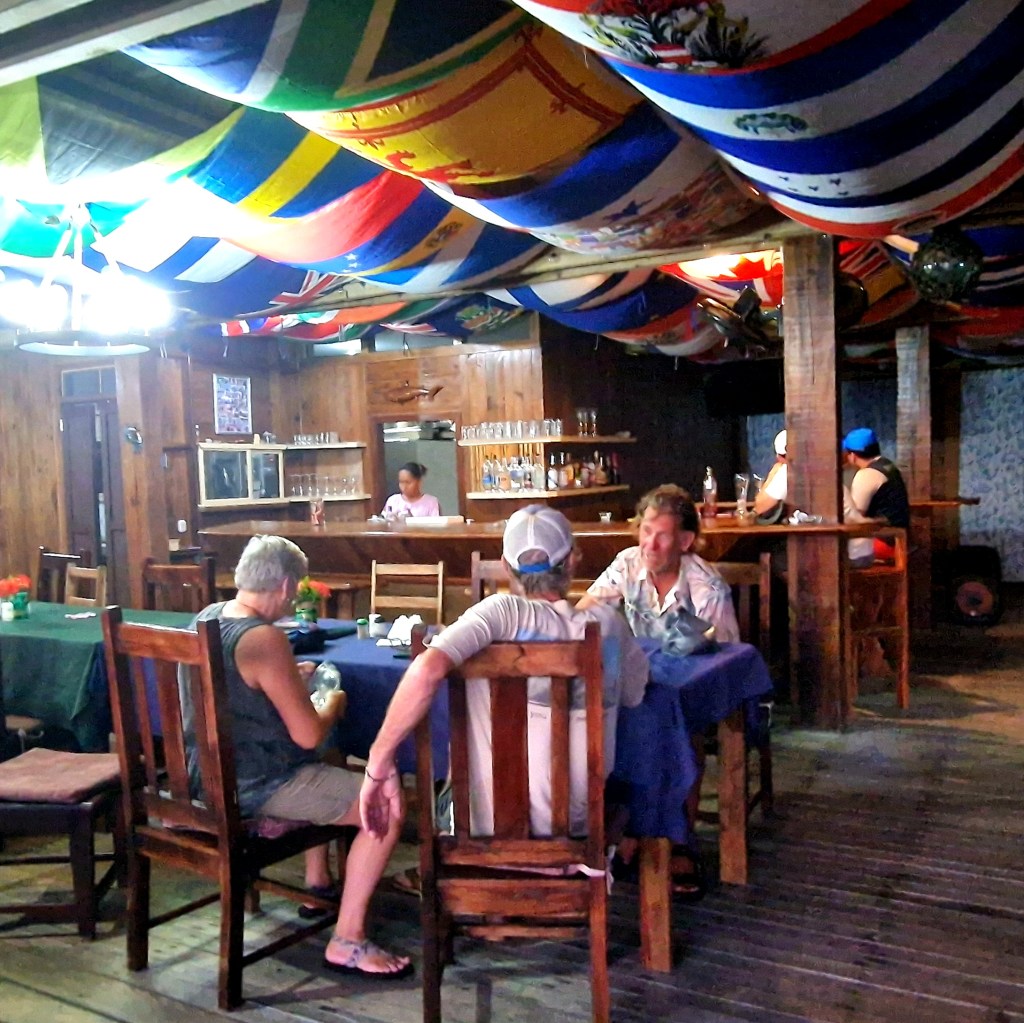
 Levermittliv